kurt vonnegut and the old solar system
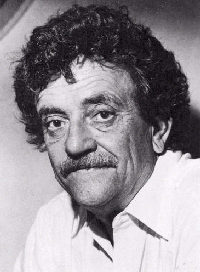
Though he wrote other sf, Vonnegut's inclusion here stems most of all from The Sirens of Titan, the only one of his plots which extends across our Solar System.
The action ranges from Earth to Mars, Mercury and Titan. However, despite the promise of ample space travel, the reader coming to this book after Vonnegut's other tales might well have low expectations of finding any truly colourful OSS stuff.
After all, this author is known mainly as a satirist.
And indeed The Sirens of Titan runs true to type - the book is mainly a satire. To be more precise, it's a witty attack on mankind's habit of equating luck with providence.
So the reader will not be surprised to find that the Mars episode is hardly Martian at all, except purely as a plot-convenience; we are given no feel for Mars as a world. The place almost might as well be some secret hide-out in a desert on Earth - but for the farcical reference to "oxygen pills"...
And yet, and yet -
The Mercurian scenes are a quite different matter. Suddenly the author becomes as creative as any OSS fan might wish.
The planet Mercury sings like a crystal goblet.
It sings all the time.
One side of Mercury faces the Sun. That side has always faced the Sun. That side is a sea of white-hot dust.
The other side faces the nothingness of space eternal. That side has always faced the nothingness of space eternal. That side is a forest of giant blue-white crystals, aching cold.
It is the tension between the hot hemisphere of day-without-end and the cold hemisphere of night-without-end that makes Mercury sing.
Mercury has no atmosphere, so the song it sings is for the sense of touch.
The song is a slow one. Mercury will hold a single note in the song for as long as an Earthling millennium. There are those who think that the song was quick, wild and brilliant once - excruciatingly various. Possibly so.
There are creatures in the deep caves of Mercury.
The song their planet sings is important to them, for the creatures are nourished by vibrations. They feed on mechanical energy...
The entire Mercurian episode is an inspired piece of pure OSS Golden Age invention. For more about the music-eating Mercurian life forms, the "harmoniums", click here.
As for Titan itself - the world in the book's title - this will be dealt with on the Titan page.
Kurt Vonnegut, The Sirens of Titan (1959); Cat's Cradle (1963); Slaughterhouse Five (1969)
For The Sirens of Titan see the Gazetteer entries for New Bedford, Mass. - Indianapolis - Los Angeles (5th ref.) - Newport, Rhode Island - Stonehenge - Wheeling.
And see the Fictional Dates page for 483,441 B.C. and 203,117 B.C.
For Slaughterhouse Five see the Gazetteer entries for Carlsbad Caverns and Dresden.
And see the Fictional Dates page for 1976 (8th ref.)
For Player Piano see the Gazetteer entry for Carlsbad Caverns.
Extract: see Skyscraper crystals on Mercury.
>> Authors
Zendexor greatly appreciates your donation of £2! Thank you.
Recent Articles and Updates


-
Uranian Throne episode 25 The Decision
Oct 20, 26 12:58 PM
 the irrevocable shoot
 -
Guess The World - how many scenes on each world
Oct 20, 26 09:52 AM
 how each world is doing on the scenic front
 -
What to see on Iapetus
Oct 20, 26 09:48 AM
 the Iapetan scene
 -
Something for your consideration...
Oct 20, 26 06:07 AM
 I have been a long-time fan of this site. The idea of things being different from what we find today is titillating. So, I finally wrote a full-length
 -
Guess The World - Seventh Series
Oct 19, 26 05:03 AM
 Yet more scenes from Solar System worlds
 -
Deeds of the Creators
Oct 18, 26 10:43 AM
 in addition to expanding our consciousness
 -
Uranian Throne Episode 11 The Terran Heir
Oct 18, 26 08:35 AM
the mind of an Earthman in the body of a Uranian -
Fictional Dates of the Old Solar System
Oct 16, 26 12:23 PM
 our timeline extended into imagined pasts and futures
 -
Haunted Worlds - Fictional auras of places on Earth, the Moon and Mars
Oct 15, 26 11:05 AM
 The double life of our place-names
 -
Names in the Old Solar System
Oct 13, 26 07:06 AM
invented appellations -
Jasoomian Gathol
Oct 12, 26 11:55 AM
 dreams and themes from an island
 -
What to see on Ceres
Oct 12, 26 08:27 AM
 The Cerean scene
 -
Authors of the Old Solar System
Oct 10, 26 11:04 AM
authors who have contributed to the old solar system -
Uranian Throne episode 24 Underway
Oct 10, 26 07:18 AM
 The skyfleet sails into Fyaym
 -
What to see on Europa
Oct 09, 26 04:26 AM
 The Europan scene
 -
What to see on Jupiter
Oct 05, 26 05:58 AM
 The Jovian scene
 -
History of Hopes
Oct 03, 26 10:46 AM
 Optimistic science and speculation
 -
the hits race
Oct 01, 26 10:37 AM
 the monthly popularity-contest for worlds
 -
Countries
Sep 30, 26 12:56 PM
 Supplementary Gazetteer for countries in sf scenes
 -
Zendexor's OSS Diary 2026
Sep 29, 26 03:19 PM
 reflections on life, the oss and everything
 -
Eras, Periods and Epochs
Sep 28, 26 02:01 PM
 The ages of deep time
 -
Uranian Throne - index of proper names
Sep 28, 26 12:43 PM
the people and places of Ooranye -
What to see on Titan
Sep 28, 26 05:16 AM
 The Titanic scene
 -
What to see on Callisto
Sep 26, 26 04:11 AM
 The Callistan scene
 -
Artists who have illustrated the Old Solar System
Sep 22, 26 12:53 PM
 visual depictions of the OSS
 -
What to see on Mars
Sep 21, 26 03:40 AM
 The Martian Scene
 -
What to see on the Moon
Sep 18, 26 04:05 AM
 The lunar scene
 -
What to see on Venus
Sep 14, 26 02:01 AM
 The Venusian scene
 -
What to see on Phobos
Sep 07, 26 05:36 AM
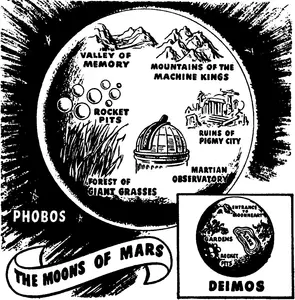 the scene on the inner moon of Mars
 -
CLUFFS
Sep 06, 26 11:33 AM
 CLUFFS - Cute Little Unfulfilled Fragments of Fascination
 -
Idea for another site - The Stellar Neighbourhood
Sep 06, 26 11:10 AM
 the named or designated stars that appear in literature
 -
What to see on the Asteroid Progenitor Planet
Sep 03, 26 09:18 AM
 The Lost Planet scene
 -
What to see on Uranus
Aug 17, 26 03:12 AM
 The Uranian scene
 -
Future Dates for Real
Aug 12, 26 02:39 PM
 prophecies which are quite certain
 -
What to see on Mercury
Aug 11, 26 07:51 AM
 The Mercurian scene