colonising genre-space:
jasoomian gathol's
royal drama
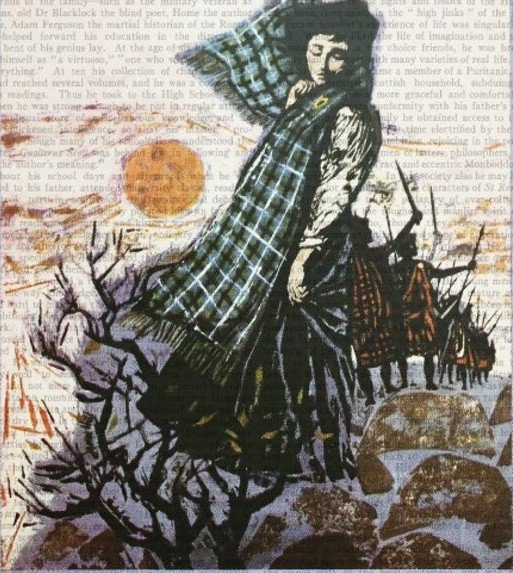
[ links to: Guess the Situation and Jasoomian Gathol ]
Those of us who are in the know, quietly understand that historical fiction is a kind of subset of sf...
Stid: Special pleading, Zendexor! You won't get away with it -
Zendexor: Let me finish. I did say "kind of". And you won't deny that the sense of wonder and the joys of a roaming imagination are common to historical sagas and sf.
Stid: I'll grant you that, but - what are you up to, Z? Are you about to lead a colonial movement to settle sf-fans in an expanded genre-area?
Zendexor: Wait and see. First, with regard to the general public, never mind sf: we've got to face the fact that there is a widespread phenomenon known as "not being interested in history".
Stid: You mean, the dopes who dismiss it as a frozen finished thing? Let 'em. Why bother with such people?
Zendexor: Because sometimes all it takes is a fresh approach. And for that purpose, I am about to present something new.
It's a presentation that draws its power from - guess what - forgetting! Temporary, selective forgetting.
Here's the idea:
Give the history-averse reader some historical narrative scenes that have been stripped of names.
The point of omitting the names? The answer is quite simple and powerful: drama is restored to freshness because, with the removal of the names, the usual boringness-buttons have been disconnected.
Stid: Hang on - why should names be boring?
Zendexor: To you and me, they aren't, but then, both you and I take it for granted that to read a name of a person or place, or a date (which as an identifier counts as a kind of name) is a helpful orientation rather than a trigger for an "oh, not that again" and a toss into the cliché-bin.
On the other hand just imagine for a moment that you're a sufferer from HAS (History-averse syndrome).
If you're one of those unfortunates, you only have to read the name of a king or queen or the date of an event in order for that section of your awareness to get immediately shut into a sort of frozen locker. "Charles the First lost his head and that's all done with." Never mind that no all-done-with Charles the First ever existed; that all times are present to those who live in them and past to those who come after them; that every moment shimmers with contingency... the HAS-sufferers don't get it.
But with the help of Guess-The-Scene, they may!
I plan to institute on this website a series on the lines of Guess-The-World, only focusing on the drama of British history. (It's what I know most about, and one has to start somewhere.)
In fact I think I'll call it Guess The Situation.
the reason for the focus on royalty
Some words of explanation:
The Guess-The-Situation entries will make use of crown-centred drama to an extent which may cause readers to wonder. It's limiting, but deliberately so. The use of a long royal line of descent is, in my view, analogous to that of a dip-stick used to stir a substance to test its consistency.
If we want to understand past eras, we want to know their texture as systems, what was possible and what wasn't... to assess how thick, how hard to stir the mixture was. How much scope existed for individual action to make a difference.
Now, the historian can't go back and try to do this himself. Time-travel (fortunately) hasn't been invented. But the next best thing is to study what stirrers did in their own times.
Rulers are perfect for this. Their egos were stroked and incited in most cases from birth. If anyone was likely to be inclined to test the bounds of the allowable, of the politically and socially possible, it was a monarch who owed his or her throne to heredity, and who felt the colossal sense of entitlement which a royal upbringing was virtually bound to instil.
Much of the drama springs therefore from the efforts of impatient royals to impose their will on the resistant fabric of society.
Have a go at identifying who, where and when!
Zendexor greatly appreciates your donation of £2! Thank you.
Recent Articles and Updates


-
Uranian Throne episode 24 Underway
Sep 15, 26 01:39 PM
 The skyfleet sails into Fyaym
 -
Guess The World - how many scenes on each world
Sep 15, 26 11:11 AM
 how each world is doing on the scenic front
 -
What to see on Jupiter
Sep 15, 26 11:06 AM
 The Jovian scene
 -
Guess The World - Seventh Series
Sep 14, 26 09:08 AM
 Yet more scenes from Solar System worlds
 -
Deeds of the Creators
Sep 14, 26 07:35 AM
 in addition to expanding our consciousness
 -
Countries
Sep 14, 26 07:05 AM
 Supplementary Gazetteer for countries in sf scenes
 -
What to see on Venus
Sep 14, 26 02:01 AM
 The Venusian scene
 -
Fictional Dates of the Old Solar System
Sep 13, 26 07:17 AM
 our timeline extended into imagined pasts and futures
 -
Artists who have illustrated the Old Solar System
Sep 12, 26 08:00 AM
 visual depictions of the OSS
 -
What to see on Mars
Sep 12, 26 07:33 AM
 The Martian Scene
 -
Haunted Worlds - Fictional auras of places on Earth, the Moon and Mars
Sep 11, 26 11:22 AM
 The double life of our place-names
 -
What to see on Phobos
Sep 07, 26 05:36 AM
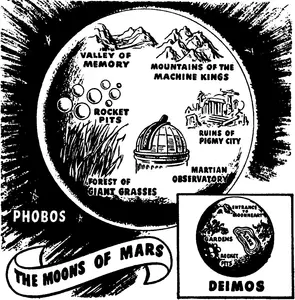 the scene on the inner moon of Mars
 -
CLUFFS
Sep 06, 26 11:33 AM
 CLUFFS - Cute Little Unfulfilled Fragments of Fascination
 -
Idea for another site - The Stellar Neighbourhood
Sep 06, 26 11:10 AM
 the named or designated stars that appear in literature
 -
What to see on the Moon
Sep 04, 26 03:38 AM
 The lunar scene
 -
What to see on the Asteroid Progenitor Planet
Sep 03, 26 09:18 AM
 The Lost Planet scene
 -
Zendexor's OSS Diary 2026
Sep 01, 26 03:26 PM
 reflections on life, the oss and everything
 -
the hits race
Sep 01, 26 11:44 AM
 the monthly popularity-contest for worlds
 -
What to see on Callisto
Aug 24, 26 04:09 AM
 The Callistan scene
 -
Jasoomian Gathol
Aug 22, 26 08:40 AM
 dreams and themes from an island
 -
History of Hopes
Aug 18, 26 03:27 AM
 Optimistic science and speculation
 -
What to see on Uranus
Aug 17, 26 03:12 AM
 The Uranian scene
 -
Future Dates for Real
Aug 12, 26 02:39 PM
 prophecies which are quite certain
 -
What to see on Mercury
Aug 11, 26 07:51 AM
 The Mercurian scene
 -
Authors of the Old Solar System
Aug 11, 26 07:49 AM
authors who have contributed to the old solar system -
Uranian Throne dates
Aug 02, 26 12:08 PM
exact dates referred to in Uranian Throne -
What to see on Neptune
Aug 02, 26 06:48 AM
 The Neptunian scene
 -
Religion in the Old Solar System
Jul 29, 26 08:41 AM
 Creeds and transcendence in the Old Solar System
 -
Invasions of Earth
Jul 27, 26 12:53 PM
 Terra targeted by other Solar System worlds