the sunport vista:
zendexor's
oss
diary
2026
The Samuel Pepys of the OSS...
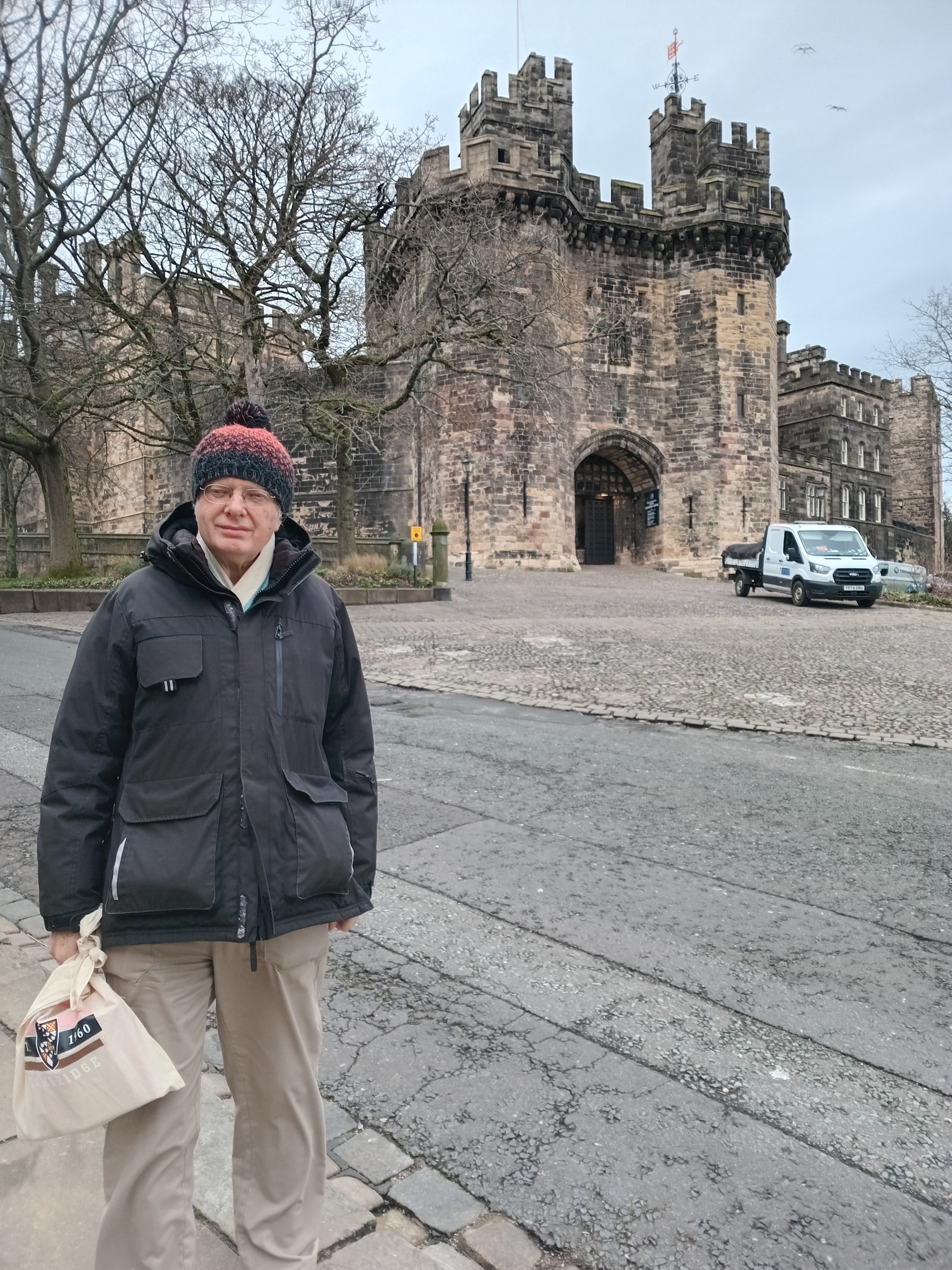 Birthday boy Zendexor at 72 in front of the even older Lancaster Castle with an incongruously modern van to the right
2026 September 29th:
GREAT WRITERS WHO DON'T KNOW WHAT THEY'RE DOING
Here's my Michaelmas Day suggestion for the beginnings of a little dossier on great writers' under-estimation of their own achievements. Three examples:
[1] Clark Ashton Smith dismissed his early science fiction story The Immortals of Mercury in a 19th January, 1932, letter to H P Lovecraft as "a lot of tripe, I'm afraid," adding that he wrote it purely in the hope of securing a $200 check to serve its financial purpose. (Lovecraft didn't agree - he found great merit in the narrative. As for me, I think it a great OSS tale, I have re-read it innumerable times, and I have referred to it with love and respect in my own Mercurian yarn, Valeddom.)
[2] Arthur C Clarke wrote in the introduction to the 1987 edition of The Sands of Mars:
"...there is only one respect in which advances in our knowledge of the planet has left me seriously embarrassed: I refer to the statement in Chapter 11, 'There are no mountains on Mars.' That is now slightly erroneous; the gigantic volcano Mons Olympus is almost three times the height of Everest, and is itself challenged by several other peaks that surpass any on Earth." Well, so what? Didn't he realize that his own version of Mars was far superior to the reality? Granted that the reality may be more geologically diverse, Clarke's Mars is the one I'd wish to visit, and to be a part of the colonist community he so wonderfully depicts.
[3] Edgar Rice Burroughs opined, re the pulp magazines, that if people were paid for writing "such rot," he could write stories just as "rotten", while being confident they would be entertaining. Time and again he betrayed his unnecessary literary inferiority complex by statements of this sort. "I have been writing for nineteen years and I have been successful probably because I have always realized that I knew nothing about writing, and have merely tried to tell an interesting story entertainingly". "I knew nothing about the technique of story writing, and now, after eighteen years of writing, I still know nothing about the technique..."
And yet the music of his prose can frequently be unforgettable. I refer the reader especially to the last five books of the Barsoom series, and most of all to the 7th and 10th.
The lesson: writing is such a mysterious channelling process, one ought to expect the channellers to work by instinct, and, with regard to what they're accessing, to be intellectually out of their depth!!
2026 September 16th:
DOC SMITH AND THE QUALITY OF SPACE
Something struck me the other day while I was re-reading The Skylark of Space after several decades' interval.
I had more or less "written off" E E Smith as regards any hope that he could make me feel the immensity of space. In the Lensman series, which I admire and enjoy, he's great on the complexity of the Universe, at the cost of disregarding its size - his characters zoom around without the narrative evoking any sense of the distances involved. I had got used to shrugging this off as one persistent fault (or maybe not "fault" so much as "trade-off") by a good sf writer.
Now however I find that his other classic series doesn't exemplify that syndrome nearly as much. Take the following passage from Chapter Fourteen of Skylark, in which one finds the same huge speeds as in the Lensman series by which to get from point A to point B, but, here, not in a way that is dismissive of the distance covered:
...now it seemed entirely possible that they could fly in a straight line for weeks without encountering any obstacle, so vast was the emptiness in comparison with the points of light scattered about in it. Now and then they passed closely enough to a star so that it seemed to move fairly rapidly; but for the most part the stars stood, like distant mountain peaks to travelers in a train, in the same position for many minutes.
Awed by the immensity of the universe, the two at the window were silent... in the presence of a thing far beyond the reach of words. As they stared out into infinity, each felt as never before the pitiful smallness of the whole world they had known, and the insignificance of human beings and all their works...
And you wouldn't need to cross interstellar space; the Solar System is plenty big enough for a traveller to acquire this sentiment of infinity. Just imagine you were riding on Voyager 2, from take-off in 1977 to Neptune in 1989: what a void-traversing epic that would be!
2026 September 1st:
BLURRING THE BOUNDARY BETWEEN FANTASY AND SF
I can't right now call to mind any examples of the above "blurring" which are set on
our neighbouring worlds.
Some
might say that C S Lewis' Cosmic trilogy is one such, but I
cannot agree, since he takes great care to make it plain that the
Oyéresu and the lesser eldila are in principle scientifically
verifiable. As for Maleldil Himself, well, the ground of all existence is
bound to transcend all categories, in whichever literary genre the attempt is made to treat of Him.
So, in the absence of extraterrestrial examples, I'll give one set on Earth.
I came across it in my recent re-reading of L P Davies' The Land of Leys (1979) - a passage on page 171 concerning "black magic":
"And it can be made to work... Think of it as a formula, or a series of formulae... It is an analogy by which one may reduce that which is incomprehensible to something understandable and acceptable. The building up of power by different, but similar means; the creation of a force-field, if you like. The Adept - the Magister - is your scientist. With the help of certain sounds, scents, and symbols, he makes a force-field which is the key that is able to unlock a door and allow the entrance of things unimaginable..."
Next
for investigation would be whether any tales set on our neighbour
worlds have achieved scenes of creepiness to match the best supernatural
horror tales set on Earth. For if (say) an M R James type of scenario
were to happen on Mars, it would maybe force us to consider the
sf/fantasy boundary in a new and interesting way.
To anticipate another possible area of disagreement: some may say that the situations which make Eric John Stark shiver in some of the tales of Leigh Brackett, qualitatively overlap with Terran supernatural shuddering. However, with the Brackett technique what is going on is, in my view, a borrowing of mood, rather than of theme. Very well done, but just not closely related enough to count as the same kind of thing.
Jack Vance in The Palace of Love has someone express the view that "haunted houses are to be found on Earth alone". I wonder if he's right.
2026 August 29th:
ELASTIC EARTH
I
used to be impatient with "lost world" stories set on Earth. If you
wish to write about new lands, why try to squeeze them into the terrain
of a world which has been almost completely mapped? Why not go and
write about a different world?
My view has changed for several reasons. Here are three points to be made:
[1] The technical challenge of the above "squeezing" can itself be of interest to both writer and reader.
[2] In any case you can easily regard the wide Earth as largely empty
of intelligent life, though swarming with dim sentience.
[3] Forget I said that.
But now I intend to make an altogether different point. Lost-world
writers are in a sense not merely squeezing a setting into an out-of-the-way terrestrial location. They are in effect stretching the Earth.
Perhaps this need not apply to the Venezuelan tepui of Arthur Conan Doyle's The Lost World (1912), the eponym of the genre. The table-mountain formation actually exists, and the novel is set within its limits. But succeeding writers have burst such constraints.
The
obvious example is the Tarzan stories. Edgar Rice Burroughs' ape-man hero explores so many lost cities and empires in Africa, that the
Dark Continent, huge though it is, couldn't possibly contain them all, or at any rate not if you allow for the extra distances between them which are demanded
by the plot; unless, that is, the saga's version of Africa is made into
something even bigger than the reality.
The same may apply to H P
Lovecraft's Antarctica. Granted, it's a big place, and the "Mountains
of Madness" are set in a region that was not surveyed at the time of
writing, so the author may have adhered to credible speculation; but if you wish to suspend your disbelief so far as to
allow that sinister austral realm's continuance into the
present day, you need to 'stretch' Antarctica.
I'm at a loss to
describe how this operation is carried out, but it can be done. At least, the action unquestionably does occur, sort of, in my mind. (I wonder, does the idea click with any of
you?)
The main example I wish to give is the most daring one
because it dates from as late as 1962, the publication date of James
Blish's The Night Shapes, though the action takes place in 1906.
American exile Kit Kennedy, alias "Ktendi" of the Wassabi tribe, is
protesting to a member of the expedition that he is reluctantly guiding
through a mysterious tract of the Belgian Congo [p.22]:
"...This area's never been mapped, and there may be mountains ahead. We aren't equipped to scale a range of any size."
"Why not?"
"Evidently you've never seen mountains in Africa. They aren't worn
down to nubbins, like the Alps, you know. Most of them are new - great
unweathered block-piles as raw as the mountains of the moon. I myself
have seen one thirty thousand feet high."
"There is no such mountain," Stahl snorted. "Everest isn't as high as that."
"Everest is too old. I know what I saw. And I know how to triangulate, Stahl."
Preposterous,
in ordinary terms, but if you just allow that part of Africa to balloon
larger, the scenario becomes possible; and it had better happen that
way, lest a great yarn lose out.
One more thought: if we're allowed to stretch the Earth, we could stretch other worlds too. In fact, really, ERB by the end of the Barsoom series was almost in the position of having to stretch Mars...
2026 August 24th:
A CALL FOR THE IMPLICIZER:
NOTES ON THE OSS OF FRANK BELKNAP LONG
Researcher/contributor Lone Wolf has been delving into the tales of this writer - see the recent CLUFFs and the extracts The thinking caps of Uranus and Dragonlike plants of Callisto.
As is often the case with OSS literature, we find a tantalizing lot of tidbits which tempt the reader to work at organizing, embellishing and, where necessary, amending the sources.
I hereby share the latest reports from LW on the state of the FBL universe.
Email, 23rd August:
Unfortunately these worlds are almost never described directly in the stories of this series. There are only passing mentions scattered here and there or little pieces of memories and daydreaming at the best (I think there was a Plutonian scene somewhere among these too and also in the first story from the last week - a scene on Neptune, but only seen in a daydream and told in only one sentence or two). That's why I said that I am not at all sure if the pictures of the planets are consistent or just randomly created (thus I think I spotted a little contradiction about Callisto in one case described as sea world and in other - as having solid crust of some compound, but we can never be sure since there is never a general description and one can imagine that there may be seas or lakes on it, etc.; similarly in one place there is said that there Neptune isn't watery, but in another is mentioned a sandy beach and tidal zone there, etc.). It would be interesting to collect all these fragments and catalogue them by planet, but even if I had the time I don't have the text of all the stories, only about half of them and I can't find the missing ones online (as it seems, this series wasn't particularly popular and so it was forgotten - according to the bibliographies online it was re-edited only once as a book ten or fifteen years ago, but it doesn't exist in digital form).
Email, 24th August:
It seems I've been mistaken in my previous email – there were actually several editions of this series in a book form. I found an article about it here:
It contains some information about Frank Belknap Long and short resumes of all the stories. As I mentioned before, Satellite of Peril seems particularly interesting because it appears to be set on Io, but unfortunately I cannot find that issue of Thrilling Wonder Stories anywhere (despite what the author of the article says, that all the stories can be found online). I think in the same story was introduced the “Mimas mold” (whatever this is), which is used again in the final novelette (The Hollow World) without much explanation (there is a short description of its use in one of the excerpts I sent, but it is quite unclear – all I understood is that it was some kind of miniature vegetable organisms which are able to re-produce a tridimensional picture of a crime scene based on some residual infrared “aura” left by the human bodies).
Note from Zendexor: All these clues furnish a clear motive for any determined reader to get cracking with the implicizer!
2026 August 11th:
PERCOLATIONS
TO PERSIA FROM MARS AND TO THE MAYANS FROM VENUS
More reflections from Lone Wolf, this time from an earlier email (21 May) which I have been meaning to include here for some time now:
Persia: Pārs
(or Fārs,
as it is now pronounced) sounds a lot like “Mars”. In Persian
dictionaries I've seen the word “pārs”
translated as “leopard”, which is most likely a loanword from the
Turkic “bārs”, since the common Persian word for “leopard”
is “palang”.
This is also present in the Russian word “bars” ("барс") as
synonym for “leopard”, which comes from the Turkic-Bulgar
“Barıs”(hence
the name “Boris”),
the spirit of victory and war in the old Tengrian mythology of the
Bulgars, who appears as big one-eyed leopard, which could have been
once the name of the “Scythian Ares”, mentioned by Herodotus, who
have been worshipped in the form of a sword (the Alp Barıs/Boris
in the legends of Bulgarian Tengrianism also had his mystic sword of
victory, which he presents to some great heroes, thus Attila himself
was said to possess “Mars' sword”, etc.) and maybe even the name
of Mars (also god of war!) derives from the same root (the labials B
and M are often interchangeable, especially in the Turkic languages).
And all this quite resembles Burroughs' name “Barsoom”, although
it was probably inspired by euphony from the name “Mars” (the
suffix “-oom” then is common for all Martian planetary names).
And then his description of the traditional feud between red and
green Martians resembles that between the settled Iranians and
the nomad Turanians from the Persian epic legends (even the names of
the green Martian tribes are similar to those of the Central Asian
nomads: Thark sounds like “Turk”, “Warhoon” – like
“Avar-Hun” (I think there was actually such tribal name,
something like “Ouarkhun” in Central Asia, but can't remember it
exactly now), etc. I can't say whether Burroughs actually got his
ideas directly or indirectly from the Persian epic (I've come across
some article online which assimilates them instead to the
Theosophists' description of Atlantis and its races), but the
similarity seems very close.
Then
the Mayan cities in the jungles and their landscape in general
definitely give me a Venusian vibe. And the curious thing is that
indeed the planet Venus was especially worshipped by the Central
American cultures and its 8-year synodic period played a major role in
their peculiar calendars. Then the famous “white bearded gods”
(the Aztec Quetzalcóatl,
the Mayan Kukulkan, etc.), bringers of civilization, were always
associated with Venus and that's why sometimes in the earlier 'ancient
astronaut' theories they were hypothesized to be Venusians (in one of
the Aztec legends, if I remember correctly, Quetzalcóatl
in the end jumps on a pyre and his hearth becomes the Evening Star,
which was interpreted as a description of a rocket ship's take-off
for Venus). Even the legendary lost lands like Mu (with its jungles
and swamps, “the land of swampy hills” in an old mistranslation of a Mayan codex) and
Atlantis (with its canal system of irrigation, described by Plato)
invoke associations with the old traditional images of Venus and Mars
respectively (Atlantis was also supposedly called “Red Land”,
which reminds of the “red planet”, etc.).
All
these coincidences, although imaginary, are rather insistent, so that
it may be speculated that they have their origin in the archetypes
hidden in the collective unconscious. Thus for instance the Martian
visions of the Swiss medium Hélène Smith also have characteristic
Oriental aesthetics, which Théodore
Flournoy explains with her particular tastes and interests, but she
was nonetheless convinced all this information came from outside her
own brain. The Martian language, which she presented in her spiritual
communications, may be an infantile imitation of her native French, as
Flournoy thought, but still it was not some random gibberish, but
possessed its own original words and names (like f.e.
“Espénié”
for Mars, “Béniel”
for Earth, “Arvâ”
for the Sun, etc.). Could it be that she actually caught a glimpse
from some
alternative reality or a virtual world in the noosphere?
Note from Zendexor: Phew! I'll start to believe in ancient astronaut theories if I'm not careful! Really though it's a more likely a case of whatever one calls the literary equivalent of pareidolia (seeing a Face on Mars, etc). Like Lone Wolf I'd rather go for the alternative idea, of seepage from an alternative reality.
2026 August 9th:
STANLEY WEINBAUM, RPG AND CATASTROPHIC PLANETOGENESIS
A guest-entry from Lone Wolf:
I've completely forgotten
how and where I found R.W. Cole's novel The Struggle for Empire,[see Towards the capital city of Neptune] but while checking the links on the last page I came again to the
page of “Forgotten Futures” - a role-playing game (RPG) created by
Marcus Rowland based on old scientific romances and science fiction,
some of which are related to the OSS. Thus for instance the game
“Forgotten Futures XI: Planets of Peril” is based on the worlds of
Stanley Weinbaum from the stories of his so-called “planetary”
sequence.
file:///C:/Users/User/Downloads/perilous%20planets%20RPG.pdf
The pdf document contains a lot of
information derived from the stories and systematized for use in the
game: descriptions of planets, spaceships, technology, characters,
plots, etc.; in particular on pages 14–16 are discussed the dates
and chronology of the stories and some slight inconsistencies in them
(I've noticed them myself, but then I thought that they were due to
typos in the versions of the texts which I read online and so far I
still haven't found time to study this fictional timeline in more
details. Now it turns out that this has already been done by Marcus
Rowland!).
Also here expressed is the interesting background idea
that the scientific justification of the descriptions of some OSS
worlds in old SF was actually based on conclusions derived from
the catastrophic (as opposed to the nebular) cosmogonic hypothesis, involving another star passing near the Sun and causing tidal
eruption of matter in the latter, from which all the planets were
born. That explains why in this version of planetogenesis it was
considered possible that the planets should be younger and more or less similar
in their chemical constitution and thus there could be heavy elements
on the outer planets, the giants could be still hot or have solid
surface, etc., just as they are often described in old SF stories. It
never came to me to look at it from this point of view, but now it
seems quite plausible: indeed, the variations of the catastrophic
cosmogony are often described and used in the plots of some stories
by authors like R.H. Romans, Leslie Stone and Edmond Hamilton.
Anyway, this document is a rather useful resource for research on Stanley
Weinbaum's OSS and the possible extensions of it (thus the author
suggests that “adventures” can be set on worlds about which
Weinbaum never wrote, like Mercury or the asteroids).
There is also another
game from this family that is related to the OSS – “Forgotten
Futures II: The Log of the Astronef”, based on George
Griffith's Honeymoon in Space, although the author admits that
some of the “adventures” in it contradict the plot of the
literary original. Well, I don't understand very well what those
role-playing games are and how exactly they are played – from the descriptions it seems to me they're like
something similar to the “psychodrama” in Poul Anderson's story
The Saturn Game. Maybe I am just too old for such things, but I guess this is also another way of resurrecting the OSS.
2026 August 4th:
TIME OUT OF JOINT - LOGIC-OVERRIDE
Having just finished re-reading Philip K
Dick's Time Out of Joint (1959) for the zillionth time (it's been one of
my favourites for most of my life), I decided to remark upon something I
noticed only on this latest enjoyment of the novel. And in so doing, I
wish to suggest a new criterion by which to judge a book's greatness.
The ending of the story is brought about quite quickly - it's a novel
which ends on page 187, and the plot-threads are tied up pretty
fast in the last twenty or so pages before that. I shan't summarise the plot,
except to say (this will be no surprise to any PKD fan) that the
protagonist's "home" environment, and its very culture and date, turn
out to be a fake. No, I shan't explain all the ins and outs of it; really this Diary entry is addressed to those who have read the
book.
Now, what did I notice this time, that I never noticed before in all my uncounted previous readings?
I noticed that it is all resolved far too easily for it to count as a
logical, believable solution. To be specific: how did the agent Mrs
Keitelbein, or Kesselbaum or whoever she is, manage to be at the right
place for Ragle Gumm to meet her? How was this arranged, and how come a
rocket was available at exactly the right place and time for Gumm to be
taken up at the end?
But none of this is a defect of any kind.
What I'm leading up to saying is, that the logical shortcomings actually
ENHANCE the book. This sounds absurd; why not just say that it's a
great story despite its lack of logic at the end?
The reason I do
not say that, is because a price would have to be paid in order to put
the logic right. A price paid by extra complication, by tightenings
which would spoil the "magic"of the tale's structure. As it is, that structure is perfect; the mood-path it traces couldn't be bettered.
My conclusion: one necessary criterion for a great book is that it must fool the
reader for decades into not noticing its flaws. The more successfully
it does that, the more powerful its magic must therefore be. Far more powerful than if there were no flaws to disguise.
And we mature readers must play our part in allowing ourselves to be fooled, at least for long enough to allow the story to get under our intellectual radar. I for one can certainly claim to have followed this advice!
2026 July 10th:
HURRAH FOR LONG SENTENCES
Not that I can't appreciate short ones - here is a passage from Fred Hoyle's October The First is Too Late in which two climbers in Scotland set off on a difficult slope that soon gets easier:
It took us up for about five hundred feet. Then we were on the summit ridge in bright sunshine. The rocks here were firm and warm. We mounted quickly to the top. It was going to be hot and a haze was already rising. To the north the Mamores and Ben Nevis looked tremendous. To the south were the ragged peaks of Glen Etive. We had no need of hurry, we spent a good hour on the top. In my capacity as quartermaster I produced my bonne bouche, two tins of orange juice. Then we set off along the ridge at a steady easy pace.
Ten
sentences in seven lines! I like this sort of thing when Hoyle does
it; however, I loathe the style (often seen in so-called "thrillers")
which I call "jerky". Perhaps the difference between Hoyle's staccato
and the boredom of "jerky" is that Hoyle's narratives are pervaded with a
connectivity of atmosphere, whereas the Jerkies don't do atmosphere.
Anyhow, let's get on to long sentences.
Of course these can be boring and/or confusing - think Henry James -
but they have an inherent advantage over the shorties: you can produce
effects of rhythm which are just about impossible otherwise.
I'll give three examples. The first - the most beautiful - is the
least complex, structured mostly as a list. It's from Clark Ashton
Smith's The Demon of the Flower, in which he begins his wonderful description of
the sinister blossoms of the planet Lophai:
Coiling and uncoiling in double dawns; tossing tumultuously under vast suns of jade green and balas-ruby orange; swaying and weltering in rich twilights, in aurora-curtained nights, they resembled fields of rooted serpents that dance eternally to an other-worldly music.
Now compare the above with something at the other end of the scale of complexity. What follows (a passage consisting not of one but of two sentences, each aiming at the same concept) is from Walter Scott's The Fair Maid of Perth (1828). Set in the tumultuous reign of Robert III (1390-1406), the novel at this point (page 258) relates how the citizens of Perth, enraged by the murder of one of their number, are nevertheless willing to wait for justice to be done by due process:
...To these delays the multitude submitted, with a patience and order which strongly marked the national character of a people, whose resentment had always been the more deeply dangerous, that they will, without relaxing their determination of vengeance, submit with patience to all delays which are necessary to ensure its attainment. The multitude, therefore, received their magistrates with a loud cry, in which the thirst of revenge was announced, together with the deferential welcome to the patrons by whose direction they expected to obtain it in right and legal fashion.
My third example lies somewhere in between the first and second in the complexity-scale.
...The things which the Stygian darkness hid from my objective eye could not have been half so wonderful as the pictures which my imagination wrought as it conjured to life again the ancient peoples of this dying world and set them once more to the labours, the intrigues, the mysteries and the cruelties which they had practised to make their last stand against the swarming hordes of the dead sea bottoms that had driven them step by step to the uttermost pinnacle of the world where they were now entrenched behind an impassable barrier of superstition.
That, as you will doubtless have spotted straightaway is from The Gods of Mars (page 106 of my edition).
With all these examples my aim is to support a preference based on the view that, when competently written, long complex sentences draw the
reader along a path with many linked viewpoints, seguing one smooth
transition after another, so that, rather than waste mental fuel
stopping and starting, the reader's attention benefits from the steady
build-up of significance.
In the third example, Edgar Rice
Burroughs seems particularly daring stylistically (though I'm sure the
daring wasn't conscious) in the breathless way he spouts the last 47
words of the sentence without a single stop for breath - i.e. with no
punctuation at all. It may seem amateurish to some critics but it's actually
the perfect way to capture the fascination with which John Carter gazes
at the painted Barsoomian scenes.
A roller-coaster narrative with dramatic swerves but no disenchanting jerks!
2026 June 18th:
PERSIA AND MARS
I have been known to grumble about Leigh Brackett's
excessively Celtic borrowing for some of her Martian names. (Caer Dhu,
indeed! Rhiannon, indeed! Didn't she realize how incongruous the
associations were likely to be?)
Now, thanks to my learned
contributor Lone Wolf (in an email of 26th May), I can, if I wish, geographically extend the grumbling on the same principle - but I shan't, because I'm
not Persian and know no Persian. Here's what LW says:
...in Lin Carter's Martian novels too, the language of the Martians is strongly reminiscent of Persian (especially in the manner of connecting words by the linking vowel “-i”, same as in the so-called “ezāfe” construction in Persian) and he even borrows directly some Persian words, although arbitrarily assigning to them different meanings (thus for instance the word “juhangir” that he takes to mean a Martian minstrel almost exactly copies the Persian name Jehāngīr – lit. “World-holder”, used also as epithet of kings and conquerors in poetry)...
All this might cause a twinge in the sensibilities of Iranian readers of Leigh Brackett's work, but for the rest of us, my guess is that Lin Carter has got away with it.
2026 June 12th:
SOUTH AMERICA AND MARS
A E Van
Vogt in The First Martian and Walter M Miller in Crucifixus Etiam made
memorable use of the theme that the natives of high-altitude regions in
South America would be well-adapted to colonizing Mars.
Then from
an email which I received on 26 May, here are some further reflections
on relations between Mars and the high plateau regions of the Andes, by
Lone Wolf in scholarly researcher-mode:
...There is the rarefied air, the scarce vegetation, the canal irrigation system used by the ancient megalithic cultures in Bolivian Altiplano (which according to Jim Allen's hypothesis may have been the actual location of Plato's Atlantis), etc., that suggest a typical Old Martian landscape. So A. Hyatt Verrill in his satirical short story A Visit to Suari (Amazing Stories, July 1930), which describes the life on Earth from Martian perspective, uses Quechua words for the Martian names and terms (e.g. “Quilla” is the Moon, Mars is “Sonko-Huara”, meaning something like “Heart-Star”, “tuppi” is the Martian “mile”– actually an old Inca measure, the Martians have "Inkis" as rulers and "Amautas", i.e. sages, etc.), and he even suggests that a lost Martian interplanetary expedition may have inspired the ancient Andean cultures – thus the Martian protagonist there sees a relief in some ruins on the Andean plateau (maybe those in Tiahuanaco?), which according to the author represents the image of a Martian (I wish I knew which relief exactly he had in mind, because he never describes how the Martians looked like themselves and only from the description of the manner in which the Earthlings appeared strange to them the reader can indirectly conclude that the Martians were somehow different from humans). So there definitely seems to exist in the fictional imagining of the alien cultures some unconscious association of the Atlantean archetype with Mars (as well as of the Lemurian archetype with Venus) and there are also authors (like Aleksey Tolstoy and Philip Francis Nowlan) who propose the opposite variant of the ancient Atlanteans migrating to Mars.
Commenting on the above, I would add that a sort of pristine science-fictional aura hangs about pre-Columbian American cultures, perhaps inevitably so, given that they developed so utterly independently of Eurasia and Africa. And the fact that their Stone-Age technologies were combined with such advanced organizations has stunning implications for the "prehistory" of our own "Old World". If only we had time-vision, as developed by the savants in Colin Wilson's The Philosopher's Stone, we might find ourselves heirs of stone-age cultures fully deserving of the term "civilization", and our prehistory would become history!
2026 June 9th:
MEA CULPA
Just starting a page devoted to the artists of the OSS, I thought I'd begin with a reference to Edward Ardizzone, thinking that he was the illustrator for Prisoners of Saturn. But he wasn't! All these years I have credited the wrong guy. The actual artist was Harold Jones, as I ought to have found out by checking.
My only excuse, a poor one, is that my copy of the book does not mention the artist's name at all, with the result that I assumed it was Ardizzone, since the style reminds me strongly of his.
I have now corrected the reference on the main Saturn page. (The Prisoners of Saturn page did not have the error.)
Both Edward Ardizzone and Harold Jones died before this website existed, but I apologize to their shades...
2026 May 24th:
NOTES ON THE CHRONOLOGY OF BRADBURY'S MARS
From researcher Lone Wolf:
...I came across a story by Ray Bradbury entitled “Dwellers in Silence” [Planet Stories, Spring 1949], which turned out to be
the first publication of the story later included in The Martian
Chronicles under the title “The Long Years”.
One curious fact is the difference of the dates in it. In The
Martian Chronicles (1950 edition) this story is dated “April
2026” (i.e. it should have happened last month in that particular
time-line!). But in Dwellers in Silence it appears to be in 2017 (which can be
derived from the mention that it is 20 years after 1997, when
according to the text the Great War on Earth and the plague on Mars
have happened).
Thus if we assume the same relative chronology of the
dates of the stories like that in the book, the first expeditions to
Mars should have been in the years 1989 – 1991, although I doubt
that this story was originally meant to be part of some continuity –
we can see for instance that here the captain of the Earth ship is
called Parsons and not Wilder from the Fourth Expedition, as it is in
the book version (and anyway, I've always thought that the chronology
set up for the book is a little too short – all the events of the
four expeditions, the mass colonization of the planet and then the
return to Earth when the war starts happen, in less than one
decade!).
But somehow those old dates feel more relevant to me, even
if we think them to belong to some alternative time-line – all
Bradbury's Martian stories have some old-time vibe and I can't
imagine them happening in our era or even in our future (and as I
learnt from the article in Wikipaedia, all the dates in the book in
the later editions from 1990s on have been moved 31 years ahead, so
now the whole sequence starts from 2030). Here are excerpts from
the two versions for comparison:
It
was the twentieth year after the Great War. Mars was a tomb planet.
Whether or not Earth was the same was a matter for much silent debate
for himself, or his family, on the long Martian nights.
(…)
“The
four crosses were there, sir. The names were still on them. I wrote
them down to be sure.” He produced a white paper and read from it.
“Alice Hathaway, Marguerite, Susan and John Hathaway. All four died
of the plague in July, 1997.”
“Thank
you, Williamson,” said Parsons. He closed his eyes.
“Twenty
years ago, sir,” said Williamson, his hands trembling. He was
afraid to look up at the people at the table.
“Yes,
twenty years ago,” said Parsons.
(Dwellers in Silence)
It
was the twentieth year after the Great War. Mars was a tomb planet.
Whether or not Earth was the same was a matter for much silent debate
for Hathaway and his family on the long nights.
(…)
"The
four crosses were there, sir. The names were still on them. I wrote
them down to be sure." He read from a white paper: "Alice,
Marguerite, Susan, and John Hathaway. Died of unknown virus. July
2007."
"Thank
you, Williamson." Wilder closed his eyes.
"Nineteen
years ago, sir," Williamson's hand trembled.
"Yes."
(The Martian Chronicles, 1950 edition: April 2026, "The Long Years"
(or in the 1997 edition: April 2057))
Comment from Zendexor: Bradbury, to me, stands on the verge of the mainstream OSS, not because of his subject-matter (which is absolutely central) but because of his ultra-distinctive style, which creates the vibe that LW mentions. His prose has the most pronounced dream-like effect of any writer, at any rate when he is focusing on Mars. Consequently it's just as well that he did put some dates in, to help anchor his tales in a sense of reality, in whatever continuum and timeline they may be. Calendar dates, though they do have a romance in themselves, are also blunt numbers; and Bradbury's hallucinatory yarns benefit from that injection of bluntness.
2026 May 15th:
JOHN CARTER AND BARSOOM - MORE ABOUT THE MYSTERY
The debate has continued in further emails since those which I quoted in Telemorphs and Gustavus Pope.
What follows contains, in particular, one idea that struck me as tremendous, and I have emphasized it thus.
LW, 13th May:
...I was musing recently about Burroughs and his uncanny
ability to describe improbable worlds and events without any
explanations and still make it sound credible. Thus he never explains
the origin of John Carter and the reason for his immortality (and one
should think he would have a lot of memories about his life on Earth
before going to Barsoom, but somehow this topic never comes up after
the first novel). Maybe (and I am not sure here if this is my
original idea or I've read it somewhere – I really can't remember,
but I have the feeling that I've seen something similar in some
online discussion) the author has intended that Carter turns out later to
be originally from Mars – from that ancient extinct race of the
white Martians who build the great cities in the time where there were
still seas on the planet. Maybe they had sent an expedition
which crashed on Earth and John Carter was the only survivor, who got
amnesia from the shock, but later adapted to the life on the planet.
There are in fact a lot of allusions in the text which seem as if intended to prepare
the reader for such a revelation: for instance, he is often compared to
the ancient white Martian race, he never misses an opportunity to
emphasize
his particular attraction to Mars and no other planet, etc. But the
moment never comes. I think Burroughs probably had some vague idea to
use this later – maybe to make John Carter remember his true
identity and use his ancient knowledge in order to save the planet –
but he never came to that; either he decided against it for some reason,
or simply forgot. He seems to be one of those writers who invent
the story in the process of telling it and have only a vague notion
about what will happen in the end. Thus he often concentrates on what
I call “side adventures” – secondary plots in which the
protagonist becomes involved while being deviated from some major
quest (I
actually find this rather annoying, because I wait for the story to
return to the main theme, which often doesn't happen, but the “side
adventure” becomes instead the main content of the particular
book). Thus he wrote a lot of sequels or spin-offs of his sagas (the
Martian, the Venusian, etc.), but never reached any real conclusion.
In the case of the Barsoom cycle it is never explained how the main
problem – containing the overpopulation of a small dying planet
with limited resources by a virtually immortal species – was
resolved when John Carter became supreme warlord and established
world peace. Before there were the quasi-feudal civilization of
constantly warring city-states and the suicidal cult of Issus which
maintained the control over the population, but he removed all that.
Maybe it was exactly here where his ancient knowledge from the
long-forgotten era of the white Martians should have come in play
(because they somehow managed to live on Barsoom once and even to
create a higher civilization), but perhaps Burroughs himself couldn't
come up with any solution to use in his fiction and that's why
he kept postponing the conclusion of the story, and thus now we'll
never now how it was originally meant to be...
As
for that book of J. J.Astor, I remember now that I also came
across it, but I found it almost unreadable and later completely forgot it... If I am not mistaken though, there was the
interesting detail that Astor was using the same term “apergy”
for the repulsive anti-gravitational force as in Across the
Zodiac by Percy Greg. Previously I'd always thought that the idea
of anti-gravitation was rather modern (from the post-rocket era's SF)
and I was surprised to find it as
early as the 19th century.
Z, 14th May:
The idea that Carter was originally a Barsoomian
is brilliant! Much better than my own theory that he was an Atlantean.
I find it easy enough to adjust to the idea that the ancient seafaring
Martians, who didn't invent flyers, nevertheless despatched one
expedition to Jasoom - since Barsoom is full of mavericks and lone
inventors; in fact all the inventors and savants seem to be loners - Ras
Thavas, Fal Sivas, Phor Tak... (No think-tanks or research institutes
on Barsoom. It's not their style.)
I
would dispute the idea that Carter as Warlord brought peace to
Barsoom. The evidence of the series contradicts that. He seems to have
created a fairly solid alliance of the sanest or most powerful states -
Helium, Ptarth, Kaol, Duhor - by the series' end. But the red
Martians are too bellicose for world peace, and Carter himself is so
fond of a scrap, it would only take one princess-kidnapping to set him
off...
However,
the final story brings a threat from Sassoom, which maybe, just maybe,
might get the red men to sink their differences for a while. Who
knows. If only one could get ERB to finish his work via Ouija bord.
I
doubt whether anyone else other than ERB could finish the series. No
other writer can convincingly combine his qualities of ramshackle
semi-consistency and the sort of lanky, beguiling sentence-structure
which I've not met in any other writer.
Having
said all this, the idea that Carter was a Barsoomian doesn't dispense
with the need for parallel evolutions, since we still have Ulysses
Paxton's marriage to Valla Dia - for which they both need to be human.
LW, 15 May 2026:
In this regard I've been
wondering about Ulysses Paxton too – did he also become immortal?
But that is not clear from the books. And John Carter didn't become
immortal when he came to Barsoom, but he was such from the start (he
says that he doesn't remember any youth or beginning of his life on
Earth, although Burroughs never returns to this topic and leaves it
without explanation). At first I thought that maybe this was some
effect from his living on Mars and thus becoming like the Martians or
that it was an inherent quality of his astral double in which he goes
there, but it doesn't seem likely that all Martians live in astral
bodies too – they appear material enough and they doesn't
astral-project themselves between planets, only John Carter does so
and this only between Earth and Mars, being attracted particularly to
the latter probably only because he once came from there, and back
because his original body still remains on Earth (it can
be argued, of course, that he is strong as an Earthman and so able to
do his miraculous jumps and stunts on Mars, but maybe that's because
he has developed stronger muscles while adapting himself to the
stronger terrestrial gravity during his age-long life on the
planet). And then Burroughs doesn't seem to understand this astral
body as composed of some subtle matter, as do the theosophists and
other occult writers, but something more like those doppelgangers
which great mystics and yogis are believed to be able to
produce as if “copying” themselves, permitting them to be in
many places simultaneously. Which leads me to another thought – could Barsoom actually exist in a slightly different phase of
reality, where the doppelganger also appears? (and I don't mean here the
“astral plane” of the occultists, but a different aspect of the
same reality, maybe even one of many which intersect in the same
planet – something like the parallel world of Thomahlia in the
novel The Blind Spot of Homer Eon Flindt, which is still Earth,
but corresponding to another section of the ether vibrational
spectrum).
This can be another ontological justification of the OSS – that we do not perceive directly the external world, but
only its re-presentation, which is a reconstruction made by our brain
on the base of the impressions, received by our sensory apparatus,
filtered through our cultural paradigm, thus being only a small
section even of the abstraction made by our senses. Then maybe the
higher principles of our organism (like soul, spirit, etc.) have
access to the total reality, but we perceive in our consciousness
only that phase (or section of it) to which our mind is culturally
tuned and thus currently we “see” the other planets through the
“eyes” of our probes. These are machines made of dead non-organic
matter. Even if they are controlled by advanced software, they are
still not complex enough to be able to harbour higher principles (or
“souls” of their own), and so, being naturally tuned to the “dead”
phase of reality and interacting only with that, they show us dead
worlds. But the astronomers of the previous ages even with their much
less perfect equipment were living persons and thus perhaps able to
glimpse sometimes into the other phases, and maybe this is how such
“illusions” appeared like the canals on Mars as seen by Lowell
and other observers or the surface of Venus with its two circumpolar
continents and seven equatorial seas between them as mapped by
Bianchini.
Z, 15th May:
That
is a another huge idea I had not thought of - that we see only that
version of the Solar System to which we are culturally attuned. It has
immense possibilities. For example, one might imagine a campaign to
readjust the attunement, so as to create or re-create the Solar System
one wants to have!
By
the way, regarding John Carter's travels between Earth and Barsoom:
Richard A Lupoff in his critical study of Barsoom theorizes that the
astral journeys are between one continuum and another; thus, if a native
Barsoomian were to try the trip in reverse in the same way, he wouldn't
reach our Earth - instead he'd reach Jasoom, which is Earth's aspect in a different
continuum. Similarly if the spaceship in The Moon Maid had succeeded
in reaching the fourth planet it would have found not Barsoom but simply
Mars. You can't reach across dimensions by spaceship: you can only do
it by doing what John Carter did - whatever that deed may have
entailed.
As
to whether Paxton becomes immortal: maybe there's indeed something in
the air of Barsoom that prevents Earth-style ageing. (For doubtless a
different reason to the anti-ageing effects of life in Pellucidar.) Of
course, even Barsoomians eventually age, if they survive long enough -
as did Ras Thavas, which is why he had to have his brain transplanted...
2026 May 13th:
REACHING OUT FOR STELLAR INFLUENCERS
Here's a suggested plot-brew:
Take the following ingredients:
- the weird "Douglas-Ouyang planets" in Cordwainer Smith's Under Old Earth;
- the idea of suns possessing consciousness in Olaf Stapledon's Star Maker;
Mix together to form the theme for a story in which the OSS is contacted remotely by exoplanet or exosolarian influencers, and then:
- add the following candidate influencer, for which I quote
from Sue French writing in the May 2008 issue of Sky & Telescope:
...the fascinating binary star W Ursae Majoris, just 162 light-years away. Its components are so close together that they're pulled into teardrop shapes that actually touch! Both stars are yellow dwarfs, one a bit larger than our Sun and the other a little smaller. The conjoined stars whirl madly around each other every 8 hours...
I'd
recommend, as in the Smith tale, that the influence be defeated; but,
on the way, there'd be room for fine shenanigans. An ideal motive, in
fact, for some maverick culture to create an off-the-beaten-track
mystery on an OSS world.
After all, just think for a moment about that crazy phenomenon: a pair of stars actually conjoined in a whirling cosmic dance! A Martian savant who tuned into that - well, I leave it to your imagination what he might do.
>> Tales Unwritten
2026 May 12th:
TELEMORPHS AND GUSTAVUS POPE
Had an exchange of emails with Lone Wolf this morning.
The starting point was my remark at the end of our notes to the latest Guess The World answer (see Steamy Seas and Saurians on Saturn): "Strange how these old writers didn't hesitate to use words for Terran species when describing life on other worlds."
LW responds:
If I remember correctly Gustavus W. Pope did the same thing while describing Mars and Venus in his two "Romances of the Planets", published in America around the same time (1894 and 1895). I remember also him describing some palace on Mars decorated with sculptures of classic mythologic figures like Nereids and Tritons with tridents riding seahorses etc. (not just similar figures named so metaphorically, but, as I understood, practically identical with their Terrestrial equivalents, which coincidence he was explaining as a result of parallel cultural developments). His samples of the Martian language were also taken from Sanskrit and ancient Greek in a curious mixture, but he doesn't mention this at all and his characters somehow never notice it. And it is not that he implies some common origin or interplanetary contacts in the past - Earthlings, Martians and "Plutonians" (as he calls the inhabitants of the destroyed asteroid progenitor planet) in his novels are humans that somehow evolved the same way on different worlds with only minor variations in skin colour and stature. And while it may be speculated that given the similar conditions on each planet the intelligent species would teleologically evolve along the same lines in more or less humanoid form, if this identity were to extend as far as repeating the same forms in their culture, arts and language, the universe would be a rather boring place (even only in our own planet we have more diversity than that).
My response:
Quite
so - it would indeed be boring. The ideal for me is Burroughs' and C S
Lewis' "telemorphs" - my term for independently-evolved humans on other
worlds - which are human but culturally original.
It should be
possible to invent some OSS-style pseudoscientific blah to explain the
biological similarity. For example: solar radiation, common to all System
worlds, might contain within it an unsuspected blueprint for parallel
evolution towards humanity (though not towards other organisms). As for
why it should work for humans alone and not (say) for elephants, well,
it may be something to do with a future community of intellects
influencing the past... blah, blah.
2026 May 7th:
SUB-MOONS: AN OVERLOOKED RESOURCE
Not a long entry, this, but something to mention in passing: it's rare, very rare, to find a tale that refers to a natural satellite of a satellite. I can only think of two examples.
One is the moon of Triton (if I remember correctly) that is mentioned in Piers Anthony's Macroscope (1969), which is not to any appreciable extent an OSS novel.
The other, earlier one is the moon of Callisto which is the scene for John Wyndham's definitely OSS tale Dumb Martian (Galaxy, July 1952): an unforgettable drama in which a slave gets the better of her master. The setting, isolated and grim, intensifies the tension between the two main characters.
...Jupiter IV/II was, by definition, a sub-moon, and probably a captured asteroid. The surface was not cratered, like Luna's: it was simply a waste of jagged, riven rocks. The satellite as a while had the form of an irregular ovoid; it was a bleak, cheerless lump of stone splintered off some vanished planet, with nothing whatever to commend it but its situation.
There have to be way-load stations...
That description would fit a current hard-sf narrative very well, with no OSS element whatsoever; but of course Mars in the story is inhabited, by people whom the male protagonist, Duncan Weaver, despises - to his cost.
2026 April 29th:
ECCENTRIC OLD TOMES
Ace researcher Lone Wolf has uncovered a trove of occultist material which we OSS fans might put to our own uses, in the business of recruiting further accretions to our cherished world-gestalts. Here, then, are three passages to read (or skim-read if, as with me, your tolerance of New-Agey waffle is low), from writers describing weird evolutionary sequences which put me in mind of ERB's Caprona - The Land That Time Forgot. From our perspective the old occultists might be said to have built better than they knew (and after all, isn't that also true of many mainstream classic SF authors? They didn't know what they were really doing. Otherwise they would have done more of it).
[1] From Annie Besant's Theosophy (1912):
...a series of six globes composed of the matter of the spheres of varying densities is formed in connection with each planet — seven globes, including the planet. Such a series is called a Chain, and during its period of evolution it passes through seven stages, or lives ; there is thus a succession of seven Chains, and this complete series is termed a Scheme of Evolution, and is under the charge of a mighty spiritual Intelligence, called by Theosophists a ‘‘Ruler of seven Chains”. There are ten of these in our Solar System, but only seven are in manifestation, ruled by the “seven Spirits before the throne of God”, mentioned in the “Revelation of S. John”. They are at different stages of evolution, marked' by the sphere of matter in which their lowest, globes exist. Thus the Neptunian and the Terrene Chains have each three globes in the physical sphere, for these are both at their deepest point of descent into matter, in their middle, or fourth, life. The seven globes of the Earth Chain include Mars, the Earth, and Mercury; those of the Neptunian, Neptune and his two satellites.
https://archive.org/details/in.ernet.dli.2015.274520/page/n82/mode/1up
[2] From L. P. Gratacap, The Certainty of a Future Life in Mars, Being the Posthumous Papers of Bradford Torrey Dodd edited by L. P. Gratacap (1903):
My father had an interesting habit of snapping his fingers on both hands together over his head when he declaimed in this way, always circling about the room in a rapid stride. I remember he stopped in front of me and continued in a strain something like this:
"For myself I am convinced that there has been an evolution in the order of beings from one planet to another, that there is going on a stream of transference, from one plane of life here to planes elsewhere, and that the stream is pouring in as well as out of this world, and that it may be, in our case, pouring both ways, that is, we may be losing individuals into lower grades of life as well as emitting them to higher. See, what economy!
"Instead of wasting the energies of imagination to account for the destinations of millions upon millions of human beings, the countless host that has occupied the surfaces of this earth through all the historic and prehistoric ages, we can, upon this assumption, reduce the number of individuals immensely, allowing that spirits are constantly arriving, constantly departing, and that the sum total in the solar system remains perhaps nearly fixed, just as in the electrolysis of water we have hydrogen rising at one electrode and oxygen at the other by transmission of atoms of hydrogen and atoms of oxygen toward each electrode through the water itself, in opposite directions, while for a sensible time the mass of water remains unchanged.
"Let us suppose that in Mercury some form of mental life exists, that it is individualized, that it expresses the physical constants of that globe, that its mentality has reached the point where it can make use of the resources of Mercury, can respond to its physical constants so far as they awaken poetry or art or religion or science. Suppose that this life is one of extreme forcefulness, of stress and storm, like some prehistoric condition on our globe, but invested with more intellectual attributes than the same ages on our earth required or possessed, perhaps reaching a permanent condition not unlike that depicted in the Niebelungen Lied or the Sagas of the North. It might be called the brawn period. Then the spirits born upon our planet or on any other planet in an identical condition, would find after death their destination in Mercury, where they could evolve up to the point where they might return to as, or to some other planet fitted for a higher life.
"Then Venus, we may imagine, succeeding Mercury, carries a higher type, an emotional life, though of course I am not influenced by her accidental name, in suggesting it. Here in Venus, a period perchance resembling a mixture of the pagan Grecian life and the troubadour life of Provence may prevail and again to it have flown the spirits which in our planet only touch that development, which from Venus flow to us, those adapted for the religious or intellectual phase we present. This Venus life might be called the sense period.
"And now our world follows, with its scientific life which probably represents its normal limit. Beyond this it will not go. As we have developed through a brawn and sense period to our present stage, so in Mercury and Venus, ages have prevailed of development which eventuated in their final fixed stages at brawn and sense. In Venus, too, the brawn stage preceded the sense period. In us both have preceded the scientific stage. There has been, may we not think, constant interchanges between these planets of such lives as survive material dissolution, and they have found the nidus that fits them in each. Souls leaving us in a brawn epoch have fled to Mercury, souls leaving us in a sense epoch have fled to Venus, and all souls in Mercury or Venus, ready for reincarnation in a scientific epoch, have come to us.
"But there is an important postulate underlying this theory. It is, that upon each planet the possibilities of development just attain to the margin of the next higher step in mental evolution. That is, that on Mercury the period of brawn develops to the possibility of the period of sense without fully exemplifying it, so in Venus the period of sense develops to the possibility of the period of science without attaining it, and in our world the period of science develops to the period of spirit, without, in any universal way, exhibiting it.
"These are steps progressively represented, I may imagine, in the planets. And, in the further progress outward, we reach the planet Mars. Let us place here the period of spirit. On Mars is accomplished in society, and accompanied by an accomplishment in its physical features, also, of those ideals of living which the great and good unceasingly labor to secure for us here and unceasingly fail to secure. O my child, if we could learn somehow to get tidings from that distant sphere, if only the viewless abyss of space between our world and Mars might be bridged by the noiseless and unseen waves of a magnetic current."
[3] From Aleister
Crowley, Liber LI. The Lost Continent:
It was the most ancient tradition of the Atlantean Magicians that they were the survivors of a race inhabiting a country called Lemuria, of which the South Pacific archipelago may be the remains. These Lemurians had, they held, built up a civilization equal, if not superior to their own; but through a misunderstanding of magical law — some said the 2nd, some the 8th, some the 23rd — had involved themselves and their land in ruin. Others thought that the Lemurians had succeeded in their magical task, and broken their temple. In any case, it was the secret Lemurian tradition that they themselves represented the survivals of a yet earlier race who lived on ice, and they of yet another who lived in fire, and they again of earlier colonists from Mars. The theory, in fine, was that the aim of man is to attain the Sun, whence, according to one school of cosmology, he was exiled in the cosmic catastrophe which resulted in the formation of Neptune. His task on any given planet was therefore to overturn the laws of Nature on that planet, thus mastering it sufficiently to enable him to make the leap to the next planet inward. Exactly how and in what sense the leap was made remains obscure, even to the heirs of Atlantis.
Lone Wolf adds:
...not sure whether Crowley actually believed all this or
whether it was just an invented background detail of his curious
“novel”.
The next logical step was the “attaining of Venus”, as Crowley
designates the spiritual goal of the Atlanteans to which were
dedicated all the efforts of their civilization ending with the
artificially induced destruction of their islands, that probably was
the way of mass transmigration to the that next planet. But it is
curious that in this excerpt he says “colonists from Mars” for
the original humans who came to Earth as if speaking about a physical
travel and not just interplanetary reincarnation.
Comment from Zendexor:
"Attaining
the Sun" sounds interesting. Maybe as disembodied spirits who don't
mind the heat, or as neutronium-bodied Solarians (vide Hal Clement's Proof)?
2026 April 26th:
LUCKY GUESSES ABOUT MOONS
Many
of you have doubtless heard of Jonathan Swift's amazing fictional idea,
way back in the early eighteenth century, that Mars has two moons -
amazing because it turned out to be true when Phobos and Deimos were
discovered in 1877.
Today in an email from Lone Wolf I learn of a
similar "lucky guess". Apparently the theosophist, Annie Besant,
asserted back in 1912 that Neptune had two moons. This was many years
before the discovery in 1949 of Neptune's actual second satellite,
Nereid.
In my view Besant's "clairvoyance" is less amazing than
Swift's, because Voyager 2 went on to discover six more Neptunian moons,
putting an end to the period in which the known Neptunian total stood
at two, whereas Mars' total of two hasn't changed and so even today
reflects what was said in Gulliver's Travels.
Nevertheless, the 1912 assertion about the Neptune system is startling;
perhaps especially for an oldster like me, who remembers having learned
about the Solar System from texts that were printed long before
Voyager. What value, if any, can we ascribe to such guesses?
My view inclines towards that of Lone Wolf, who in the same email remarked:
....Scientists, of course, would have dismissed the topic as fabrication or coincidence and even the believers in theosophy today don't take those old writings of Leadbeater and Besant seriously knowing the astronomical facts in them to be untrue; they try to sweep them under the rug as unorthodox deviations from the doctrine by quoting their denouncing by H. P. Blavatsky as “misunderstanding of the statements in some of the messages of the Mahatmas”. But those are not just theoretical speculations they write about, but visions reported as results of “clairvoyant research”. How then came they into being in the first place? I think even fantasies and fabrications should have some explanation and not be excluded from study just because of their apparent “unreality”. The psychological theories of C. G. Jung about the collective unconscious and its archetypes in his study of myths and symbols was probably the first step and our speculations about the alternative realities contained in the noosphere could probably get us further in that direction.
Anyhow, one is tempted to add the wish that Miss Besant was right when she said that "Neptune and his two satellites" were habitable!
2026 April 17th:
INVENTING NAMES: THE ORIGIN OF MURASH MONN
It happened like this (about a week ago).
Background: my wife and I share the household tasks as follows: she
sees to the dusting, ironing, hoovering and gardening, and the keeping of accounts,
all of them actions she wishes done to a high
standard; I take care of the stuff that a moron could do - loading and
unloading of the dishwasher and washing machines, hanging out
clothes to dry and taking them in, and the regular daily shopping.
It
happened that she asked if the next clothes-wash could be a
"lights-wash" - a lot of her things are light in colour. So I made a
note to remind myself to do a Mary-wash on Monday:
"M-wash Mon."
My handwrighting is usually quite clear, as I'm finicky about it, but this time "M-wash" came out looking like "Murash".
Never let such a chance go to waste!
Murash Monn now joins the crowd of names waiting to be attached to people on the planet Ooranye.
2026 April 15th:
CAN A CREATIVE FOCUS ENLARGE THE REAL?
Further email correspondence with researcher Lone Wolf, concerning
material he sent to me about the claims to knowledge of life on our
neighbouring worlds asserted by Charles Leadbeater in The Inner Life
(1911), leads me to follow on from my previous Diary entry, Migration to Mercury.
In that entry a week ago I remarked on
the mystery of how the heck did this Leadbeater fellow, and
others of his sort, get to be so certain about their claims.
After all, it's one thing to let one's imagination rip in writing OSS
fiction; it's quite something else to assert it as fact!
In my view it would be facile to dismiss these theosophists as liars. The Inner Life
doesn't have the ring of deliberate falsehood; it's hard to read that
sort of stuff without concluding that the author believed what he was
saying. (I get the same impression and the same problem from current New Agey stuff about
channelling Atlantis, etc.)
I mentioned
this quandary to Lone Wolf.
His reply has really and truly got me thinking:
Might creative ideas, as he suggests, clump together to form a collective memory
which overspreads the boundary between subjective and objective, to enlarge the domain of
what counts as real?
Might the "reality engineering" theme I use in Uranian Thule become, some day, true?
Here are Lone Wolf's words (I've put the central point in bold) plus an earlier email in which he provides an online link to the 1911 book:
[email, 12 April 2026]
I've been wondering about the same thing. It doesn't seem to me that this could have been a deliberate hoax – I mean that Leadbeater probably believed himself in what he was writing about Mars, otherwise why would he jeopardize the credibility of all the other things in his book? And it could be easily seen by anyone who has read the novel of Percy Greg [Across the Zodiac (1880)] that he simply summarizes his description of the Martians (up to their appearance, clothes, houses of coloured glass, artificial language, speech-recording machines, electrical technology, autocratic social structure, materialistic beliefs and secret occult order, etc.), but only putting them within a more modern (for his time) astronomical depiction of the planet – that of a Lowell-type Mars. That's why I was speculating that he has read that novel too and maybe even forgotten it, but the images from it have emerged from his subconscious mind into his visions. I don't know what kind of procedure the theosophists have used for their “astral projections”, but I guess it was something that induces a self-hypnotic trance like lucid dream or shamanic experience. In such state the smallest suggestion could serve as a seed for the creation of a whole imaginary world, maybe even maintained independently from the individual brain in the collective subconscious where other persons could experience it too and thus confirm it as “real” (I've read descriptions of such rituals among the primitive tribes in which a shaman could supposedly share his experience in a state of collective trance and take the whole group of participants in his visionary quests to the invisible worlds of the spirits). Hence came my hypothesis about the cosmic memory of the planetary noosphere, in which all mental experiences, including phantasies and dreams, are collected, maintained and even developed by an active collective subconscious. Thus all fantastic worlds from the novels could exist “objectively” out there and they could be experienced not only in imagination, but first hand, as “real”, if only one can “tune” his mind and perceptions to them. Then if we add to this the modern ideas about multiverse and parallel realities, the very notion of “reality” may become relative and one can wonder whether there is actual difference between the creative imagination of a writer and the “channelling” of a psychic medium. Maybe then the difference between reality and imagination, the external sensual experience and the internal mental experience, is just a matter of habitual focus of the conscious mind (but acquired on a subconscious level!) upon this or that possible world, unconditionally and unconsciously accepting the basic premises which define it. If we could learn how to change this by will we would probably be able to wander to different possible worlds, becoming a kind of “psychonauts” and a whole new science of “psychonautics” could be developed.
As for the idea about migration and reincarnation to other planets, I first thought it was rather extravagant, but it turned out that it was quite popular once among the spiritist and spiritualist circles a century or so ago, as I learned from the book of Theodor Flournoy about the Swiss medium Madame Helene Smith (who supposedly communicated with a person reincarnated on Mars and also produced descriptions and paintings of the Martian life and even texts in Martian language and its scripture). There seems to have been different theories among the spiritualists, some of them used also in the fantastic literature, about that to which planets we would go and from where we may have come. I know that Lovecraft was familiar with the theosophist writings and maybe therefrom he took that notion about Mercury as a future abode of life. I remember also Aleister Crowley writing in his rather obscure book The Lost Continent (which was supposed to be something like a satirical fantastic novel) that the ancient Atlanteans inherited from their Lemurian ancestors the belief that life goes from planet to planet starting from Neptune in direction to the Sun, from where once it was exiled, thus coming to Earth from Mars, while the next immediate spiritual goal being Venus. But then there is the opposite opinion expressed in the book Melbourne and Mars (1889) by Joseph Frazer (about each I have written once before, I think) – he describes an utopian society on Mars, where more evolved souls incarnate, including such from Earth, while those who have not yet reached that state, but are more developed than the other Earthlings, could be living on both planets in different bodies simultaneously, as do the protagonist of that novel. Then I also came across another book by some author from New Zealand (L.P. Gratacap, The Certainty of a Future Life in Mars, 1903), who develops a whole theory about the souls evolving while incarnating consecutively from planet to planet in direction away from the Sun – thus, if I remember correctly, according to him Mercury was a place of physical development, Venus – of aesthetical, Earth – of rational and Mars – of spiritual...
[Note re Mars and link to theosophist text in previous email from Lone Wolf, 7th April 2026:]
I finally found again that text of Charles Leadbeater, in which he describes his “clairvoyant research” of the planet Mars and its inhabitants – it was in Vol. II of his book The Inner Life from the 1911 edition:
https://archive.org/details/in.ernet.dli.2015.152110/page/n409/mode/1up
I read it during my first university studies back in the 1980s... The description of the Martian civilization, culture and society is like a resume of that in Percy Greg's book Across the Zodiac (1880). The only thing that Leadbeater adds is the notion of the canals (in Greg's book there are no canals yet, but the old Mars with open seas and continents from the Dawes-Proctor's maps)... Obviously according to Leadbeater Mars and Mercury are part of the so-called “planetary chain” of the Earth, as in theosophy is called the circle of seven planets through which the “wave of life” (a great multitude of monads reincarnating en masse) passes consecutively in its evolution over enormous periods of time. Thus Mars has been before Earth the abode of our transmigrating souls in some very distant past, while the Mercury should be such in the future, when the Earth will no longer be inhabitable, passing itself into “obscuration”. Later though, Madame H.P. Blavatsky criticized this notion calling it a misconception – according to her the physical planets are each one the middle, visible members of their respective planetary chains, while the other six members (3 on the descending and 3 on the ascending arc) are located on the subtler planes of existence (astral, mental and causal), thus being invisible. So this chapter of Leadbeater's book was removed from its later editions.
2026 April 8th:
MIGRATION TO MERCURY
To start with, I shall quote from H P Lovecraft's The Shadow Out of Time
some unforgettable lines about the mind-swapping Great Race: alien
intelligences who had been on our world for a long age - from about a
billion to about fifty million years before our present day.
Originating on a distant, fantastically ancient, dying planet, they arrived here when they "sent their minds en masse into that future
race best adapted to house them - the con-shaped things that peopled
our earth a billion years ago. Thus the Great Race came to be, while
the myriad minds sent backward were left to die in the horror of strange
shapes."
Stid: Charming. The rotters.
Zendexor:
And the ruthlessness is all the more effective in that Lovecraft
doesn't bother to stress it - he has so much else to say, including
stuff about a far nastier species which manages to terrify even the Great Race.
These adversaries of the G.R. are semi-polypous, semi-material horrors
who have been banished underground and sealed off with trap doors...
Thus the reader is drawn ever deeper through zone upon zone of cosmic
spine-chill.
But back to the Great Race - in its cone-shaped
form it was "of a queer and intricate shape resembling no life-form
known to science, which had lived till only fifty million years before
the advent of man".
Stid: I see: that terminal date of about 50,000,000 years before the present, together with the billion-year-old arrival, brackets the continuous career of the Great Race on our planet. Except that they will come back, won't they?
Zendexor: Not while we're around, but later, yes, they will reappear:
...After man there would be the mighty beetle civilization, the bodies of whose members the cream of the Great Race would seize when the monstrous doom overtook the elder world (i.e. when the polypous things burst out from their confinement).
Stid: Again, rather selfish, to scarper and let the beetle-things cope with the polypous break-out.
Zendexor: Well, that's life, Stid; at any rate in the HPL universe, it's horror eat horror. Though in this case I'd say there must surely have been an
interval before the beetle-intelligences evolved. In all that
time, the polypous horrors were slowly weakening; after all, the one
the narrator meets on that night in Australia was already less than
lethal, and by the time of the beetle folk they were most likely quite
dormant, more or less.
Anyway, let me get on to the point of this essay. After the beetle civilization:
...Later, as the earth's span closed, the transferred minds would again migrate through time and space - to another stopping-place in the bodies of the bulbous vegetable entities of Mercury.
Stid: And that's it? No more migrations by the Great Race?
Zendexor: No further escapes are mentioned in the story.
Stid: Looks like the other races in the Galaxy will be able to breathe easily after that, then.
Zendexor: Yes, Mercury will be the end of the line for the Great Race. And that theme is echoed in another work - a greatly different one - to which I've just been alerted by Lone Wolf, the weekly contributor to Guess The World and a great researcher into the byways of OSS literature. The author is a theosophist, Charles Leadbeater, and using the link Lone Wolf sent me I quote from page 424 of volume II of The Inner Life (1911 edition):
Of our future home, Mercury, we know much less than of Mars, for visits
to it have been hurried and infrequent. Many people would think it
incredible that life such as ours could exist on Mercury, under a sun
that appears at least seven times as large as it does here. The heat,
however, is not at all so intense as would be supposed. I am informed
that this is due to the presence of a layer of gas on the outskirts of
the Mercurian atmosphere, which prevents most of the heat from
penetrating. We are told also that the most destructive of all possible
storms on Mercury is one which even for a moment disturbs the stability
of this gaseous envelope. When that happens a kind of whirl-pool is set
up in it, and for a moment a shaft of direct sunlight comes from the sun
through its vortex. Such a shaft instantly destroys whatever life comes
in its way, and burns up in a moment everything combustible.
Fortunately such storms are rare. The inhabitants whom I have seen there
are much like ourselves, though again somewhat smaller.
The influence of gravity both on Mars and Mercury is less than half what
it is on earth, but while on Mars I did not notice any particular way
in which advantage had been taken of this, I observed on Mercury that
the doors of the houses were quite a considerable height from the
ground, needing what for us would be a respectable gymnastic feat to
reach them, though on Mercury it is only a light spring that is
required. All the inhabitants of that planet are from birth possessed of
etheric sight; I remember that the fact was first brought to my notice
by observing a child who was watching the movements of some crawling
creature; and I saw that when it entered its abode he was still able to
follow its movements, even when it was deep down under the ground...
Stid: Was this supposed to be fiction?
Zendexor:
Not supposed to be, no! But it was all made up - as we now know,
more's the pity! It would be interesting to know whence the
theosophists acquired their convictions of certainty. [See the following Diary entry, Can a creative focus enlarge the real?]
Anyhow,
what I'm leading up to, is that with the thematic overlap of Lovecraft and Leadbeater we
seem to be acquiring an accretion of the idea of Mercury as the future
home of Man. All we need now is a third angle on the theme and it will
really take off. It's an idea that should occur naturally, after all,
to those who assume the Sun is getting cooler and cooler - a reasonable
idea, though scientists now think the opposite is true.
2026 March 18th:
MAGAZINE VS. BOOK
Researcher/contributor Lone Wolf remarked to me in an email of15 March:
Maybe this is just a personal taste of mine, but I've noticed that when some novel or novelette from the pulp era is adapted and published as a book later, I usually prefer the original magazine version better, like for instance Leigh Brackett's stories featuring Eric John Stark. This is especially so with her second Martian story of this series - Black Amazon of Mars, with its quasi-Lovecraftian Ice Creatures, which in the book version are replaced with just some lost Martian tribe living out of phase with physical reality, if I remember correctly (something so much less interesting that I even don't remember all the details). The indirect allusion to a native life on Phobos is also removed from the text - here's the comparison of the same sentence from the two versions:
But the Martian had fought beside him through a long guerrilla campaign among the harried tribes of the nearer moon. (Black Amazon of Mars, Planet Stories, March 1951)
But the Martian had fought beside him through a long guerrilla campaign far to the south, among the harried tribes of the Dryland borders. (People of the Talisman, 1962)
I don't think this is due only to the need to adapt the settings in accord with the progress of astronomical knowledge (it's still the OSS period and the possibility of life on small moons and asteroids was scientifically speaking highly improbable even in that era), but it's just that in pulp SF there reigned that carefree attitude in which anything goes so long as it is made to seem probable and makes a good story. I think this type of literature functioned as a kind of folklore of the scientific era and the pulp magazines with their community of readers were like an equivalent of the city taverns and similar places in olden times, where fantastic highly exaggerated stories of sailors and travellers could be heard and so legends were born (like the stories about Ulysses, Sindbad, etc.). Their charm perhaps comes precisely from their obvious improbability, just like the tales of Baron Munchhausen.
Zendexor: LW is, I'm sure, on to something here, and his remarks make me want to read Black Amazon of Mars.
However, I have never regarded the strange northern Martians in People of the Talisman as "just some lost Martian tribe", i.e. like the rest of the human COMOLD bunch. To me they have always been non-human "real Martians". Partly perhaps that's due to the illustration on the cover of my Ace books edition! But also, this view of them is supported (in my view) by their first appearance in the text:
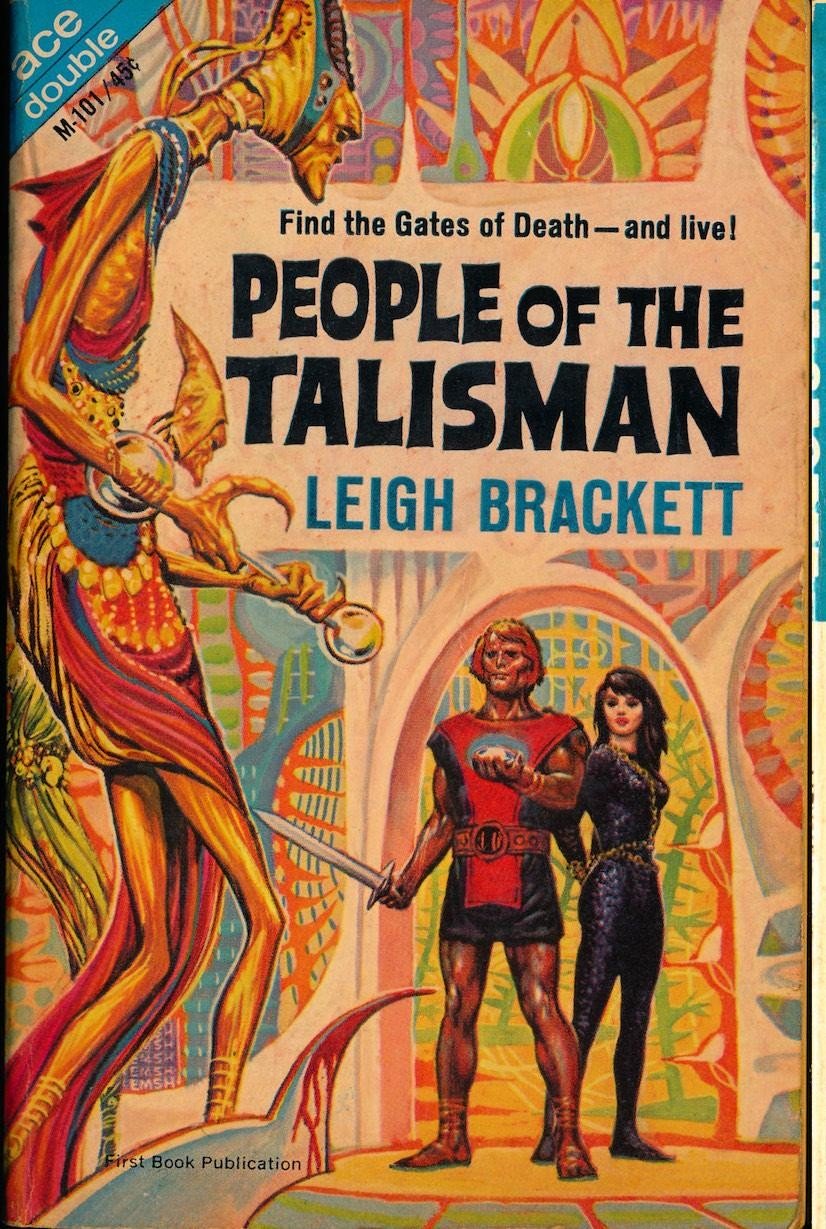
...five figures had appeared in the street. ...They were very tall, these figures, towering over the people of Kushat, towering even over Stark, but they were excessively slender and they moved with swaying motion like reeds before the wind... queer tall caps...exaggerated their elongated narrow skulls... a structure of facial bones that seemed to be all brow and jaw with little in between but two great round eyes like dark moons...
That decided the issue for me on first reading and ever since.
Stid: But perhaps you were hasty in shutting off your attention from this issue after that one first impression. One could argue to a different conclusion from a passage a few pages further on:
...Thanis said furiously, "Ban Cruach would never have promised his help to these monsters."
"That was a long time ago," Stark said. "I doubt that they were monsters then..."
Given a modicum of ingenuity you could interpret this as a hint that the oddities of these elongated people are the result of age-long evolution away from the human norm, which means they could still count as a basically human tribe, isolated rather than alien.
Zendexor: I could indeed argue thus, but I would not. That's not to deny that your citation is worth thinking about; but one must assess the total effect of Brackett's depiction of the folk who live beyond the "Gates of Death", her portrayal of their mentality, and the way they move, and the spooky part they play in the story; and at the end of it all I come back to saying that they are real non-human Martians.
One last point: it's certainly interesting to learn that in the original tale Phobos was imagined as sufficiently ample to contain "harried tribes"! Very carefree writing, as LW points out. Any chance of justifying the idea logically? Using one's excuse-making power at full strength one might envisage a special short-range gravitational force (an idea I've used in some of my own stories) which operates only close to the surface of small worlds, undetectable at greater distances, and thus resulting in cases of surprising habitability...
That would help explain conditions on the asteroid Iskar.
2020 March 6th:
WINTER BLUES ON SATURN
On page 35 of the Astronomy Now publication, Saturn: Exploring the Ringed Planet (2015), is a picture with the caption:
Winter is coming. Taken by Cassini on 29 July 2013, this view of Saturn shows the planet's southern polar region, growing blue as winter approaches and temperatures plunge to -172 degrees Celsius, while the north enjoys summer, such as it is...
I tried scanning it but the colours don't come out at all well. I found a better one online, and have posted it here. You can see the contrasting seasonal colours in the two hemispheres.
Now, this to me is a striking example of a possible "OSS echo". It's
almost inviting an author to write a tale of the Captain Future variety
in which a habitable Saturn has cloud-tops which look bluer in winter!
It's as though poor old reality makes occasional halting steps towards an imitation of picturesque fiction. In my view it's worth keeping an eye out for such correspondences between the dreamlike and the actual, even if their relations with the real are as tenuous as they are here.
After all, we live in a rather retarded, special-needs solar system, and when, every now and then, it does seem to dodder in the right direction, we ought to show we appreciate the effort...
2026 February 28th:
DOWN WITH MISSION CONTROL
In a recent exchange of emails with the anomymous researcher "Lone Wolf" who contributes so many Guess The World scenes to this site, I found these remarks of his quite irresistible:
The “happy-go-lucky exploration”, as you call it, is my favourite type of those old time interplanetary adventure stories, especially when it is about secret inventions of private researchers, which made possible travels to other worlds of single individuals or at the most – small groups of private persons, that remain unknown or hidden from the general public (such as H.G. Wells' First Men in the Moon, G.P. Serviss' A Columbus of Space, G. Griffith's A Honeymoon in Space, C.S. Lewis' Out of the Silent Planet or J.W. Campbell's stories about Blake and Penton, etc.), – stories that are without fanfares and glory or pompous heroic stuff about expeditions seen and celebrated from all the world, not to mention such modern things like telemetry and other practices that expose the person to total monitoring by the “mission control”, deprive him of any privacy and make him more a machine or instrument than a man. That's why the old kind of secret adventures, which happen as if in a private world, have always had a special fascination for me...
Me too... though I also like the nostalgia of more public fictional enterprises in the old space program. And granted,
of course, that in real life the crew of Apollo 13 (to take the most
obvious example) had every reason to be grateful to Mission Control...
Of course, both in fiction and in real life, the
further from Earth people go, the less there can be a "mission
control" in any close or immediate sense - unless someone discovers a way to beat the light-speed in communications!
Another point in favour of adventure is the sheer number of possiblle
destinations. Even if the Solar System were to fall under a tyranny,
it's hard to believe that every landscape of every world and planetoid
could possibly be under regular surveillance. Even if everything could in principle be monitored, how could the monitors keep up?
2026 January 31st:
DARE-DEVIL WORLD-BUILDING
A
phrase which has stayed in my mind over the decades is, "a more
practical civilization". Not, you might think, a resonantly romantic or
adventurous idea. Yet it has impressed me for over half a century.
Here is the long sentence in which it occurs:
...During
the ages of hardships and incessant warring between their own various
races, as well as with the green men, and before they had fitted
themselves to the changed conditions, much of the high civilization and
many of the arts of the fair-haired Martians had become lost; but the
red race of today has reached a point where it feels that it has made up
in new discoveries and in a more practical civilization for all that
lies irretrievably buried with the ancient Barsoomians beneath the
countless intervening ages.
This excerpt from chapter XI of A Princess of Mars (note the magnificent sentence structure) might prompt the retort, "Are you sure, Mr Burroughs, that the modern culture of the red men of Barsoom
is all that practical? If they were practical wouldn't they have
surveyed their planet properly by now - they've had long enough in which
to do it - so that it wouldn't be left till recently to discover the
kaldanes, for example, or the Panars, or the secret valley of Kamtol?
And is it practical to have a political system which allows a jeddak
like Tul Axtar to rule untrammelled? And what about space travel - if
Gar Nal and Fal Sivas can both build spacecraft, why hasn't it caught on
before now?"
A fair enough demur, but it misses the point I'm aiming at. Still, first, regarding inconsistencies -
Edgar Rice Burroughs
wrote so much, I reckon it's a fair guess that he wrote at speed, and
without a lot of hesitation or planning. This meant some inconsistency
was bound to creep in, but, on the other hand, spontaneity had the good
effect that what poured up through the channel of his imagination was
allowed to flow free, without those rationalisations that can kill the
immediacy of the vision. (And of course it's a darned good thing, from the plotting point of view, that the Barsoomians hadn't carried out any exhaustive planetary surveys.)
A consequence of this ad hoc spontaneous approach was that the author could successfully take a risk without even knowing that he was doing
so, like a daredevil teenager showing off his bike-riding skills
instinctively for the sheer heck of it without even bothering to boast
"Look, no hands!" And this is where the "practical civilization" remark
comes in.
Barsoom, wonderfully, is not a decline-scenario,
despite the fact the world is slowing dying through the leakage of its
atmosphere. Burroughs, in making it clear that that the red men's
culture is healthily vibrant, confident and creative, is thus daring to forgo all the narrative advantages of (for example) the Brackett
Mars, which is culturally as well as physically on the wane. "Look, no
hands!" The equivalent here being, "Look, I can make my tale
picturesque without resorting to the autumnal tints of declinism!"
And the reward for dispensing with those autumn tints - which though pretty do tend to accumulate an atmosphere of gloom - is the creation of a unique version of sword-and-planet Mars: the only one, so far as I know, that so successfully embodies exuberant adventure.
2026 January 29th:
CONSPIRACIES GALORE
My mysterious pen-friend and anonymous researcher Lone Wolf has sent me links to a couple of tales by Ben Bova, a post-OSS author whom I haven't much read or enjoyed - I read one of his blockbusters and gave it back to the shop - but who evidently can delight me, as I hope these little gems delight you; here are links to them:
and
The Great Moon Hoax, or A Princess of Mars.
Playful explorations, these, of the theme which John Greer treated so successfully, and rather more seriously, in Out of the Chattering Planet
- namely, that the old ideas of an inhabited Solar System were true,
and that the modern probe results which seem to disprove them are
spurious.
Playful, yes, but lending a frisson of wonder to those readers who might in some circumstances be tempted to believe...
In Greer's version [spoiler alert], the deception is
carried out by the Martians themselves, who reverse-engineer the Terran
probes so as to transmit false data back to us. In the Bova versions, although the motive comes from the Martians the execution of the plot is
controlled by authorities on Earth, who agree that the Red Planet ought to
be left untouched for a while.
I would add that you could have another version of the conspiracy:
How about bringing in all the ludicrous claims that the Apollo
landings were faked? A story might be composed in which it's suggested that those who accuse the authorities of this cover-up are actually themselves conspiring: it is these private organizations, not governments, who are in league with the Martians who wish to
discredit Terran attempts at space travel. I suppose the reverse-engineering theme would have to be abandoned - but the Martians might be invisible, or something... I don't know; you work it out.
2026 January 24th:
A HANDY EXCUSE
Often have I stressed the point that OSS literature is full of "nods" to
science; perfunctory-but-essential references made in order to keep up
the bare, vital minimum suspension of disbelief. The "nods" are what
keeps "science fantasy" from being, simply, "fantasy". They are, in a
sense, incantations; they "cast the
spell of science" (paradoxical though this sounds) in the form of mood.
It's the mood that's convincing,
not the science, and yet - if psychology is a science, perhaps it is in
a way scientific after all!
Now, see if you can spot what struck me as the important "nod" in the following passage.
Something
in the very name of Pluto; something in the thought of this forlorn
ninth member of the Solar System took an irresistible hold upon his
imagination, and for days he seemed able to talk about little else.
“Think of this strange, strange world!” he would exclaim, while slowly
he would pace up and down the room and stroke his chin as though
weighing some momentous problem. “Think of it a billion miles or so
beyond Neptune, a globe perhaps no larger than the earth, lost in the
blackness of the outer void, its years longer than our centuries,
its seasons longer than our lives! What stories it would be able to
tell! Are there any living creatures there? Were any living beings ever
able to endure the terror of its sunless,
frozen
plains? Would we find the imprint of lost races upon its shores?—races
that flourished while the planet was heated from within, but that have
long ago fallen in the struggle with the cold?
“Just consider, Dan!—consider the scientific value of exploring such a
world. May not its geological strata hold the secret of evolution? yes,
the secret of the evolution of the universe? May we not, after
journeying there, be able to propound a new nebular hypothesis? May we
not even
have won the key to the Ultimate?”
- Stanton A Coblentz, Into Plutonian Depths (Wonder Stories Quarterly, Spring 1931)
You
saw it, didn't you? I'm sure you did: it's the handy assumption that
any frozen world enjoyed an early period when it was heated from within, and could
thus have been habitable.
Never mind the question, whether there
could have been enough time, way out at Pluto's distance, for life to
evolve while the planet had not yet completed its cooling. "Nods", that's to say OSS-style-scientific-mood-excuses, are immune to quantification.
That's how they work, and even reputedly hard-science-sf authors take advantage of the principle now and then. Consider the following couple of masterpieces, each a favourite of mine: Arthur C Clarke in The City and the Stars has Earth's last city, Diaspar, existing a billion years in the future, despite the scientific consensus that the Sun by that time will have heated up enough to make Earth uninhabitable (current thinking gives us only about 500 million years); and even more strikingly, Fred Hoyle in Fifth Planet has a star brighter than the Sun approach close to our Solar System in the year 2087, close enough for its planets to be reachable by interplanetary rocket, despite the obvious fact that such an intruder would have been spotted long before now as an already brilliant light in the sky.
In the case of Coblentz's theme, the pay-off is potentially immense.
Think of all those ice-worlds in the outer Solar System, now open to fictional exploitation by means of the "nod" in the above passage; think of the secrets they hold, or will hold once you fictioneers get going...
2026 January 20th:
THE POWER OF BLANK
Here's a riddle for you: what is the connection between Lancaster Castle and the fictional Solar System?
You may suspect that I'm just going to make the vague point that all big things are linked; that the sort of person who likes reading history will also have a big enough imagination to like to rove in the immensities of fictional space.
All that is true enough, but isn't quite what I have in mind to talk about today.
I'm serious about the riddle. Can you connect a medieval castle and the OSS?
Read on...
Today I attained the age of 72, and my wife Mary took
me out to our local historic town for an expenses-paid browse amongst Astronomy magazines and books, before our return home for a special meal. It's
always pleasant to visit Lancaster, only a few miles by train or bus
from our home in Heysham, and this time as we took the train we passed the Castle on our way from the station to the town centre.
Lancaster Castle is medieval, but lacks the drama of a violent medieval history (unless you count executions),
though later it was attacked more than once in the 1640s during the Civil War. Its record therefore doesn't match that of Carlisle Castle 66 miles to the north, which can boast of having
repelled an attack by Robert the Bruce in person in 1315. Mostly, I
suspect, Lancaster was too strong to acquire such renown; enemies took a look at it and decided not to bother...
Might we even conclude that a really impregnable, totally effective castle would have no history at all? It would keep the peace and protect the people, allowing authors to live in safe conditions where they could create their own histories...
And what about an empty-of-life Solar System? Need we grumble, as I
often do, about how it has failed to live up to fiction? Or -
Could we say that its blankness is all the more effective as an
imagination-trap, like fly-paper, attracting an infinity of ideas by that very barrenness which invites authors to fill it?
Zendexor greatly appreciates your donation of £2! Thank you.
Recent Articles and Updates


-
Guess The World - Seventh Series
Oct 08, 26 03:37 PM
 Yet more scenes from Solar System worlds
 -
Haunted Worlds - Fictional auras of places on Earth, the Moon and Mars
Oct 08, 26 03:15 PM
 The double life of our place-names
 -
Deeds of the Creators
Oct 08, 26 02:48 PM
 in addition to expanding our consciousness
 -
Fictional Dates of the Old Solar System
Oct 07, 26 12:33 PM
 our timeline extended into imagined pasts and futures
 -
Uranian Throne episode 24 Underway
Oct 07, 26 08:38 AM
 The skyfleet sails into Fyaym
 -
Guess The World - how many scenes on each world
Oct 05, 26 06:09 AM
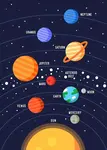 how each world is doing on the scenic front
 -
What to see on Jupiter
Oct 05, 26 05:58 AM
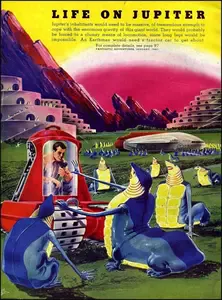 The Jovian scene
 -
History of Hopes
Oct 03, 26 10:46 AM
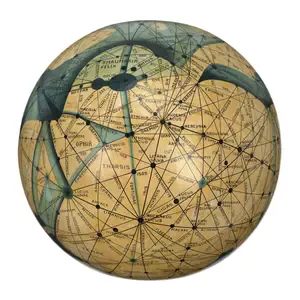 Optimistic science and speculation
 -
the hits race
Oct 01, 26 10:37 AM
 the monthly popularity-contest for worlds
 -
Countries
Sep 30, 26 12:56 PM
 Supplementary Gazetteer for countries in sf scenes
 -
Zendexor's OSS Diary 2026
Sep 29, 26 03:19 PM
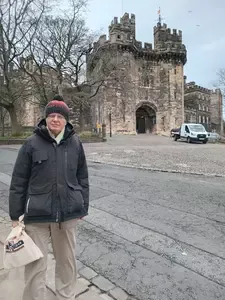 reflections on life, the oss and everything
 -
Eras, Periods and Epochs
Sep 28, 26 02:01 PM
 The ages of deep time
 -
Uranian Throne - index of proper names
Sep 28, 26 12:43 PM
the people and places of Ooranye -
What to see on Titan
Sep 28, 26 05:16 AM
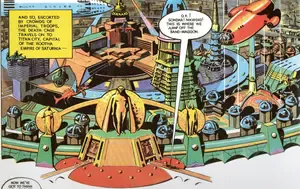 The Titanic scene
 -
What to see on Callisto
Sep 26, 26 04:11 AM
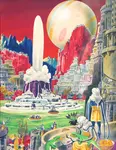 The Callistan scene
 -
Artists who have illustrated the Old Solar System
Sep 22, 26 12:53 PM
 visual depictions of the OSS
 -
What to see on Mars
Sep 21, 26 03:40 AM
 The Martian Scene
 -
Authors of the Old Solar System
Sep 18, 26 01:09 PM
authors who have contributed to the old solar system -
What to see on the Moon
Sep 18, 26 04:05 AM
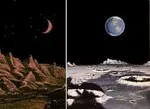 The lunar scene
 -
What to see on Venus
Sep 14, 26 02:01 AM
 The Venusian scene
 -
What to see on Phobos
Sep 07, 26 05:36 AM
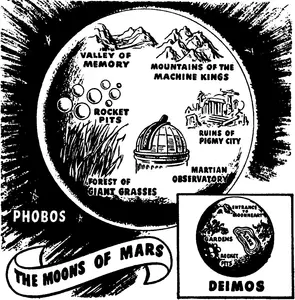 the scene on the inner moon of Mars
 -
CLUFFS
Sep 06, 26 11:33 AM
 CLUFFS - Cute Little Unfulfilled Fragments of Fascination
 -
Idea for another site - The Stellar Neighbourhood
Sep 06, 26 11:10 AM
 the named or designated stars that appear in literature
 -
What to see on the Asteroid Progenitor Planet
Sep 03, 26 09:18 AM
 The Lost Planet scene
 -
Jasoomian Gathol
Aug 22, 26 08:40 AM
 dreams and themes from an island
 -
What to see on Uranus
Aug 17, 26 03:12 AM
 The Uranian scene
 -
Future Dates for Real
Aug 12, 26 02:39 PM
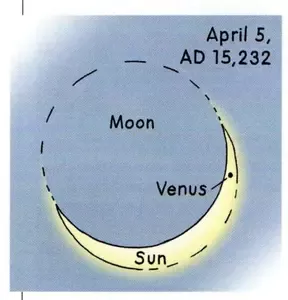 prophecies which are quite certain
 -
What to see on Mercury
Aug 11, 26 07:51 AM
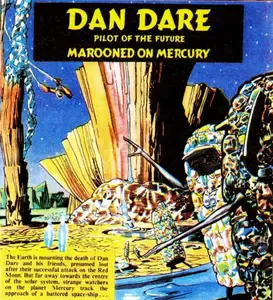 The Mercurian scene