guess the world -
seventh series
entries 601 - 700
[ + links to : the other Guess The World pages - Guess The World scene-counts - Guidelines for contributors]
2026 October 8th:
…Armies of biologists could have spent lifetimes studying one small oasis. Unlike the Palaeozoic terrestrial seas, the [..........] abyss was not a stable environment, so evolution had progressed with astonishing speed, producing multitudes of fantastic forms. And all were under the same indefinite stay of execution; sooner or later, each fountain of life would weaken and die, as the forces that powered it moved their focus elsewhere. All across the [..........] sea-bed was evidence of such tragedies; countless circular areas were littered with the skeletons and mineral-encrusted remains of dead creatures, where entire chapters of evolution had been deleted from the book of life. Some had left as their only memorial huge, empty shells like convoluted trumpets, larger than a man. And there were clams of many shapes – bivalves, and even trivalves, as well as spiral stone patterns… exactly like the beautiful ammonites that disappeared so mysteriously from Earth’s oceans at the end of the Cretaceous Period…
2026 October 4th:
[..........], although still an astronomical distance away, now
filled Rex's window with its stupendous mass; and as, inexorably, the Spacemaster
was drawn towards it at mounting velocity the details began to emerge, as on
Earth a landscape will materialize from dawn-mist cleared by the sun.
To
say that it presented a dreadful spectacle would be to say little. Clearly,
now, it could be seen that the colossal planet was literally on fire; not so
much blazing as smouldering; and a burning world is not a thing to be imagined
by puny mortals.
From gaping cracks and craters, like bleeding wounds, poured
streams of molten rock and metal to form pools which, undermining the tottering
crags around, brought them down into the cauldron with a splash that for a
moment hid the scene in a blaze of light that hurt the eyes. In a flash a
million tons of rock became a cinder, to vanish in a wisp of gas.
Everywhere rolled clouds of smoke on which were reflected
the lurid colours of the fury beneath. Tongues of flame licked high, to die,
writhing, and reappear elsewhere. Comets, born in the elemental holocaust, were
fired into space by forces beyond human comprehension; some to mark their
course with a blinding wake of meteors or incandescent nebulosity. One such
horror passed within a few miles of the Spacemaster, causing it to spin
and rock and filling the cabin with such heat that faces streamed perspiration
which, condensing, fogged the windows.
Outside the circumference of the great planet, held in the
invisible but unbreakable embrace of gravity, swung its satellite moons, which
Vargo had said were being slowly sucked into the relentless vortex. Not only
those that had been seen from observatories on Earth, but scores of smaller
ones. Those nearest were already glowing red with heat. The outer ones were
smoking, leaving trails to mark their shrinking orbits...
entry 670 [contributed by Lone Wolf]
2026 September 27th:
He
was weak and dizzy; his body bathed in cold sweat. For another minute
he closed his eyes and she went on silently sponging his head. He
remembered now, vaguely, that he had been conscious enough to realize
that he had been dragged here by the weird red-haired animals. It had
evidently not been far. Dimly he seemed to recall that they had
plunged underground, where there were phosphorescent rocks to light
up the subterranean passages with an eerie glow.
He
opened his eyes again. He could see that phosphorescent glow through
the window-openings here. He was in a room—a little grotto with
tattered, faded fabric drapes on its walls, a rug on its floor. And
two or three pieces of weird-looking, old-fashioned earth-style
furniture.
(…)
…
He
was gazing through the glowing window-opening of the cave-room. There
was vegetation outside. It was like a great lush subterranean forest.
Gnarled, fantastic-shaped trees with bluish vines lacing them
together. Huge pods hung on them, and monstrous pallid flowers that
opened and closed their petals rhythmically as though breathing.
Gruesome
damn things. Morgan was about to ask if what looked like vegetation
here might not be more animal than vegetable, when suddenly his
attention was caught by a little round red thing that was on the
ledge of the rocky window-opening. It was no bigger than the end of
his finger—a round, glistening, red-shelled thing with jointed legs
protruding from it. Tiny antenna were weaving in front of its single
eye, which seemed glaring at him balefully.
He
made a startled gesture. "What the devil is that?" he
demanded.
Nada
smiled. "One of our insects. Father used to call them rollers.
He said on earth you'd consider them of the ant family. They're
remarkable little things. Well, I guess you'd say that about earth
ants, too, wouldn't you? Terribly strong for their size, with a nasty
bite. They build their own houses. They're highly organized, with
workers and leaders, and their own armies."
"And
you can talk to them, too?" Morgan muttered.
"Well,
no," she said. "Not exactly. But Cah seems to be able to
make them understand."
The
little red-shelled, ball-like thing on the window ledge suddenly
hitched out a leg and rolled itself backward; then picked itself up
and scurried away like a tiny round crab.
"Well,"
Morgan said, "your father's theories, here on [..........]—"
A
sudden distant growl made him check himself. It was outside; muttered
growls, growing louder. He stared inquiringly at Nada.
"The
goths," she murmured. "Something wrong?"
They
came in a moment; two of the weird, round-headed animals, dragging
something between them. In the background a pack of the others
lurked, shaggy red blobs half hidden by the fantastic tangle of
vines, their peering eyes like little lanterns among the foliage and
the pallid flowers...
entry 669 [contributed by Lone Wolf]
2026 September 25th:
...The Great Plains of Haratha are aptly named. From the inland sea of Sanmur Laj in the
remote west to the Black Mountains of the far east, they dominate the southern
half of this Jungle Moon…
…the plains stretch, league after
league of desolate prairie whose long grasses sigh and whisper beneath the
winds. But by no means are the Great Plains
of Haratha unbroken flatlands, for here and there, like miniature islands
amidst an ocean, small clumps of trees break the monotony of the prairie. Generally, these are jaruka trees, which,
with their gnarled and knotted black trunks and branches and thick growth of
uncanny scarlet foliage, are the most common arboreal flora of the Jungle Moon…
entry 668 [contributed by Zendexor]
2026 September 20th:
From
an altitude of a few miles he looked down on a picture for which he
could muster no enthusiasm; for as far as it was possible to see the
surface of the planet was one vast plain, creating an impression of
monotony almost beyond belief. Nine-tenths of it, he estimated, was
desert, flat, sterile, hopeless. The remaining part within his view
was a broad band of green that ran as straight as a railway line
across the landscape to where, in the far distance, it was crossed at
right angles by another. Along this unnatural line, spaced at
intervals, were light-coloured patches that looked as if they might
be towns of some size. He could think of nothing else they could be.
He thought he could discern similar marks out in the desert, too. The
Professor had been right, he decided. This strange arrangement was
not the work of nature.
As
the Spacemaster dropped nearer the picture became intensified,
but yielded no further information. Nothing moved. Anywhere. Nothing,
large or small. If the green belt was grass, and that was what it
looked like, it supported no grazing animals.
“I'm
going to look closer at the canals,” announced the Professor.
The
Spacemaster went down until it was hovering at about fifty
feet.
“Grass,”
said Rex.
“No,
reeds,” contended Tiger.
“It
looks to me very much like an ordinary marsh,” said the Professor.
“There's water there or the growth wouldn't be as green as that.
What have we over here?” He took the ship some way out into the
desert and brought it to a stop, still hovering over what was
unmistakably a town. From above, it appeared not unlike one of the
desert towns of Arabia. There were no trees. Not one. There was a
little scrub in the nature of camel-thorn. But there was no movement
of any sort. No smoke from the chimneys. It was clear that the place
was no longer inhabited.
(...)
… It
so happened, too, that at this moment his eyes wandered on down a
street that ended at the canal. He could see the green of it. He
moved his position and looked again, for he had seen something else.
Hanging over the canal was a curious brown mist. Was this, he
wondered, one of the supposed desert storms that had been observed
from Earth? Or locusts? He knew they moved in swarms of millions. For
a moment longer he stared at the cloud, which seemed to be rising
higher. Then the truth struck him. “Good heavens!” he cried.
“Look at the mosquitoes rising from that bog! Did you ever see
anything like that?” Even then he wasn't conscious of any immediate
danger.
“Where?”
asked Tiger urgently.
Rex
pointed.
Tiger
looked. “Unholy smoke!” he exclaimed. Then his voice rose
sharply. “That's it! Mosquitoes! And by the billion by the look of
it. They're coming this way. Let's get out of this. There are enough
to swamp us, even if they can't eat us through our suits.”
(…)
They
hurried on. Looking back Rex saw that the air was now so full of
insects that the Sun was dimmed. An unnatural twilight had fallen.
The Sun itself was an evil-looking brown ball. The leading swarms had
reached the city and were dropping into it, apparently in search of
food. A thrill of horror swept over him as he realized that against
such an attack the few surviving [..........] could do nothing. Day
after day their strength was being sapped by an enemy they were
powerless to resist. Knowing it, they had abandoned themselves to
their fate...
entry 667 [contributed by Lone Wolf]
2026 September 17th:
[..........] was an old, well-worn environment favoured by the wealthy and successful. Everything there seemed to be hundreds of years old. The sun-burnished towns and cities were luxuriously ancient, built in a rococo style fashionable half a millennium ago, and the planet’s dry, dead surface was criss-crossed with an antiquated tracked transport system…
entry 666 [contributed by Zendexor]
2026 September 14th:
…Inwardly he cursed every atom of every Kwang in the
Universe. Never in his life had he known a more peculiar race of people. They
had the intelligence of a moron — but the strength of twenty men…
[..........] is a world of phenomenal monsters. The Kwang,
nearest thing to human form on [..........], live in constant fear of their
existence because of the roving killers on their world. Because of this, nature
has provided them with a means of defense. Their highly unintelligent minds
possess the phenomenal ability to create “illusions.” When a Kwang is attacked
by one of the monsters on his home world, he becomes so hysterical in his fear
that he creates a mental monster. This nonexistent creature actually appears
to live and breathe. When the real [..........] creature sees this illusion as one of
its own kind about to attack, it retreats. The Kwang then has time to gain
safety. This ability of the [..........] Kwang to create seemingly real “illusions”
is comparable to the human “mirage.” Only much more effective…
entry 665 [contributed by Zendexor]
2026 September 13th:
...Behind the thick pall of cloud that had hidden her for so
long [..........] was a world – and what a world! It was not fair, pleasant, smiling
land, with cool rivers sweeping into sparkling seas under clean, sun-washed
air. For as far as he could see, through a dull misty gloom, it was flat,
waterlogged swamp; a bog with pools of stagnant, weed-choked water, from which
arose a miasma of steaming mist to deepen the indigo curtain overhead, a
blanket of vapour which no ray of sunlight pierced. No need to wonder any
longer why the clouds were there, thought Rex.
The trouble seemed to be, the ground was too flat, so that
the water, having no fall in any direction, no sea in which to drain, could
only be disposed of by evaporation. (…)
From out of the primeval slime that bordered the pools
sprang a jungle of vegetation that was obviously engaged in a desperate
struggle for supremacy. Rising from great reeds and masses of moss, tall palms
and giant tree ferns, bursting their fronds in the air like green rockets,
appeared to be winning, although even they were often dragged down by the
weight of creepers which clutched at them in their efforts to reach the air.
All in all it was a scene of hopeless confusion, an emerald green nightmare.
Here and there through it ran lanes where everything had been crushed flat as
if by the passage of a steamroller. And as he stared, wondering what could have
caused this, Rex saw the answer. Down one of them, crushing or pushing
everything aside under its colossal weight, came a creature of such enormous
size that he found it hard to believe his eyes. (…)
“A dinosaur! A living dinosaur, by all that's marvellous!”
declared the Professor in high pitched voice that revealed his excitement.
“Isn't it magnificent? (…) I fancy this fellow below is Brontosaurus
excelsus – a vegetarian.”
(…)
The source of the mysterious barks was now revealed. From a
belt of trees that ran far out into the mire, barking and yelping came a mob of
creatures of a very different type. Indeed, so different were they, and so
unexpected, that at first sight of them everyone sprang to his feet. Rex
instinctively began to back away towards the ship.
“Keep still!” ordered the Professor curtly. “If we keep
still they may not see us. We must watch this.”
Rex notice that he offered no explanation of what the
creatures were, perhaps assuming that this would be understood. To him they
looked uncommonly like men, very big men, men or apes, covered with either hair
or mud; it was impossible from the distance to tell which. From the fact that
they carried clubs he decided that they must be something more than apes, and
therefore, as creatures of some intelligence, to be more feared than the
monsters. Apparently the megalosaurus knew this, for it broke off its gory
repast to stare at the barking, snarling figures, running and leaping towards
it. The pterodactyls rose in a cloud, wings clashing, but the megalosaurus
stood its ground, turning with jaws wide open to face those who would deprive
him of its prey – for that, clearly, was the intention of the newcomers. This
brave front did not last long. Yelping like mad dogs the apemen assailed it
from all sides, hurling rocks so thickly that the air was full of them. This
was too much for the megalosaurus. Roaring with rage it began to back towards
the water, whereupon the apemen rushed upon the now dead brontosaurus and tore
at it like wolves.
“Observe our ancestors before they learned table manners.”
said the Professor quietly. “Could you imagine a picture of such bestial ferocity.
In my papers I shall devote a chapter to this enlightening incident. A most
wonderful experience, don't you think?”
entry 664 [contributed by Lone Wolf]
2026 September 11th:
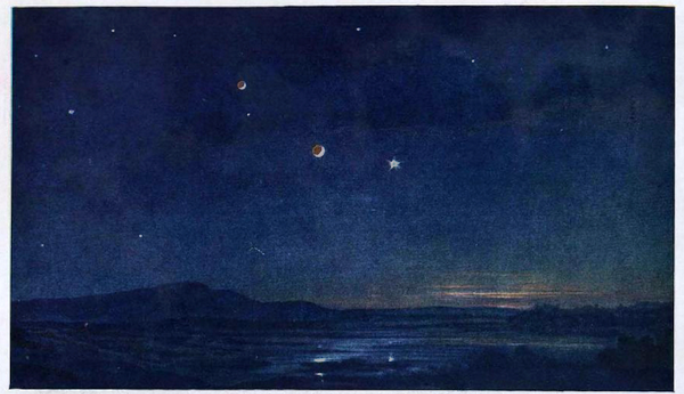
entry 663 [contributed by Zendexor]
2026 September 6th:
... The little globe of [..........], looking more and more like
a miniature moon without its craters, drew near. The Professor turned the Spacemaster
and began to check the fall. Watching, Rex thought he saw the “harbour” for
which the Professor was making – a flat, sandy-looking basin surrounded by low
rounded hills, destitute of any forms of vegetation. But as he stared he saw something
else, something that caused him to take a new interest. “I can see houses!” he
cried.
For a minute no one answered. Then Tiger said: “I can see
what you mean, and they do look like dwellings of a sort.”
“Probably just curious rock formations,” interposed the
Professor. “If they were houses the people would be out by now, to look at us.”
“If there were any people to come out,” said Tiger. “The
existence of dwellings doesn't necessarily mean they're occupied.”
In a rising atmosphere of excitement the Spacemaster
continued its descent until it must have been evident to all that there was a
village in the hollow. But there was still no sign of life.
A few minutes later, with dust swirling away from its jets,
the landing legs of the Spacemaster grated in the sand some fifty yards
or so from the nearest houses. They were small square structures, the same
colour as the hills, with open doors and square windows.
(…)
The Professor proceeded to the doorway. There was no actual
door. He went in and the others followed, to find themselves in a small square
room with an earth floor. There were three articles of furniture; a bed, a
table and a chair. All were fashioned in the same way and of the same material;
coarse plaited rushes. Several earthenware pots of simple design stood on the
floor.
“Now what are we to make of this?” murmured the Professor.
“Observe, there is no wood anywhere. Obviously they had no wood, or it would
have been used. You may say, neither they had any rushes, for rushes need
water, and there is certainly no water on [..........]. Very well. The answer must
be, the rushes, or the pieces of furniture already fabricated, must have come
from Mars. (…)”
(…)
The next house revealed the same furniture. So did the next,
and the next.
“What did these people use for food?” asked Tiger. “There is
obviously none here.”
“There may have been some at one time, when there was air,
although that must have been a long time ago,” replied the Professor. “As I read
the story these people died of starvation, and that must have been before the
air disappeared entirely. They may have been supplied with food from Mars for a
time, but when supplies ended, as obviously they did, the people here perished.
Impossible though it may seem now, in view of what we can see, there must have
been a time when life on [..........] was possible, or this settlement could never
have come into existence. The conditions are not very unlike those we found on
our own Moon, but the Moon being so much larger, life lingered on. [..........] is
finished, and, as I believe, our own Moon is on its way to final extinction.”
entry 662 [contributed by Lone Wolf]
2026 September 3rd:
… And Gleason is a resourceful collector. We didn't even
know wobblies existed on [.......] until he hoisted three adult specimens out of a
mountain crevice, and sent me that space-ogram.
(...)
"How many times must I tell you that wobblies are not
flesh-eaters," he said chokily. "They hurl nettles to protect
themselves from their natural enemies, but otherwise they're harmless. When
Gleason observed them on the mountains he took copious notes. They're freakish,
but harmless perambulating plants."
(…)
...Hideously manlike they seemed, with their gray and
eroded-looking body-roots writhing against the sheets.
Tall they were, at least seven feet in height, and
proportionately broad of shoulder. The fact that they had three tendrils on
each side of their torso-like bodies in lieu of arms, and that they moved, when
erect, on stumpy legs which caused them to wobble grotesquely did not detract
from the illusion of humanness which their appearance conveyed.
Staggeringly weird they seemed when they used their nettles,
for the flabby sacks in which the prickly "strawberries" grew
resembled the belly pouches of kangaroos, and the nettles had to be plucked
out, and hurled. Jocularly, Gleason had called Carstairs' attention to the fact
that a wobbly with its tendril arm extended, and its body twisted sharply in
the act of hurling a nettle looked not unlike a pitcher in the old Earth game
called baseball.
(...)
Wobblies feast on a substance which is rare on [..........]. Being
perambulating plants, they have to suck it in from the nearly airless vacuum
which is [..........]'s atmosphere through their body roots, and it costs them a
tremendous effort. Ordinarily their blood pressure remains low because they
have adapted themselves to an environment in which nourishment is scarce…
…BENEATH him stretched the foothills of the mightiest
mountain range on [..........]. Coruscating in the light of brittle stars, they arose
precipitously from an ash-strewn plain, and though the smallest of them would
have dwarfed a full-fledged mountain on Earth they seemed of pygmy dimensions
when his gaze swept upward over the Gargantuan peaks beyond.
(…)
Carstairs looked down, his spine congealing. Sheer height,
when viewed from a solid structure, is seldom terrifying, but it is quite
otherwise when the observer is clinging to the thrumming struts of a circling
plane.
Beneath him yawned a dizzying gulf of emptiness, walled with
darkness and substructured with peaks which looked like stalactites in reverse,
each one of which seemed capable of impaling him, and rotating him in squirming
agony till the end of time.
"Maybe it wasn't such a good idea," he muttered
between clenched teeth, tightening his grip on the strut.
Down the plane swooped and down. It had ceased to descend
gracefully, had begun to gyrate. Like a wounded bladder-bird, it swooped to
right and left and quivered from beak to stern.
Carstairs' nerves were shrieking when it settled to the
ground in a deep gulch between two peaks and glided to a halt with a barely
perceptible jolt...
entry 661 [contributed by Lone Wolf]
2026 September 2nd:
The colossal marching images traverse a broad area toward the zones of eternal twilight and night. Crossing a sort of mountain-range, they descend toward a shadowed sea of dark purplish-red water. Strange lights glimmer far out in the sea, as if illumined in the under-surface depths—like the lights of a sunken city. When the colossi reach the shore, many monstrous and enormous beings emerge from the sea to meet them. These beings are perhaps images—perhaps living behemoths; and all indescribably terrible and evil. A battle ensues, in which the warrior and animal images vanquish the creatures from the dark sea. Most of these latter, however, are not destroyed but merely flee into the depths; and it seems that some power of sorcery or exorcism used by the white goddess has served greatly in defeating them. Hespire feels that the war he has witnessed is of immemorial origin and will go on until the annihilation of one or both armies of participants. (It is like a struggle between good and evil, between darkness and light?) It serves to deepen the unreadable mystery of Ascharia, which neither Hespire nor any earth-being can penetrate...
entry 660 [contributed by Zendexor]
2026 August 30th:
...The Professor beckoned, and at a curious bouncing gait began
to walk stiffly towards the nearest patch of green, some thirty or forty yards
away. Even before they reached it Rex saw that it was vegetation of a sort. So,
apparently, did the Professor, for he let out a little cry of delight. “Life”
he exclaimed. “How wonderful!”
At first sight there was nothing particularly wonderful
about it, thought Rex. But still, as the Professor had said, it was life; vegetable
life; and there was a world of difference between life, in a form no matter
how primitive, and death.
The growth turned out to be a low-growing, vicious-looking
form of cactus, each plant consisting of a small rosette of thick, stiff,
bayonet-like leaves, pointing outwards and upwards. Some of the plants bore a
small, vivid scarlet flower. Another, similar, fleshy plant, flat on the
ground, bore minute white flowers. They reminded Rex of a picture he had once
seen of plants growing in a desert somewhere – he couldn't remember where.
“A vegetable hedgehog”, said the Professor. “Notice how the
leaves shine. That means there's a varnish to save the water stored in them
from excessive evaporation. That form of protection is usual in desert
countries, and just what one could expect to find in these conditions. There
must be some water available, sometimes, even if it is only a very little at
rare intervals. This alone is a discovery of outstanding importance. Why those
horrid spines, I wonder? There are, of course another form of protection,
normally against grazing animals. But against what were they developed here?
Can there be something, a form of rodent perhaps, in these holes I see about?”
Rex had seen the holes. They might have been rat holes,
except that instead of entering the ground at an angle they seemed to plunge
straight down, with excavated earth piled neatly round the top. He also noticed
something else, something that gave instant weight to the Professor's
suggestion that the holes might have be the retreat of creatures of some sort.
Several of the plants had been nibbled. In one case the fibrous flesh was still
oozing sap, showing that the wound was recent. He pointed it out to the others.
Then, as his eyes roved over the scene he saw a movement; and there, sure
enough, was one of the creatures. The others saw it too, and with exclamations they
moved towards it, taking care not to step on the bristling plants; but just as
they drew near to it, although it moved slowly, it disappeared in one of the
holes. However, there had been time to have a good look at it, although had it
remained still, so much did the colour and texture of the skin resemble the
soil, it might easily have been overlooked.
Rex would have described the thing as an enormous worm. It
was not a snake; or at all events, not an ordinary snake. It didn't look like a
snake. For one thing it had no discernible head. It was nearly a yard long and
about three inches thick. Both ends tapered, and were apparently identical. In
fact, the only ways in which it differed from an ordinary worm were its size
and the coarse texture of its skin.
“Another adaptation to highly specialized conditions,” said
the Professor, in a voice vibrant with excitement. “My friends, the age-old
question is answered. There is life on [..........], both animal and vegetable.
What a splendid day we are having!”
entry 659 [contributed by Lone Wolf]
2026 August 23rd:
“Snapdragon?” echoed McGuire, blinking.
“Not the familiar garden perennial. Inspector, but a real
snapdragon — from [..........].” (…) On the curator’s outstretched palm a
perfectly formed little dragon sat placidly.
“It bears a striking resemblance to the traditional
conception of a dragon, doesn’t it?” Carstairs asked. “St. George’s dragon.”
“I’ll say it does !”
“The resemblance is entirely coincidental. By some freakish
twist of natural selection this hard-shelled, voracious plant has developed
dragon-like characteristics in its battle for survival on [..........].” (…) “It is
the product of a lush, tropical environment filled with beaked enemies — fling
catchers — capable of piercing a steel disk two inches thick. Like the fume
slugs. Snapdragon has learned how to protect itself. But instead of giving off
fumes, it has built up a protective shell to thwart its natural enemies,
extremely massive in front and curving out from its segmented body like the
wings of a dragon.
“You will notice that it has teeth-rimmed jaws. I would not
wish my worst enemy to receive a frontal assault from this agile little
monster, Inspector. In a very few minutes it could tear a man to
ribbons.” (…) Snapdragon comes from a world without oxygen. The soil
of [..........] is impregnated with nitrogen in a peculiar combination. Snapdragon
feasts on diazo compounds and nothing else; get it?”
“No,” stated McGuire bluntly.
“All right, put it this way. There isn’t much friction,
percussion or heat on [..........], so the soil doesn’t go off with a bang every
time Snapdragon feasts. But the entire upper crust of [..........] is a modified
diazo compound.”
entry 658 [contributed by Lone Wolf]
2026 August 16th:
It seemed only a moment before Carstairs felt all the life
leaving his hands. Vera’s pale face receded and he seemed to be grasping
emptiness, to be poised on the brink of a precipice that overhung a vast,
glimmering void. Although he seemed to be standing on a solid surface, his body
felt unnaturally buoyant. He was not even sure that he had a body. When he
looked down, all he could see was a wavering grayness where his legs should
have been. A fearful tension was growing within him, a sense of impending
disaster.
The long, squid-like shape emerged obscurely from shivering
haze. There was something about it which filled him with nightmare terror, but
irresistibly he was drawn toward it through the grayness. Gradually the
obscuring mist fell away. He saw that the shape was resting on a crater-pitted
plain that stretched out endlessly in all directions.
The thing was unmistakably squid-like, but there was a
suggestion of the human in its stare. There were waving tentacles up there. Two
limpid eyes gazed down at him out of wrinkled flesh. As Carstairs stared in
sick revulsion, a voice seemed to whisper in his brain:
“Thinking cap. On your head. I put it there.”
Carstairs knew then. The cups were mind cups of the
monstrous growth! His brain was throbbing with the plant’s own despairing
homesickness, its black and hopeless dreams of a [..........] landscape...
entry 657 [contributed by Lone Wolf]
2026 August 10th:
…
the cold blackened sun witnessed a spectacle that harkened back to its youth.
At the apex of slow-growing civilization, the culmination of aeons of material
and scientific advancement, men were again fighting with weapons little better
than the crude spears of primitive savages. Strange and deadly weapons had the
world known. Bows and arrows had supplanted swords, had in turn been replaced
by guns firing chemically propelled leaden pellets. And these, in turn, had
gone into oblivion before the immensely more deadly ray weapons. And these, to
complete the cycle, were useless without catalyte. So men trained in the
transcendent sciences issued out of the gates with blades with which to hack
other men’s bodies. Over it all, the glow of the burning Treasury streamed
silently, the funeral pyre of a dying civilization.
The palace guards, large, truculent
men, came on methodically. They wore armor of small, flexible, overlapping
plates, with conical helmets that had protective extensions over the backs of
their necks. They carried long, heavy swords with which they were wont to drive
through all opposition, all defensive armor.
The technics, with no protection
whatever, except their blades with which they parried blows with nice
precision, proved unexpected stern opposition...
entry 656 [contributed by Zendexor]
Note: from this point on (GTW 656) answers will be placed at the head of the appropriate "What to see on..." pages, instead of at the end.
2026 August 2nd:
…And then,
less than twenty miles from the far side of the sea, the steady throbbing of
our rockets was interrupted. The firing tubes began to stutter uncertainly. I
was with Captain Toft when the chief engineer rang through and reported that it
would be necessary to descend for repairs. The hasty glance which Toft gave through
the control dome windows told me that he had conceived the same distaste for
the locality as had the rest of us. He decided swiftly to make for the cliffs
now looming ahead at the sea’s edge. There could be no better landing surface
than the level, grey sand beneath us, but he preferred to stop near its
confines. With some anxiety, he inquired the extent of the failure, but was
told that this could not be ascertained while in flight. The Scintilla continued
to forge lamely ahead, gradually sinking. She took the sand at length some two
hundred yards from those high perpendicular cliffs which once had stood like
the ramparts of giants against a beating sea.
The Captain left the dome to
interview the engineer, and I made my way to the central saloon. A deal of
chatter greeted me as I opened the door. My colleagues were peering excitedly
at the cliffs; all signs of their depression had vanished. Robson, the leader
of the scientific side of the expedition, drew me forward and thrust a pair of
field glasses into my hands.
“Look at those cliffs, man. Just look
at them.”
I focused eagerly. The sand in the
immediate foreground was dotted with rocks of all sizes which had fallen from
the heights, and beyond them was a line of darkness which hid the cliff-face in
deep shadow. The meager, reflected light was just enough to show regular
markings of some kind. I fancied that I could make out the carved figure of a
man.
“Wait a minute,” cried Robson as he
turned and dashed from the room.
A moment later, a searchlight was
playing a flood of brilliance onto a scene which caused us to gasp
incredulously. The surface of the granite-like rock to the height of some
seventy or eighty feet was covered with carvings in high relief — an involved, ingenious
ordering of the figures of men, animals, and conventional forms. The first
astonished silence was succeeded by a babel of excited talk. Everyone spoke at
once, and no one listened. And no wonder; compared to this revelation, our earlier
discoveries dwindled to mere nothings. [..........]...
entry 655 [contributed by Zendexor]
2026 July 26th:
When the fifteenth day had arrived, [..........] showed a large
disc, and this grew rapidly larger. Then it became a huge ball on which
continents, seas, islands, rivers, and mountain ranges could easily be seen.
The propelling power was shut off on board all the ships, and the engines were
reversed. A few days later the whole of the fleet plunged into the atmosphere
of [..........] at a speed of some hundreds of miles an hour.
As soon as the speed was low enough, the hatchways were
opened and the men were allowed to go out on to the outer deck. Many of the
vessels bore on their exteriors the ghastly traces of the collision. Arms,
legs, strips of skin, and heads, often so burnt and bruised as to be hardly
recognisable, were hanging on to the torpedo-nets or wedged up between the rods
and wires. These were quickly removed, and the blood was washed away from the
windows and the other parts of the hulls where it had been splashed. The masts
were set up and flags run up on to them, so that the fleets might have as fine
an appearance as possible. The ships kept on rushing through the air at a great
speed, as was testified by the rate at which the objects beneath flashed past.
They careered over villages, towns, cities, and mountains, the admirals
carefully examining maps all the time to see their way to the
capital. When they passed over the great towns, they saw crowds of people
standing out in the open air and gazing up at the huge fleet, but they were
come and gone like a flash of lightning. At last a dull booming was heard in
the distance. The speed was slackened, and gradually the houses thickened
together and became more large and splendid. Everywhere, as far as the eye
could reach, the roads seemed to be converging together as if to some centre,
while numerous small craft plying about in the air announced the vicinity of a
great city. Then they crossed a ridge of mountains, and Makouffon, the capital
of [..........], lay stretched out at their feet, and in the distance the allied
fleets appeared anchored in lines within a few yards of the ground. The latter
fired a salute as soon as the fleet from the earth had come to a stop...
entry 654 [contributed by Lone Wolf]
2026 July 23rd:
TOM CLARK stared at the sword he held in his hand. It should
have been in a museum, for it was a rare specimen. The steel was bright and the
hilt was an example of workmanship in which the ancients had excelled.
It had been centuries since a sword had been used in battle.
But on this day, in the atmosphere plant which supplied oxygen to the great
quartz dome on [..........], a naked blade had
leaped and flashed, a weapon again. It was no longer a relic doomed to be
regarded with curiosity by a race that had forgotten its use.
The blade had belonged to Ben Jacobs, an heirloom which had
been handed down, in the name of sentiment, from father to son, for many
generations. Undoubtedly it was worth a small fortune, for the museums of the
Earth held only a few such weapons.
But now Ben Jacobs lay in a heap on the floor of the plant,
struck down by a burly Selenite.
To Jacobs the sword had been a symbol. He had carried it
from the Earth to this forsaken planet, where the only evidence of life was ten
huge domes of quartz set over as many mines…
…Tom lifted the sword again and ran his fingers along its
edge. They came away red and sticky.
He laughed grimly. The sword, ancient weapon as it may have
been, had another tale added to the long list which had started, said legends,
in the year 1815, in the Napoleonic Wars. For century upon century the blade
had been regarded as a heirloom, a thing of sentiment.
On this day, however, it had come again into its own. It had
leaped and flashed, bitten deeply into flesh and bone, drunk blood…
…“It’s those damn Martians,” Hal Eaton, young time keeper,
only six weeks from the Earth, had screamed as a huge Selenite struck him down
with a blow of his mighty pick.
Tom, jerking his atomic pistol from its holster, knew that
what young Eaton had just screamed was true. The Martians were the
trouble-makers and the traitors of the solar system. Once an insolent people,
who had regarded themselves as the most advanced in culture and erudition in
the universe, they still, even after hundreds of years, resented the bondage in
which it had been necessary to place them to curb their diabolic cunning and
haughty egotism. They were forever forming secret societies, always cooking up
local revolutions. Where there was trouble, one would usually find a scheming
Martian…
entry 653 [contributed, with some misgivings, by Zendexor]
2026 July 21st:
“...and now they were sending him to [..........], to take his place with those marooned, bestial outcasts of three planets whose luck had fallen down on them when they needed it. (…) Sometimes he thought of that living tomb ahead, where he must fight for food and shelter and life itself among the dregs of three planets — hairy brutes like himself from Earth and the Moon, tall gods without emotion from Venus, little fragile Martians that had run amuck under the strain of conditions on other planets than their own. Once, only once, police landed there to take off a man who had been pardoned, and it was nip and tuck for a while!”
entry 652 [contributed by Lone Wolf]
2026 July 19th:
...Bruce strove desperately to pierce the darkness that was
settling upon them at an alarming rate.
“What's happened to the sun? I can't see a thing anymore.”
His father was gazing awestruck at the sky.
“Bruce, it's an eclipse. An eclipse!”
“Not on [..........]!” Bruce cried. Even with a wild beast about
to leap at his throat, he could remember that much. “There can't be an eclipse
on [..........]. [..........] hasn't got a moon to make an eclipse.”
“Then what's going on up there?” his father demanded,
pointing overhead.
“It is an eclipse!” Bruce gasped.
Through a break in the clouds the sun had appeared as if by
magic. But what a sun! Instead of a bright shining disc there was only the
merest sliver of light. And that sliver was shrinking rapidly. Now but a single
gleaming point lingered, as if the sun were reluctant to be blotted out
completely. Then while they watched, the last bit of light vanished, plunging
the world in total darkness. Simultaneously, the pale corona flashed out around
the black disc of the [..........] moon.
So absorbed were they in the eclipse, they momentarily
forgot the peril which threatened them in the jungle. It was almost upon them
now. In their bewildered state, its heavy breathing seemed to come from all
directions. They were surrounded by it. Bruce felt a hot blast of air upon his
back. He spun around.
Facing him not five feet away was a monster such as he
supposed existed only in medieval folklore and legend. A monster with the head
of a dragon attached by a long neck to a bloated body set on thick, powerful
legs. And like a dragon, its mouth was dripping with fire. Liquid fire was
splashed over the creature's chest and forelegs – its entire body was covered
with glowing phosphorescent patches.
As Bruce raised his rifle to fire he got another shock. He
himself was all lighted up like a neon sign!
While Bruce stood staring at the apparition before him the
sky lightened. Through the driving clouds a brilliant crescent of sun appeared,
growing rapidly larger. The eclipse was over. It had lasted scarcely a minute.
The monster stood motionless regarding the two men with a
quizzical look in its eye. Its mouth turned up a little at the corners giving
its face a self-satisfied expression. After a brief inspection the animal
wagged its head, heaved a long sigh, and scooped up a mouthful of leaves. Bruce
noticed how the white sap, drooling from its mouth, left a trail of fire
wherever it dropped. So that was the source of the glowing marks upon his
clothes. The phosphorescent sap from the vine was not bright enough to show in
the ordinary dim twilight, but came out with startling luminosity during the
darkness of the eclipse...
entry 651 [contributed by Lone Wolf]
2026 July 17th:
[..........] was covered with rolling green plains, and seemed a peaceful,
inviting place. Yet Captain Future was
the only person in the whole system who ever dared to land on that
innocent-seeming world!
“There’s the [..........] city,” Curt
said soon, pointing. “Land just outside
it, Otho.”
“The queerest city in the System,”
growled Otho. “A city without buildings.”
“The [..........] are too far
advanced mentally to have need of material buildings,” commented the Brain in
his rasping voice, his lens-eyes peering keenly.
The [..........] “city” was nothing
but a great smooth metal platform of circular shape, several miles across. The Comet landed nearby. Curt and the Futuremen emerged, Grag carrying
the Brain. As they stood in the thin
sunlight, they became conscious of a tingling force pervading them.
“We’re inside the [..........] zone
of ‘creation force’!” warned Captain Future.
“Watch your thoughts!”
“That’s the devil of this place!”
complained Otho. “You think of something
like a Plutonian ice-tiger, and right away – ”
“Look out – you’ve done it now!” Curt
shouted.
For as Otho spoke the words, the very
beast he had mentioned appeared suddenly out of thin air beside him, miraculously
solid and real.
A Plutonian ice-tiger, a great,
hairy, snarling beast that reared up furiously to attack the android!
“Think him away, quick, Otho!” yelled Captain
Future. “Think him into something else!”
Desperately, Otho thought of the
snarling monster changing into a harmless rodent. And, immediately, the ice-tiger changed
miraculously into just such a scared little rodent...
entry 650 [contributed by Zendexor]
2026 July 14th:
[..........] subcellar gardens are startling to outsiders. In
the air was the bitter tang of narcotic incense. Smoke distorted vision.
Nightmarish fantasies of mobile murals in rich colors writhed on the walls. The
ceiling was an illusion of sky and stars, complete with intricacies of
celestial mechanics, and the flooring resembled grassy sward, set with
miniature pools and cool, gurgling streams, crossed by arching bridges of
carved and tined ivory. Singing birds and trilling winged serpents filled the
air with sound and motion. Luminous bubbles rose and burst above lighted,
musical fountains. Musicians toyed with the acrid melodies of ancient [..........],
and only close inspection proved the dancing girls 3-d projections.
It was a painstaking reproduction, pitiful and exquisite, of
the richly barbaric and luxuriant youth of a now-dying planet. To a [..........],
it would have been nostalgic and lovely. To Torry, fresh from the scent of
blood and death, it was a garish mockery, like a painted corpse.
(…)
Metallic decking became raw stone floor, and an endless
tunnel unwound before them. Torry lost all track of direction, even the primary
up and down. They went through underground workings like city streets lined
with open front factories. Gray, barren vistas of workrooms were relieved by
the stark symmetries of sleek machines, shielded atomic converters, and
patiently revolving turbines. Here was the marvelously efficient underground
economy of the old [..........] civilization, still functioning and serving the
remnants of a great race of builders and scientists.
On soaring cantilevered balconies and in alcoves, Torry
glimpsed cliff like structures of offices and dwellings. Giant compressors
labored to force a mighty pulse of breakable air—but the atmosphere was warm,
dry and stifling. Runnels of sweat ran down Torry's body and vanished in quick
evaporation; fever and exertion alternated in him; he blew hot and cold as
energy burned away too quickly, and as drying sweat produced intense, quick
chills. Temperatures dropped. Air seemed denser and was poisonously clouded
with dust, but it was cool. Slowly it became chill and depressing with a hint
of dampness in it. They came into a maze of galleries and pits, tunnels and
vaults, less used and uninhabited portions of the deep-workings.
It was like a world apart, a place of dim storage bins with
natural refrigeration, of packing sheds piled high with mountains of commercial
molds, bales of dry, compressed and packed mushrooms. It smelled stale and
foul, the air hideous with a powdery mist of mold dust and spores, and the
incredible mustiness of mushroom spoilage. These caverns were empty of life, as
if the troglodyte [..........] had long ago joined their mummied dead.
(…)
They moved steadily onward, faster than before, into a still
more shadowy region. Light itself seemed to exist only at long intervals where
age-old radilumes performed a feeble service. The spongy floor of rotten
bedrock was scummed over with moss to make for slippery footing. Formations of
natural rock seemed like stage furniture designed by elves and gnomes, in which
stone mimicked monstrosities of the vegetable world. Fat, knotted stalagmites
suggested tree trunks, and the darkness overhead appeared like shadowy
densities of foliage. Seepage had fretted the walls into lacy limestone
traceries like a fern forest. They went on, with tense silence savage between
them...
entry 649 [contributed by Lone Wolf]
2026 July 12th:
[...............]—was a vast mirage with
many facets. Atmosphere was as dense and still as water in ocean deeps. Sky was
cloudless, but not clear, apparently built up of different layers of gases, and
the light was both glaring and erratic. At a distance of over three and a half
billion miles from the Sun, most of the light was not sunlight, and the little
that came through the air ocean was filtered and absorbed into curious colors
and intensities. Other illumination sources were auroral displays, radioactive
hotspots that glowed like eery ghosts, and volcanic outbursts of crimson or
gold.
Surface pressure of the atmospheric ocean was extreme, and
the gas densities and weird light gave an uncanny submarine illusion. Venturing
onto the surface of [..........], Torry felt like a diver in that long-past period
when man's last frontier on Earth had seemed the ocean deeps. Gravity, greater
than on Mars, but less than Earth's, gave a sense of buoyancy; the spacesuiting
was not unlike ancient diving costume; and the thickness of the atmosphere
itself suggested deep, still water.
Most disturbing of all were the mirages. All the familiar
effects of Earth mirages were present but magnified and even multiplied into
infinite complexities. To a scientist of optics or meteorology, [..........] would
be a superb laboratory. To Torry, it was—
Near madness...!
Mirages by hundreds and thousands floated between surface
and zenith, or hugged the ground like captive nightmares. Pinnacled dream
mountains rose from bases of empty air. Phantom battlements and mock castles
stormed upward from nothing. Magnified rockeries became goblin cities, looming
near or far in equal scale. Water glittered in the sky and on the ground, and
floating debris became fleets of fairy argosies. Lateral mirages played eery
jokes with distance. All images seemed unreal, and diffraction haloed them with
misty, rainbow coloring.
[..........] itself was bleak, savage, merciless, nearly
windless but for vagrant currents of slow-moving dense air, like currents in an
ocean.
By levels, temperatures were absurdly high or low, depending
upon location or freak circumstances. It was a lifeless world, inhospitable to
man. But it wore a mask and costume of exotic, lying beauty, and masquerade was
hard to distinguish from the harsh reality. Anything definite was hard to
distinguish...
entry 648 [contributed by Lone Wolf]
2026 July 8th:
...Our pace, hindered as we now were, was slow — barely as fast as a man
could run on earth. And then they came, those creatures of the Mekal.
They popped up from various points of cover about us, and darting this
way and that, they rushed toward us. Each brandished a small electronic
pistol. Insects, huge insects, resembling the tiny Ledi, which are the
only living creatures native to [..........]! The sight of them astounded
me, and yet it did not spoil my aim. One disappeared in a spurt of
sparks from my weapon, another and another. I sent the gun swinging this
way and that, seeking victims.
The minions of the Mekal were
close now, and I saw that they were not insects but men — men who peered
through strange slant-eyed goggles with which their fantastic space
suits were fitted. It was evident that the resemblance of their queer
costumes to the Ledi was intuitional and not accidental.
What was
the reason for this outlandish kind of horseplay? I had no time to
ponder the question, for the task of defending the caterpillar
completely occupied me. And it looked as though I was going to fail. I
had accounted for half a dozen of the scattered attackers, but the
others had come so close now that they were out of range of my weapon.
They were directing flaming blasts from their pistols at the treads and undercarriage of our vehicle.
The heavy insulating material that
coated all external parts of the machine would resist the electronic
streams for maybe a minute; then the undercarriage would melt away and
we would be wrecked. Our foes feared to puncture the airtight cabin for
they did not know that we all wore space armor; they had no desire to
cause the death of their Mekal by exposing him unprotected to the vacuum
of the void...
entry 647 [contributed by Zendexor]
2026 July 5th:
...Some hours later a whistling noise awoke him. He rolled
over, awake instantly, for in past months his ears had saved his life as often
as had his eyes. High in the sky he picked out a cannibal fish from the Acid
Sea. It had set its great wings in a dive.
He raised his heat-gun, fired once, saw the feathers burst
into blue flame, saw it falling; then he rolled over and went back to sleep.
Not even the thud of its heavy body on the sand disturbed him, but an hour
later he heard another warning—a rasping sound—and through the stench of the
ancient swamp he smelled a fetidness that meant danger.
This time as he turned he rolled to his feet. He saw the
huge coils of the [..........] water-constrictor. One lidless phosphorescent eye
gleamed evilly at him, but its great jaws were spread and the dead fish was
half-way down its bone-plated throat.
Grant Russell relaxed. Ordinarily he would have been scared
to death to be within miles of the big saurian. But now for a few hours, with
the fish in its throat it would be comparatively harmless.
Grant rubbed his eyes and stretched. How wonderful sleep
could be! For six weeks he had been in the swamp where he never had dared to
take off his diving-suit even when he was resting on a clump of floating grass,
for fear it would suddenly sink and drop him into a hundred feet of brown
water; six weeks walking through mud sometimes over his head, with the brown,
infested water above that; six weeks pitting all his swamp lore against sudden
death in a thousand forms, with only the light gravity of [..........] to aid him,
and his indomitable determination to keep him going. But now he felt like a
million.
(...)
The stone had a fair polish. He looked at its surface and
shut out all the normal sounds from his ears. The stone seemed to be in motion
on the inside, and presently that motion communicated itself to his mind. He
had a picture of a constrictor, lying sleepily in a pool of brown water
surrounded by heavy, deep grass that hung over the banks and grew down into the
water.
He heard now the distant bellow of a swamp-ox, the buzzing
of aquatic bees. Slowly he turned the stone on its edge and revolved it
carefully. When the picture was clearest in his mind he picked out an
orientation point in the distant mountains. Then, well pleased, he put the
stone in his pocket, got into his diving-suit, screwed on the helmet, adjusted
the oxygen, and stepped off into the brown water of the swamp.
The bottom here was steep but it was good. It was hard and
not more than knee-deep in mud. He travelled carefully, freezing on occasion
when huge shadows moved above him. He was in fifty feet of water and he liked
that better because it was easier to go unnoticed. He avoided a patch of
electric cactus, for the spines would have electrocuted him even through the
suit, and he went far around an area of white bull-root, shaped like women's
legs, because he knew the bull-root was always infested with swamp-razors that
would cut through the seams of his diving-suit.
When he came out of the water he found his orientation point
and kept going. He came to a wide stretch of water, and with the wind at his
back, made fast time by climbing on an island of floating grass and going
straight across...
entry 646 [contributed by Lone Wolf]
2026 July 3rd:
...Vickers
drove savagely. In the television screen set in front of the controls he saw
his fog lamps cutting deep swaths of light into the fury of the slashing,
howling elements.
The liquid ammonia rain, whipped by the
shrieking wind, was a blinding maelstrom. Jagged lightning streaked across the
clouds and ripped around the top of Mount Bellow. Weird vegetative formations
seemed like gray ghosts in the driving rain, while ahead of the tractor rolled
four metal machines, four robots to help get at the shattered [..........].
Scurrying gray and red things scuttled out
of the path of the light. Once one of them hurled itself in a streaking charge
at one of the robots, slammed hard against the metal of the machine, rolled to
the ground and charged again, retreating into the dimness of the rain only
after its fury had worn out.
Vicious little things. Poison mean.
Intelligent, too, many of them — but just how intelligent it was almost
impossible to know.
No big life on [..........], for big life simply
couldn’t live under the awful pressure. Here life had to be small and quick,
life built to hug the ground…
…He skirted a mighty cliff, a white, chalky
cliff, composed of stuff that on Earth would have been water, but on [..........],
because of the terrible cold, the crushing atmosphere, was a solid instead. A
blue waterfall of liquid ammonia spewed over the cliff, rushing down the
mountainside in a swirling torrent. The waterfall was shrouded in a steamy
vapor…
entry 645 [contributed by Zendexor]
2026 July 1st:
BARELY
THREE HOURS had passed since the Rook’s capture. Now, with a skillful
rover pilot at its controls, it quartered the dim, desert face of [........]. A
vast, shadowy gorge yawned below. Into this the craft dropped.
Down it
went, down, while long minutes passed. Tarrant, wandering back and forth among
the instruments in the control room, saw rovers anxiously checking gauges that
showed the rate and extent of the journey. At length the pilot struck a quick
combination of the keys of his control board and the ship halted.
Simultaneously its bottom settled on a solid surface.
The lock
panels flew open and some of the rovers emerged, flashing lights. Other
flashes, seemingly far away, answered. Tarrant, following Jahree into the open,
looked upward. The top of the gorge, which from above had seemed so great, now
appeared as a tiny rift, through which a scrap of starry sky peeped. Apparently
this retreat was well toward the center of the satellite. It was warm —
internal heat, he guessed — and the air was as good as on Earth’s surface.
More and brighter lights flickered up here and there, on
stands in the open and in
doorways. With their aid Tarrant could make out the interior of a vast, dim
cavern, the walls of which soared up into lofty darkness beyond the range of
the brightest beams. On the smooth rocky floor rested several war craft and
among them sauntered armed men. The
freighter had landed near one of the walls, and into this wall, he saw, small
caves ran, their mouths emitting warm glows…
… “An ape!’’
cried Tarrant, half in alarm.
The Martian
snickered. “In a manner of speaking, yes,” he agreed. “In reality, he’s of the
once-ruling class of [..........] — an apelike generation. Kamba, this is Captain
Tarrant.”
The great,
shaggy creature, seven feet tall and tremendously muscled, bowed solemnly.
Tarrant
stared in growing amazement. “He understands?”
“Perfectly.”
Gorgol’s sardonic smile grew. “As you saw at first glance, he does resemble the
terrestrial ape. Note his strong, ungainly lines, his bestial face, his great
fangs. Once his brain was apish, too. It took Gorgol, the scientist, to change
that, with surgery and chemical injections — eh, Kamba?” The [..........] gazed
at Gorgol with deep-set, lustrous eyes.
“He doesn’t
thank me,” went on the Martian mockingly. “If he could speak he’d curse me — no, he wouldn’t. He’d be afraid.”
“If you’ve
given him human understanding,” said Tarrant, a little harshly, “why don’t you
treat him as a human?”
“But I
bought him for a slave,” said Gorgol nastily…
entry 644 [contributed by Zendexor]
2026 June 28th:
...They were riding along a high rocky ridge. Here the wind
blew, strong and with a faint trace of coolness, but it could not entirely
dispel the scorching hear of the mid-day sun burning like a bloated red eye
from the pale blue heavens of the [..........] heat belt.
Their horses picked a leisurely path around the scattered
boulders. Above them, sharp slopes rose to the mountains standing naked in the
wind. Below, the hillside dropped away to the floor of the great circular
Valley of Nomoon.
(…)
There lay the city of Nomoon, a pile of yellow towering
stone. The streets were cloaked in dim shadows, and empty. Beyond the city were
large buildings made entirely of pale blue glass. Within them, tiny dots of men
could be seen hurrying, tending waving frond-like things.
(…) Shannon turned to where the second rider sat atop his
horse. He was a native of [..........], with traditional pale blue skin, an almost
triangular head, and faint wisps of blue hair lying straight back on his blue
skull. Hardly more than a boy, he was nevertheless a noble personage among the
people of the valley: Kersten XI Borne, son and heir to old Kersten, ruler of
Nomoon...
entry 643 [contributed by Lone Wolf]
2026 June 21st:
...The atmosphere of [..........] was sufficiently thin to allow
the ship to respond, and I soon had it under full control. Now no more than
eighty miles from the [..........] surface, I could see what appeared to be a vast
forest.
That forest presupposed hard ground, and was the obvious
place to land, since I knew nothing of the conditions on the remainder of this
shining world. As I dipped still lower, it became clear that it was indeed a
massive growth of trees that towered a full mile above the ground. These ranged
in color from a light blue to a deep purple.
I picked a clearing some fifty yards in diameter and soon
had the little ship down to rest in a natural amphitheatre.
It was daytime—although hardly the daytime of earth. The
sun’s light seemed somehow diffused, giving the [..........] day the aura of a
pastel wonderland. Various multi-hued foliage gave immediate evidence that
[..........]'s flora was very much alive, despite what our scientists may claim.
My attention was suddenly captured by a swift movement
behind one of the giant trees. It ceased almost as abruptly as it had begun,
and I wrote the incident off to nerves.
The ship sat on some matted brown vegetation which extended
as far as the eye could scan. (Later I discovered that this brown, grass-like
substance covers most of [..........]'s surface, which doubtless accounts for the
[little moon’s] brownish appearance in our telescopes.) I thought I could see a
stream running in among the trees about a mile distant, but my attention was
soon diverted by an increasing sensation of warmth.
entry 642 [contributed by Lone Wolf]
2026 June 14th:
“At this time of the year — or day — you can never be
certain what the currents will be,” declared Dillon.
He, with young Lacon, was standing aft, on the poop. It was
dark. It was blowing a gale from the eastward. The sky was overcast, but there
was no fog. Instead there were frequent flurries of hail and sleet. A big floe,
thin, brittle, breaking up still further with every sea, slid by, gleaming
pallidly in the glow from the stern light.
Lacon turned up the collar of his greatcoat, pulled the
attached hood more securely over his head. He complained, “I never thought that
[..........] was like this.”
“You’re seeing a side of [..........] that very few people do
see. Not every Master likes making a voyage to the edge of the night — even
when it means cutting off a couple of hundred miles, But this Old Man loves it.
Says it reminds him of Cape Horn ...”
“Me too,” agreed the Fourth, shivering. “But I still don’t
like it.”
“This’ll thicken your blood, man! I believe that if some of
you young fellows really lived here, and had no means of transport, you’d do
what some of the more backward tribes and most of the Day Side animals do —
hibernate... And that reminds me — one thing you must see is the Day People
migrating away from the sunset. There’s a couple of reels of film in the ship’s
library — I took ’em myself with the infra-red camera. Whacking great twin
canoes, decked over, with big square matting sails, scudding before the gale .
. . One thing I’ve never got yet, although I’m still hoping, is the people of
the thirty fourth parallel on the move. They don’t go in for sail. They have
big, fish-lizard things, sort of marine draught horses, to tow their boats for
them...”
“And the people round our settlements ?”
Dillon spat over the rail.
“They’ve had it,” he said flatly. “They’re fast becoming no
more than parasites, hangers on. If they want to shift — or if the Powers That
Be want to shift ’em — the likes of us get the job...” He continued, after a
pause, “It’s a pity. They hadn’t a bad sort of culture — for their world. And
now, whether we’re humane or not, that culture is dying. But this isn’t buying
the baby a new frock!”
entry 641 [contributed by Lone Wolf]
2026 June 8th:

entry 640 [contributed by Zendexor]
2026 June 7th:
… They awoke with a start when bright daylight hit their
closed eyelids like a blow.
Astern of them, black against a wall of ice and snow, was
the circular mouth of the tunnel from which they have been spilled. Ahead of
them and all around them was a vast lake, extending to the horizon. Their speed
had diminished but the current still curried them along at a good seven knots;
they were keeping to what must be a deep water channel, marked by long,
straight, parallel lines of pile beacons.
The time of the day seemed to be late afternoon. The sun was
close to the western horizon, sinking almost visibly, and a shimmering golden
path ran from its ruddy disc, across the calm water to the boat. And around the
setting sun were the towering castellations of gilded cumulus clouds. It was
wrong, all wrong – but the water was real enough and so was the air, the air
that carried the faint scent of vegetation, the subtle hint of wood smoke, that
they were breathing.
(…)
Suddenly, it seemed, the sun was gone.
The sun was gone, and low in the still luminous west hung a
bright star, a planet, shining with a steady, green-blue radiance. Earth, of
course. Home. (But what was Earth like on this Coil of Time?)
The sun was gone, and the darkness was sweeping in from the
east, and overhead the twinkling points of light that were making their
appearance. From the surface of the water a silvery mist was rising, condensing
in clammy droplets on the metal deck and on the garments of the man and the
woman... []
entry 639 [contributed by Lone Wolf]
2026 June 6th:
Seventy-five
feet was all the distance he’d been from the instrument tripod. Only a hundred
and fifty feet from the shelter, itself. But here, mere shortness of distance
was mockery. The blackness of a sealed tomb. And the fuddling chaos of a
caldron — not hot, but fearsomely cold. And still Jan Viborg battled on,
trying to spiral...
[..........] ...the Arctic and Antarctic regions covered most of the
planet. Polar nights and days thus became decades long. And in the night, as
now, the snows of frozen methane fell, until it was scores of miles deep. In
the summer — the day — the temperature would shift upward a little from its
three-quarters approach to absolute zero. The Sun would shine dimly through the
clouds, and some of the snow would melt. But that time was still Earth years
away, here...
entry 638 [contributed by Zendexor]
2026 May 31st:
...At first he thought that he had been transported to Earth,
to one of the few remaining untamed areas of the mother planet. But this, he
came to realize slowly, was no world that he had ever known. It was not Earth,
and it was not Venus, and it certainly was not Mars. Fantastically lush was the
vegetation; great fleshy fronds, huge blossoms that were explosions of scarlet
and orange, green-and-purple-mottled ribbons and streamers that undulated
lazily in the breeze.
But was there a breeze?
Wilkinson cursed the immobility of his armor, and then
discovered that he could, at least, move his helmet —slowly and painfully, but
enough to extend his field of vision. He bore down on the chin pad and the
helmet tilted, the neck joints complaining. He was standing, he discovered, in
what appeared to be an almost dry watercourse. There was a bed of stones, large
and small, waterworn, all covered with an unpleasant grey slime that steamed in
the heat. (He knew, somehow, that it was hot, even though the temperature
control of the suit was functioning perfectly.)
Little things like crabs, hard to see because of their
protective coloration, scurried, over the pebbles and boulders, darting into
the crevices. And there drifted into the spaceman's field of view a larger
creature, a thing with a long, spindly body, striped orange and black supported
between Bickering gauzy wings. It hovered before his helmet, staring at him
with its great, many-faceted eyes, and then, suddenly, it was gone...
entry 637 [contributed by Lone Wolf]
2026 May 27th:
Spiny cactiform crystals, shimmering with an inner luminescence of their own, were all about him, breast-high, covering the floor of the crevasse like a thicket of grotesque jewels. They broke with brittle, tinkling sounds as he forced his way through their ranks. Long, slender, furry parts of them groped through the gloom, and touched him in a way that was half hungry, half inquisitive. They were neither plant nor animal nor the inanimate creation of a purely physical process. They lived, and in a dim way they were intelligent ! Yet they were not composed of protoplasm, but of ice, and of liquefied and frozen gases which on Earth would have been a permanent part of the atmosphere. Their vital processes were electrical…
entry 636 [contributed by Zendexor]
2026 May 24th:
At last came the first, faint streamers of light in the
east. Silhouetted against the paling sky was what appeared to be the rim of an
enormous crater, along which were black shapes, pylons and low, squat
buildings, far too regular in appearance to have been the work of natural
forces.
Abruptly, the sun’s rim topped the crater wall. A long beam
of golden light streamed across the level, grey-green plain, scintillating on
the hoar frost crystals that spangled the fronds of the tall, feathery
vegetation. To the westward, in the direction in which they had seen the lights
before their landing, half seen buildings loomed huge and mysterious through
the morning mist.
“This side of [..........] must be one, huge crater,” said
Stornsen. “Think of it, an atmosphere, vegetation, intelligent life! Get your
gear, both of you, and we’ll explore!”
(…)
The explorers had been prepared for all kinds of alien
monstrosities, but what they saw was far more amazing than any glorified
reptile or insect would have been. Advancing over the plain in single file came
a long line of what were, indubitably, human beings. As they came on through
the last, fast dissipating wraiths of mist it was hard to tell whether they
were marching or dancing. The three men fought for a place at the high-powered,
mounted telescope. When, at last, Taberner got his turn, he saw that they were
indeed dancing, advancing slowly with some kind of rhythmic shuffle that
impressed him, somehow, as having a ritual significance.
The [..........], he saw, were indeed human, rather taller,
perhaps, than the average by Earth standards. Their skin was of a coppery
colour, as he could judge with ease, as their only garments appeared to be a
very abbreviated apron and an elaborate, feathered headdress. And there was
something wrong about them. No, not physically, for all were almost perfectly
proportioned. Just something wrong. He took his eye from the eyepiece, thinking
that, perhaps, the powerful lenses had induced some subtle distortion. But the
sense of wrongness persisted.
(…)
It seemed, said Taberner, that, before they reached the
city, the level plain became rocky and uneven. But there was a road leading
them through the distorted rocks, the jagged boulders, until they entered the
city itself.
He had a fleeting impression of low, stone houses, of wide
streets bordered with strange, exotic plants. Then Stornsen was leading them up
flight after flight of stone stairs to the top of what must have been the
largest building, a huge, truncated pyramid.
On its flat top was an altar, and three chairs, or thrones...
entry 635 [contributed by Lone Wolf]
2026 May 19th:
…I sat back
and looked at Karn. There was much in the
document I had not understood, but the main outlines were clear enough.
“Yes,” I said, “this is it! Where’s that photograph?”
He handed it over. The quality was poor, for it had been copied
many times before reaching us. But the
pattern was unmistakable and I recognized it at once.
“They were good scientists,” I said
admiringly. “That’s Callastheon, all
right. So we’ve found the truth at last,
even if it has taken us three hundred years to do it.”
“Is that surprising,” asked Karn, “when
you consider the mountain of stuff we’ve had to translate and the difficulty of
copying it before it evaporates?”
I sat in silence for a while,
thinking of the strange race whose relics we were examining. Only once – never again! – had I gone up the
great vent our engineers had opened into the Shadow World. It had been a frightening and unforgettable
experience. The multiple layers of my
pressure suit had made movement very difficult, and despite their insulation I
could sense the unbelievable cold that was all around me…
entry 634 [contributed by Zendexor]
2026 May 17th:
We were reposing peacefully at the bottom of what appeared
to be an immense valley, shut in by mountains and cliffs of the most fantastic
hue. Never had Nature displayed such lavish colours before the eyes of startled
man. The blinding rays of blue, purple and gold, seemed to strike the sky
itself, which was of a bright rose colour, overhead, softening down at the
horizon to a deep greyish purple, through which the sun's disc (Was it the
sun?) shone like a mirror of polished sapphire. Not a cloud, not a streak of
vapour was visible in this strange heaven, and the layers of light softened off
into each other in a way which no painter, however skilful, could have
adequately rendered. From the lofty crests above us, covered in places with
white patches of what appeared to be snow, a perfect deluge of fantastic
vegetation poured down into the depths, cascades of scarlet creepers, fields of
white and blue grass, mottled like Dresden china plates, trees with orange tops
that blossomed out like opening roses, swaying gently to and fro in the warm
breeze, their slender stems hidden under bushels of light, purple passion
flowers (if I may be allowed to institute a comparison with earthly flowers),
magnolias, lotuses, water-lilies of uncouth size, golden-leaved ferns,
scarlet-blossomed groves of hibiscus—
(…)
I rushed to the other side of the deck. From the depths of
the sombre valley came a sound of roaring water, and a pyramidal cone of fine
steam rose nearly five hundred feet into the air. My eyes roamed impatiently
over the sky in all directions. A large star of the first magnitude, of a pale
greenish colour, shone resplendently near the eastern horizon, but no moon was
visible. I uttered a cry.
'We are on [..........]!' I exclaimed.
(...)
Night overtook us before we reached the valley. Overhead the
azure peaks vanished into thin air, leaving only a vague starlight to guide our
steps. As I stumbled along, forcing my way through the tangled mass of shrubs,
whose aromatic perfume became intenser as we descended lower, I saw a bright
light shining among the pendant bells of giant convulvuli. The captain had lit
his electric lamp, an example which was speedily followed by his companion. A
dark tunnel of overhanging trees opened before us, ending, as far as we could
in an open plateau, feebly lit by the diffused starlight.
A sting of fluid in my face made me start. Ned uttered a
cry.
'It's raining!'
Overhead the dark, thick leaves formed a perfectly
impenetrable covering, water-tight as a galvanised iron roof.
'It must come from the trees,' said I.
As I spoke a second deluge of drops fell. We were enveloped
in a shower-bath of thin spray, warm and aromatic like a mist of chloroform. I
felt my brain growing curiously stupid.
'Run for it if you value your life!' shouted someone in
front, and I saw myself scudding away through that deadly spray, while the
gaunt branches on either side writhed horribly, like a nest of serpents.
In less time than it takes to tell, we were standing in the
open air, panting like stranded fish. Behind us those ghostly trees kept up an
incessant rustling.
'They are the vampire-trees of the equator,' said the
captain. 'Had we stopped a moment longer, we would have been eaten alive—look!'
The electric lamps threw a clear light back into the foggy
mist, which sprung in a myriad tiny fountains from the long sickle-shaped
leaves. Presently the shower ceased and a curious thing happened, that sent a
shiver of fear through us.
Slowly, slowly, like living arms outstretched to grasp their
prey, the long spiny branches, twisting and sliding like the tentacles of a
mammoth jellyfish, descended across the path we had traversed, in the moist
soil of which our footsteps were still visible. Crossing and intercrossing like
threads in a weaving-mill, they swept the soil with an even swaying movement,
reminding one of the action of a scythe in the hands of an experienced reaper.
These fearful arms were endowed with human senses—they lingered over our
footprints, turning the earth over with their long spikes, kneading it as
though they craved, from the dull clay, the satisfaction of a giant hunger.
Then they rose again slowly, while a shudder passed across the darkness of the
forest, a shudder that seemed half groan, half howl, a cry of wild-beast fury
that struck terror to our hearts, so mournful and weird was it.
(...)
We soon rejoined the rest of our party, who were standing at
some distance on a knoll, reconnoitring this singular landscape. Half-a-mile
farther on, a roaring curtain of spray rose vertically upwards, like the breath
from a volcano's smouldering mouth. Beyond, through the mists of the morning,
loomed the forms of gaunt mountains, their crests of snow slightly tipped by
the first rays of sunlight—not a warm, yellow light such as we are accustomed
to, but a cold, greenish-blue colour, like luminous sea-water.
Presently, the sun rose—what a sun! Separated from us by
only twenty-six million leagues of space, the boiling orb appeared nearly
double the size of our earthly luminary, and our thick, white parasols hardly
granted an efficient protection against its consuming fires. As we advanced,
the roaring became louder. Then, as we reached the edge of the great valley, a
sight was unveiled to our startled eyes, more terrible, in its grandeur and
loneliness, than even the awful plains of Saturn, beside which the lunar
solitudes, the chasm of Mount Archimedes sank into perfect insignificance.
Half a league farther on, an entire ocean of water seemed to
be falling from the sky.
Above, where the thick mists hung in opaque layers, the
forerunners of the cataract (equal in size to nearly twenty Niagaras) were
visible, descending evenly in a gigantic wall of water that must have been
quite a hundred miles broad, and so deep that it ended, some thousands of feet
below us, in total blackness, darker and more opaque than the night that hangs
above the legendary Styx.
The solar rays, acting on this shifting mass, produced here
and there magnificent rainbows, which the peculiar chemical properties of the
atmosphere tinted with blueish-violet. The noise was dreadful —we did not
shout, we roared at each other...
entry 633 [contributed by Lone Wolf]
2026 May 10th:
...Right and left, as far as the eye could reach was a perfect
chain of fire-crowned mountains, burning in jets and cascades of scarlet, green
and blue, sending up columns and spirals of black smoke, across which, as they
intermingled, pale lightnings played incessantly. Nor was this all. High up,
above the drifting vapours, the sky seemed to be in flame. Lambent streamers,
of a pale golden colour, wavered and undulated in a broad arch over this
continent of fire, throwing a soft twilight over the farthest limits of the
dark sea. The inflammable gases, lighter than the surrounding atmosphere, rose
of their own accord into higher regions, igniting in their passage across the
boiling lava-flows and curving upwards to join the flaming sea above. Sometimes
the clouds parted, and a clear white light shone through, mingling weirdly with
the lurid red of the smouldering volcanoes. [..........].
The sea, flecked in places by patches and puffs of steam, undulated peacefully
round the Astrolabe.
We were anchored in what appeared to be a shallow bay, shut
in by two protruding peninsulas, formed by glowing lava-streams. The hissing
and roaring was indescribable. Everywhere fire and water were in conflict. At
times masses of incandescent rock, hurled aloft by one of the hundred craters,
fell with a roar like thunder into the sea, which boiled furiously at the
contact—rings of white steam, similar to those produced by an expert smoker
with a tobacco-pipe, floated away to condense on the colder rocks, and run back
oceanwards in gleaming cascades and rivulets.
A boat was fastened alongside, into which we descended. Four
men sat at the oars, and we flew along over the glassy water, which I noticed
was boiling in several places. The air under these circumstances could hardly
be cool. It was intolerably hot owing not so much to the proximity of the
spouting lava-streams as to the glare from the burning sky above. We rapidly
neared the shore of this dreadful continent, which I could see was overgrown
here and there by some kinds of trees—firs and larches for the most part.
Cone-bearing plants flourish in places where no other varieties can exist, and
the carbonic gases from the volcanoes aided rather than checked their growth.
It was two in the afternoon when we set foot on solid ground. The men drew up
the boat, and deeming our wraps unnecessary, we left them behind, only taking
our weapons and belts.
For half-an-hour we toiled up a gentle slope, composed
almost entirely of old lava-flows, and seamed with a million fissures.
Surprises greeted us at every turn. Geysers of salt water, larger than the
Icelandic ones, roared into the air, breaking and foaming into rainbow-crossed
sheets of spray. On reaching the summit of the incline, an exclamation from Ned
made me start. A curious and wonderful sight greeted us. Disporting
themselves harmlessly in a shallow arm of the sea were a score of strange
animals, with long necks and pointed heads. The red light gleamed along their
wet scales as they dived and plunged about, rolling among the pink foam like
giant porpoises.
'We've struck a shoal of antediluvian dragons! cried Ned.
'Very nearly. They are plesiosauruses.'
The sight was one that would have convulsed a naturalist
with delight. Instinctively I wondered what my revered old professor at the
university would not have given to be able to share my impressions for a few
moments. I was lost in admiration at the symmetrical beauty of these creatures,
equally adapted for swimming under the water or on its surface, their smooth,
undulating necks, curved like a swan's, writhed to and fro like serpents. It
seemed to me that I could even distinguish the double row of gleaming teeth and
the flashing green eyes, armed with thick lenses of horn to protect them from
the pressure of the watery strata when diving after their prey.
(…)
We continued our walk. A low copse of strange trees
confronted us, their branches standing out gaunt and black against the glare
behind. In height they were about a hundred feet, broader at the top than at
the bottom, which was only a long trunk, covered with diamond-shaped scales
like those on a pine-apple. In the centre of this coppice, which the lava had
spared till now, was a small clearing.
'Hallo, what's that?' queried Ned.
A curious jagged object lay on the ground at some distance,
like a gigantic bat, with wings outstretched. One of the men took up a stone
and threw it.
A horrible cry burst on the stillness, and a great shadow
rose from the ground, beating the air with its giant wings, and soaring high
above the trees.
'It is a flying dragon!' I cried.
The monster resembled a lizard in shape, or better still, a
crocodile. Its long head, armed with a formidable row of teeth, resembled that
of a large bird rather than of a reptile. It flew anxiously round in circles,
uttering fearful cries, like the shrieking of a pencil across a slate, or the
creaking of a carriage-wheel...
entry 632 [contributed by Lone Wolf]
2026 May 5th:
...The Astrolabe was still revolving. I waited till
the circular disc, elongated and converted into an oval by the angle, touched
the centre of the scarlet carpet. Then I rose on my elbow and looked out of the
window.
I uttered a cry of surprise. The boundless abyss of space
was gone. Under the keel of the Astrolabe stretched an acre or two of
solid ground, sandy and yellowish in colour, covered here and there by patches
of moss—we seemed to be on the rounded summit of a mountain, a mountain which
commanded a view of the stellar universe —we must have landed on some planet
while I was sleeping.
(...)
'Where are we?' was the first question I asked.
'On the back of a wandering star, professor,' was the
answer. ' A mere mass of rock floating lazily round the sun in a fixed orbit;
to the earth an invisible nothing, to us a resting-place in the midst of
immensity... It has a slight atmosphere, so you will not need your
diving-dresses.'
'But this atmosphere must be horribly rarefied, captain,' I
said.
'It is not very dense, sir, in point of fact,' answered the
commander, 'and what is more, the actual surface of the globe is covered to a
depth of two feet or so with a layer of almost pure carbonic acid gas—so take
care not to sit or lie down, as in the event of your doing so you will run a
great risk of being abruptly smothered, like a dog in the Grotto del Cane
at Naples.'
(...)
As I have already said, the ground sloped away in a gently –
rounded incline, like the top of a mountain. In spite of the light envelope of
oxygen, the air was fearfully cold—the sun glaring above us at the zenith,
being apparently unable to communicate much heat to this cold remnant of some
broken-up world. The soil, of yellowish clay, with here and there a splinter of
blackish basaltic rock, was covered with a thick growth of untidily-matted
algae, whose vigorous development I was unable to explain till a sudden
occurrence enlightened me. We were walking along slowly, turning from time to
time to look back at the shining decks of the Astrolabe, which were
disappearing from view behind the rounded circle, when my lungs experienced a
choking feeling, as though a warm aromatic fluid were being forced down into
them. At the same moment my feet began to sink in the soft soil. Captain
Chlamyl, seizing me firmly by the shoulders, dragged me aside.
'Look where you're walking!' he said severely; 'you nearly
went head foremost into a mudvolcano!'
I gazed round me. Ned was coughing and laughing by turns. At
my feet was a stretch of black soil, sparkling and bubbling under the light of
the sun. It was a spring of poisonous gas—of carbonic acid, similar to the ones
in Java, only on a far smaller scale.
'There is some chemical operation going on under the
surface, perhaps near the centre of this globe,' explained Captain Chlamyl,
'which gives rise to these bubbles of gas. Most of it goes to feed the plants,
the rest hangs about over the surface of the soil, especially over the lower
parts.'
'How long do you suppose, captain, is it since this planet
was in a state of fusion?'
'Some thousands of years only,' answered the captain ;
'small bodies take a very short time to cool. What's Master Ned looking at?'
'Hallo!' exclaimed the individual addressed, 'the sun's
going to set!'
I turned abruptly, and witnessed a curious sight.
The glowing disc was sinking towards the horizon with a
regular motion like clockwork. Ned's shadow lengthened yard by yard, till it
vanished, so to speak, 'over the edge' into space. There was hardly any sunset
worth speaking of in that rarefied atmosphere. I could hardly notice any change
in the colour of the burning disc as it approached the irregular line of
hillocks that bounded our view.
Slowly it sank. The shadow crept rapidly up from our feet to
our waists, then I saw it run up Ned's tall form, the reflection and diffusion
being so insignificant that he appeared to vanish away into nothing, like a
ghost. For a second or so his head, vividly illumined, hung between earth and
heaven, the way I have sometimes seen the peak of Chimborazo hanging some hours
before the dawn, then it vanished and we were left in total darkness, only set
off and toned down by the feeble glimmering of the stars...
entry 631 [contributed by Lone Wolf]
2026 May 3rd:
...We were nearly two miles beneath the surface of [..........]—any atmosphere that there was must perforce linger in the depths on
account of its weight alone. Thus, in this dark tunnel, we were once more
surrounded by life-giving air.
'Place your dresses and helmets on this rock,' remarked the
captain, indicating a table-like formation of granite, ' we shall not need them
for some hours, torches will be sufficient to light our way.'
The air in this place was dull and singularly warm. Captain
Chlamyl's companion produced several long sticks of some resinous substance
which, on being lit, burned with a clear bright flame.
'Now forward into the City of the Dead,' said the commander.
(…)
We passed on. A broad street of stone, flat and level as the
pavement of a Paris boulevard, shone under the light of the torches. Above our
heads was intense blackness—the cavern must have been at least a hundred and
fifty feet high, if not more. Shadows loomed at the side of the road. They were
the ruins of [..........] buildings, yellow and crumbling with age. At first I
thought they were built of stones united with mortar or superimposed in the
Egyptian fashion. I soon discovered my mistake. There was no attempt at
building, the houses were hewn bodily out of the solid rock, resembling in
their rough simplicity a series of caverns rather than an agglomeration of
human dwellings. They were windowless for the most part, for of what use would
windows have been in that deep gloom? and their walls were in some places
covered with cuneiform writing. I asked Captain Chamyl whether he had ever
discovered the key to this strange alphabet.
(…)
We continued our examination of these [..........] dwellings,
the doors of which, hewn squarely out of the light rock, were some of them
nearly ten feet high, and broad in proportion, thus seeming to endorse the
theory of certain astronomers, who, arguing from the standpoint of gravity,
maintain that the dwellers on [..........] surpassed those of the earth in
physical stature.
In the open space outside, resembling a public square, were
several wells, enclosed in the remnants of ruined circular walls. Captain
Chlamyl pointed to them and looked at me without speaking. Presently a gigantic
building confronted us, its vast pillars looming through the darkness like
spectres.
'A palace,' said Ned to me.
It was indeed a dwelling worthy of a king. Steps of lava,
forty in number, and rather exceeding the height of our steps on the earth, led
up to a row of Titanic columns, twenty feet broad at the base and at least two
hundred feet high. The torchlight failed to reach their tops, but our sturdy
engineer produced a roll of magnesium wire, and in an instant the whole
building, with the silent square in front of it, was enveloped in blinding
white radiance. The imposing edifice was evidently some public building—perhaps
a cathedral. The stone had decayed in places, leaving unsymmetrical gaps and
holes. In some of the chinks I perceived lichens growing—dull, colourless
plants, not differing much from their earthly representatives. An exclamation
from Ned attracted me.
'A statue!' he said.
The figure of a man was visible, standing erect in the
centre of this vast temple, his arms crossed on his breast.
Come now! thought I, we are on [..........], not on the earth,
and this figure looks singularly human!
The statue was about thirty feet high. It had the head of a
monkey, and was dressed in a gown not unlike the Roman toga. To my surprise, I
noticed that the ears were totally absent—at its feet was a circular ball,
about five feet in diameter.
'A geographer!' suggested Ned.
'An astronomer,' corrected Captain Chlamyl, 'that globe
represents the earth!'
entry 630 [contributed by Lone Wolf]
2026 May 1st:
…The slopes were vertical now, polished surfaces
that slanted upward, glinting darkly.
The tiny arc-white sun glared between two heights that loomed overhead
like cliffs…
Far above a mighty river poured over
a high cliff, thundering down into mist: its roar was steady rumble underfoot.
…There was a sudden heavy tremor… far above, a vast fragment detached itself
from the wall, seeming to float downward with dreamlike grace, surrounded by a
convoy of lesser rubble. Great chunks
smashed against the cliffsides, cascaded downward; the main mass of the avalanche
shattered, dissolved into a cloud of ice crystals…
entry 629 [contributed by Zendexor]
2026 April 29th:
…For close on a hundred million years this aerial society endured with little change. On many of the islands throughout this period stood even yet a number of the ancient pylons, though repaired almost beyond recognition. In these nests the men and women of the seventh species slept through the long [..........] nights, crowded like roosting swallows. By day the same great towers were sparsely peopled with those who were serving their turn in industry, while in the fields and on the sea others laboured. But most were in the air. Many would be skimming the ocean, to plunge, gannet-like, for fish. Many, circling over land or sea, would now and then swoop like hawks upon the wild-fowl which formed the chief meat of the species. Others, forty or fifty thousand feet above the waves, where even the plentiful atmosphere of [..........] was scarcely capable of supporting them, would be soaring, circling, sweeping, for pure joy of flight. Others, in the calm and sunshine of high altitudes, would be hanging effortless upon some steady up-current of air for meditation and the rapture of mere percipience. Not a few love-intoxicated pairs would be entwining their courses in aerial patterns, in spires, cascades, and true love-knots of flight, presently to embrace and drop ten thousand feet in bodily union. Some would be driving hither and thither through the green mists of vegetable particles, gathering the manna in their open mouths. Companies, circling together, would be discussing matters social or aesthetic; others would be singing together, or listening to recitative epic verse. Thousands, gathering in the sky like migratory birds, would perform massed convolutions…
entry 628 [contributed by Zendexor]
2026 April 26th:
As we penetrated more and more deeply into the marine
forest, the vast skeletons became more and more frequent until, by the third
hour of the morning, we found ourselves in a veritable mammoth boneyard, a maze
of white shafts glimmering upward to meet the canopy of undersea wilderness. (…)
We had come to a place in the labyrinth, where we were able
to continue the march only by crashing through the confusion of brittle debris
with our axes, when our attention was attracted by a gradual brightening of the
strange coral gloom. By one accord we stopped and looked aloft. High overhead,
a colossal shape, faintly luminous, faintly iridescent, appeared vaguely in its
descent toward the lacy vaulting of our wilderness.
Slowly it drifted down; slowly its outlines sharpened until
the monstrous fish – for such it was – came to rest above the scarlet flowers
that sprang orchid-like from above the fronds.
With vast diaphanous fins fanning in slow rhythm, it hung
poised, a monster beyond the wildest dreams of men; elusive, iridescent lights
playing subtly along its dead white belly. Floating leisurely, it browsed
through the gargantuan garden under whose fronds we crouched, fearfully
watching. And even as we looked, the behemoth, as though drugged by its mere
proximity to flowers, stiffened. It quivered convulsively, then relaxed and
sank slowly to the sea floor through the tangled fronds. Here it came to rest,
pierced through in a dozen places by the bones on the white sea floor.
Startled by the suggestiveness of the incident, I stopped
for a handful of sand, and examined it as it sifted through my fingers. It was
almost pure calcium. The very sea-bottom, we trod, had been formed from the
decay and attrition of these creatures' bones!
Absorbed in my discovery, I had for the moment lost sight of
the tragedy taking place so near us, until the sharp pressure of Halliday's
fingers on my arm directed my attention to its final grisly stage. The long,
mossy filaments that draped the trunks of what we thought were trees, had begun
to move, Sinuously, as though stirred by some gradual current, perhaps by the
downwash drawn in the wake of the great fish as it sank, they floated;
unwinding to surprising lengths, and fastened upon the body of the prey,
growing stationary with horrid, suggestive stillness.
I wondered no longer at the lifelessness of the area through
which we were passing. It was no forest we were in, but a vast colony of
enormous sea-anemones – so we should name them on earth – animals that
attracted their prey by deceptive likeness to harmless vegetable forms. As he
hastened forward, I prayed feelingly that the druggy emanations from swaying
blossoms would take an upward direction, and that we should be spared the slow
paralysis and the lash-like tentacles, armed with their myriad tiny suckers.
entry 627 [contributed by Lone Wolf]
2026 April 19th:
…Twelve hours later my journey was practically finished
as I hovered over the northern hemisphere about a hundred miles from the
surface of the planet, but well within its atmosphere shell.
From a great height the continent of Elysia looked like a
green carpet spotted with patches of white and brown. Below me I recognized the
contours of a large peninsula which my map showed to be about 200 miles east of
the mouth of the Holmes River. Before setting out for that point I dropped
lower to view the surface of the planet at close range.
The green carpet was a forest of trees which I estimated to
be all of 200 feet high, and it stretched inland as far as the eye could reach.
Their tops were waving in a breeze hardly perceptible otherwise, and above them
there was no sign of bird life or life of any sort. When I swooped down close
to the water, however, I saw a group of large reptilian animals slither into a
marshy backwater from the bank, where they have been sunning themselves. I
mounted to an elevation of about 1,000 feet and headed westward toward the
destination of my long journey. After 45 days spent alone in the small space
ship I had the strongest desire to set my foot on solid ground again and to
find someone of my own kind to talk to.
After half an hour, about the time I had allowed myself to
cover 200 miles, I saw that I was approaching a wide indentation in the coast
line, which I judged to be the mouth of the Holmes River. Two miles upstream I
should find Commander Jones' camp...
entry 626 [contributed by Lone Wolf]
2026 April 12th:
...Tentatively I reached forward a hand to the
gravity-nullifiers. Would they work? Or had the plates of the ship's hull also
become magnetized? I switched on the lower hull connections, waited. And
behold, the mists were clearing. Soon we'd see the sun, the blessed sun. I was
retreating.
But there was no sun! Instead, above us was lying a land, a
land tinted a copperish red, a rolling country, a country of low-lying hills
clothed in verdure, trees. The gleam of a lake shone in the far distance, a
river meandered through a pretty country. That some of it was cultivated
country was evident by the alternate patches of bare earth and blocks of
growing things, geometrically straight lines between the blocks, low rock
fences! But for a difference in coloring it might have been an Earthly scene,
only here the verdure was for the most part purple, although I saw patches of
red, blue, orange; and soil was pale lavender.
So! This was [..........].
When I thought we were hull downward, we were really upside
down, and the nullifiers had forced us toward the surface!
(…)
Below us lay a city!
It wasn't the sort of city men of Earth build on their
far-flung possessions, but its collection of low buildings was enough to
warrant the name. They were hardly more than round huts with conical roofs, set
between narrow streets with plan and foresight, and there was a rude-stone
fence encircling the village. Beyond were the well-cultivated fields of this
native people. A herd of some sort of bovines were grazing in a field. But what
sort of creatures the people were we could not guess; not a single inhabitant
was in sight. Most likely all had fled for cover at the appearance of our ship.
(…)
I had noticed the strange effect Small mentioned. It was as
if our eyes refused to focus properly. A scene near at hand inexplicably
changed its relation with us and the ship, and slid into distance. The trouble
seemed to lay [sic] with the quality of the copperish light that filled
this world as if it were denser in one place that in another. It was very
disconcerting. (…) According to my calculations, and the relative size of the
landscape below us, we should have been from seven to eight hundred feet up,
but what with that unsettled appearance of everything, and the distance of the
horizon it didn't seem to agree at all.
entry 625 [contributed by Lone Wolf]
2026 April 5th:
...My curiosity drove me to locate first of all the deep pool I
had seen from the mountain two days ago. This was less than a mile away,
according to my sketch, and in fact proved less distant. I soon arrived at the
edge of the trees, which were so clothed in leaves as to be difficult to see
through and still damp enough to make muddy walking. There was a opening before
me several hundred feet across and I found myself gazing into a sunken dell,
circular and with sloping sides. The banks were steep and slimy and enclosed a
deep pool of water. At the edge of the pool I could observe some rocks and I
made my way carefully down to examine them. They were of a uniform size and
quite evidently formed the top layer of a wall that enclosed the water before
me. Here was no handicap of Nature, but a well – created by the same
intelligence, perhaps, that have hewn the caves in the mountain-top! I tasted
the water and founded sweet and pure and I rejoiced that the problem of a
water-supply had been finally solved to us. If we had only chanced upon this spot
on our first landing, I thought!
I stood there musing a moment upon these further traces of a
vanished civilization and suddenly felt a curious impression that someone was
watching me. It was a genuine feeling; the hairs at the back of my neck
bristled slightly and the flesh shivered along my back-bone. I turned about
quickly and stared up that smooth slope to the edge of the woods above. A row
of dozen faces peered down on me! I caught my breath sharply and had reached
for my revolver before I finally realized that they were our friends, the
chickenpork. Then I laughed aloud and climbed up at them, making threatening
sounds and gestures, whereupon they vanished.
(…)
We passed by one side of the well and kept hidden and quiet
as we passed hoping to see something of our friends the chickenpork. We saw two
or three of them wandering aimlessly over the ground and half a dozen were at
the water's edge drinking. (I saw one which scooped up water with two fore-paws
and drank like a human!) Out of almost every hole protruded their soft black
muzzles. It was a peaceful and interesting scene, but as we looked the aspect
changed suddenly. There was a quick desperate scurrying and the clay bank was
empty in a flash. A moth at least four feet from wing-tip to wing-tip fluttered
silently down over the hollow. It was curiously marked with white on black
wings, somewhat suggestive of a bat though it had none of the latter's
dexterity in flight. The body was cylindrical and covered with black velvety
fur.
Just then two smaller “moths”, as I shall call them, came
floating over the well and one, catching sight of us perhaps, flew close
overhead and Mason struck at it with a branch he had picked up from the ground.
All three hovered around us awhile as we proceed through the woods, which only
partially restricted their flying – so nearly bare had the trees been stripped
by the voracious insect life all about us. In half an hour he walk proved so
unpleasant that we turned about and started back to camp. I had noticed and
called my companion's attention to the thing which finally proved too much for
our peace of mind. It was a chrysalis near the top of a tree. The dirty white
sheet measured five feet in length! In all directions were to be seen similar
shroud-like cocoons of various sizes and in many different positions, and on
the way back I spied several caterpillars that had not even yet begun to
pupate. They were the size of monsters in nightmares – as big around as a man's
thigh, and as long...
entry 624 [contributed by Lone Wolf]
2026 March 29th:
Mason was holding
his head in a strained listening attitude, Haworth was holding his finger to
his lips and I strained my ears expectantly. Unconsciously we drew together
close to the trunk of one of the tree-ferns. I saw something
move. It was just a shadow at first. Then I could see that it walked on two
legs. As it came still closer I could distinguish arms and claw-like hands. It
was about three feet high. Its face was mostly snout and teeth, but in one of
the hands it held a tree branch crudely broken off to form a club!
Curious sliding
steps it took — straight toward us. At about fifty yards distance it stopped
suspiciously and stared in our direction, as if hesitating whether or not to
come further.
Haworth pressed
my shoulder warningly and then slowly advanced out of the shelter of the trees.
He moved with the utmost precaution "to avoid frightening it," as he
afterwards explained. But he need not have worried had he known as much about
the courage of these animals as we did a little later on.
The creature
remained motionless until he had advanced twenty feet. Then it stirred
nervously. Haworth came to a halt and raised his right arm slowly over his
head. There was no motion from the other and Haworth started to talk to it in a
quiet tone of voice. I could see the head twitch suddenly at the sound, but
there was no other response.
Then Haworth took
another step forward and like a flash the creature spun about and fled in great
leaping.
Our leader
shouted at it excitedly and followed. We, in turn, followed Haworth. We ran
about a hundred yards when we came in sight of a dense growth of trees. We were
panting painfully and absolutely saturated with sweat in that hot-house
atmosphere.
"Did you see
the club? That means an opposing thumb on the hand! There isn't any doubt the
beast is intelligent to at least some extent!"
"This is the
most important thing we have seen yet."
But I had seen
something of a different sort when the beast had turned to flee.
"It has a
tail," I reminded them. "A real large tail, almost as big as kangaroo's. And that snout strongly suggests the reptile, if ever I saw
one!” We walked slowly
toward the dark shadow of the forest, mopping our brows and endeavoring to
recover our breath. The ground here was possibly fifty feet higher in elevation
than the swamps at the water's edge and the growth of vegetation was not nearly
so rank as it was down there. Openings were visible here and there between
the tree-trunks.
We were within
fifty feet of one opening when we all three stopped uncertainly, as though we
had realized that danger might lie hidden just behind that screen of
foliage. And as we stood there I saw a movement in the shadows, close to the
ground. Out from the woods stepped the animal we had been pursuing and beside
him stood half a dozen more of the same kind. Slowly they came out into the
open. Still more of then. Followed and spread out on each side until nearly
fifty of the beasts were visible.
We all three had dropped our bundles of
stakes and had our rifles ready for action.
"Don't shoot
until we have to," whispered Haworth and stepping forward a pace he raised
his rifle in the air and gestured with his free arm.
"There,
there, there," he said
in a soothing tone, "We'd like to be friends if you'd let us."
They seemed
undecided as to how they would take this. They cocked their heads sideways,
some of them, for all the world like a dog that has been spoken to. Two or
three of them uttered curious little croaks and shifted uneasily on their feet.
I was beginning to believe we might establish some sort of understanding with
them after all when one of the beasts began leaping up and down and uttering
wild chattering squeals. At that they all seemed to get excited and started to
advance upon us.
I raised my rifle
and pulled he trigger, aiming at the foremost of the creatures, who slumped to
the ground and lay there thrashing his tail and biting savagely at the rocky
ground.
The shot stopped
them...
entry 623 [contributed by Lone Wolf]
2026 March 27th:
...Its
skin was of an oily smooth grayness. Its
motions were slow, as became a creature who burrowed in stone and was more than
half stone itself. There was no writhing
of muscles beneath that skin; instead it moved in slabs as thin layers of stone
slid greasily over one another.
It had a general ovoid shape, rounded
above, flattened below, with two sets of appendages. Below were the “legs”, set radially. They totaled six and ended in sharp flinty
edges, reinforced by metal deposits.
Those edges could cut through rock, breaking it into edible portions.
On the creature’s flat undersurface,
hidden from view unless the silicony were overturned, was the one opening into
its interior. Shredded rocks entered
that interior. Within, limestone and
hydrated silicates reacted to form the silicones out of which the creature’s
tissues were built. Excess silica re-emerged
from the opening as hard white pebbly excretions.
How extraterrologists had puzzled
over the smooth pebbles that lay scattered in small hollows within the rocky structure
of [..........] until the silicones were first discovered. And how they marveled at the manner in which the
creatures made silicones – those silicon-oxygen polymers with hydrocarbon slide
chains – perform so many of the functions that proteins performed in
terrestrial life…
entry 622 [contributed by Zendexor]
2026 March 23rd:
…The rough terrain of [..........] lay below. A cold, bluish radiance, almost invisible, seemed to flicker here and there. Duncan set the ship down with trained skill, landing on a broad plateau at the base of a high range of alps.
He was on [..........], shunned and feared by Earthmen for a hundred and fifty years. He was in the very lair of the mind-vampires.
And nothing happened.
Slowly Duncan rose and turned the valves on the oxygen tanks. He divested himself of his spacesuit and made a careful examination of the two bodies. Both Olcott and Hartman had been killed, apparently, by the [..........]. They had the stigmata.
But Duncan was thinking a rather impossible thought—that there were no [..........].
With half of his mind he made tests. There was atmosphere, almost pure chlorine. Nor was it unduly cold. An electroscope gave him the answer. [..........] was a radioactive planet, warmed from within by the powerful radiations of the ore.
Duncan took the dead Olcott’s helmet and adjusted it upon himself. Turning on the power made the intertron knob glow, but there was no other result. The Varra, of course, could not safely venture within the Heaviside Layer of any planet, and [..........] had a Layer, since it had an atmosphere. Chlorine—radium—Duncan shook his head, trying to fit the puzzle together…
entry 621 [contributed by Zendexor]
2026 March 22nd:
...I noticed that the sky had a sickly, greenish-yellow tint,
due to the presence of the chlorine; but because of the atmosphere’s tenuosity
the color was vague, wraith-like. The sun was a great yellowish globe resting
on the horizon; bilious-yellow, rather. Its light but faintly illuminated this
portion of the planet. Opposite the sun the blackness was tinged with yellow,
the stars were dim and faded. Only high above were there any features of note.
One was the blue-white light of Venus likewise yellowed— a lamp hung there to
give light to this morose land. The other feature was Tellus, smaller, more
distant, a golden luminary vying with Venus for beauty.
It was the landscape that held most of my attention. There
was just light enough to make out the bleak, dirty-white terrain of broken,
rough-pitted rock in which there was nothing to break the utter monotony of
ugliness. Hills, valleys, plains were all tumbled together in a hodge-podge —
colorless, uninviting...
entry 620 [contributed by Lone Wolf]
2026 March 20th:
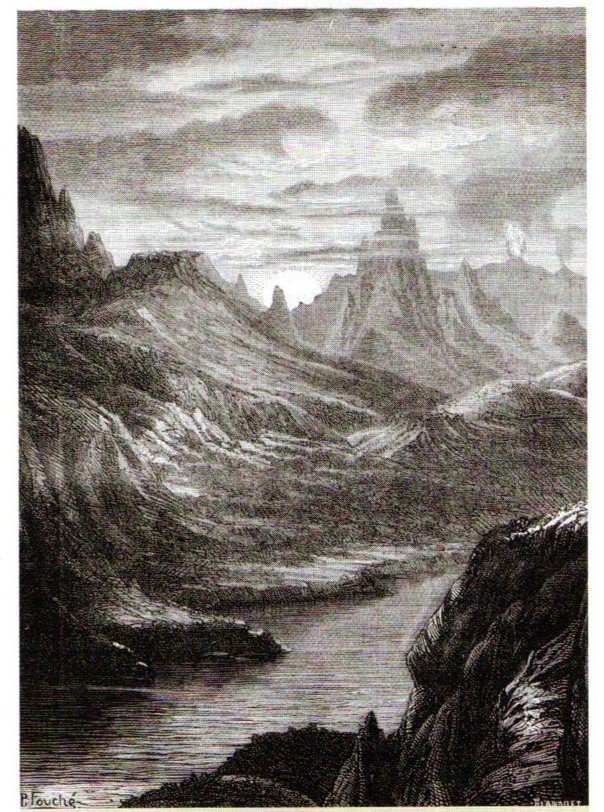
entry 619 [contributed by Zendexor]
2026 March 15th:
For two hours they drifted in the breeze while they attended
to the bruised men and set the ship in order. While the men were at work, the
captain and Grigson repaired the slight damage to their telescope and made some
observations. They concluded that they had splashed into what astronomers call
the “Dawes Ocean” at a point near the mouth of “Kaiser Sea.”
“‘Dawes Continent’ is probably the largest body of land on
the planet,” said Masters. "Perhaps we should go there first.”
"It seemed to be thickly populated,” Grigson agreed.
(…)
“Land ahead!” someone shouted.
All eyes strained to make out the land, but it was still a
mere streak on the horizon. It came out of the water rapidly, however, and in
the crystal-clear air they could soon distinguish the buildings built along the
shore.
At last they flew over the land. Hundreds of small black
buildings with red tiled roofs were scattered everywhere, skirting the crooked
streets. They could see that the soil was of a peculiar yellowish red or light
brown color and even the vegetation was more brown than green.
(…)
Masters watched the little [..........] ships dart away in
fright from the flame at the dissipating plate.
Gently as a feather they touched the ground, but they
remained in the ship to study their surroundings before emerging. The guns had
been loaded and were now manned by the gunners in readiness for any hostile
move that might be made on the part of the [..........]. For several hours they
watched the ships dart about. Presently one of them landed and a tiny man
stepped out. He was only three feet high, with queer, short legs and small feet
that seemed deformed. Masters was reminded of the Brownie pictures in the
children’s books. The [..........] stood beside his ship for a long time before he
ventured any nearer. Instead of walking he advanced in quick jumps like a bird.
“The attractive force of their gravity is so slight that
they can jump easier than walk,” Masters remarked, thoughtfully.
The little man came up close to the ship and then went
around it, eyeing it curiously. Presently, when they saw that the monster was
apparently harmless, other ships landed and in a short time the field was
crowded with gesticulating people. Masters hung a microphone out of one of the
port-holes so that they could hear over the amplifier and loudspeaker despite
the thick walls of the ship. They listened for a while to the crowd jabbering
away in short sentences, which were broken as though the speakers had not
sufficient lung capacity for longer ones. Their voices were disagreeably high
pitched, some of them ranging almost above audibility.
“Evidently their lungs are very small,” Masters said.
"Notice how flat their chests are. I suppose that that is due to the
almost pure oxygen of their atmosphere.”
One of the little men, perhaps bolder than the others, came
up to a port-hole and stared into the ship. His green eyes were large, and they
now opened wide with surprise when he saw the huge men inside. He hopped back
and gesticulated wildly to the others and a wave of excitement billowed through
the crowd. Others now came close and pressed their faces against the lowest
port-holes. Their tiny noses and wide, square jaws lined with flat teeth were
hideous. But their high foreheads indicated intelligence...
entry 618 [contributed by Lone Wolf]
2026 March 8th:
The building, the bedroom, seemed to be on a hillside
overlooking a valley. Not too high a hillside, because through the lower edge
of the window he could see a wide, badly discolored river. It was beyond the
river that the giant trees began.
There was instantly no question but that he was not on
Earth. Cyclopean were those trees! One, two, three thousand feet they towered
into the misty heavens. They started about a mile away; and each tree was as
thick at the base as a normal city block. The branches began low down; and the
trees tangled with each other in a fantastic intertwining of gigantic limbs and
endless foliage.
It was impossible to see for sure, but Gosseyn had the
impression that the forest of titans stretched away into the remote and verdant
wilderness.
(…)
Gosseyn estimated an atmosphere twice as thick as
Earth’s, a thousand miles or more of air — the clouds of [..........] that made the
[..........] planet the dazzling spectacle of Earth's night sky.
Thinking about it, he felt more alive, excited. Felt himself
in a timeless world.
Gosseyn descended the stately steps to a green velvety soil;
and, turning, looked at the building. It stood alone in a natural-looking,
gardenlike setting. It was constructed entirely of a shiny gray stone. Behind
it, a hill rose steeply, as much as four hundred feet in places, a long, wavy
green ridge, thick with gigantic shrubs and flowering plants.
(...)
He looked down,
down, down into distance. Gray-blue haze of distance. The hill on which the
hospital was built was not really a hill at all, but a lower peak of a
mountain, dipping down behind him past the hospital into a smaller valley
before curving past the titan trees towards the higher peaks beyond.
Now that he was
four hundred feet above the building, Gosseyn could see the peaks. They rose
above the trees; they were snow-capped; they must be miles higher to be visible
at all beyond that barrier of trees.
There were more
trees in the greater valley down which Gosseyn gazed. But even they were
dwarfed by the appalling depths to which the mountainside receded. Far down in
that depth, Gosseyn caught a gleam of water, and, shocked, remembered the
discolored river.
He turned to
stare at it. And now that he was looking for it, he could see the sharp tilt of
the water. No wonder it looked dark and ugly; no wonder it was so silent in its
course: it was racing down a mountainside with an oily velocity that long ago
had worn a smooth bed.
Somewhere farther
along must be cataracts that would make Niagara tiny so far as height of fall
was concerned; only thus could this swollen river hope to get down so swiftly
to the deeper reaches of the great valley, where its gleam was so faintly
visible.
(...)
He stared with a more calculating intensity into the gulf of distance below
him. He could see where the valley down there levelled off. For several miles
it seemed to be a flat plain; and then the mists of remoteness closed in, and
hid what lay beyond.
entry 617 [contributed by Lone Wolf]
2026 March 1st:
...All this while the ship and ourselves had been drifting
towards [.........]. The little world was as prominent as Mars in the sky now. The
ship was clearly still making for [..........].
"Ancient Martian history tells of colonies on [..........],
of cities, air-plants and supplies left intact when the place was
evacuated," Usulor told us. "Many thousands of years ago, of course.
But most of it is probably still usable."
"Why was the world evacuated?" I asked.
"Because of radiations, the old books say. That might
mean cosmic rays, or ultra-violet or radium emanations. It might mean almost
anything."
(...)
AS WE got nearer
to [..........] we saw that what looked like disks of
pale green glass were dotted about the surface of the tiny world, some of them miles in diameter.
"Air and temperature traps," Usulor
explained. "Former Martian
colonies. Radiant heat goes in through the glassite readily but seeps out only
very slowly."
I could easily
understand that. I have grown tomatoes in a hothouse or greenhouse. On [..........] men had tried to live in giant
greenhouses. Without much success, it appeared.
(…)
After a long, long journey we reached [..........]. A desert,
uninviting world, apart from the hothouse colonies. Jagged mountains, thin air,
polar ice-caps, no extensive seas, some stunted vegetation in the valleys. No
place for a honeymoon...
entry 616 [contributed by Lone Wolf]
2026 February 23rd:
Through the smoky yellow veil they made out a strange moving
thing that, as they peered, revealed itself as a dark disc, its edge inclined
toward them, slowly turning. It was as large around as a tea-tray, and was
thickest in the middle, so that its shape was like that of two saucers, placed
with concave faces together. Its spinning motion increased and it drew nearer.
They could see now that it was composed of living tissue.
Closer it came, and closer. It spun out of sight to the
left, coming up against the ship, and a moment later came into view again, but
a few inches from the port. There it hovered, almost within arm’s length of
them, while they stood silent, fearing that a sound or a motion might cause it
to go away.
Slowly it revolved, and nowhere upon it could they see the
slightest trace of a visible organ. Yet it quite patently sensed their
presence, their attitude, as it hovered there. After a little time, it suddenly
went spinning away again, to be swallowed by the enveloping vapors.
(…)
THE spinning creatures ranged in size from soup-plate to
cartwheel, and in color from soft tan to deep purplish brown. All were in
motion, whether merely bobbing up and down as if floating on a quiet stream or
skimming and whirling here and there like leaves in a high wind. Yet none of
them left the vicinity of the ship.
Suddenly a larger disc floated into view — one as large as a
round table-top, and almost black in hue. It went straight from bow to stern of
the Nonpareil, as if making an inspection. Then it drew away. The
smaller discs fell back, too, ranging themselves in a sort of curtain formation
beyond the big one.
entry 615 [contributed by Lone Wolf]
2026 February 22nd:
SLOWLY, as if wearied by eight unbroken months in space, the
Nonpareil settled down upon a gently rolling plain, while three faces
appeared at the ports to look out at the strange landscape.
Around them lay stretches of mossy turf that gleamed, now
violet, now green, like changeable silk. Here and there it was tufted with
clumps of strange bushes. In the middle distance a silvery stream wound its
way, and farther on were wooded hills. In the blue sky above drifted fleecy
clouds, and two lights gleamed — the great banded globe of [..........] and the
smaller but much more brilliant sun. The expedition had reached [..........].
(…)
The trio set out, finding and discussing new wonders at
every step. From the bushes they gathered fleshy leaves and particolored
flowers of great size. The stir of small life was all about them. Once a
rose-colored creature, the size of a squirrel and walking upon many legs,
scuttled away from under their very feet and darted into a hole. They
approached a bush-clump to see a larger thing peering interestedly at them from
the branches to which it clung, but it withdrew to some hiding place before
they could get a good glimpse of it. Overhead they saw floating specks that
might be large birds. Nowhere, however, did they see cultivation or other sign
of human works.
(…)
They returned to the ship, and the next several days were
spent in making brief hops here and there about the little world. Once they
paused on the shore of an ocean and gathered strange shellfish for their
collection of specimens. Another time they perched high on a mountain top while
Bromburg and Duvelskoe poked into what looked like metal deposits. At last they
returned to the very spot where they first landed...
entry 614 [contributed by Lone Wolf]
2026 February 15th:
Crash! There was a vivid flash! Our ship lurched, rushed
mightily through space; entered a mad falling arc of acceleration! I was dazed;
for a moment I could not believe my senses. We had survived!
“Saved!” ejaculated Professor D Four-Ten delightedly.
“Saved! The charge of electricity neutralized by jumping across in a spark!
Don’t you see, the rarefied air of this little planet enabled the surplus
electrons of the electric charge to jump through space! Saved!”
“I’m not so sure of that, Professor,” I put in, noticing
something below the ship. He followed my pointing finger. From the rocky
surface of the planet below the weird metallic inhabitants of [..........] were
floating upward — creatures with a tiny ring of eyes about the upper portion of
the cylindrical body. A vast squadron of the creatures were materializing from
a series of what looked like ant mounds, and they maneuvered swiftly upward.
“I can’t understand!” murmured Professor D Four-Ten in
perplexity. “The metal people of [..........] have always been so peaceful!”
For almost half a century the Earth-Mars Space Line had
maintained a refuelling station on [..........], unhindered by the peaceable metal
men, who went their own way quietly. Now, however, they looked decidedly
vicious and the little eyes in the strange shapes changed to angry colors like
semaphores. Never before had they been known to offer battle!
(…)
As the long flight of metal figures approached from below,
the tentacles from their middles unwrapped and stretched forward in
anticipation!
(…)
The bodies of dully scintillant metal approached swiftly and
their tentacles wrapped about our sphere. The malevolent eyes glared in at us.
Soon the twining metal-sheathed tentacles were wound about the ship as more and
more of the creatures added their weight to our vessel. Through the spaceports
their thickly twining tentacles were visible, shutting so much light out that
we were in partial shadow. Then our sphere began once more to sink.
We were being dragged down to [..........], by a cloud of passing
meteorites...
entry 613 [contributed by Lone Wolf]
2026 February 8th:
...They had come halfway around the sun to meet it, and now
[..........] lay in quadrature to them, its first quarter, showing them half its
illuminated side. At most it was but 1200 miles in diameter, a small world
whose mass was surprisingly great in proportion to its size. Wendell had
already explained to Beale that [..........]’s surface gravity was in excess of that
felt by men of Earth when upon the moon. That was because it was made tip of
the heaviest of metals. Now the captain wanted to know if Wendell knew where
they were to land.
In half an hour the little world looked like a bowl with its
upturned edges. They were circling it, passing from the light into the darkness
twice. They saw it had no really large areas of water. There were innumerable
lakes and rivers, but nothing that could be rightfully called a sea. There were
mountains in one hemisphere, but for the most it was flat or slightly rolling
country. One thing was particularly noticeable about the night side, the fact
that the vegetation gave off a ghostly light, glowed of itself like phosphorus.
The lakes were molten silver, the jungles a riot of wild color.
(…)
With wondering eyes the men stared at the queer life about
them, for it was even stranger than it had appeared from above. The trees were
for the most part a hundred feet high, straight, slender with trunks that
resembled those of a palm tree: smooth, glistening, barkless; but the branches
that jutted from their crowns were unlike anything they had ever seen. They
were long, stiff, needlepointed spikes with a feathery lacy froth of needles.
The branches were no more than three to four feet in length, solitary and
uncrowded. The only shade cast by the whole tree was the straight unvarying
image of its polelike length.
Vines clung somehow to the unyielding trees, vines that
dropped festoons of needles from their length linking the jungle trees
together. Around the trees was growing a veritable mat of stiff-stalked young
trees; bushes, stocky plants, all with underdeveloped spiky leaves and
branches. Only on the ground was there a growth with a fleshier leaf — broad
and flat, prone to the soil. The bushes mostly resembled palmettos and cacti.
Nature, at first lavish, had turned about-face and with
niggardly hand finished her work, stinting the land of her natural abundance.
Then she had remembered and was more prolific, for on each tree, weighing down
the vines, bending the backs of the shrubs, palmettos and cacti were the fruit
clusters. Red, yellow, blue, orange, green they were; long banana-shaped fruit,
globulars of all sizes, berries, melons — round, oval, cylindrical, every shape
and form; luscious peaches, over-sized pears, mouth-watering berries, scarlet
cherries, purple grapes, juicy plums, golden oranges ... all were here in wild
profusion, in wild fecundity.
“It’s the sun,” explained Wendell. “Were the leaves of the
trees broad they would absorb too much vitality beside that already partaken of
from the radioactive soil, hence they would shrivel and die under the glare of
the white-hot sun. Nature can be more prodigal with the fruit because there are
enough to make use of it . . . See...” He pointed out flocks of tiny birds, no
larger than humming birds darting among the fruit, the swarms of insects
feeding in armies, the dainty head of some animal feeding on fruit fallen to
the ground.
Another creature that looked like a cross between a bear and
a monkey was climbing a tall tree toward an especially appetizing cluster of
fruit hanging by a slender cord from a vine. The fruit proved just out of reach
of the animal, but with infinite patience the bear angled for the prize with
long forelegs. At last, unable to gain the fruit by that means, it let go its
hold upon the tree-trunk to make a lunge for the fruit cluster, and landed upon
it with all four feet. The vine held and the animal went about the prosaic
business of harvesting its dinner without a care as to what would happen when
it ate away its support.
A shadow fell against the trees and ground. Glancing up the
men saw an unusually large, brightly-plumaged bird plunging downward. Through
the thick walls of the ship they could not hear its cry, but they could see its
paralyzing effect upon the flock of humming birds which for the nonce seemed
suspended on quivering wings unable to move forward or backward. The killer had
time to swoop down, gobble a third of their number before their brains began to
function properly again, and they could escape. The big fellow made no attempt
to follow. He simply turned to the fruit nearest at hand and commenced to gorge
himself.
Beale and Jimson, standing with Wendell, grew aware of even
more life in the jungle. Birds of every size and description flew through the
trees, creatures lurked among the vines, snakes and tiny furred things raced up
and down tree trunks and vines, flinging themselves through the air. There was
life on the ground, peering from between the heavy, thick leaves of the vines
that crawled upon the earth’s bosom. Suddenly Wendell was pointing out a
strange apparition to his companions.
It stood staring back at them from between two tree trunks,
a creature five feet tall, upright on two legs. It had a small pointed face
that was fox-like, yet faintly resembled a human face! The head was round,
bulging upward from heavy beetling brows. The ears that came to a point at the
top were set on the side of the head slightly below the level of the large
black eyes. The nose was long, pointed — the cheeks and jowls sloped forward
adding to its animal-like appearance. The mouth was wide, the chin rather
heavy-set, incongruous looking to the rest of the face, giving it its humanness
that was otherwise lacking except in the rather intelligent set of the large
beady black eyes.
The face and body were bare of hair, the skin a slate brown.
The body was proportionately slender to its height, in repose it leaned forward
so that the thin arms dangled below the knee. Hands like the face were free of
fur, delicately-boned, almost claws...
entry 612 [contributed by Lone Wolf]
2026 February 1st:
[........] the lava vent opened into a weird underworld. Headfirst,
mittened hands vainly clawing for a hold on the glassy walls of the tube. Red
Tonti shot from a little hole halfway up the cavern-wall and crashed to the
rocky floor. Stunned, he lay for a moment gasping, staring about him. Twenty
years since he was here last!
Above, the roof is hidden in blackness, but walls and floor
are alive with wan white luminescence, greentinged and feeble. Down the ledged
wall trickle streams of moisture, and where they wet the soft rock grow
colonies of lichens, flat and pulpy, with great white spore-cups that glow
eerily. The floor is wet with glowing slime, where soft, flabby monsters writhe
and wriggle hungrily. For perhaps ten seconds Red has lain there, and now as he
struggles dizzily to his feet his groping hands sink wrist-deep in the avid
mass of life that has been creeping to him, eager to feed! One clings to his
arm — a great, pale slug-thing, oozing green light, that mouths the joints of
his armor and spatters with his angry blow, leaving thick slime that drips
slowly from his fingers! Another of the damn things is on his helmet, sucking
with flabby lips at the quartz. He can see right through it, into its belly —
see the horrid writhing of its gut as it sucks at him! God! How can such things
live? Give him space, and the planets!
Here in the festering bowels of [..........] there was sound
again, and Red’s boots squelched sickeningly in the luminous morass of foul
life as he hurried to the low corridor opening from the cavern wall. A pale
white glow lit the whole length of the tunnel, to where it opened into
darkness, high on the wall of a great underground vault, cleaving the body of
[..........] for mile on mile. A viscid trickle of glowing ooze lipped over the
ledge where the tunnel opened, and fell into eternal darkness, down, down God
knows where or into what Hell's paradise of living light!
entry 611 [contributed by Lone Wolf]
2026 January 25th:
… They cut down some of the huge, pulpy plants, and with the
aid of some tougher material Stetson procured somewhere, succeeded in rigging a
substantial and remarkably tight little dwelling in some five hours.
(…)
Bates had been astounded to see Stetson hurling small
boulders a quarter of a mile. Then he had tried it and found that the
combination of mass and small weight made it possible to push the stone harder
as it left the hand, use a stone whose mass was really greater than the arm,
and still not have it so heavy it couldn’t be thrown. Stetson had been able to
direct them unerringly after a few tries and had crushed a thing that looked
like a large jackrabbit with black armor on. Stetson brought three of them back.
Also he had some violently colored growths. He called them [.......... stentius], and claimed it was the correct name. Bates had his doubts. Also
he doubted the edibility of mushrooms with colors so flamingly brilliant.
“We can eat ’em, all right. They are good, too,” promised
Duke.
“Well, I never saw anything good to eat advertising itself
so promiscuously,” replied Bates doubtfully.
“Apparently the things here can’t eat them. They contain a
thing unusual in Terrestrial mushroom growths, a true sugar. Sugars are
alcohols, and apparently alcohols are poisonous to the animals here. Also, we
can thank luck that no large animals, dangerous to man, have ever been
discovered here,” explained Stetson.
When they reached the camp. Stetson started a fire. Then he
took a small knife, and opened the armorlike legs of the oversize cricket he
had found. Inside was solid flesh, and despite stories he had told Parker, the
meat was very good and quite tender. Its flavor was not strong, but quite
different from anything they were accustomed to. However it gave out an odor,
when cooking, that was detectable for amazing distances. Something like the
odors of frying fish or bacon, or onions, it had the power of bringing the
presence of an appetite acutely before the conscious mind.
(…)
“Ah — that smells good. I see you found something to eat,
didn’t you?” he said delightedly, waddling up in a most extraordinary way on
this lighter planet. His face was colored a deep green by [..........].
entry 610 [contributed by Lone Wolf]
2026 January 18th:
Now the clouds drift up and [..........]
lies far below the scudding ship — desolation rampant. Crags, deserts, great
ranges and wind-carved, time-worn plateaus — all of the blue-green ice of the
outer planets, ice that has lain hidden for ages under the cloud-drift that men
see. But it is not barren ice that he seeks, but another thing by far, and as
the rocket sinks slowly he sees his goal rising above the curve of the planet —
the great [..........].
The ice has nearly all vanished, and harsh black rock juts
in its stead in a chaotic wilderness where no ship can land unwrecked. He is
uneasy, the controls are unfamiliar, do not respond as he would like. He is
close to the crags now, too close, closer than he has ever been. He can see
great rivers, torrents of ice and water, flowing in the heat of the [..........]. The
great mass of the planet, too, is making itself felt, and he reacts to stimuli
sluggishly. But the [..........] is close now, and the great updraft of hot air
that will hurl them above the clouds, to safety. Like a crimson mountain it
looms ahead, and already great winds are sweeping them into the maelstrom. But
it is hot, and his feet and hands feel heavy — it is hard to think and act. No,
he has never been so low— he can see the region about the base of the [..........],
cloaked in rising vapor that is torn to shreds by the gales. It is like a deep
bowl all around the great oval of the [..........], deep and green with rank
vegetation. There are swamps, where the waters of the great rivers fester and
rise to mist in the frozen clouds. There are great forests, and long, low
plains — all gleaming strangely in the lurid glare of the [..........].
(…)
The air was thick, stifling and unbearably hot and humid,
trying to burst into his body and strangle him. His ears throbbed with a dull
thunderous roar, from the greater air-pressure, and an awful weight was bearing
him down. Slowly, painfully he rolled over on his face, pressed down into the
thick, springy moss [..........]. Inch by
inch he gathered his limbs beneath him, struggling against the weight of his
space-suit — five hundred pounds of matter crushing him into the ground. His
head rose above the moss; he looked about him.
Above the forest the [..........] loomed through the rising mists — a huge
mountain of molten rock, oval, raised from the planet’s face by the whirling
centrifuge and tidal drag that will some day rip it free and give it birth [..........]. Then the forest — a matted
tangle of unearthly olive-green tree-ferns, glossy and uncannily still — at its
edge the rocket, by Fate’s whim unharmed in its fall…
entry 609 [contributed by Lone Wolf]
2026 January 14th:
The valley
floor was a flat expanse of gray pumice, dust deposited here by the action of
swift, tenuous winds. A huge, jagged rock, gaunt and black and fanglike,
projected upward from its center, a low' ridge of solid ground leading to it.
Dotting the valley were spiny gray spheroids, half-embedded. Within their thick
shells, moisture, which was absorbed during the rare times that a little of it
seeped into the desiccated soil of the place, was sealed up. Those spheroids
might have been called plants, though their metabolism differed considerably
from that of any terrestrial flora. And they were not actively alive now ; the
water in them was frozen solid, for this was clearly not a warm season.
[...]
There was a sickly, whitish yellow
haze over the valley. The air was extremely thin, but the speed of its
currents, combining with a feeble gravity, enabled it to support such fine
debris blown from [..........]. From a deep mountain gorge a
creamy wisp, looking like a discolored cirrus cloud, projected. But it was only
the path of the incoming wind, made visible by the dust and other solid
material it bore…
entry 608 [contributed by Zendexor]
2026 January 11th:
The astroship arrived at the beginning of evening twilight.
Sophie Kasvin was given the privilege
of stepping out first. Her gaze eagerly scanned the vast greyish plain bordered
on its surroundings by gigantic rock formations that defined the horizon.
The temperature was rather warm.
However, inhaling the air gave her lungs a pleasant
refreshing sensation, due to the high oxygen saturation.
A distant murmur could be heard like
a prolonged rumble of thunder. The rumble, contrasting with the sepulchral
silence of the landscape, added a disturbing, awe-inspiring note.
"The Black Sea!" said
Charles Javin, straining his ears. "Don't you hear the roar of its
waves?"
Ted shuddered and looked at Sophie.
At that moment, a dense chain of reddish clouds obscured the radiant semicircle
of the sun. A strange gloom fell upon the Earthlings who, astonished, gazed at
the inhospitable [..........] region.
Unconsciously, Sophie turned up the
collar of her sweater in an instinctive gesture of protection.
"It's cold," she said, her
teeth chattering.
Atartuk consulted the tiny
thermometer attached to the face of his watch.
"Twenty-six degrees," he
replied. "The cold we feel is a mere nervous reflection of our
thoughts."
Ted Drummond set off toward a nearby
rise in the terrain. A few minutes later, he stood atop a promontory
overlooking a spectacle breath-taking in its grandeur and sinister
significance.
In the iridescent light of twilight,
the polished surface of an ebony-black sea shimmered. It stretched to infinity
on the horizon. At Ted's feet, more than two hundred meters deep, a gentle
swell broke against the cliffs, producing a rhythmic murmur with a steady
frequency and thick resonances.
Drummond picked up a large pebble and
threw it forcefully. A shiver of horror ran down his spine as he watched the
indescribable whirlpool that formed when the stone hit. A raging jet of water
erupted, spraying in all directions. For a few seconds, that small area of the
sea seemed to boil and crackle. Then came the calm.
His soul shrinking with terror, Ted
Drummond turned around and bumped into Sophie Kasvin, who was standing behind
him.
"Did you see it?" he asked
hoarsely. The girl nodded.
"A living sea...!" —The
words spilled from her lips as if propelled by a hallucinating mind—. "My father
was right."
entry 607 [contributed by Lone Wolf]
2026 January 8th:
"On the planet [..........]… where we were exiled, the
three-brained beings are… how shall I tell you?—like a 'karoona,' that
is to say, they have a long broad trunk, amply provided with fat, and a head
with enormous protruding and shining eyes. On the back of this huge planetary
body of theirs are two large wings, and on the underside two comparatively
small feet with very strong claws…
“…the three-brained beings breeding on that planet can see
freely everywhere, however great the 'kldatsakhti,' ["Kldatsakhti"
means "darkness"] and can move about not only on the planet but also
in its atmosphere, and occasionally some of them even manage to travel beyond
its limits.
(…)
"… the planet [..........] … has a 'keskestasantnian
firm surface,' that is to say, one half of its surface consists of land
presence and the other of 'saliakooriapnian' masses or, as your
favorites would say, one half of it is land in one continuous continent, and
the other half is covered with water.
“…I was told that the 'toof-nef-tef very much wished
to see me.
"'Toof-nef-tef is the name given on the planet [..........]
to the chief of all the three-brained beings breeding there, that is, he
corresponds to the being who, on your planet, is called 'king. '
"I had known this toof-nef-tef, or king, in his
youth, when he was only a 'plef-perf-noof' A plef-perf-noof is
almost the same as a zirlikner on our planet and a physician on your
planet Earth.
(…)
“… I was informed that the toof-nef-tef of the planet
wished to see me personally…
"This [..........] toof-nef-tef was already...an extremely old being, by the time-calculation of the planet [..........],
he was about twelve thousand years old..."
entry 606 [contributed by Lone Wolf]
2026 January 4th:
"During the period I am speaking of, I visited most of
the planets of that solar system, those already populated and those still
unpopulated.
"Personally I liked best of all the three-centered
beings dwelling on the planet ['……….']. Their outer form is quite unlike ours,
resembling that of the bird-being, 'raven. '
(…)
"The verbal intercourse of these raven-beings of the
planet [……….] is somewhat like our own. But their way of speaking is the most
beautiful I have ever heard.
"It can be compared to the music of our best singers
when with all their being they sing in a minor key.
"And as for the quality of their relations with each
other—I don't even know how to describe it. It can be known only by existing
among them and having the experience oneself.
"All that can be said is that these bird-beings have
hearts exactly like those of the angels nearest our Endless Maker and Creator.
"They exist strictly according to the ninth commandment
of our Creator: 'Consider everything belonging to another as if it were your
own, and so treat it.'
"Later, I must certainly tell you in more detail about
those three-brained beings who arise and exist on the planet [……….], since one
of my real friends during the whole period of my exile in that solar system was
a being of that planet, who had the exterior coating of a raven and whose name
was Harharkh."
(...)
"On the planet [……….] 'harakhrakhrookhry' is the
name given to the sole chief of all the other beings on that planet... on the Earth such a chief is called a 'king.'
(…)
"No sooner had we arrived on the planet [……….] than the
chief of our tribe there came to communicate to us the contents of an
etherogram he had just received, announcing that the big intersystem ship Omnipresent
would not land on the planet [……….] until early in the next 'khreh-khree-khra.
'
" 'Khreh-khree-khra,' on the planet [……….],
means a period of time determined by a certain position occupied by this planet
in relation, on the one hand, to the sun of its system, and on the other, to
another planet of this system called 'Neptune.'
"In one [……….]ian year there are seven of these
definitely established periods, and each of them has its own name.
"As there still remained... almost half a 'fooss' before the next 'khreh-khree-khra'
or, by the time-calculation of your favorites, about a month and a half, we
decided to organize our ordinary being-existence in the meantime in a more or
less suitable manner...”
entry 605 [contributed by Lone Wolf]
2025 December 28th:
"There is still another planet in that solar system, my
dear boy, quite a small one, bearing the name ['..........']
(...)
"Though the beings of this planet have very frail
planetary bodies, they have an indomitable spirit, which gives them an
extraordinary perseverance and capacity for work.
"Their external form is like that of large ants, and
like them they are always bustling about, working both on and within their
planet.
"The results of their ceaseless activity are already
plainly visible.
"I once happened to notice that in two of our years
they had 'tunneled' the whole of their planet. They were obliged to undertake
this task on account of the abnormal 'climatic conditions' there, caused by the
fact that this planet arose unexpectedly, and therefore the regulation of its
climatic harmony had not been prearranged by the Higher Powers.
"The climate of this planet is truly 'mad,' and in its
variability could give points to the most high-strung, hysterical women
existing on another planet of that solar system, which I shall also tell you
about.
"Sometimes the cold is so intense on this [..........] that
everything is frozen through and through, and it becomes impossible for beings
to breathe in the open atmosphere, and then suddenly it gets so hot that you
could fry an egg in a jiffy.
"There are only two short periods on that peculiar
little planet, namely, before and after it completes its orbit around a
neighboring planet, when the weather is so glorious that for several rotations
the whole planet is in bloom, and yields the various products for the first
being-food of its inhabitants—even greatly in excess of what they need for
existence in that strange intraplanetary kingdom they have devised, where they
are sheltered from the vagaries of this mad climate and all the inharmonious
changes in the state of the atmosphere..."
entry 604 [contributed by Lone Wolf]
2025 December 21st:
We stared for a
long time at that wall of scarlet plant-life, lacking the vocabulary to express
our reactions to it.
The higher part
of the weed-bank had the appearance of being smooth and rounded, especially
towards its visible crest.
Here it looked like a gentle, undulating hill, although by looking in more
detail at its surface we could see that what appeared to be an unbroken face
was in fact made up of thousands or millions of branches.
Lower down, in
the part of the growth where we had lain, its appearance was quite different.
Here the newer plants were growing, presumably from seeds thrown out from the
main bulk of vegetation. Both Amelia and I remarked on a horrible feeling that
the wall was inexorably advancing, throwing out new shoots and piling up its
mass behind. Then, even as we looked aghast at this incredible weed-bank, we
saw that the impact of the sun's rays was having an effect, for from all along
the wall there came a deepthroated groaning, and a thrashing, breaking sound.
One branch moved, then another... then all along that living cliff-face
branches and stems moved in a semblance of unthinking animation.
(...)
As we moved along
the weed-bank we came across more and more of the peasants, all of whom seemed
to be working without supervision. Their conditions of work were atrocious, as
in the more crowded areas the spilled sap created large swamps, and some of the
poor wretches were standing in muddy liquid above their waists. As Amelia
observed, and I could not help but agree, there was much room for reform here.
We walked for
about half a mile until we reached a point where the wooden trough came to a
confluence with three others, which flowed from different parts of the
weed-bank. Here the sap was ducted into a large pool, from which it was pumped
by several women using a crude, hand-operated device into a subsidiary system
of irrigation channels. From where we were standing we could see that these
flowed alongside and through a large area of cultivated land. On the far side
of this stood two more of the metal towers.
Further along we
saw that the peasants were cutting the weed on the slant, so that as we had
been walking parallel to their workings we eventually found what it was that
lay beyond the bank of weeds. It was a water-course, some three hundred yards
wide. Its natural width was only exposed by the cropping of weeds, for when we
looked to the north, in the direction from which we had walked, we saw that the
weeds so choked the waterway that in places it was entirely blocked. The total
width of the weed-bank was nearly a mile, and as the opposite side of the
waterway was similarly overgrown, and with another crowd of peasants cutting
back the weed; we realized that if they intended to clear the entire length of
the waterway by hacking manually through the weeds then the peasants were
confronted with a task that would take them many generations to accomplish.
Amelia and I
walked beside the water, soon leaving the peasants behind. The ground was
uneven and pitted, presumably because of the roots of the weeds which had once
grown here, and the water was dark-coloured and undisturbed by ripples. Whether
it was a river or a canal was difficult to say; the water was flowing, but so
slowly that the movement was barely perceptible, and the banks were irregular.
This seemed to indicate that it was a natural watercourse, but its very
straightness belied this assumption...
entry 603 [contributed by Lone Wolf]
2025 December 14th:
...The smoke and steam cleared. The explorers pressed their
faces to the windows.
Fog rolled in, darkness approached. Alien nature seemed to
hide from prying eyes.
Gigantic reddish trunks, bare and smooth, branchless,
stretched upward in columns. There they blossomed into dark tents. There was no
grass beneath them. Instead, serpentine roots intertwined in knots. And between
the trunks stretched... nets?
Alyosha froze. Nets! Intricately woven nets!
But the scientist suppressed the dreamer in him. These were
vines, tenacious, twining around the trunks, woven in an intricate pattern. The
thicket seemed impenetrable.
Alyosha peered until his eyes ached, trying to spot any
movement.
But darkness approached. Soon everything disappeared...
Lights began to flicker in the forest and in the swamp. If it weren't for them,
the darkness would be total. The inhabitants of [..........] never see the stars or
the sun... Alyosha looked expectantly at Ilya Yuryevich.
"Wait," Bogatyrev immediately understood.
"Roman, turn on the external microphones."
Alyosha froze. Blood pounded in his ears.
And suddenly, without interruption, a wave of sound burst
into the cabin, a terrifying symphony, brutally capturing, overwhelming...
The receding, galloping rumble of a rumbling chariot or an
avalanche of rocks gave way to a close howl. Then came a piercing squeal and a
cry of pain, heartbreaking, hoarse. And suddenly the wings flapped...
Pulka screeched desperately and scraped the bulkhead.
Dobrov wanted to turn on the searchlight, but Ilya Yuryevich
stopped him.
Now a steady, measured hooting could be heard. Alyosha
grabbed the back of the chair. Could it really be a machine?
There was a cracking sound, as if fabric was being torn
apart, and immediately—a rising whistle, dying at the highest pitch.
Then a melodic note, then another, then a third... Singing?
Alyosha looked at Ilya Yuryevich with wide eyes.
He shook his head.
Dobrov turned on the spotlight.
And suddenly everything fell silent, as if the microphone
had been turned off, froze, crouched.
Only the dog whined piteously in its compartment.
A blinding light tore the nearby trunks of giant ferns and
the network of vines, now somehow white, from the darkness. The serpentine
roots seemed frozen in their struggle, frozen.
In the thicket, angry little stars sparkled with reflected
lights... And not a movement...
entry 602 [contributed by Lone Wolf]
2025 December 7th:
...Lost in such thoughts, he tripped over a small black rock
that was almost invisible in the deep shadow of a larger boulder. He caught
himself in time to keep from falling, then noticed that Dorn had stopped
walking and was staring at an advancing object. At the same time, the ground
began to tremble. Carson, looking up, thought at first that a mountain had
begun to move.
It was not a mountain, however, but a living creature
somewhat like a dinosaur, as a second glance showed him. Its dull, scaly
covering gave it a rock-like appearance. The thing was about fifty feet in
length, and about a third that in width and height.
Except for an elongated neck and a relatively tiny topknot,
such as the human-appearing [..........] possessed, the major portion of the
creature’s body appeared to be a single undifferentiated mass of what Carson
supposed to be flesh.
There were six short legs that could hardly have supported
the weight of so huge an animal on Earth, but were quite sufficient here
because of the lesser gravity. And set in the topknot’s forehead were hideous
eyes, four of them in a semi-circle, glaring viciously...
(…)
...From the edge of the desert on, the pace of the expedition
slowed down to a crawl. Carson, staring out at the barren rocks that stretched
mile after mile in front of them, found it difficult to believe that this was
an expanse of wasteland greater than any on Earth.
At the horizon something seemed to rise in the air, ascend
to the sun, and then come plummeting down. Carson called the attention of the
leader of the [..........], a member of the purple race, to the unexpected
phenomenon. It seemed impossible that any creatures should be able to make
their homes in this desolate waste.
The [..........] raised his topknot cautiously, uncovering
his eyes, and stared. Again the object rose in the air, shimmering like a prism
of glass in the bright sunlight, and again it swept down.
“It is a flyer,” the [..........] said uneasily.
“Is it alive?”
“Very much alive.”
It seemed incredible to Carson. A bird or a plane needed air
in which to fly. There wasn’t enough air here to support a mosquito.
The flyer was coming closer. A third time it soared upward,
and then sank to the ground once more. Apparently it did not possess the
ability to stay up very long. Apparently—
Carson’s eyes were glued to the creature. It did not really
fly— it leaped. That was the secret of its travel through the air. Carson
imagined what a large creature possessing the leaping ability of a flea would
do on this planet of low gravity, and knew he had the answer.
The flyer shimmered like a piece of glass, because it
reflected the sun’s light and heat almost completely. That was one of the best
ways to keep cool on this overheated desert. Simply not to absorb heat...
(…)
...Presently, a few feet ahead of Nora, in the space between
two enormous rocks, there was a darker patch on the ground, several inches
across, like a small hole dug by a miniature meteor. The girl flashed her
lights at it, but the black patch reflected no light at all.
She approached until she was almost above it. Then she saw
with astonishment that the object was moving, inching along the ground at a
snail’s pace toward her.
One of the [..........] noticed her surprise.
“They are alive, but not dangerous. All the same, it is well
to keep away from them.”
“How can they live here?”
“There is in their bodies a liquid that never freezes, no
matter how cold.”
Haines touched her shoulder, making contact between his suit
and her own, so that the sound of his voice would carry.
“Sounds like liquid air to me,” he said.
Nora was dubious. She turned to the [..........].
“Is it the gas we breathe?”
“That freezes. This does not.”
“Maybe it’s liquid helium,” Haines ventured. "Unless
the temperature got closer to absolute zero than I can imagine it could, helium
would stay liquid.”
“These creatures absorb radiations of all sorts,” the
[..........] went on. “They knew we were approaching because of the radiations
of heat from our suits. The light attracts them also, but it is too much for
them. They can’t stand a sharp light.”
As Nora stared at it, the black patch suddenly exploded.
Where it had been, there was nothing whatever left.
“It absorbed too much heat,” the [..........] explained. “The
liquid turned into gas, the pressure inside became too great, and there was an
explosion.”
entry 601 [contributed by Lone Wolf]
Zendexor greatly appreciates your donation of £2! Thank you.
Recent Articles and Updates


-
Guess The World - Seventh Series
Oct 08, 26 03:37 PM
 Yet more scenes from Solar System worlds
 -
Haunted Worlds - Fictional auras of places on Earth, the Moon and Mars
Oct 08, 26 03:15 PM
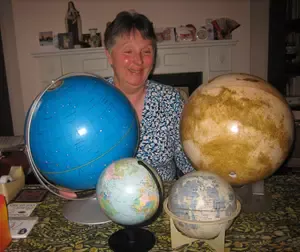 The double life of our place-names
 -
Deeds of the Creators
Oct 08, 26 02:48 PM
 in addition to expanding our consciousness
 -
Fictional Dates of the Old Solar System
Oct 07, 26 12:33 PM
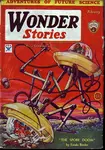 our timeline extended into imagined pasts and futures
 -
Uranian Throne episode 24 Underway
Oct 07, 26 08:38 AM
 The skyfleet sails into Fyaym
 -
Guess The World - how many scenes on each world
Oct 05, 26 06:09 AM
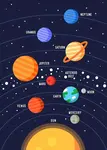 how each world is doing on the scenic front
 -
What to see on Jupiter
Oct 05, 26 05:58 AM
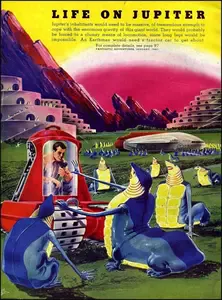 The Jovian scene
 -
History of Hopes
Oct 03, 26 10:46 AM
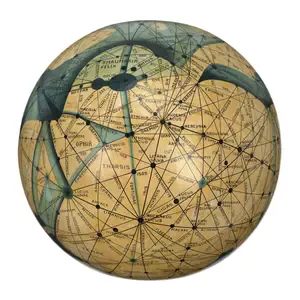 Optimistic science and speculation
 -
the hits race
Oct 01, 26 10:37 AM
 the monthly popularity-contest for worlds
 -
Countries
Sep 30, 26 12:56 PM
 Supplementary Gazetteer for countries in sf scenes
 -
Zendexor's OSS Diary 2026
Sep 29, 26 03:19 PM
 reflections on life, the oss and everything
 -
Eras, Periods and Epochs
Sep 28, 26 02:01 PM
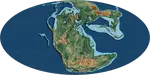 The ages of deep time
 -
Uranian Throne - index of proper names
Sep 28, 26 12:43 PM
the people and places of Ooranye -
What to see on Titan
Sep 28, 26 05:16 AM
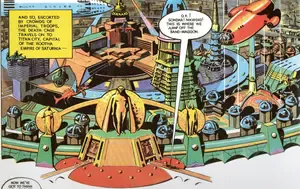 The Titanic scene
 -
What to see on Callisto
Sep 26, 26 04:11 AM
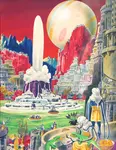 The Callistan scene
 -
Artists who have illustrated the Old Solar System
Sep 22, 26 12:53 PM
 visual depictions of the OSS
 -
What to see on Mars
Sep 21, 26 03:40 AM
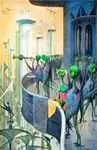 The Martian Scene
 -
Authors of the Old Solar System
Sep 18, 26 01:09 PM
authors who have contributed to the old solar system -
What to see on the Moon
Sep 18, 26 04:05 AM
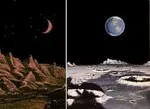 The lunar scene
 -
What to see on Venus
Sep 14, 26 02:01 AM
 The Venusian scene
 -
What to see on Phobos
Sep 07, 26 05:36 AM
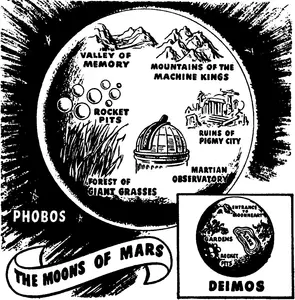 the scene on the inner moon of Mars
 -
CLUFFS
Sep 06, 26 11:33 AM
 CLUFFS - Cute Little Unfulfilled Fragments of Fascination
 -
Idea for another site - The Stellar Neighbourhood
Sep 06, 26 11:10 AM
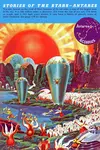 the named or designated stars that appear in literature
 -
What to see on the Asteroid Progenitor Planet
Sep 03, 26 09:18 AM
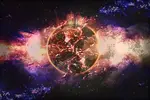 The Lost Planet scene
 -
Jasoomian Gathol
Aug 22, 26 08:40 AM
 dreams and themes from an island
 -
What to see on Uranus
Aug 17, 26 03:12 AM
 The Uranian scene
 -
Future Dates for Real
Aug 12, 26 02:39 PM
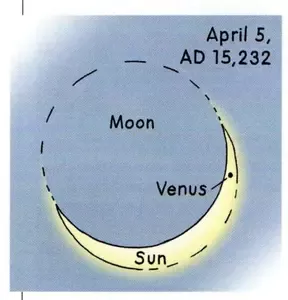 prophecies which are quite certain
 -
What to see on Mercury
Aug 11, 26 07:51 AM
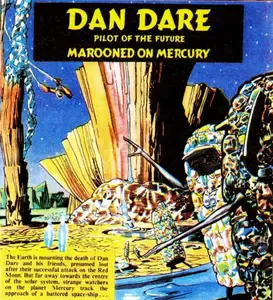 The Mercurian scene