guess the situation
in
jasoomian gathol:
answers
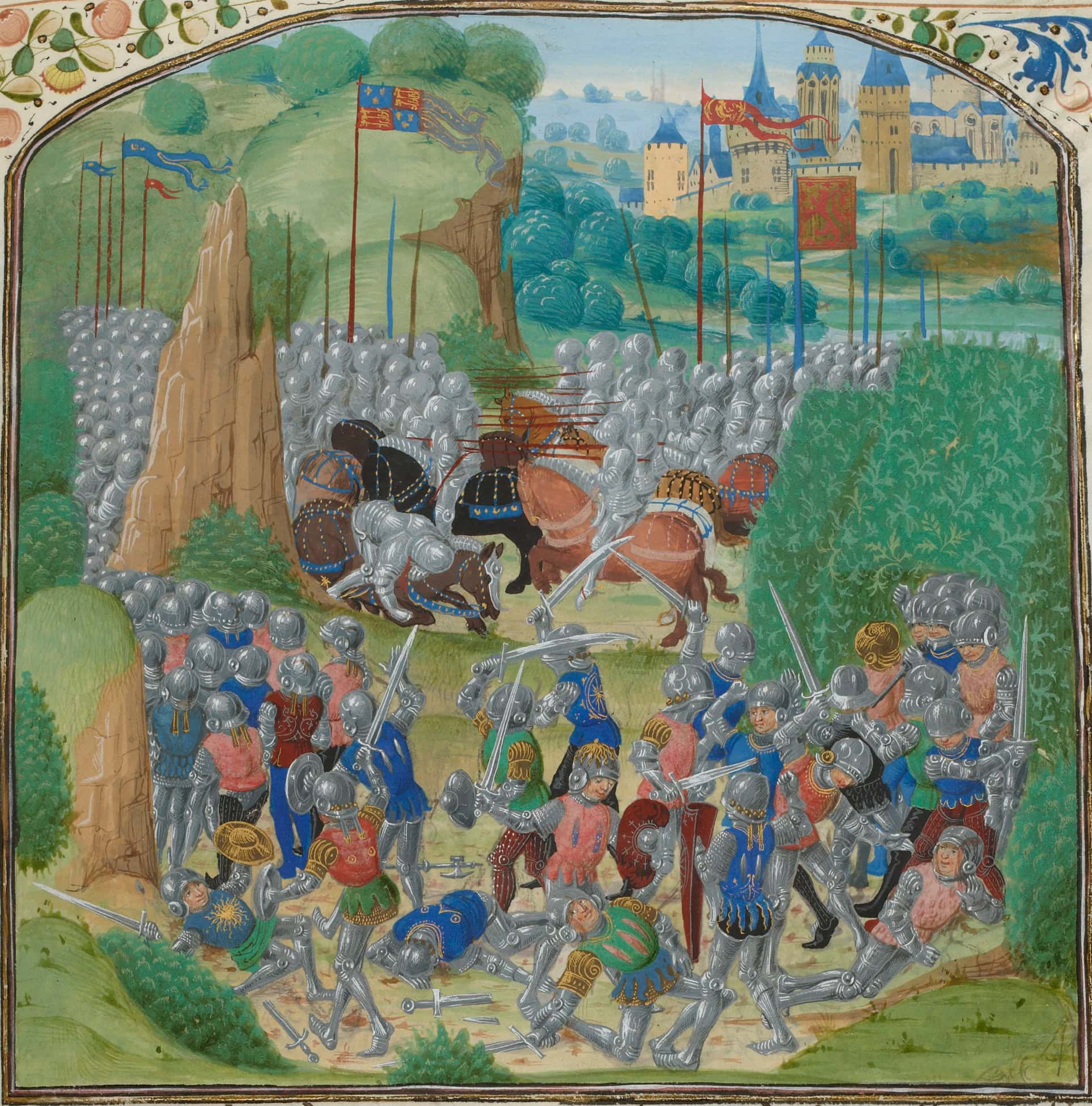
answer to #14 Single Combat:
23 JUNE 1314: THE BRUCE DUELS DE BOHUN ON THE EVE OF BANNOCKBURN
...An English advance party was already in sight as King Robert rode out to supervise his frontal positions. Sir Henry de Bohun, nephew of the Earl of Hereford, spurred his charge forward hoping to win incomparable chivalric fame by killing or capturing the Scottish king. Though mounted on a palfrey and armed with only a battle-axe Bruce was too much of a knight to evade the encounter. As Bohun charged ponderously with his lance at the ready, the king sidestepped and with his axe cleft Bohun's skull. This was the signal for Bruce's battalion to drive back the dismayed English troops.
Though it momentarily cast the fate of Scotland into jeopardy the king's personal feat of arms enhanced the chivalric prestige that was essential to his success...
Ranald Nicholson, Scotland: The Later Middle Ages (1974), p87-8
>> Guess The Situation 20260313
answer to #13 The Archbishop of Canterbury pleads for the life of the Archbishop of York:
1405: HENRY THE FOURTH INSISTS THAT SCROPE MUST DIE
The rebellious Archbishop of York, having supported the Yorkshire Rising, had exhausted the King's patience. Thomas Arundel, Archbishop of Canterbury, tried to intercede.
...Archbishop Arundel knew Henry well and realised what the likely outcome would be. As soon as he heard that his fellow archbishop had been arrested for treason, he set off from London, hoping to catch Henry before he could sentence the archbishop. On the way he learned that Henry was intending to teach the northerners a lessson by executing their rebellious archbishop at his own castle. Arundel pushed on, riding day and night. On 6 June, as Henry and his prisoners arrived at Bishopthorpe, the fifty-one-year-old Arundel was still some way south. It was not until late the following night that he rode into the courtyard of the castle, and asked to see the king. He was told Henry was in his chamber. Arundel... burst in and pleaded with Henry... What would people think if he, Henry, were to kill an archbishop? Look what people said about the last King Henry who killed an archbishop... Could he really be willing to bring such disaster upon himself? He was widely rumoured to have killed his cousin, an anointed king; was he now going to compound his sins by killing a religious leader? He told Henry in no uncertain terms that, as archbishop of Canterbury and the king's spiritual father, and the 'second man in the realm' after the king, he should leave any sentencing of the archbishop to the pope. Either that or let the man be judged in parliament.
Henry listened to his old friend, but he did not agree with him. He had been down each of these roads before. He had let judgement on the bishop of Carlisle pass to the pope after the Epiphany Rising. There had been a long delay and eventually the man had been acquitted. He had let judgement on the earl of Northumberland pass to parliament the previous year. They had celebrated his opposition to Henry and had irresponsibly let him keep his castles and lands. Such a decision was one of the reasons he was facing this plot now... The time had come to show absolute resolve...
...As Thomas Arundel went down to breakfast next morning, he did not know that the prisoners were being sentenced elsewhere in the castle. About midday, all three were led out to a field nearby and beheaded.
- Ian Mortimer, The Fears of Henry IV (2007), p295-7.
>> Guess The Situation 20260226
answer to #12 The imprisoned poet-king finds love:
THE FIRST JAMES MEETS HIS FUTURE WIFE
James, son and heir of Robert the Third of Scotland, was captured by the English as a child. He had been born in 1394, and was captured in 1406, an event which may have brought on his father's death soon after; as a consequence, the King of Scots was a prisoner in England. Meanwhile the government of Scotland in retaliation sent help to the French who were in desperate need of assistance against England's formidable Henry the Fifth.
...The death of Henry V in 1422, resulting in confused counsels in England during the minority of the infant Henry VI, improved James' prospects... From the English point of view, James' restoration would at least bring about the downfall of a Governor who had been encouraging Scottish intervention in France.
It was at this stage that there occurred the best known episode in James' captivity - the romance which he himself recounted in The Kingis Quair. In it he relates that he was lying awake at midnight in his
prison chamber and, being unable to sleep, read a portion of a work of
Boethius. Shutting the book, he meditates on the reverses of fortune
until he hears the bell ring for matins. He determines to write a
poem... To divert his thoughts, he walks to the window. This is the
turning point of his life, for he hears in the garden below the cheerful
song of the nightingale and presently sees a lady with whom he falls in
love at first sight...
The lady of the poem, or at any rate the lady of James' choice, was Joan Beaufort, daughter of the Earl of Somerset; as her father was a brother of Henry IV, she was a cousin of Henry V. "Romance," it has been remarked, "found the very match which policy would have dictated."
Gordon Donaldson, Scottish Kings (1967), p63.
>> Guess The Situation 20260217
answer to #11 The Queen begs the Admiral for mercy:
ANNE OF BOHEMIA PLEADS IN VAIN FOR SIMON BURLEY, 1388
The "Merciless Parliament" of 1388 was controlled by the Lords Appellant, opponents of Richard the Second. Having seized power in the kingdom, the Appellants looked likely to dethrone Richard; they proceeded to destroy his supporters.
Of the four Appellants, the Earl of Arundel was the one who most hated Sir Simon Burley who had criticised his strategy as Admiral. In revenge for this insolence Burley had been charged with encouraging the King to have a corrupt council about him, and sentenced to a traitor's death.
Anne of Bohemia, wife of King Richard, tried to save him.
To quote from Thomas B Costain, The Last Plantagenets (1962), p154:
Queen Anne, growing desperate in her desire to save an old friend, actually went down on her knees to this fiercely unrelenting subject. She pleaded, she wept, she wrung her hands. She was no longer a queen with position and authority to wield, she was a woman willing to lay aside all dignity and all power in this sorry crisis.
Arundel did not stir from his stand. Nothing she could say had any effect on him...
One statement only from the adamant earl is given in the chronicles of the day.
"Let the request alone, Madam Queen," he is reported to have said. Then, permitting his words to convey in full measure the threat being held over the royal pair, he added: "Pray for yourself and your husband. That is the best thing you can do."
As things turned out, Richard was not dethroned by the Appellants (they couldn't agree on whom to replace him with) and a decade later the King was still around to pick them off one by one...
>> Guess The Situation 20260210
answer to #10 The King hides in a sewer:
THE FIRST JAMES IS CORNERED AT PERTH, 1437
James, first of that name to be King of Scots, had made many enemies during his firm rule. To quote historian Ranald Nicholson (Scotland: The Later Middle Ages (1974), P.324):
...Using a poker the king wrenched up the planking of the floor and let himself down to the sewer that ran beneath. Its outlet had been sealed a few days previously since the king had lost so many tennis balls there. He remained hidden in this noisome tunnel while the conspirators burst into the chamber above. One of them wounded Queen Joan... Disappointed in their quest the conspirators left the chamber only to return when one of them remembered the sewer. By the light of a torch they caught sight of the king in his hiding place. Though unarmed he fought manfully before he died by the strokes of the assassins...
>> Guess The Situation 20260203
answer to #9 The Hesitant Queen:
THE NINE-DAY-REIGN
In 1553 John Dudley, Duke of Northumberland, the most powerful and most hated man in England, prevailed upon the Protestant boy king Edward the Sixth, who was dying of tuberculosis, to disinherit his Catholic sister Mary who was next in line to the throne. The Duke got the King to make a will leaving the Crown instead to a cousin - who happened to be the Duke's daughter-in-law, Jane.
Ostensibly the purpose of this political manoeuvre was to preserve the Protestant religion in England. Actually the Duke's purpose was to keep himself in power and put a line of Dudleys on the throne of England. For the measure disinherited not only the Catholic Princess Mary, but also her Protestant sister Princess Elizabeth.
Jane - formerly Lady Jane Grey, now officially Queen Jane the First - reigned for nine days. At first it was thought that she would last, for the power of the Duke seemed strong; but it melted away as people flocked to join Mary.
After the defeat of the Duke and the triumphant accession of Mary, Jane was imprisoned in the Tower of London, judged guilty of treason, and sentenced to death. Probably she would have been pardoned if it had not been for an event which occurred early in the following year: a rebellion, raised in her name, in which she had no share. She was beheaded in February 1554, at the age of sixteen.
>> Guess The Situation 20260127
answer to #8 A Stunning Rapprochement:
DISTRUSTFUL RECONCILIATION BETWEEN QUEEN AND KINGMAKER
The queen was Margaret of Anjou, wife of King Henry the Sixth. Her enemy-turned-friend was Richard Neville, Earl of Warwick, known to history as the Kingmaker.
Their dramatic reconciliation occurred in July 1470, and was followed by a successful expedition to England in which Warwick carried out his part of the agreement, driving the Yorkist King Edward the Fourth out of the country, and releasing the Lancastrian King Henry the Sixth from the Tower of London.
However, Queen Margaret still could not bring herself to trust the earl, wondering what his ultimate intentions might be. So she delayed following him with an army of her own to England; and this hesitation proved fatal when Edward made his comeback in 1471...
>> Guess The Situation 20260117
answer to #7 A "summit" of the two British kings?
HENRY VIII IS STOOD UP BY HIS NEPHEW JAMES
The year: 1541; the month: September. If the arrangement had gone through, it would have been a unique occasion. But possibly James the Fifth, King of Scots, had doubts about his personal safety on English ground; might not his uncle seize the opportunity to kidnap him? (In fact the following year Henry considered a proposal to do just that, though his council talked him out of trying it.)
So Henry waited in vain, and was not in the best of tempers when he returned south, only to find that his wife Catherine Howard had been having an affair...
>> Guess The Situation 20260108
answer to #6 The claim and the silence:
THE MISSED MOMENT OF THE HOUSE OF YORK
October 1460: the Duke of York finally tried to claim the throne, after years of the disastrous rule of his cousin Henry the Sixth. If Duke Richard had succeeded in his claim, he and not his younger son would have become Richard the Third. But the Duke, although his claim by descent was better than Henry's, suffered from two handicaps. First, he and the other notables of the realm had sworn allegiance to Henry. Second, he lacked the ruthlessness which was to be subsequently displayed in the reigns of his sons Edward the Fourth and Richard the Third...
Two months later the Duke was killed in battle and shortly after that his eldest son demonstrated how to seize a throne: without qualms and without hesitation.
>> Guess The Situation 20260106
answer to #5 Ambassador's bluff:
GONDOMAR INTIMIDATES JAMES
The ambassador was Don Diego Sarmieno de Acuña, later Count of Gondomar, arriving in the spring of 1613 to represent Spain at the court of King James the First of England.
Gondomar was formidably adept at steering the mind of the King into directions that suited Spain. Most memorably, he successfully insisted upon the execution of Sir Walter Ralegh, who had kept trying to foment war with Spain. At one point, so much under Gondomar's spell was James, that he went as far as to put before the Privy Council the idea that Ralegh should actually be surrendered to Spain. The Council must have made their shock felt, at the idea that a King of England could surrender a subject to a foreign power for execution. They must have made James see that this was simply not on. Ralegh, therefore, was beheaded in his own country.
Meanwhile playing continually upon James' desire to be known as a great peacemaker, Gondomar managed to keep England neutral during the start of the Thirty Years' War, dissuading the King from supporting the Protestants in Germany even though James' own son-in-law was the key ruler on the Protestant side. In 1621, Gondomar talked James into dissolving the Parliament that had been eagerly offering to provide financial support for a war with Spain.
England never did get into the Thirty Years' War, thanks to a great extent to Gondomar.
History driven by personality...
>> Guess The Situation 20260104
answer to #4 Volte-face of the rebel heir:
THE LIONHEART TEASES THE MARSHAL
The rebellious heir was Richard, eldest surviving son of the old King Henry II.
The date: July 1189. The ambush took place outside Le Mans. The obscure knight who knocked Richard off his horse was William Marshal.
Richard - now King Richard the First - summoned William, teased him a little with having attempted to kill him, then pardoned him and made him one of the richest and most powerful barons in England.
The new King - sobriquet the Lionheart - needed reliable men above all because he was planning to leave his kingdom for several years while he went on crusade, and he wanted it kept intact for when he returned.
(William Marshal's remarkable rise to fame and fortune later culminated, when he was in his seventies, in being made Regent for the boy Henry III and saving the kingdom by winning the Battle of Lincoln in 1217 against an alliance of baronial rebels and French invaders.)
>> Guess The Situation 20251231
answer to #3 The throne passes to a commoner:
HAROLD GODWINSON SUCCEEDS THE CONFESSOR
The date was January 1066. King Edward the Confessor had designated the most powerful man in the kingdom as his heir: Harold Godwinson, Earl of Wessex, whose sister Edith was the King's wife.
By blood alone the successor would have been Edgar the Atheling, the Confessor's nephew; but Edgar was too young to satisfy the need that was felt for a leader in this threatening time.
For there were powers with designs on England. Two threats, one from the north and one from the south.
Norway's King, Harold Hardraada, had a claim based on an old arrangement made with the Confessor's Danish predecessor; a tenuous claim, but sufficient as an excuse to mount an invasion. And the banished Tostig, treacherous brother of the new English King, was ready to help the invader.
In the other direction, Duke William of Normandy claimed that the Confessor had promised to make him his heir. The records suggest that this was probably true at one time; and though the old King had later changed his mind, the damage was done: he had given William an excuse to invade.
Both threats materialized that same autumn. Harold defeated the northern one brilliantly, then without rest or pause marched south to deal with the Normans...
>> Guess The Situation 20251228
answer to #2 The King killed by an exploding cannon:
A DEAD MAN WINS ROXBURGH CASTLE
3rd August, 1460: Mary of Gueldres, wife of James the Second, King of Scots, arrives to join him at the siege of Roxburgh Castle, which James is determined to recover from the English.
(Now seems a good time to try it - while the English are occupied with their dynastic war between the House of Lancaster and the House of York.)
The cannon explodes and the twenty-nine-year-old James is killed; but such is the unity which he has achieved during the last years of his short reign, that the army he has assembled remains intact until his purpose is achieved.
Thus is fulfilled the prophecy, that a dead man will win Roxburgh Castle.
>> Guess The Situation 20251221
answer to #1 The Queen makes war on her husband:
ISABELLA'S REVENGE ON EDWARD THE SECOND
Matrimonial bliss eluded Edward and his French wife. Isabella wanted revenge on the two favourites - the elder and the younger Hugh Despenser - whom Edward had raised to power and who treated her with contempt. She hid her feelings at first, causing her enemies to underestimate her and to lower their guard. Then, safely out of the country and with Prince Edward in her hands, she announced that "discarding my marriage garment, I shall assume the robes of widowhood and mourning until I am avenged".
She achieved her wish. She and her lover, Roger Mortimer, defeated and executed the Despensers, deposed the King and set up the boy Prince in his place as King Edward the Third in January, 1327.
Later that year, the ex-king was murdered in the dungeon of Berkeley Castle. His tomb soon became a place of pilgrimage, popular hatred having swiftly been transferred from his fallen ministers to the Queen's lover. Isabella meanwhile had earned the epithet "the she-wolf of France".
>> Guess The Situation 20251220
Zendexor greatly appreciates your donation of £2! Thank you.
Recent Articles and Updates


-
Deeds of the Creators
Oct 10, 26 11:17 AM
 in addition to expanding our consciousness
 -
Authors of the Old Solar System
Oct 10, 26 11:04 AM
authors who have contributed to the old solar system -
Haunted Worlds - Fictional auras of places on Earth, the Moon and Mars
Oct 10, 26 10:24 AM
 The double life of our place-names
 -
Uranian Throne episode 24 Underway
Oct 10, 26 07:18 AM
 The skyfleet sails into Fyaym
 -
Guess The World - how many scenes on each world
Oct 09, 26 04:33 AM
 how each world is doing on the scenic front
 -
What to see on Europa
Oct 09, 26 04:26 AM
 The Europan scene
 -
Guess The World - Seventh Series
Oct 08, 26 03:37 PM
 Yet more scenes from Solar System worlds
 -
Fictional Dates of the Old Solar System
Oct 07, 26 12:33 PM
 our timeline extended into imagined pasts and futures
 -
What to see on Jupiter
Oct 05, 26 05:58 AM
 The Jovian scene
 -
History of Hopes
Oct 03, 26 10:46 AM
 Optimistic science and speculation
 -
the hits race
Oct 01, 26 10:37 AM
 the monthly popularity-contest for worlds
 -
Countries
Sep 30, 26 12:56 PM
 Supplementary Gazetteer for countries in sf scenes
 -
Zendexor's OSS Diary 2026
Sep 29, 26 03:19 PM
 reflections on life, the oss and everything
 -
Eras, Periods and Epochs
Sep 28, 26 02:01 PM
 The ages of deep time
 -
Uranian Throne - index of proper names
Sep 28, 26 12:43 PM
the people and places of Ooranye -
What to see on Titan
Sep 28, 26 05:16 AM
 The Titanic scene
 -
What to see on Callisto
Sep 26, 26 04:11 AM
 The Callistan scene
 -
Artists who have illustrated the Old Solar System
Sep 22, 26 12:53 PM
 visual depictions of the OSS
 -
What to see on Mars
Sep 21, 26 03:40 AM
 The Martian Scene
 -
What to see on the Moon
Sep 18, 26 04:05 AM
 The lunar scene
 -
What to see on Venus
Sep 14, 26 02:01 AM
 The Venusian scene
 -
What to see on Phobos
Sep 07, 26 05:36 AM
 the scene on the inner moon of Mars
 -
CLUFFS
Sep 06, 26 11:33 AM
 CLUFFS - Cute Little Unfulfilled Fragments of Fascination
 -
Idea for another site - The Stellar Neighbourhood
Sep 06, 26 11:10 AM
 the named or designated stars that appear in literature
 -
What to see on the Asteroid Progenitor Planet
Sep 03, 26 09:18 AM
 The Lost Planet scene
 -
Jasoomian Gathol
Aug 22, 26 08:40 AM
 dreams and themes from an island
 -
What to see on Uranus
Aug 17, 26 03:12 AM
 The Uranian scene
 -
Future Dates for Real
Aug 12, 26 02:39 PM
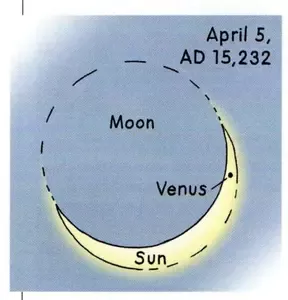 prophecies which are quite certain
 -
What to see on Mercury
Aug 11, 26 07:51 AM
 The Mercurian scene