guess who,
guess when and
guess the situation
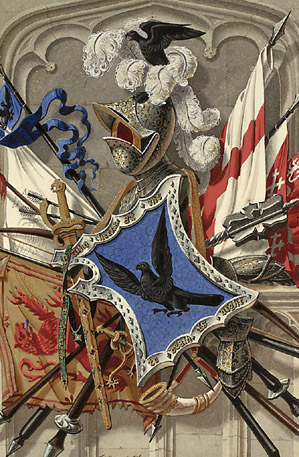
in the game of jasoomian gathol thrones
[ links to Colonising genre-space and Jasoomian Gathol ]
Place the following situations in their right context if you can...
2026 March 13th: entry 14
SINGLE COMBAT
The King rode out to supervise his army's frontal positions. One of the enemy knights spotted him and spurred his charger, hoping to win undying fame by killing or capturing him. Though mounted on a palfrey and armed with only a battle-axe the King did not evade the encounter; as the knight charged ponderously with lance at the ready, the King sidestepped and with his axe cleft the knight's skull.
2026 February 26th: entry 13
THE ARCHBISHOP OF CANTERBURY PLEADS FOR THE LIFE OF
THE ARCHBISHOP OF YORK
The Archbishop rode day and night and finally burst into the King's chamber to plead for the life of his colleague of York. What would people think if the King were to kill an archbishop?
The King listened but did not agree...
2026 February 17th: entry 12
THE IMPRISONED POET-KING FINDS LOVE
In a poem the King relates that he was lying awake at midnight in his prison chamber and, being unable to sleep, read a portion of a work of Boethius. Shutting the book, he meditates on the reverses of fortune until he hears the bell ring for matins. He determines to write a poem... To divert his thoughts, he walks to the window. This is the turning point of his life, for he hears in the garden below the cheerful song of the nightingale and presently sees a lady with whom he falls in love at first sight...
2026 February 10th: entry 11
THE QUEEN BEGS THE ADMIRAL FOR MERCY
To plead for the life of an old friend, the queen went down on her knees before the Admiral, who, a member of a victorious clique of noblemen who were dominating the king, was determined on the execution of the king's former tutor.
The Admiral was implacable. He "pulled at his beard and glowered about him, anxious to end the scene but not daring to carry disrespect to the point of turning his back on her and leaving the room. It is said that she remained on her knees for three hours, all to no avail."
2026 February 3rd: entry 10
THE KING HIDES IN A SEWER
The King had been staying in a priory over the Christmas season.
One night the treacherous chamberlain of the royal household laid planks over the defensive ditch around the priory, and eight armed conspirators entered, while the King was alone with the queen and her ladies.
Noise of clanking armour gave the King warning of approaching danger. The locks of the doors had been rendered useless by the chamberlain, so the room could not be secured. Therefore the King sought to escape by using a poker to wrench up the planking of the floor.
Having done so, he let himself down to the sewer that ran beneath...
2026 January 27th: entry 9
THE HESITANT QUEEN
The fifteen-year-old girl was bewildered when the noblemen knelt to kiss her hand. She blushed scarlet when one of them called her "their sovereign lady". Not knowing what was going on, she was led into the Chamber of State where her family - father, mother, husband, father-in-law - bowed and curtsied low. She was then led further, into the area under the canopy reserved to royalty.
Then the Duke, her father-in-law, announced the news: the King was dead. That was the first shock; for the secret had been well-kept. The second shock was to hear the Duke say what the King had done just before he died.
She heard the shattering news that the King had disinherited his own immediate family and bequethed the Crown to - herself.
The Duke was continuing, "This declaration hath been approved by all the Lords of the Council, most of the peers and all the judges of the land, and all this confirmed and ratified by letters patent under the Great Seal of England. There is nothing wanting but Your Grace's grateful acceptance of the high estate which God Almighty, the sovereign and disposer of crowns and sceptres - never sufficiently to be thanked by you for so great a mercy - hath advanced you to..."
Eventually the girl fainted; when she came to, she burst into tears. She denied that she had any right to the crown. The Duke responded angrily, "Your Grace doth wrong to yourself, and to your house!" Her family pleaded with her, then stormed at her. Silently, then, she asked God what she should do.
There seemed to be no answer; no voice in her mind telling her what to do.
She took this silence to mean that she was permitted to wear the crown.
Between three and four o'clock on that afternoon of July 9th, she was being conveyed on the state barge down the river towards the royal apartments in the Tower. She had been gien shoes with three-inch soles to increase her height so that the crowds could see the Queen whom they hardly knew...
2026 January 17th: entry 8
A STUNNING RAPPROCHEMENT
The scene: Angers, capital of the province of Anjou, in northern France.
The exiled queen of England sat in the castle, looking at a sight that should have amazed anyone who knew the wrongs which she and her family had suffered. The man who had been her greatest enemy - the powerful earl who more than anyone else had been responsible for her exile and for the dethronement of her husband - had come to kneel before her and beg her forgiveness! More than that, he was now proposing that she and he join forces, and that he would recompense her for the past by his future achievements in her cause!
For now the earl was an exile too. He needed her help, just as she needed his.
He knelt before her for fifteen minutes before she could bring herself to reply. Eventually, with the King of France acting as go-between, an agreement was reached: the earl would lead an army to restore the queen's husband to the throne of England; and the earl's daughter would wed the queen's son.
2026 January 8th: entry 7
A "SUMMIT" OF THE TWO BRITISH KINGS?
The King of England had arranged with the King of Scots that they would meet at York for a discussion of how to ease the growing tension between their two realms.
Fifteen hundred workers laboured for weeks, building and painting, to furbish the abbey hall of St Mary's at York till it was fit for an encounter between sovereigns.
With thousands of troops and retainers, the King of England went north and waited at York for nine days, but the King of Scots never came.
2026 January 6th: entry 6
THE CLAIM AND THE SILENCE
The duke rode to Westminster accompanied by five hundred armed men, trumpets blowing, banners with the royal arms of England held aloft, and a sword borne upright before him. When he reached the palace of Westminster he
"...went straight through the great hall until he came to the chamber where the king, with the commons, was accustomed to hold his parliament. There he strode up to the throne and put his hand on its cushion, just as though he were a man about to take possession of what was rightfully his. He kept it there for a while the, withdrawing it, he turned to the people and, standing quietly under the canopy of state, waited expectantly for their applause."
Instead of which, there was a stony silence. No sign of acclamation for his claim to the throne.
Eventually, the archbishop of Canterbury approached him and asked him if he wished to see the king.
The duke replied, "I know no one in the kingdom who ought not rather to wait on me."
But he had hesitated, and the vital moment had passed...
2026 January 4th: entry 5
AMBASSADOR'S BLUFF
Custom required that a foreign ship strike its colours whenever it entered a harbour in the Channel in which an English warship also happened to be floating.
The new ambassador, however, immediately after his landing at Portsmouth, instructed his captain to refuse to lower his flag.
The English captain informed him that he must either lower his flag or be blown out of the water.
The ambassador asked for time: just enough time to write a letter to the King of England, saying what had happened and asking permission to return to his ship, so that he could go down with her if she were sunk by the guns of the English.
The ambassador was guessing that the King of England would not risk war on the issue of prestige involved. And the gamble paid off. Permission was given to the ambassador, to travel up to London without the need for his ship to give the salute.
The ambassador had won a special concession for the pride of his country.
2025 December 31st: entry 4
VOLTE-FACE OF THE REBEL HEIR
The heir to the throne, who had rebelled against the King his father, was actually leading a party of pursuers in an attempt to capture his father, when one of the old King's loyal adherents laid an ambush for the pursuers and attacked the heir, knocking him off his horse.
This gained the King a bit of time, and he reached one of his castles in safety; but he died a few days later.
Thus the situation was suddenly transformed. The rebel leader had now himself become King. Suddenly he became totally in favour of loyalty to the throne. Needing loyal supporters, he regarded those who had shared in his own rebellion as traitors; while he respected those who - unlike himself - had remained loyal to his father.
A prominent example of this respect, was that the new King rewarded and promoted, instead of punishing, the knight who had unhorsed him.
2025 December 28th: entry 3
THE THRONE PASSES TO A COMMONER
It was an extraordinary occasion, unique in English history. The dying, childless King of England bequeathed his crown not to his nephew who was of royal blood, but to a man whose only relevant family connection lay in the fact that he was the King's brother-in-law.
The arrangement was carried out. The man without a single ancestor of the royal line became the new King.
2025 December 21st: entry 2
THE KING KILLED BY AN EXPLODING CANNON
The common touch, in this case, was fatal.
The King who was "fellow to every private soldier" strayed close to watch the cannon firing a salute to welcome the arrival of the Queen. The idea had been, that her presence beside him would give further cheer to their troops, were were besieging the enemy stronghold. But the celebrations went tragically wrong. The cannon exploded accidentally, a flying fragment killing the King.
2025 December 20th: entry 1
THE QUEEN MAKES WAR ON HER HUSBAND
The King of England allowed his wife to go to France on a diplomatic mission.
She completed it successfully under terms which required the attendance of the prince, their eldest son. So the King allowed the prince, also, to travel to France: accompanied by the Bishop of Exeter, the boy crossed the Channel to join his mother.
Once the Queen had the thirteen-year-old heir to the throne in her power she felt able to defy her husband. The Bishop of Exeter fled her party in disguise and returned to England to warn the King that she had taken a lover and was plotting treason.
The King tried to fortify the coast and the castles of southern England as a defence against invasion, but the unpopularity of his ministers hindered his efforts and caused mutiny in the fleet, preventing the interception of the Queen's supporters when they finally set sail.
The Queen landed in Suffolk with only a few hundred followers, but rapidly her forces gathered adherents. The Bishop of Exeter was seized by the London mob and decapitated with a butcher's knife; his head was sent to the Queen who accepted the gift with thanks.
The King and his ministers meanwhile fled westwards...
Zendexor greatly appreciates your donation of £2! Thank you.
Recent Articles and Updates


-
Guess The World - Seventh Series
Oct 08, 26 03:37 PM
 Yet more scenes from Solar System worlds
 -
Haunted Worlds - Fictional auras of places on Earth, the Moon and Mars
Oct 08, 26 03:15 PM
 The double life of our place-names
 -
Deeds of the Creators
Oct 08, 26 02:48 PM
 in addition to expanding our consciousness
 -
Fictional Dates of the Old Solar System
Oct 07, 26 12:33 PM
 our timeline extended into imagined pasts and futures
 -
Uranian Throne episode 24 Underway
Oct 07, 26 08:38 AM
 The skyfleet sails into Fyaym
 -
Guess The World - how many scenes on each world
Oct 05, 26 06:09 AM
 how each world is doing on the scenic front
 -
What to see on Jupiter
Oct 05, 26 05:58 AM
 The Jovian scene
 -
History of Hopes
Oct 03, 26 10:46 AM
 Optimistic science and speculation
 -
the hits race
Oct 01, 26 10:37 AM
 the monthly popularity-contest for worlds
 -
Countries
Sep 30, 26 12:56 PM
 Supplementary Gazetteer for countries in sf scenes
 -
Zendexor's OSS Diary 2026
Sep 29, 26 03:19 PM
 reflections on life, the oss and everything
 -
Eras, Periods and Epochs
Sep 28, 26 02:01 PM
 The ages of deep time
 -
Uranian Throne - index of proper names
Sep 28, 26 12:43 PM
the people and places of Ooranye -
What to see on Titan
Sep 28, 26 05:16 AM
 The Titanic scene
 -
What to see on Callisto
Sep 26, 26 04:11 AM
 The Callistan scene
 -
Artists who have illustrated the Old Solar System
Sep 22, 26 12:53 PM
 visual depictions of the OSS
 -
What to see on Mars
Sep 21, 26 03:40 AM
 The Martian Scene
 -
Authors of the Old Solar System
Sep 18, 26 01:09 PM
authors who have contributed to the old solar system -
What to see on the Moon
Sep 18, 26 04:05 AM
 The lunar scene
 -
What to see on Venus
Sep 14, 26 02:01 AM
 The Venusian scene
 -
What to see on Phobos
Sep 07, 26 05:36 AM
 the scene on the inner moon of Mars
 -
CLUFFS
Sep 06, 26 11:33 AM
 CLUFFS - Cute Little Unfulfilled Fragments of Fascination
 -
Idea for another site - The Stellar Neighbourhood
Sep 06, 26 11:10 AM
 the named or designated stars that appear in literature
 -
What to see on the Asteroid Progenitor Planet
Sep 03, 26 09:18 AM
 The Lost Planet scene
 -
Jasoomian Gathol
Aug 22, 26 08:40 AM
 dreams and themes from an island
 -
What to see on Uranus
Aug 17, 26 03:12 AM
 The Uranian scene
 -
Future Dates for Real
Aug 12, 26 02:39 PM
 prophecies which are quite certain
 -
What to see on Mercury
Aug 11, 26 07:51 AM
 The Mercurian scene