deeds of the creators
(and events in their lives)
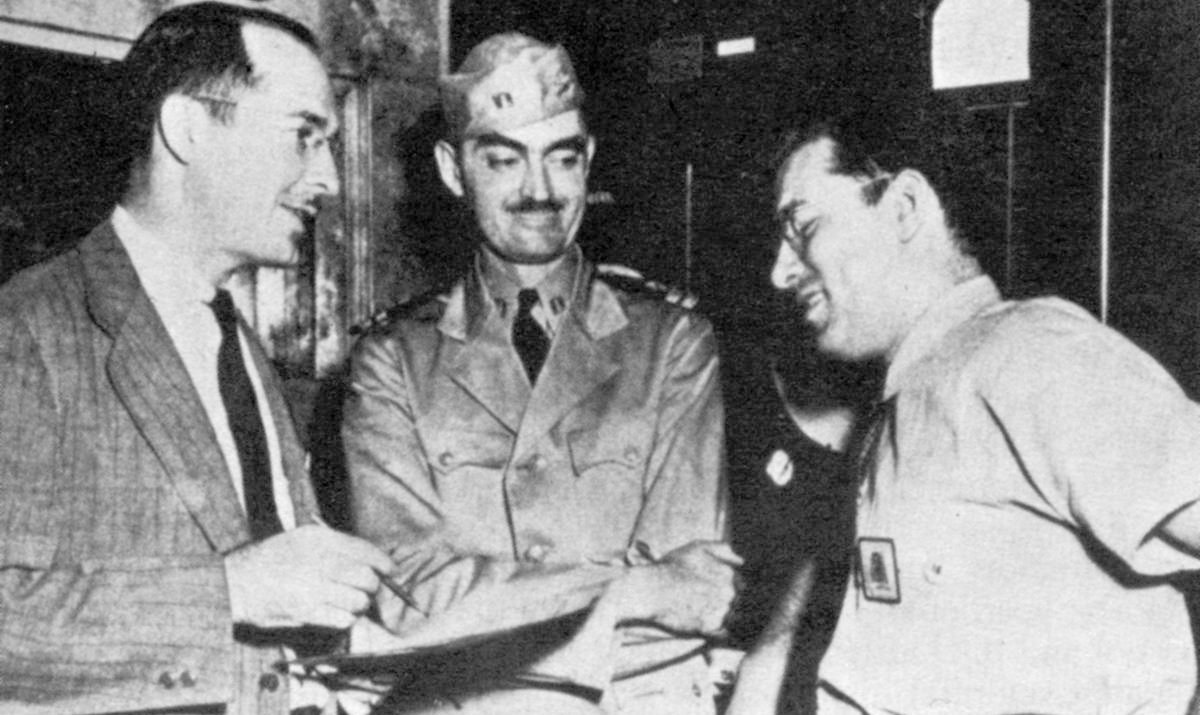 Robert Heinlein, L Sprague de Camp and Isaac Asimov, Philadelphia Navy Yard, 1944
This is intended to grow like the other add-on pages - such as the Diary, the Gazetteer and Fictional Dates - into an expanding tribute to the eruption of imaginative awareness that shone its brilliance onto humanity during the first two-thirds of the twentieth century, with some halation of the glow before and after. Here, the emphasis will be on the creators as people; what they did and what was done to them in their involvements in the real world.
(As with some other pages, particularly the Fictional Dates, here the topic will spill over from the Old Solar System to the sf greats in general, because I shan't wish to exclude information about an author just because he or she is more interstellar than OSS.)
1619
Birth of Savinien Cyrano de Bergerac, c. 6th March 1619, in Paris.
1655
Death of Savinien Cyrano de Bergerac, 28th July 1655, in Sannois, Île-de-France.
1828
Birth of Jules Verne, 8th February 1828, in Nantes, Brittany.
Birth of Gustavus W Pope, 3rd December 1828, in Oneida, N.Y.
1837
Birth of Percy Greg, 7th January 1837, in Manchester.
1838
20th December: birth of Edwin A Abbott, in Marylebone, London.
1842
Birth of Camille Flammarion, 26th February 1842, in Val-de-Meuse, Champagne, France.
1847
Birth of "Fenton Ash" [= Francis Henry "Frank" Atkins]
1848
In July
1848, Jules Verne left Nantes for Paris, where his father intended him to
finish law studies and take up law as a profession.
In a letter to his
family, Verne described the bombarded state of the city after the recent June Days uprising but assured them that the
anniversary of Bastille Day had gone by without any significant
conflict.
1849
Jules Verne makes the acquaintance of Alexandre Dumas.
1850
Birth of L P Gratacap, 1st November 1850, in Gawanus, New York.
1851
In 1851, Jules Verne met with a fellow writer from Nantes, Pierre-Michel-François Chevalier (known as "Pitre-Chevalier"), editor-in-chief of the magazine Musée des familles. Pitre-Chevalier was looking for articles about geography, history, science, and technology, and was keen to make sure that the educational component would be made accessible to large popular audiences using a straightforward prose style or an engaging fictional story. Verne, with his delight in diligent research, especially in geography, was a natural for the job. Verne first offered him a short historical adventure, and Pitre-Chevalier published it in July 1851, then published a second short story by Verne, A Voyage in a Balloon (August 1851). The latter story, with its combination of adventurous narrative, travel themes, and detailed historical research, would later be described by Verne as "the first indication of the line of novel that I was destined to follow." [WJGV]
Birth of C C Dail, in Kentucky.
1856
Birth of H Rider Haggard, 22nd June 1856, at Bradenham, Norfolk.
1857
14th May 1857: birth of Edwin Lester Arnold, in Swanscombe, Kent.
Birth of George Chetwynd Griffith-Jones [= George Griffith], 20th August 1857, in Plymouth, Devon.
1859
Birth of Arthur Conan Doyle, 22nd May 1859, in Edinburgh.
1864
Birth of John Jacob Astor IV, in Rhinebeck Valley, N.Y., 13th July 1864.
1865
Birth of William Dixon Bell, 10th May 1865.
Birth of Robert W Chambers, in Brooklyn, New York, 26th May 1865.
1866
Birth of G I Gurdjieff, 13 January 1866 (?), in Gyumri, Armenia.
Birth of H G Wells, 21st September 1866, in Bromley, Kent.
1867
E F Benson born, 12th July 1867, in Crowthorne, Berkshire, England.
1869
Birth of Robert William Cole, 6th August 1869, in Heston, Middlesex.
1873
30th July 1873: birth of Curtis Charles Senf, in Rosslau, Russia.
Camille Flammarion, a renowned French astronomer and enthusiastic aeronaut, spent his honeymoon in a balloon with his bride, Sylvie Pétiaux. The balloon ascension took place on 28th August 1874, shortly after their wedding, with the trip lasting 24 hours and ending with a descent at Spa.
Birth of Lucien Rudaux, 18th October 1874, in Caudelec-lès-Elbeuf, Normandy, France.
Birth of Edgar Rice Burroughs, 1st September 1875, in Chicago.
1877
Birth of William Hope Hodgson, 15th November 1877, in Blackmore End, Essex.
1878
Birth of Howard V Brown, 5th July 1878, in Lexington, Kentucky.
1879
2nd July 1879: birth of Hugh Rankin, in Loda, Illinois.
1884
Birth of Charles W Diffin, 25 March 1884, in Meadville, Pennsylvania.
18th April 1884: birth of Frank R Paul [Franz Rudolphe Paul], in Radkersburg district, Austria.
H G Wells gets his studentship:
...In May came the examinations, and when the results were announced... a whole shower of "A" certificates descended on the head of Wells. An official letter from the Department of Education followed, offering him a studentship at the Normal College of Science in South Kensington with a bursary of a guinea a week, leading on possibly to a degree as Bachelor of Science. To give oneself to learning, and to be paid for it! To sit under such famous men as Professor Huxley, Darwin's friend and defender, and Norman Lockyer, the astronomer, who taught at the Great Gallery of Iron on Exhibition Road... He knew he was crammed with indigestible fact, that he had seen nothing illustrated or demonstrated, and he could only imagine what a laboratory was like. But he was full of self-confidence. Science held out to nearly everyone at that time the promise of a new dawn... [LDHGWp42-3]
Birth of Hugo Gernsback, 16th August 1884, in Luxembourg City.
1887
Birth of Roget Sherman Hoar (=Ralph Milne Farley), 8th April 1887, in Waltham, Massachusetts.
Birth of Ray Cummings, 20th August 1887, in New York City.
Birth of Willard Hawkins, 27th September 1887, in Fairplay, Colorado.
Birth of Miriam Allen deFord, 21st August 1888, in Philadelphia.
Birth of Thea von Harbou, 27th December 1888, in Tauperlitz, Germany.
1889
Birth of Miles J Breuer, 3rd January 1889, in Chicago.
Birth of Erle Stanley Gardner, 17th July 1889, in Malden, Massachusetts.
Death of Percy Greg, 24th December 1889, in London.
1890
Birth of E E Smith (later known as "Doc" Smith), 2nd May 1890, in Sheboygan, Wisconsin.
Birth of H P Lovecraft, 20th August 1890, in Providence, Rhode Island.
1891
Birth of Clare Winger (upon marriage in 1912, Clare Winger Harris), 18th January 1891, in Freeport, Illinois.
Edgar Rice Burroughs at age fifteen was sent to work with his elder brothers on a ranch near Yale, Idaho.
...The greenest of ranch hands, young Burroughs began to gain his experience in the most painful ways. His brothers George and Harry were hard put to find some tasks he could do.
...I did chores, grubbed sage brush and drove a team of bronchos to a sulky plow. I recall that once, after I unhooked them, they ran away and evidently, not being endowed with any too much intelligence, I hung onto the lines after tripping over a sage brush and was dragged around the country three times on my face...
"...as I had proven more or less of a flop as a chore boy," Ed noted, "they appointed me mail carrier." He rode daily to the railroad at American Falls, either on horseback or, if there was freight to bring back, with a team and wagon. When he went on horseback, he made the round trip of sixty miles in one day... [ERBIP p47, p 49]
1892
Birth of J R R Tolkien, 3rd January 1892, in Bloemfontein, Orange Free State [now in South Africa].
1893
Birth of W E Johns, 5th February 1893, in Bengeo, Hertfordshire.
The life of H G Wells takes a new direction after he falls in danger while working as a science teacher at the University Correspondence College in London:
...One evening in May 1893 he left the school in Red Lion Square, hurrying for his train at Charing Cross Station. As he ran down the steps to the platform, he coughed sharply, and there came the familiar gush of blood to his mouth and he knew that once again he had started a haemorrhage. In the night a second and much greater haemorrhage occured. There was no question of a stained handkerchief now; this looked like death itself. He seemed to be finished with life before he had really begun.
It was a night when, fevered and coughing up blood, his spirits should have been at their lowest ebb. But instead of feeling depressed, he confesses that he felt a subdued state of excitement. He believed this to be so because he knew that if he survived this attack he would not be able to go on teaching and that now he would have to depend on his pen for a living... [LDHGWp71]
17th October 1893: birth of Richard Connell, in Poughkeepsie, N.Y.
George Griffith's "Phileas Fogg" act:
...in March 1894, at the invitation of his ever-demanding employers, Griffith began a successful attempt to break the record for circumnavigating the globe, then held by a journalist from the New York Herald. Relishing his part in this publicity stunt, Griffith’s sixty-five day journey was covered at length by Pearson’s Weekly. Boarding a ship from Naples to Hong Kong via Ceylon, and another from Yokohama to Vancouver, Griffith travelled the length of the Canadian Pacific Railway, before taking a final boat from New York to Southampton, and arriving back at Charring Cross on 16th May...
19th August 1894: birth of Hans Wessolowski, in Graudenz, Germany.
1896
Birth of Charles R Tanner, on 17th February 1896, in Cincinnati.
Birth of William Fitzgerald Jenkins [= Murray Leinster], 16th June 1896, in Norfolk, Virginia.
Birth of Otto Willi Gail, 18th July 1896, in Guzenhauzen, Germany.
Stanton A Coblentz born, 24th August 1896, in San Francisco.
1898
ERB tries to join the Rough Riders:
...Even on the small ranch in Idaho, so remote from the center of the nation, Ed had become aware of the turbulent events that were arousing the nation, driving Americans to a fever pitch of patriotism. The sinking of the battleship Maine in Havana Harbor on February 15, 1898, had provided a climax to the already tense situation between America and Spain...
...Most exciting to him was the news that Theodore Roosevelt had assembled his Rough Riders to join in the battle. He wrote directly to Roosevelt, volunteering for the Rough Riders; the response was prompt, terse and disappointing:
First Regt. U.S. Vol. Cavalry
In Camp near
San Antonio, Texas,
May 19th, 1898.
Edgar Rice Burroughs,
Pocatello, Idaho.
Dear sir,
I wish I could take you in, but I am afraid that the chances of our being over-enlisted forbid my bringing a man from such a distance.
Yours very truly,
T. Roosevelt
Lt. Col.
The typed note bore Roosevelt's sprawling signature. [IPERBp126-7]
Birth of George Henry Weiss [= Francis Flagg], 4th July 1898, in Halifax, Nova Scotia.
In November 1898, William Hope Hodgson was awarded the Royal Humane Society medal for heroism for saving another sailor who, in March of the same year, had fallen from the topmast into the sea in shark-infested waters off the coast of New Zealand.
Birth of C S Lewis, 29th November 1898, in Belfast.
Birth of Nevil Shute Norway, 17th January 1899, in Ealing, London.
Jorge Luis Borges born on 24th August 1899, in Buenos Aires.
In 1899, at age 22, William Hope Hodgson opened a School of Physical Culture in Ainsworth Street, Blackburn, England, as "the inventor and teacher of a system that will cure indigestion". The School offered tailored exercise regimes for personal training. Among his customers were members of the Blackburn police force.
Birth of Paul Ernst, 7th November 1899, in Akron, Ohio.
Birth of R F Starzl, 10th December 1899, in Le Mars, Iowa.
1900
Birth of Donald Suddaby, 20th December 1900, in Leeds.
1901
A development that transforms the lives of the 14-year-old Olaf Stapledon, his father William (who had been clerking in Egypt for many years) and his mother Emmeline:
...the three Stapledons celebrated the most momentous event in their family history since Olaf's birth: the long-hoped-for permanent return of Willie to Liverpool. How William Stapledon came to have a post in 1901 as one of the managers of the Ocean Steam Ship Company's Blue Funnel Line... is a mystery...
Whatever lay behind Willie's ascension to the board of managers, its effect on his family was immediate. In January and February of 1901, Olaf solemnly recorded the stages of Queen Victoria's final illness, her death and funeral, and the memorial service in Liverpool. The next month he and Emmeline headed for Port Said to help Willie pack up the family possession; the passage from the Victorian to the Edwardian age coincided exactly with the new era in the Stapledon microcosm... [OSSFTFp45-6]
Birth of Frank Belknap Long, 27th April 1901, in New York City.
Birth of Gawain Edwards, 19th May 1901, in Omaha, Nebraska.
15th August 1901: birth of Albert dePina, in Havana, Cuba.
1902
Howard Phillips Lovecraft discovered discovered what he called "the myriad suns and worlds of infinite space" in 1902 at the age of eleven or twelve. He credited the "excellent but somewhat obsolete collection" of astronomy volumes amassed by his maternal grandmother for sparking his interest in the science... [CDHPL]
Birth of Stanley G Weinbaum, 4th April 1902, in Louisville, Kentucky.
Birth of Robert Shirley Richardson [= Philip Latham], 22nd April 1902, in Kokomo, Indiana.
Death of Gustavus W Pope, 21st July 1902, in Washington, D.C.
On Friday, 24th October 1902, William Hope Hodgson appeared on stage at the Palace Theatre in Blackburn, Lancashire, with handcuffs and other restraining devices supplied by the Blackburn police department, and applied the restraints to escapologist Harry Houdini, who had previously escaped from the Blackburn jail. Hodgson's behaviour towards Houdini generated controversy; the escape artist had some difficulty removing his restraints, complaining that Hodgson had deliberately injured him and jammed the locks of his handcuffs.
Death of C C Dail, near Quindaro, Kansas.
1903
Jack Bradley born.
Sir Arthur Conan Doyle founded the Crimes Club, a private social club, in 1903. Its purpose was discussion of crime and detection, criminals and
criminology, and continues to this day as "Our Society", with membership
numbers limited to 100. The club meets four times a year at the
Imperial Hotel, Russell Square, London, with the proceedings conducted
under the Chatham House Rules. Its logo is a silhouette of Doyle.
[From the net, 1 August 2026]
Birth of John Wyndham Parkes Lucas Beynon Harris, on 10th July 1903, in Dorridge, Warwickshire.
1904
A suddenly difficult year for the young H P Lovecraft:
...In 1904 the death of his grandfather brought severe financial hardship to Howard's family, and he and his mother moved into a modest apartment. Always a sickly child prone to nerves and fatigue, as a fourteen-year-old he fell victim to illness, probably psychologically induced... [TNAHPLpxxxiii-xxxiv]
In April of 1904 Edgar Rice Burroughs and his wife Emma said their farewells to Idaho, the adventurous days of a near-frontier life forever behind them, and departed for Salt Lake City... In May ERB was appointed a railroad policeman, to be paid by the Oregon Railroad Company. [ERBIPp156-7]
Birth of Clifford D Simak, 3rd August 1904, in Millville, Wisconsin.
4th October 1904: birth of Earl Andrew Binder, in Harkau, Austro-Hungarian Empire.
21st October 1904: birth of Edmond Hamilton, in Youngstown, Ohio.
1905
9th January 1905: birth of Eric Frank Russell, in Sandhurst, Berkshire.
Death of Jules Verne, 24th March 1905, in Amiens, Picardy.
10th May 1905: birth of Alex Schomburg, in Puerto Rico.
Birth of Leslie Frances Rubenstein [= Leslie F Stone], 8th June 1905, in Philadelphia.
Birth of Mae Freeman, 15th August 1905.
Birth of Robert E Howard, 22nd January 1906, in Peaster, Texas.
Lovecraft urges the search for the ninth planet:
In 1906 a fifteen-year-old amateur astronomer in Providence, Rhode Island, penned a letter to Scientific American urging the world's observatories to "band together and minutely photograph the ecliptic" in a quest for planets beyond Neptune...
His third and last telescope was
a Bardou 3-inch refractor bought from Montgomery Ward in 1906 for $50...
[CDHPL]
H G Wells meets Maxim Gorki in New York:
...when Gorki, who had arrived there in a blaze of glory and renown to appeal for funds to help the victims of Czarist oppression, was in the process of being evicted from his hotel upon the discovery that the woman accompanying him was not his wife...
...This had happened during Wells' American tour, and naturally a situation like this had aroused all his excitement and ardour. "At one moment Gorki was in immense sunshine, at the next he was literally being pelted through the streets... To me it was astonishing, it was terrifying..." [LDHGWp263-4]
Death of George Griffith, 4th June 1906, in Port Erin, Isle of Man.
29th October 1906: birth of Frederick Brown, in Cincinnati.
1907
Doyle as real-life detective:
...On January 11th, 1907, the first instalment of his eighteen-thousand-word statement, The Case of Mr. George Edalji, appeared in the Daily Telegraph.
First he held up the evidence against Edalji, and carefully tore it into small pieces...
This, said Conan Doyle, was a kind of squalid Dreyfus case. In each affair you had a rising young professional man ruined by authority over a matter of forged handwriting. Captain Dreyfus, in France, had been made a scapegoat because he was a Jew. Edalji, in England, had been made a scapegoat because he was a Parsee... [ALOSACDp192]
Birth of Ira Freeman, 9th May 1907.
Birth of Leslie Charteris [as Leslie Charles Bowyer-Yin] 12th May 1907, in Singapore.
Birth of Georges Remi - later known as Hergé - on 22 May 1907, in Etterbeek, Belgium.
Birth of Robert A Heinlein, 7th July 1907, in Butler, Missouri.
Birth of John D Clark, 15th August 1907, in Fairbanks, Alaska.
Birth of L Sprague de Camp, 27th November 1907, in New York City.
Lovecraft's five-year emotional trough begins:
...In 1908 Lovecraft was struck by a debilitating attack of depression... His 1908 breakdown caused him to abandon high school forever a few months before he would have graduated. S.T.Joshi, Lovecraft's chief biographer, speculates that the breakdown was brought on by his realization that he could never become a professional astronomer. He had been, in his own words, "repelled and exhausted" by mathematics, especially algebra...
[CDHPL]
Birth of Donald Wandrei, 20th April 1908, in St. Paul, Minnesota.
Birth of Jack Williamson, 29th April 1908, in Bisbee, Arizona Territory.
Birth of Ian Fleming, 28th May 1908, in Green Street, London.
John Russell Fearn born on 5th June 1908, in Worsley, Lancashire.
Nelson S Bond born on 23rd November 1908, in Scranton, Pennsylvania.
1909
A youthful adventure of William F Jenkins, later to be known as Murray Leinster:
His education terminated abruptly after three months of the eighth grade, never to be resumed. Young Jenkins' burning ambition was to be a scientist, and inquiry into the nature of things prompted him to buy materials to build a glider, which he successfully flew at Sandstorm Hill, Cape Henry, Virginia, in 1909, winning a prize from FLY, the first aeronautical magazine, for his achievement...
[SMSTp57]
A Mr Alden wrote to Sir Arthur Conan Doyle in February 1909:
"As the sole surviving witness of the burial of Edgar Allen Poe... and one of the few remaining who have seen him in life, I regret exceedingly that my advanced age and impaired health will prevent me from joining the centenary dinner at which you are to preside.
"As a then resident of Baltimore, my native city, I often saw Mr. Poe...
"On a cold dismal October day, so different from the ordinary weather of that clime, I had just left my home when my attention was attracted by an approaching hearse..."
So the letter continued... Conan Doyle, as he read it, had moving memories of one of his earliest literary idols. Edgar Allan Poe, he had already declared, was the supreme original short-story writers of all time. And he stressed it again, with his tribute to the inventor of the detective story among other things, when he took the chair at the Hotel Métropole dinner to honour the centenary year of Poe's birth.
[ALOSACDp200]
Birth of August Derleth, 24th February 1909, in Sauk City, Wisconsin.
H G Wells amended Ann Veronica in view of an event of 30th June 1909:
....When he must have been at the point in the story where Ann Veronica declares her love for Capes, for we know that he finished the book at the end of July, something occurred which altered his intention with the story and forced, or perhaps inspired, him to bring it to a sudden and explosive close. The evidence for this is an event explicitly described in the book and forming the turning-point to the climax: a suffragette raid on the House of Commons which took place on 30 June...
Of the twenty-seven women who were arrested, twenty-six next morning, after a night in the cells, refused to be bound over and were given prison sentences of up to three months. Wells makes Ann Veronica one of these...
[LDHGWp192]
Birth of Paul W Fairman, 22nd August 1909, in St. Louis, Missouri.
Arthur K Barnes born on 6th December 1909.
1910
Lovecraft and comets:
...He missed seeing perhaps the most spectacular comet of the early 20th century, the Daylight Comet of 1910, because of "a hellish case of measles" that kept him confined to bed. He did observe Comet Halley during its very favorable apparition later that year...
[CDHPL]
The return of Halley's Comet in 1910 (most visible in May) sparks a fascination with astronomy in the three-year-old Robert A Heinlein.
John W Campbell, Jr. born on 8th June 1910, in Newark, New Jersey.
Birth of Walter Llewelyn Hughes [= Hugh Walters], 15th June 1910, in Bradley, Staffordshire.
Birth of Lloyd Arthur Eshbach, 23rd June 1910, in Palm, Pennsylvania.
Birth of Raymond A Palmer, 1st August 1910, in Milwawkee, Wisconsin.
Birth of Fritz Leiber, 24th December 1910, in Chicago.
Frank Brueckel, Jr., born in 1910.
1911
The seven-year-old John Wyndham Parkes Lucas Beynon Harris is forced by his father, George Harris, to drink a glass of sherry in front of his horrified Wesleyan mother - this being a move by Harris to assert his authority over his richer wife and in-laws.
...George was pushing against the boundaries. The terrible evening when George forced Jack to drink sherry in front of his mother... was, like everything George did even under the influence, an instinctively canny choice. It would be sweet enough not to disgust the child, but strong enough to show his mother who was in charge.
It was also, like everything George did, a short-sighted attempt to score points without a strategy for the long-term game. Nothing could have been more likely to turn the Parkes family against him, especially given the family's Temperance campaigning...
[ABHW,p13]
Birth of C L Moore, 24th January 1911, in Indianapolis.
Birth of Raymond Z Gallun, 22nd March 1911, in Beaver Dam, Wisconsin.
Birth of Gardner F Fox, 20th May 1911, in New York City.
20th June 1911: birth of Stanley Mullen, in Colorado Springs.
Edgar Rice Burroughs begins writing the Barsoom saga:
...The immediate day-to-day pressure of providing for his growing family left him little time or energy to implement his other creative thoughts and ideas. In his Autobiography he recorded:
Evidently there was not a job to be had in Chicago. I got writer's cramp answering blind ads and wore out my shoes chasing after the others. Then, somehow, I got hold of a few dollars and took an agency for the sale of a lead pencil sharpener and borrowed office space from a friend of mine, Bert Ball, who was a corset jobber with an establishment at the corner of Market and Monroe Streets in Chicago.
I would not try to sell the lead pencil sharpeners myself, but I advertised for agents and sent them out. They did not sell any sharpeners, but in the leisure moments, while I was waiting for them to come back to tell me that they had not sold any, I started writing "A Princess of Mars", my first story.
The incredible plot concerning a certain princess on a far-off planet had probably passed through a long period of gestation. In July 1911 he started writing. The words flowed swiftly, the details clear and vivid in his mind.
As the story progressed, the pencil sharpener business ground to a halt and then expired. Ed went to work for his brother Coleman, who now owned the Champlain-Yardley Company, a firm that in Ed's words "might be grandiloquently described as manufacturing stationers - we made scratch pads." In the company's office at 222 West Kinzie Street he continued his writing and completed the first half of the story. On August 14, 1911, he mailed the manuscript, together with an explanatory letter, to Argosy Magazine, New York, preferring to use his business address rather than that of his home on 2008 Park Avenue.
Of his first story and its submission Ed recalled that at the age of thirty-five (he was within a few weeks of thirty-six) he knew nothing about writing technique, and remarked:
I had never met an editor, or an author or a publisher. I had no idea how to submit a story or what I could expect to get in payment. Had I known anything about it at all I would not have thought of submitting half a novel...
[ERBIPp182-4]
26th August 1911: birth of Otto Oscar Binder, in Bessemer, Michigan.
Birth of Walter Braden Finney, alias Jack Finney, 2nd October 1911, in Milwaukee, Wisconsin.
Birth of James H Schmitz, 15th October 1911, in Hamburg.
Birth of Valdemar Axel Firsoff, 29th January 1912, in Bila Tserkva, Russian Empire.
Olaf Stapledon is restless at the office in Liverpool:
...In January 1912 he was totalling accounts of a million pounds and couldn't locate a three-shilling error; in mock horror he wrote, "All my insides are turning to figures. My heart beats in additions; the hair on my head stands up & tries to count itself; I digest by long division." ...Desperate for a change, in the spring of 1912 he took up a standing offer from his father's brother James to come to Port Said and work for a while in the family agency, Holt's representative at the Suez Canal...
Determined not to arrive in Egypt like a spoiled junior executive on holiday, he bypassed the Blue Funnel passenger liners for a well-worn cargo boat whose only entertainments were the dinner conversations in the captain's quarters. During the thirteen-day voyage to Port Said, the ship's doctor, Olaf, and the one other paying passenger were invited by the veteran captain to argue everything from free will and determinism to whether flooding the Sahara would alter the balance of the earth...
Olaf reached Port Said on 22 March 1912... [OSSFTFp97-8]
Birth of P Schuyler Miller, 21st February 1912, in Troy, N.Y.
Birth of A Bertram Chandler, 28th March 1912, in Aldershot, Hampshire.
Birth of Charles Cloukey, 15th April 1912, in Madison, Wisconsin.
Birth of A E van Vogt, 26th April 1912, in Edenburg, Manitoba, a tiny (and now defunct) Russian Mennonite community east of Gretna, Manitoba, Canada, in the Mennonite West Reserve.
Sir Arthur Conan Doyle disguised himself as the main character in The Lost World, due to be published serially in The Strand magazine edited by Herbert Greenhough Smith, from April to November 1912:
...In an immense black beard, with adhesive eyebrows and a wig, he glared out at the camera as Professor Challenger. There was another picture, showing him seated among three friends who represented Roxton, Summerlee, and Malone. But the full-face close-up, decorated with a silk hat, was to represent Challenger as an illustration in The Strand.
"The frown is characteristic," he wrote to Greenhough Smith on February 9th, 1912. "'The Scowl of the Conans', Sir Walter Scott calls it at the end of one of his novels."
Greenhough Smith was alarmed. He said that the disguise, though sufficiently hideous, was not undetectable and might get the magazine into trouble for hoaxing. "Very well," agreed Conan Doyle three days later. "Not a word about the photo of Prof. C. I begin to realize my own audacity. After all, it is not me..."
At the same time, he was so pleased with his Challenger disguise that he had to try it on somebody. Some thirty-odd miles away, the Hornungs and their son Oscar were living at West Grinstead Park...
....Announcing that he was der Herr Doktor von Somebody, this hirsute apparition towered in the doorway. He said he was a friend of Herr Doktor Conan Doyle...
Hornung, fortunately or unfortunately, was short-sighted. Moreover, he was used to the fact that a friend of his brother-in-law might be anybody from some broken-down tramp to the Prime Minister. His welcome was effusive. The visitor, rattling off long strings of German, really did get away with it for several minutes. Then Hornung was furious...
[TLOSACDp219-220]
John Jacob Astor IV, author of A Journey in Other Worlds, was the richest passenger on board the Titanic, and died in the disaster.
In the summer of 1912 Clark Ashton Smith visited his mentor the poet George Sterling in Carmel.
Edgar Rice Burroughs refers to the unpopular ending of Tarzan of the Apes and considers an Arab mate for Tarzan:
...On December 20 he wrote:
There is so much reference to the "punk ending" that I am inclined to think that that is the very feature of the story that really clinched their interest. For two cents I'd give them another surprise in the sequel. I have a bully little Arab girl, daughter of a sheik, who is the only logical mate for a savage like Tarzan. I am just "thinking", however, and probably shall not do it, though it would be quite artistic. [ERBIPp244]
Birth of J Harvey Haggard, 30th November 1912, in Ozark Township, Missouri.
Birth of Henry Guth in 1912.
Birth of Henry Hasse, 7th February 1913, in Indiana.
John Boland born on 12th February 1913, in Birmingham.
On 6th July Edgar Rice Burroughs sent his publisher Thomas Metcalf the sequel to The Gods of Mars,
...which both Metcalf and the All-Story readers had been demanding. He titled it "The Prince of Helium"...
...I hope the ending will suit everybody - especially you.
...Am not sure that you will find the title commercially fit. I had difficulty in finding one to suit me. First I called it The Yellow Men of Barsoom; but that didn't describe the story. I also thought of The Fighting Prince of Mars, and The War Lord of Barsoom. How would something like Across Savage Mars do?
Well, if you like the story, and I hope you will, you can dope out your own title - my think tank is exhausted. [ERBIPp263]
Birth of Paul Myron Anthony Linebarger (later known to sf as Cordwainer Smith), 11th July 1913, in Milwaukee, Wisconsin.
ERB's publisher provides some paratext for the Barsoom saga:
...For the All-Story "Table Talk" of October, 1913, Metcalf, on his own initiative, arranged a glossary of Martian terms. In the column he commented, "Mr. Burroughs had all the terms at hand and we simply put them in alphabetical order and are printing them hereinafter, so that all who read the Martian stories may know exactly what is what." His glossary was divided into categories of "Proper Names" and "Common Names". [ERBIPp277]
Birth of Alfred Bester, 18th December 1913, in New York City.
Late in 1913, H P Lovecraft begins contributing a monthly astronomy-column for the Providence Evening News. [>>1918]
1914
Ray Cummings worked as an assistant to Thomas Alva Edison during 1914-19.
H G Wells at the outbreak of the Great War:
On 4 August his and Rebecca West's son was born. He spent that strange Bank Holiday awaiting that event, and when the mother and child were safe and well, and it was plain that Germany was not going to respond to Britain's ultimatum and that Armageddon might indeed be at hand, he sat down late that night to write an article to which he gave the title that was to be taken up as a national catch-word, "The War That Will End War"... [LDHGWp270]
1st October 1914: birth of Donald A Wollheim, in New York City.
20th October 1914: L P Davies born, in Crewe, Cheshire.
11th November 1914: Howard Fast born, in New York City.
In December 1914 a letter was forwarded to Edgar Rice Burroughs containing the first inquiry about a foreign language translation of Tarzan of the Apes:
...from Dr. Ralph Julian Sachers of New York requesting German rights to the famous story. Ed was inclined to view the whole matter with skepticism. The European situation, with World War I in full swing, made a request for terms on German translation rights appear particularly inappropriate...
....Ed commented, "In the first place it is doubtful if Germany would provide a profitable field at this time even for a novel of the first magnitude; and in the second the popular interest in a novel featuring an English lordling and a French Officer in heroic roles would be notable for its absence." [ERBIPp357]
Birth of Henry Kuttner, 7th April 1915, in Los Angeles.
2nd June 1915: birth of Lester del Rey, in Saratoga, Minnesota.
24th June 1915: birth of Fred Hoyle, in Gilstead, Bingley, in the West Riding of Yorkshire.
Birth of Ernest Hill, 14th July 1915, in Stourbridge, Worcestershire.
Olaf Stapledon performed ambulance work with the Friends' Ambulance Unit (FAU) on the Western Front in France and Belgium from July 1915 to January 1919. As a conscientious objector and registered pacifist, he chose a non-combatant role, driving ambulances and carrying wounded men under fire. He served with the French Army's Section Sanitaire Anglaise 13 (SSA 13) and was eventually awarded the French Croix de Guerre for bravery.
Birth of David I Masson, 6th November 1915, in Edinburgh.
7th December 1915: Leigh Brackett born, in Los Angeles.
Birth of Charles L Harness, 29th December 1915, in Colorado City, Texas.
1916
August 1916: Edgar Rice Burroughs on vacation finds himself seated with William Jennings Bryan:
...At the dinner table in Larned, Kansas, the Burroughs family was surprised to discover that the distinguished William Jennings Bryan was seated near them; he had come to open a chautauqua series. Ed, disapproving of Bryan's pacifist philosophy, commented disparagingly about him: "He is not as large a man, physically, as I had thought. His face belies his peace-at-any-price character. I have no admiration for him; but I imagine he would fight as well as the next man if necessity arose. It is sad to see one of his ability striving to paint a whole nation yellow and making them like it..." [ERBIPp392]
Birth of Jack Vance, 28th August 1916, in San Francisco.
...Dated October 21st, 1916, there appeared in the psychic magazine Light Conan Doyle's article announcing his belief in communication with the dead.
Pondering his words carefully, he said that in the face of the evidence for survival there were two courses of thought.
"It is absolute lunacy, or it is a revolution in religious thought," he wrote...
[ALOSACDp264]
Birth of Stanley Bennett Hough (= Rex Gordon), 25th February 1917, in Preston, Lancashire.
Robert Bloch born in Chicago, 5th April 1917.
Arthur C Clarke born in Minehead, Somerset, 16th December 1917.
Death of L P Gratacap, some time in 1917, in New York City.
1918
The Providence Evening News rebuffs HPL [see entry for 1913]:
...Lovecraft gave up his astronomy column in 1918 after an editor asked him to dumb it down... [CDHPL]
Edgar Rice Burroughs shows he's peeved at the movie industry:
...On January 16, 1918, with Tarzan of the Apes scheduled to open at the Broadway Theatre in New York on the 27th, Harry L. Reichenbach, publicity manager for the National Film Corporation, advised Ed that a box was being held for him. The Burroughs reply was frosty and succinct: "Thank you for your invitation to the opening of the Tarzan picture, which I shall have to decline." Throughout the years of waiting, Ed had experienced rebuffs and rejections in his numerous attempts to have Tarzan produced, and the repeated statements about the difficulties of adapting the jungle story to the screen had almost convinced him that a Tarzan film was impossible... [ERBIPp431-2]
Birth of Philip José Farmer, 26th January 1918, in North Terre Haute, Indiana.
C S Lewis was wounded on Mount Bernenchon during the Battle of Arras on 15 April 1918 - by an English shell exploding where it should not have been... [RLGWHp54-5]
In his autobiography Lewis described the experience:
...I found (or thought I found) that I was not breathing and concluded that this was death. I felt no fear and certainly no courage. It did not seem to be an occasion for either. The proposition "Here is a man dying" stood before my mind as dry, as factual, as unemotional as something in a text-book. It was not even interesting. The fruit of this experience was that when, some years later, I met Kant's distinction between the Noumenal and the Phenomenal self, it was more to me than an abstraction. I had tasted it; I had proved that there was a fully conscious "I" whose connections with the "me" of introspection were loose and transitory... [SBJp159]
17th or 19th April 1918: an artillery shell kills William Hope Hodgson, in the Ypres salient, Belgium.
Jack Williamson (1908-2006) recalls the childhood hardships of a homesteader:
...From the age of eight or nine I often worked through long days alone, riding a horse behind cows or some farm implement behind a team of mules. In the dry year of 1918, I remember driving the wagon behind our little herd of starving cattle on a long expedition into Texas to search for grass... [TEWp11]
Birth of D F Jones, 15th July 1918, in London.
Birth of H B Fyfe, 30th September 1918, in Jersey City, New Jersey.
Olaf Stapledon, of the Friends' Ambulance Unit, is awarded the Croix de Guerre:
...On 8 November word came that he was one of four Englishmen being cited for heroism during "les plus violents bombardements" of September and October. He was amused that the citation called him "careless of danger", since he "often had to refrain from speaking for fear of my voice going all of a dither." A week after the armistice, while walking out for a cup of tea, he happened to pass Henry Brown, second-in-command of the Unit. "Oh, I'm glad I've met you: I can get rid of this." Brown reached into his pocket and handed over a small packet wrapped in tissue. Inside was a bronze cross back by crossed swords with a tiny head representing the French Republic in the center, all hanging from a blue-and-gold ribbon with a bronze star. This was the formal ceremony at which Olaf was invested with his Croix de Guerre. When he got home, he treated the medal as casually as it had been proffered to him. He tossed it into a drawer...
[OSSFTFp145]
Birth of Frank Hampson, 21st December 1918, in Audenshaw, Manchester.
1919
In a letter of 28th April 1919 Edgar Rice Burroughs - who in March had bought the California ranch he named "Tarzana" - describes the frustrations and joys of ranching:
...My secretary and her husband threw up the sponge and departed hence for Illinois last week. I am now my own secretary, hog expert and goat impresario. Also both my goat herders quit Saturday, a coyote killed a kid yesterday, three other kids died, I fired the ranch cook, it rained all over my freshly mown hay and the starter on the Chandler won't work. Otherwise we are having a helluva nice time. (I just glanced out the front window to discover that the pole on the rake has broken and that two men have stopped work to look at it, leaving a team and tractor idle.) But somehow I can't help liking it - I never loved any place in my life as I do this and if anything happens that I don't make a go of it I believe that it would about break my heart.
[ERBIPp478-9]
Birth of Frederick Pohl, 26th November 1919, in New York City.
In 1919 Edward E Smith was hired as chief chemist for F. W. Stock & Sons of Hillsdale, Michigan, working on doughnut mixes.
In 1919, Paul Linebarger [=Cordwainer Smith], while at a boarding school in Hawaii, was blinded in his right eye, which was replaced by a glass eye.
Isaac Asimov born in Petrovichi, Russia, 2nd January 1920.
Birth of Lee Grimes, 27th February 1920, in Freemont, Nebraska.
Birth of Theodore L Thomas, 13th April 1920, in New York City.
Philip Klass [= "William Tenn"] born on 9th May 1920, in London.
Edgar Rice Burroughs, in a letter of 10th May 1920, admits that while writing Tarzan the Untamed he had wished to kill off Jane:
...I left Jane dead up to the last gasp and then my publisher and the magazine editor rose up on their hind legs and roared. They said the public would not stand for it... so I had to resurrect the dear lady. After seeing Enid Markey take the part of Jane in the first Tarzan picture I was very glad to kill her...
[ERBIPp506]
Birth of Sam Moskowitz, 30th June 1920, in Newark, New Jersey.
Birth of Richard M Elam, Jr., on 16th July 1920, in Richmond, Virginia.
22nd August 1920: birth of Ray Bradbury, in Waukegan, Illinois.
Birth of Frank Herbert, 9th October 1920, in Tacoma, Washington.
4th November 1920: birth of Sydney J Bounds, in Brighton, Sussex.
1921
Death of H P Lovecraft's mother in Butler's Hospital, Providence, R.I., where his father had died in 1898. She died after "extended periods of depression and what was then termed hysteria" [TNAHPLpxxxiv].
14th January 1921: birth of Kenneth Bulmer, in London.
Birth of David McIlwain [= Charles Eric Maine], 21st January 1921, in Liverpool.
Birth of Chester S Geier, 4th April 1921, in Stevens Point, Wisconsin.
23rd May 1921: birth of James Blish, in East Orange, New Jersey.
9th November 1921: birth of Alfred Coppel, in Oakland, California.
1922
"John Christopher" (Sam Youd) born on 16th April 1922, in Knowsley, Lancashire.
Richard Hough born on 15th May 1922.
30th May 1922: birth of Harry Clement Stubbs ("Hal Clement"), in Somerville, Massachusetts.
Edgar Rice Burroughs is contacted by a real jetan player:
...Burroughs received a letter of August 6, 1922, from Elston B. Sweet, a convict in Leavenworth Prison. Sweet offered information of unusual interest. After reading "The Chessmen of Mars", he and a fellow prisoner had used the details provided in the story to carve a full set of pieces for jetan. Sweet noted, "...We have not only played dozens of games between us, but have succeeded in making the game a favourite among several other prisoners." He inquired whether jetan was being manufactured commercially, and if so, hoped that Burroughs would send him a set. According to Sweet, he and his friend had been sentenced to terms of fourteen and ten years...
On August 16 Burroughs responded to explain that the two prisoners had made the first set of jetan...
[ERBIPp540]
19th September 1922: birth of Damon Knight, Baker City, Oregon.
H G Wells was the Labour candidate for London University in the General Election of November 1922. He came bottom of the poll. [LDHGWp335]
1923
4th March 1923: birth of Patrick Moore, in Pinner, Middlesex.
Edgar Rice Burroughs becomes "Inc."
...How could he cut expenses and realize a higher net income? After long consultations with his tax accountants and attorneys, he was advised that he should become a corporation!
...so far as is known, no other author at that time had incorporated himself. ...on March 26, 1923, Edgar Rice Burroughs, Inc., a California corporation, came into being. One week later, in a document dated April 2, 1923, Edgar Rice Burroughs, the author, granted to the new Edgar Rice Burroughs, Inc., all of his rights, title, and interest in his current and future literary rights. In exchance for these assets, he and his family received shares of stock in Edgar Rice Burroughs, Inc., with Ed having controlling interest by virtue of owning one share more than Emma. The three children were given token shares, with their father as trustee...
From that time until his death in 1950, Burroughs was a salaried employee of ERB Inc. with all of his literary output becoming the property of the company...
[ERBIPp529]
Birth of Lloyd Biggle, Jr., in Waterloo, Iowa, 17th April 1923.
Birth of James E Gunn, 12th July 1923, in Kansas City, Missouri.
Birth of Gordon R Dickson, 1st November 1923, in Edmonton, Alberta.
H G Wells was the Labour candidate for London University in the General Election of December 1923. He came bottom of the poll. [LDHGWp335]
1924
H G Wells relocates:
A combination of nervous exhaustion through overwork and an overwhelming unhappiness in his private life brought about in 1924 a temporary breakdown. He disappeared from the London scene, settling in Provence, where he established a winter home - somehow an unlikely background for one who had never really shed his cockneyism. But there were sound reasons of health for preferring the sunshine and the pine-scented air of southern France to the smoke of London. His lung trouble still dogged him...
[LDHGWp334]
H P Lovecraft moves to New York (2nd March) - to his two years there we owe The Horror At Red Hook - and married Sonia Greene the next day, 3rd March, at St. Patrick's Chapel, Manhattan.
6th June: birth of Robert Abernathy, in Tucson, Arizona.
1925
In 1925, Donald Wandrei gave Clark Ashton Smith $50 so that the Auburn poet could see Sandalwood through the press. [Online info]
Birth of James Murdoch MacGregor (pen name J T McIntosh), 14th February 1925, in Paisley, Renfrewshire.
Birth of Harry Harrison, 12th March 1925, in Stamford, Connecticut.
Death of H Rider Haggard, 14th May 1925, in London.
Edgar Rice Burroughs declared his regret that he had caused trouble for his German publisher, Charles Dieck, due to the anti-German sentiments expressed in Tarzan the Untamed and The Land That Time Forgot, which had been composed under the influence of febrile wartime propaganda.
...On May 18, in a general statement addressed to the German press, Ed presented a defense both of his novel and of Dieck's role as publisher; he again stressed that Tarzan the Untamed was written "during the heat of an extremely bitter war"...
"If I have been stupid in not realizing the harm that Tarzan the Untamed might do," he stated, "I have at least tried to remedy the wrong by instructing my publishers and agents to withdraw this book from circulation as rapidly as possible throughout the world and never to offer it again..." He noted that since his stories were published in twenty countries, his losses would be far greater than any income he could ever derive from German sales. Ed closed, "I know that the German press wants to be fair. I do not ask them to be fair to me but I sincerely hope that they will be fair to Mr. Dieck, a fellow German."
[ERBIPp610]
Death of Camille Flammarion, 3rd June 1925, in Juvisy-sur-Orge, Hurepoix, Île-de-France.
9th June 1925: birth of Keith Laumer, in Syracuse, New York.
H P Lovecraft keeps abreast of the July 1925 Scopes trial:
...In July, Lovecraft followed the newspaper reports of the famous "Monkey Trial" - the Scopes evolution trial in Dayton, Tennessee. William Jennings Bryan, who had served as a volunteer prosecuting attorney in the case, died a few days after the trial. Despite the vast gulf between his outlook and Bryan's, Lovecraft sympathized with Bryan, who, like himself, was born into an uncongenial time:
Unfortunate soul! He meant well, dense as was his ignorance; & I have no doubt but that his alarm at the expansion of human thought was a profound, altruistic, & genuinely frantic passion...
[LABp235]
18th August: birth of Brian W Aldiss, in Dereham.
1926
H P Lovecraft earns for the first time:
...In March 1926, Lovecraft did obtain a temporary job, at $17.50 a week, from... the booksellers Dauber & Pine. Lovecraft addressed the envelopes in which 10,000 catalogues were to be mailed out. The job lasted about three weeks. Lovecraft hated the work, but at least it could no longer be said that he had never earned a pay check...
[LABp240]
April 1926: Having given up on his marriage to Sonia Greene, H P Lovecraft returns from New York to his native haunt.
...Alienated from the city, unable to write, and separated from Greene, he capitulated and returned to Providence in the spring of 1926, where he remained for the rest of his life... [TNAHPLpxl]
Charles L Harness [b. 29th December 1915] recounts his first encounter with pulp sf:
‘‘Back in Fort Worth, Texas in 1925 [sic; he must mean 1926], I encountered my first copy of Amazing Stories.
Great big magazine, beautiful big type, wonderful illustrations by
Frank Paul. I was ten years old, and this was just inspiration beyond
heaven and earth!..."
[Locus, December 1998; see LOA]
30th April 1926: birth of Edmund Cooper, in Marple, Cheshire.
Birth of Richard Cowper, 9th May 1926, in Abbotsbury, Dorset.
Edgar Rice Burroughs' daughter Joan and his future son-in-law:
...In the summer of 1926, the chance meeting between Joan and James H. Pierce, a former All-America football player from the University of Indiana, led to a romance that would culminate in marriage two years later. Pierce, who had been a blind date for Joan at an El Caballero Country Club swimming party, at once aroused Burroughs' interest as a prospective Tarza. Then coaching at Glendale High School on the outskirts of Los Angeles, Pierce was planning to study for a career in law and had little interest in motion pictures. But Burroughs, upon viewing the six-foot four-inch, 190-pound Pierce, was convinced that he had found his ideal Tarzan. Burroughs had never been enthusiastic about Elmo Lincoln in the Tarzan role and was undoubtledly recalling Lincoln when he commented, "Tarzan was not muscled like a strong man or a blacksmith, but rather for speed, agility and endurance."
...Burroughs, using all his persuasive powers, arranged for Pierce to make a screen test at the Film Booking Offices in Los Angeles, FBO - later RKO - Studios...
...Pierce won the role, and productoin got under way in the fall of 1926; the film would be the first full-length Tarzan feature and the last of the Tarzan silent movies...
[ERBIPp676]
12th October 1926: death of Edwin A Abbott, in Hampstead, London.
25th November 1926: birth of Poul Anderson, in Bristol, Pennsylvania.
In a letter to The Edgar Rice Burroughs Club on 18th January 1927 the author tells his fans about his desire to conserve wildlife:
"...The coyotes come down every night close to the house, and on many mornings during the summer I could shoot them from my bedroom window, but I would much rather see them than kill them." He described the situation at Tarzana where the wildlife had been protected for mny years. ..."When I was a boy and young man, I wanted to kill things as I think most boys and young men do, but as we grow older we take more pleasure in life than in death."
[ERBIPp695]
C S Lewis and Norse:
...This year Lewis began learning the language of the sagas - "it is an exciting experience when I remember my first passion for things Norse" - and to Arthur Greeves he wrote, "I am realizing a number of very old dreams in the way of books - reading Sir Gawain in the original [Middle English] and, above all, learning Old Icelandic. We have a little Icelandic Club in Oxford called the 'Kolbitar': which means (literally) 'Coal-biters', i.e. an Icelandic word for old cronies who sit around the fire so close that they look as if they were biting the coals. We have so far read the younger Edda and the Volsung Saga: next term we shall read the Laxdale Saga. You will be able to imagine what a delight this is to me, and how, even in turning over the pages of my Icelandic Dictionary, the mere name of god or giant catching my eye will sometimes throw me back fifteen years into a wild dream of northern skies and Valkyrie music: only they are now even more beautiful seen through a haze of memory."
[RLGWHp93]
"Fenton Ash" [= Francis Henry "Frank" Atkins] died in 1927.
H P Lovecraft bones up on London: [from a letter to Clark Ashton Smith, 16th April 1927]
...I trust your visit to Berkeley may prove enjoyable. My own trips about New England will begin pretty soon - the first probably being to Boston & environs. Meanwhile I have been enlarging my scenic background by a very minute study of London from books, maps, & pictures. I have often lamented my lack of exact knowledge concerning the topography & byways of the historic metropolis, & am now determined to correct this condition as best I can without a personal visit. It will not only enhance my appreciation of such literature as has London for a scene, but will give me a good setting for such future tales of my own as demand a richer antiquarian background than America can afford...
[LOHPLCASp129]
Birth of Henry Slesar, 12th June 1927, in New York City.
In late 1927 Donald Wandrei hitchhiked from Minnesota to Rhode Island to visit H.P. Lovecraft. Lovecraft conducted him on a grand antiquarian tour of Providence and then on to similar tours in Boston, Salem and Marblehead. There was also an excursion to Warren, Rhode Island, later made famous by Wandrei's reminiscences in the Arkham House volume Marginalia (1944) during which Wandrei, Lovecraft and James Ferdinand Morton each sampled twenty-eight different flavors of ice cream at Maxfield's ice-cream parlour.
[Online info. However I haven't been able to find any mention of all this in LAB.]
Birth of Randall Garrett, 16th December 1927, in Lexington, Missouri.
From 26th January to 10th February 1928, Edgar Rice Burroughs, on temporary assignment as a newspaper columnist, covered the trial of William Edward Hickman for the Los Angeles Examiner:
...Ed found the alienists' theories incredible and hilarious; on February 1 he noted, "The idea, as it appeared to me, is to prove that Hickman is not guilty of kidnapping and murder because his mother thought she heard strange noises about the house at night." Hallucinations of this type led to a diagnosis of insanity. Ed jeered at the entire idea: "When I was a young man I thought, upon a certain occasion, I could thrash a policeman. It was a hallucination. Once I had an hallucination that I could write a play. With these facts well established and a matter of record I may now start upon a career of murder."
[ERBIPp702]
H P Lovecraft in May 1928 finally gets a pittance from Hugo Gernsback for The Colour Out of Space (Amazing Stories, June 1927):
...After Lovecraft wrote many dunning letters, the magazine sent him a check for $25 the following May. This was fifth of a cent a word - a ridiculous price.
Thereafter, Lovecraft referred to Gernsback as "Hugo the rat"...
[LABp282]
Journeys of H P Lovecraft, June 1928 (in Massachusetts) and July (beyond):
...On the 18th, Lovecraft caught buses to Athol, Massachusetts... On the 29th, he went to North Wilbraham, Massachusetts, where he had an invitation from the veteran amateur journalist, Edith Dowe Miniter. Mrs. Miniter lived with her cousin, Evanore Beebe. The latter was a stout squiress of seventy, who drove about in a buggy and controlled local politics. She was "fit to be tied" when Lovecraft shoveled sugar into his coffee, leaving an undissolved mass at the bottom. Lovecraft was delighted to find such antiquities as lard-burning lamps and cat ladders, placed inside chimneys to enable cats to get from one floor to the other...
These journeys cost Lovecraft little outside of bus fares, because his hosts insisted on giving him bed, board, and entertainment. His friends later thought that this trip was one of the happiest times of his life.
After a week at North Wilbraham, Lovecraft wandered around Massachusetts by bus and trolley car and went to Albany, New York. Thence he took a Hudson River boat to New York...
July 11th found Lovecraft in Philadelphia again, whence he traveled on to Baltimore, Annapolis, and Washington. He took a train to the Shenandoah Valley, where he visited the Endless Caverns:
...For over an hour I was led spellbound through illimitable gulfs and chasms of elfin beauty and daemonic mystery - here and there lighted with wondrous effect by concealed lamps, and in other places displaying awesome grottoes and abysses of unconquered night; black bottomless shafts and galleries where hidden winds and waters course eternally out of this world and all possible worlds of mankind, down, down to the sunless secrets of the gnomes and night-gaunts, and the worlds where web-winged monsters and fabulous gargoyles reign in undisputed horror... [LABp298]
16th July 1928: birth of Robert Sheckley, in Brooklyn, N.Y.
Origin of E E Smith's "Doc" nickname:
Edward Elmer Smith held a PhD in chemical engineering. When Gernsback published Smith's groundbreaking story The Skylark of Space in the August 1928 issue of Amazing Stories, he chose to append "Ph.D." to Smith's byline. Seeing the academic credentials on his published work led early science fiction fans and fellow community members to affectionately start calling him "Doc" Smith, a moniker that stuck for the rest of his career.
[online info]
Jack Williamson recalls the circumstances of his first sale, that of The Metal Man, which
...had Merritt's The Moon Pool for a model. The encounter with strange beings in a volcanic crater made a somewhat similar plot, and the style was laced with Merritt's purple adjectives. I revised it with care and sent it off hopefully. The weeks of waiting grew into months, but I heard nothing from it.
That summer my father sold the oil royalty on our homestead for four dollars an acre and used part of the money to send me and Jo to school at Canyon, Texas. Economizing, we rented a little house and got our own meals. A freshman there at West Texas State that fall, I was shopping for groceries when I happened to pass a drugstore window and saw the December issue of Amazing displayed on the rack, with a bright Paul cover picturing what looked like my own metal man.
I looked into the magazine. The story was really mine. Unbelievably, the editor compared it to Merritt's Moon Pool and hoped that "Mr. Williamson can be induced to write a number of stories in a similar vein." There was nothing I felt more eager to do. In my dazed elation, I bought all three copies off the rack and left my sack of groceries.
The first delight was only a little tempered by the fact that the story had not been paid for. I knew nothng about the business of writing. A week or two earlier, the fall issue of Gersback's Amazing Stories Quarterly had come out with an editorial I had submitted in a contest offering a $50 prize. The editorial was five hundred words, the story five thousand. I remember a too-hopeful calculation that the story might be worth $500...
[TEWp15-16]
Birth of Philip K Dick, 16th December 1928, in Chicago.
1929
Jack Williamson gets paid belatedly for his first sale [cont. from 1928]:
...In
January, after I had written two or three plaintive letters, Gernsback
sent me $75, $50 for the editorial and $25 for the story. The small
size of the cheque was a sharp disappointment, yet I wasn't really
discouraged. Amazing wanted more stories. I was a writer! [TEWp16]
Raymond Z Gallun gets his first acceptance - but with a temporary "fly in the ointment":
...Lo, early in 1929, I guess in gloomy February, I got two letters from Gernsback by the same post. Their text was identical, except for separate yarn titles. Both letters said that Gernsback very much liked the story referred to, and wanted to publish it.
Wow! Today I can't quite recapture my innocent young triumph of then. Two science fiction yarns of mine, the first I had ever completed and submitted, were in! And with the great Gernsback!...
But then the dark side, the flaw that made it all a Pyrrhic victory. Gernsback went on to say that, due to involuntary bankruptcy, he was no longer connected with Amazing Stories. He continued by declaring that he was in the process of setting up some new magazines, and that of course I had sent my manuscript(s) to his private home in Riverside Drive, and not to Amazing Stories, but that I should send him a letter so that he would be sure of this...
...I wrote to Gersback... told him that I very much wanted him to publish my stories, but that truly I had sent the scripts to him as editor of Amazing Stories, and what should I do?
Promptly, I got the manuscripts back. With them was a short, curt note, stating that I was now free to submit them wherever I wanted. I returned them to Gernsback at once. So another agonizing wait, seeming longer than it was... I suppose no real difference was made, except that they might have been printed a couple of months sooner. "The Crystal Ray" and "The Space Dwellers" appeared simultaneously and respectively, in the November 1929 issues of Air Wonder Stories and Science Wonder Stories. And I had two crisp checks - for twenty-five and thirty dollars...
[SAORZGp38]
The nine-year-old Ray Bradbury discovers Buck Rogers:
The future... landed with a terrific thud on the front porch at 619 Washington. Despite the onset of the Great Depression, Ray found inside the pages of the Waukegan News a new comic strip, Buck Rogers in the 25th Century...
The adventures of William "Buck" Rogers began appearing in the daily newspapers in October 1929, and Ray began collecting the comic strip religously, almost madly, cutting it from the newspaper. He didn't miss a single edition. Created by writer Phil Nolan and drawn by Dick Calkins, the Buck Rogers space opera was the first science fiction comic strip. Its cartoon panels, replete with images of hovercrafts, rocket guns, paralysis rays, and jumping belts that lifted people high into the clouds, awed Ray, a boy born during the era that bridged the dusk of Victorian times and the dawn of the rocket age...
[TBCp45]
Birth of Ursula Kroeber [later Ursula leGuin], 21st October 1929, in Berkeley, California.
1930
26th January 1930: birth of (Roderick) Bryan Berry, in Ealing, Middlesex.
H P Lovecraft goes sightseeing to South Carolina, April 1930:
...From Columbia, he wrote that he had found a veritable "paradise":
But what a place! A real civilization, with pure American people, a sense of leisure & repose, & a vast amount of opulent (tho' not antiquarian) beauty. Why in Heaven's name does anybody live in the North - except from compulsion or from sentimental attachment?
He spent several days in Charleston, full of energy, working up a tan, and ecstatic over Colonial remains. He stayed at the YMCA and saved laundry bills by washing his own shirts and underwear in the washbasin. He cut his own hair with a gadget that enabled him even to trim it in back, with the help of two mirrors. He breakfasted on a cheese sandwich, coffee, and ice cream and hunted down Italian restaurants for dinner. With alarm he noted that his weight had gone up to 142 pounds... [LABp326]
Ray Bradbury (1920-2012), in "Tarzan, John Carter, Mr. Burroughs, and the Long Mad Summer of 1930" (his Introduction to the Porges biography of ERB), is looking back on this year from the Burroughs centenary in 1975:
In the summer of 1930 if you had got off a train and walked up through the green avenues of Waukegan, Illinois, you might have met a mob of boys and girls running the other way. You might have seen them rushing to drown themselves in the lake or hide themselves in the ravine or pop into theatres to sit out the endless matinees. Anything, anything at all to escape...
What?
Myself.
Why were they running away from me? Why was I causing them endless flights, endless hidings-away? Was I, then, that unpopular at the age of ten?
Well, yes, and no.
You see my problem was Edgar Rice Burroughs and Tarzan and John Carter, Warlord of Mars.
Problem, you ask. That doesn't sound like much of a problem.
Oh, but it was. You see, I couldn't stop reading those books. I couldn't stop memorizing them line by line and page by page. Worst of all, when I saw my friends, I couldn't stop my mouth. The words just babbled out. Tarzan this and Jane that, John Carter here and Dejah Thoris there. And when it wasn't those incredible people it was Tanar of Pellucidar or I was making noises like a tyrannosaurus rex and behaving like a Martian thoat, which, everyone knows, has eight legs.
Do you begin to understand why in Waukegan, Illinois, the summer of 1930 was so long, so excruciating, so unbearable for everyone?
Everyone, that is, save me...
[ERBIPp17]
3rd June 1930: Lin Carter born, in St Petersburg, Florida.
Death of Sir Arthur Conan Doyle, 7th July 1930, in Crowborough, Sussex.
H P Lovecraft enthuses about Quebec in a letter to Clark Ashton Smith, 10th September 1930:
...I am still full of my trip to Quebec - & wonder whether I can never get it out of my head long enough to think of anything else! Never before have I seen such a place, & never do I expect to again! All my former standards of urban beauty are superseded & obsolete. As I said on my card, I can scarcely believe that Quebec belongs to the waking world at all. A mighty headland rising out of a mile-broad river & topped by a mediaeval fortress - city walls of cyclopean masonry scaling vertical cliffs or towering above green table-lands - great arching city gates & frowning bastions - huddles of pointed red-tiled roofs & silver belfries & steeples - archaic lanes winding uphill or lurking in the beetling shadow of colossal precipices - horse-drawn vehicles, & all the vestiges of a mature, leisurely elder civilisation... The city is in truth an exotic & unique growth on this continent in this age. Properly it belongs to ancient Bourbon France - to Averoigne, I have not a doubt! I almost tried to take a side-trip to the ruined chateau of Fauseflammes!
[LOHPLCASp231]
Jack Williamson received encouragement from Abraham Merritt:
...Merritt was still my literary idol. I felt overwhelmed when I got a fan letter from him saying he liked my first stories...
...he soon agreed, unbelievably, to work with me on a new novel based on the notion that intelligence might evolve in the mineral structures of a desert mountain... He suggested that I write a quarter of the story, with an outline of the rest, and send the material to him for revision, "of course only after consultation."
...I spent the Thanksgiving weekend of 1930 writing a 20,000-word beginning. I sent it to him, keeping no carbon, and I don't recall ever hearing any more about it. The manuscript is no doubt lost by now, a fact I can't regret. It was written too fast... Trusting too much to the magic I expected Merritt to add, I had too little to say about anything at all... [JWWCp56]
Birth of J G Ballard in the Shanghai International Settlement, 15 November 1930.
Arthur C Clarke recalls obtaining, in his thirteenth year, his first sf magazine: an unclaimed copy of the March issue of Astounding Stories of Super-Science in the study room (the "Dungeon") of Huish's Grammar School, Taunton, Somerset, whereupon...
...my life was irrevocably changed.
...I read that March 1930 Astounding from cover to cover, doubtless when I should have been doing geometry or algebra or (ugh) Latin, then returned it to the literary debris of the Dungeon. A few days later, I noticed that it was still lying around, and that no one had claimed ownership. I quickly rectified that deplorable oversight, and so started my collection... [ADACC]
9th January 1931: birth of Algis Budrys [Algirdas Jonas Budrys] in Königsberg, Germany.
Birth of Allan W Eckert, 10th January 1931, in Buffalo, N.Y.
Birth of Allan Danzig, 21st April 1931, in New York City.
Birth of Gene Wolfe, 7th May 1931, in New York City.
Birth of Julian May, 10th July 1931, in Chicago.
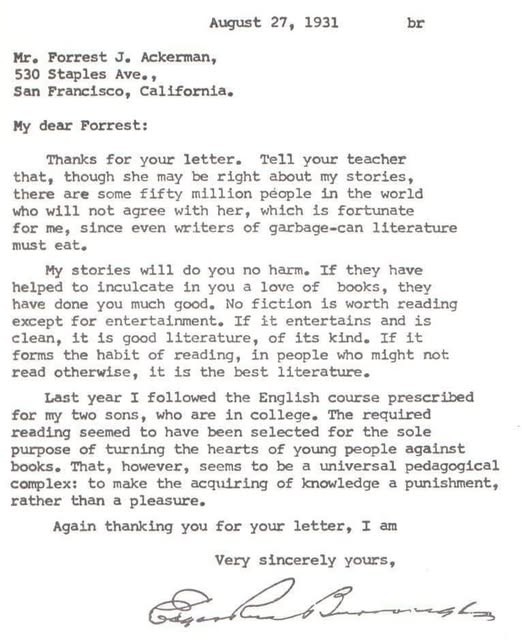
14-year-old Forrest J. Ackerman wrote a letter to Edgar Rice Burroughs, informing him of an argument he had with his teacher regarding ERB's books. Burroughs replied:
Edmond Hamilton does a Huck Finn:
...In the summer of 1931 Hamilton and his good friend Jack Williamson, both lovers of Mark Twain's Huckleberry Finn, motorboated down the Mississippi River from Minneapolis to New Orleans in emulation of Huck Finn's raft ride down that river... [ELDCEH3]
C L Moore describes how she got hooked on sf, which happened when
"...one rainy afternoon in 1931 when I succumbed to a lifelong temptation aand bought a magazine called Amazing Stories whose cover portrayed six-armed men in a battle to the death (Awlo of Ulm by Capt. S. P. Meek, in the September, 1931, issue). From that moment on I was a convert. A whole new field of literature opened out before my admiring gaze, and the urge to imitate it was irresistible."
[SMSTp305-6]
C S Lewis' spiritual journey coincides with a trip by the Lewis brothers to Whipsnade:
...On Monday, 28 September, Lewis and Warren took a picnic lunch to Whipsnade Zoo, Warren driving his motor cycle and his brother riding in the side-car. That evening Warren recorded in his diary that, while watching an enclosure of bears, they were attracted by a "delightful brown plethoric one which sat up and saluted for buns. Jack is full of the dream of adding a pet bear to our private menagerie, which he intends to christen 'Bultitude'." This, no doubt, is the original 'Mr Bultitude' who later found his way into That Hideous Strength. But something of far greater importance happened to Lewis on the way to Whipsnade for, as he says in Surprised by Joy: 'When we set out I did not believe that Jesus Christ is the Son of God, and when we reached the zoo I did. Yet I had not exactly spent the journey in thought. Nor in great emotion. "Emotional" is perhaps the last word we can apply to some of the most important events. It was more like when a man, after long sleep, still lying motionless in bed, becomes aware that he is now awake.' [RLGWHp116]
A youthful prodigy, sf author Charles Cloukey died aged 19 on 28th September 1931, from typhoid fever, in Landsdowne, Pennsylvania.
 Senf did do the cover.
In an October 1931 letter to H P Lovecraft, headed "From the inner vaults of Yoh-Vombis", Clark Ashton Smith mentions his doubts about a forthcoming issue of Weird Tales which will feature a tale he has already shown to HPL:
...Wright tells me that "The Monster of the Prophecy" will furnish the cover design for the Jan. W.T. Holy smoke! I wonder what it will look like. You may recall that the earth-hero was stark naked in the tale; and that the heroine, as well as the other Antareans, was equipped with five arms, three legs, three eyes, and a superabundance of other anatomical features. However, Senf (if he does the picture) probably won't read that far.
[LOHPLCASp328]
Birth of Bob Shaw, 31st December 1931, in Belfast.
1932
Edgar Rice Burroughs sends a get-well message:
On February 27, 1932, Ed received a telegram from the city editor of the Washington Star... about NQXGI, a six-year-old gorilla, critically ill of pneumonia in the Washington Zoo. The editor noted that a half-dozen child specialists and veterinarians were attending NQXGI and explained:
NQXGI has been the special pet of all children of Washington who have visited the zoo since he was sent there at the age of two by the famous Chrysler expedition. Since the children have followed the adventures of Tarzan with the great apes through your strip in the Star, we thought perhaps you might send ZQXGI a cheering message via The Star...
Ed responded the same day, addressing his telegram to NQXGI:
Have just heard of your illness and hasten to express my sympathy and sincere wishes for your early recovery. You must take care of yourself on the children's account. They would be heartbroken if anything happened to you. If your large corps of physicians feels that a change of climate would be beneficial, I should be glad to have you visit me on my ranch at Tarzana... Tarzan of the Apes and Bolgani, the gorilla, join me in wishing you an early recovery.
[ERBIPp693]
Birth of Robert L Forward, 13th August 1932, in Geneva, New York.
Ray Bradbury recalls how he was inspired to write by a significant experience at a carnival in September 1932 [WRDB]:
I suppose the most important memory is of Mr. Electrico. On Labor Day weekend, 1932, when I was twelve years old, he came to my hometown with the Dill Brothers ... He was a performer sitting in an electric chair and a stagehand pulled a switch and he was charged with fifty thousand volts of pure electricity. Lightning flashed in his eyes and his hair stood on end. I sat below, in the front row, and he reached down with a flaming sword full of electricity and he tapped me on both shoulders and then the tip of my nose and he cried, "Live, forever!" And I thought, "God, that's wonderful. How do you do that?" ... So when I left the carnival that day I stood by the carousel and I watched the horses running around and around to the music of "Beautiful Ohio" and I cried. Tears streamed down my cheeks because I knew something important had happened to me that day because of Mr. Electrico. I felt changed. And so I went home and within days I started to write. And I've never stopped.
28th September 1932: birth of Michael G Coney, in Birmingham.
8th November 1932: birth of Ben Bova, in Philadelphia.
1933
Raymond Z Gallun recalls:
...in 1933 light appeared on my horizon! A solid old publishing house, Street & Smith, had bought Astounding Stories, and was bringing it back! I lost out in a couple of shots at it. Feeling briefly depressed, I even tried to join the CCC - the Civilian Conservation Corps - recruiting for public works projects, including forestry, etc. They shelved me on a waiting list.
Well, it didn't matter, because I cracked into Astounding with a little story, "Space Flotsam". There was no letter at all from F. Orlin Tremaine, the new editor. Just a Street & Smith check with a notation of what story it was for on it. Thirty-five bucks - payment at the bottom rate, a cent a word. But I'd never gotten that rate before! [SAORZGp50]
An exchange of notes between H G Wells and G K Chesterton:
...H.G. wrote to Chesterton:
If after all my Atheology turns out wrong and your Theology right, I feel I shall always be able to pass into Heaven (if I want to) as a friend of G.K.C.'s. Bless you.
Temporarily laid out in bed, unable to acknowledge at length but able to appreciate H.G.'s letter, Chesterton replied:
As to the fine point of theology you mention. If I turn out to be right, you will triumph, not by being a friend of mine but a friend of Man, for having done a thousand things for men like me in every way, from imagination to criticism. The thought of the vast variety of that work, and how it ranges from towering visions to tiny pricks of humour, overwhelmed me suddenly...
[LDHGWp368-9]
From early 1933 Otis Adelbert Kline became a literary agent for Robert E Howard (and remained so till REH's death in 1936).
Philip K Dick's home splits:
...Edgar and Dorothy were divorced in 1933, at the height of the Depression. The National Recovery Administration had asked Edgar to open an office in Reno, Nevada. Dorothy refused to move and consulted a psychiatrist, who assured her that divorce would not have a detrimental effect upon Phil. The psychiatrist was dead wrong: To Phil it felt as if his father had abandoned him, and the scar endured. As for Edgar, his first response was incomprehension. "It came out of the clear blue sky," he recalled fifty years later...
[DIALOPKDp24]
Death of Robert W Chambers, in New York City, 16th December 1933.
1934
Raymond Z Gallun remembers the odd-jobbing life he led while beginning to sell sf stories:
...Things were looking a lot better for me in 1934. No, my way of life didn't change so much outwardly. I still worked at the cannery, during the pea-season, and was on call to label and pack up shipments now and then during the rest of the year. And there were other odd jobs. I like the sweaty relief of physical labor, and I remained a country type of young fella, not visibly different from any other, except that I grinned genially a lot more than I used to, though I didn't usually explain why. Blending in, I kidded and joked around some on a job, like anybody else.
Generally, I kept my science fiction magazines out of sight of other folks. In a small, Midwestern city of then, those vivid covers could incite some disapproving glances...
[SAORZGp52]
Lester del Rey's ups and downs:
...He decided to take a one-year course in the secretarial skills, shorthand and typing, as a means of gaining entry to firms where he might find the type of work he liked. The best it did for him, during the Depression years, was to help him get a job in 1934 as an office boy and comptometer operator at the Crane Plumbing Co. in Washington, D.C., a job he would hold till 1937.
Then occurred one of those freak bits of luck. He went out to a Maryland gambling house one day in 1934 with $100 and began to play roulette. He wound up with $6,000 and bought a little restaurant, employing others to run it. In a declaration of independence, he left his uncle's home for his own lodging...
[SMSTp175-6]
The Bradbury family moves from Waukegan, Illinois, to Los Angeles, California, in mid-April, 1934.
"There you are, you little son of a bitch!" said W. C. Fields, handing the autograph book back to the brash thirteen-year-old. It was Ray Bradbury's first week in Hollywood, and already, poised on his roller skates outside the gates of Paramount Studios, he was making friends. This boy, who was in love with the world of movies, was now living in the middle of it all...
[TBCp69]
E Hoffman Price remembers:
...Upon my arrival on the Pacific Coast, in mid-April of 1934, Clark Ashton Smith had written to assure me that I'd find him at home any time I could make the 165 mile drive from Oakland to Auburn. There were two Auburns, the new, and the old town. The latter was the original gold rush settlement, a mile or so beyond which, and just a piece past the railway tracks, was the road to Smith's home.
The sound of the Ford and the slam of its door called Smith from the cabin and down the slope. Tall, thin, fragile, he at once did, and did not resemble the person portrayed by the snapshot he had mailed me before I set out from New Orleans. I heard and saw, as it were, two Smiths at once...
...Clark lived with his parents. Each was past eighty, and at first sight, seemed old beyond numbering. The irises of Mr. Smith's eyes had faded to colorlessness, exaggerating the appearance of age. By no means unfriendly, he was nonetheless reserved, mid-way between noncommittal and remote.
Mrs. Smith, white-haired, slight, sharp-faced, moved quickly, spoke with animation and sparkle, restoring the balance at once. And, she lost no time in giving me a tour of the cabin.
To my right was a comfortable, welcoming kitchen of the sort I remembered from old times, with its wood stove, its dining table, and work table. To the left, I glanced into the duskiness of Clark's study, which seemed spacious, although it was no more than one of the four quarters of the house, the remaining two being the bedrooms.
Stepping into her son's workshop, Mrs. Smith pointed out the figures sculptured in talc. "Clark gets the material from my brother's mine. When the carving is completed - " She picked a miniature monster, one of Cthulhu's kinfolk, from atop the bookcase that lined the entire wall. "He fires it in the kitchen stove..."
[CASAM]
27th May 1934: birth of Harlan Ellison, in Cleveland, Ohio.
News starts to get around fandom that C L Moore is a woman:
...Her sex was revealed by fan columnists Julius Schwartz and Mort Weisinger, writing in the May, 1934, issue of THE FANTASY FAN. Since THE FANTASY FAN never topped sixty in circulation, the news was slow in being passed along the grapevine...
[SMSTp305]
July 1934: H G Wells was granted an interview with Stalin.
Wells I am very much obliged to you, Mr Stalin, for agreeing to see me. I was in the United States recently. I had a long conversation with President Roosevelt and tried to ascertain what his leading ideas were. Now I have come to ask you what you are doing to change the world...
Stalin Not so very much.
Wells I wander around the world as a common man and, as a common man, observe what is going on around me...
[Wells, chairman of PEN, unsuccessfully tried to get Stalin to join this literary society.]
Heinlein had to abandon thoughts of a Naval career:
...On August 1, 1934, he was found "totally and permanently disabled". At the age of twenty-seven, his career was over. Heinlein had hoped to honor his family's tradition in the Navy, but although he had done everything right, he had failed... and now he had to find answers somewhere else...
[ANLAp42]
9th November 1934: birth of Carl Sagan, in Brooklyn, N.Y.
In the history of sf fandom:
...The first officially sanctioned club, the Science Fiction League, was established in 1934 by Gernsback and Charles Hornig of Wonder Stories. It received free coverage in the magazine, but it also became seen as a tool of the publishers, drawing attacks from fandom's radical wing...
[ANLAp100]
A first for Edmond Hamilton:
...In 1934 Julius Schwartz and Mort Weisinger acquired Hamilton as the first client for their Solar Sales Service, the first literary agency specializing in fantasy and science fiction...
[ELDCEH3]
Birth of Robert Silverberg, 15th January 1935, in Brooklyn, New York.
1st March 1935: death of Edwin Lester Arnold.
Isaac Asimov in Before the Golden Age (1974) wrote of his attempt in 1935 to apply for entry to Columbia College:
...I had decided to go to Columbia for my college education. It was, after all, in Manhattan, and there was no question of leaving the city. College or not, I had to continue working in the candy store.
...I had applied for entrance, and a date had been fixed for an interview. It was April 10, 1935...
I was still only fifteen at the time and had never gone to Manhattan alone. My father, I think, had visions of me ruining my chance of getting into Columbia by getting lost in the confusing subway system and arriving late for the interview - or not arriving at all. He therefore actually abandoned the store to my mother and came with me. Naturally, he waited outside the building I was supposed to enter, because he didn't want to ruin my chances by having me appear to be a baby who could not be trusted to travel on his own.
He might have saved himself the trouble. I ruined my chances entirely on my own. I made a very poor impression. I was bound to... too eager, too talkative, too lacking in poise and self-assurance, too obviously immature...
My interviewer may have been impressed by my scholastic record... He therefore suggested I attend Seth Low Junior College...
I tried to put a good face on it to my father when I came out of the building and stoutly maintained that Seth Low "was just as good" and my father stoutly said it was. I didn't believe it, though, and neither did he...
On the way home from this unsuccessful interview, Asimov and his father stopped in at a museum:
(I think it was the Metropolitan Museum of Art but it may not have been). There we saw Albert Einstein, who happened to be looking at the exhibits also. He was unmistakable, and everywhere he went a small crowd of the curious followed, my father and I among them, all maintaining a respectful distance. Einstein, undoubtedly used to this, paid no attention. It was the only time I ever saw him, and it is for his sake more than for my Columbia interview that I remember the day.
23rd May 1935: birth of Susan Cooper, in Burnham, Buckinghamshire.
Eric Frank Russell, acting as assistant to British Interplanetary Society secretary/Treasurer Leslie Johnson, meets Olaf Stapledon:
...In the summer of 1935, Russell happened to see a letter of enquiry dated August 7th which had been sent to Johnson by William Olaf Stapledon, at the time a Professor of Philosophy, and extra-mural lecturer in English Literature and Industrial History, at the University of Liverpool, whose epic novel, Last and First Men, recounting the rise and fall of humanity, and its sequel, Last Men in London, had been published to great acclaim a few years previously. Realizing that here was "a prize worth catching", Russell first arranged for the current issue of the Society's Journal (and as many back issues as were available) to be sent to Stapledon. Then, after a short interval, he and Johnson headed off to Stapledon's confortable bungalow at Caldy Hill in West Kirby, a town near the southern tip of the Wirral Peninsula overlooking the Dee estuary. Arriving somewhat tired and dusty, Russell and Johnson were delighted to be warmly received by Stapledon and, once they were refreshed with tea and a light meal, the three men spent a pleasant afternoon discussing what Russell later referred to as "philosophical concepts", with Stapledon explaining that he did not regard his own books as science fiction, but rather as vehicles for philosophical ideas, the resemblance to science fiction being "accidental and irrelevant". In any event, the outcome of the meeting, as Russell had hoped all along, was that another "big name" signed up for Membership of the B.I.S.
A couple of years later, when talking to Walter Gillings, Stapledon recalled the meeting, revealing that he had never even come across, let alone read, science fiction magazines until Russell asked what he thought of them on that summer afternoon... [IYTp86]
Death of Stanley G Weinbaum, 14th December 1935, in Milwaukee, Wisconsin.
C L Moore loses a fiancé:
By 1936, C L Moore, working as a secretary at the Fletcher Trust Company in Indianapolis, was engaged to one Herbert Ernest Lewis, who also worked at Fletcher Trust. However, he died by a gunshot wound on 13 February 1936. Moore herself, and the newspapers, reported the death as accidental, but according to the pulp fiction scholar Bobby Derie, "the death certificate lists it as a suicide".
[From Wiki]
Henry Kuttner and C L Moore first met after Kuttner sent her a fan letter under the impression that she was a man.
Arthur C Clarke gets a government job:
I don't know who suggested that I should take the entrance examination for the Civil Service Executive Grade, but in the spring of 1936 I found myself scribbling away in what is now the Museum of Man, just off Piccadilly...
To everyone's surprise, including my own, I came in 26th in a field of about 1500, and so was able to select whatever branch of the Civil Service I preferred. Because I had scored 100 percent in arithmetic, it was suggested that I apply for the Exchequer and Audit Department; so in the summer of 1936, wearing a hat for the first (and last) time in civilian life, I arrived in Whitehall.
Literally: my first office was in King Charles Street (next to Downing Street) and here I was supposed to help audit the accounts of the Board of Education. I quickly discovered that government financing was, and would forever remain, a complete mystery to me; luckily, that didn't really matter...
I prided myself on having the fastest slide rule in Whitehall, so I was usually able to do all my work in an hour or so, and devote the rest of the day to more important business. Very leisurely lunch hours, which allowed for enjoyable strolls around Green Park and St. James's Park, also helped to pass the time pleasantly...
[ADACCp135-6]
Death of Robert E Howard, by suicide, 11th June 1936, in Cross Plains, Texas.
Jack Williamson in Kansas calls on Governor Alf Landon:
...Out of mere curiosity, I called on Landon the morning after the 1936 Republican Convention nominated him to run for the presidency against FDR. His secretary let me in. I found him alone in his office, with time to shake hands and inquire about Republican power in New Mexico, of which I had to confess I knew nothing... [JWWCp101]
In 1936, Donald A Wollheim organized the first-ever American science fiction convention, which took place at Philadelphia on October 22nd.
Members of the New York branch of the International Scientific Association (ISA) traveled to Philadelphia to meet with the local science fiction club.
(This historic meetup is widely considered the precursor to modern events and paved the way for regional meetings and the first-ever Worldcon.)
1937
Birth of Lee Harding, 19th February 1937, in Colac, Victoria, Australia.
Death of H P Lovecraft, 15th March 1937, in Providence, Rhode Island.
Birth of Barrington J Bayley, in Birmingham, England, 9th April 1937.
Death of Robert William Cole, 12th November 1937, in Dawlish, Devon.
Raymond Z Gallun leaves his home in Beaver Dam, Wisconsin, for keeps:
I signed the 1931 Chrysler coupe I had over to my sister. She kidded me: "London, Paris, Cairo?...Why don't you young writers be original for a change, and just go to Halifax?..."
Perhaps she had a point. But against the possible accusation that I was trying to run away from myself, I can still respond that a person can also run towards something in himself.
There's a little bit of death in any abrupt and likely terminal shift in scene and lifestyle. As my ham radio friend drove me into town with my gear, I looked back once. I could make a straight face, or laugh and make jokes, pretty much as occasions seemed to demand - which didn't tell all about how I felt inside. There in the bleak winter scene of January 6, 1938, with grimy snow on the fields, that old house, with the attached barn - the remnants of white paint still clinging - looked eccentric, disowned, pathetic, and forlorn... I had enjoyed much contentent, wild dreaming, and satisfying work in the shelter of the odd old place. Would I ever see it again?... As matters have turned out, I never did...
[SAORZGp82]
John W Campbell adjusts his magazine's title:
...With the March 1938 issue he changed the magazine's name. Astounding Stories, a title which in his opinion was too juvenile, became Astounding Science-Fiction.
[HOTSFM Part2,p22]
John W Campbell gets an ultimatum:
...After joining the firm, he had asked Frank Blackwell, the editor in chief, what would happen if he couldn't find enough stories to fill an issue. Blackwell had replied, "An editor does."
By the beginning of 1938, however, he was faced with an alarmingly lean inventory. He blamed it on writers submitting to the revived Amazing, which had been acquired by a new publisher, but his own higher standards were also to blame. Campbell was buying just one out of every fifteen submissions, and while he got a few good stories, he didn't have as many as he needed.
This was the situation that he faced when he was called out of his office for a meeting with Tremaine and Blackwell in the spring of 1938. When Campbell arrived, he discovered that two writers were already there, and as he listened, disbelieving, he was ordered to buy everything they wrote. One was [Arthur J] Burks. The other was a tall, imposing man of twenty-seven with red hair and skin so pale that it was almost transparent. It was L. Ron Hubbard...
[ANLAp82-3]
Sam Moskowitz versus Donald A Wollheim:
...fandom in New York had broken into two rough divisions. One was led by Sam Moskowitz, an athletic kid of eighteen who was less interested in political disputes than in running conventions and meeting professionals. The other group gathered round Wollheim and his friend John Michel, whose views were expressed in a leftist manifesto, "Mutation or Death", that argued that fans should strive for the kind of social change that they saw in their favorite stories.
In May 1938, Moskowitz and the fan William Sykora, who had formed an alliance against Wollheim, organized the First National Science Fiction Convention in Newark. When Campbell showed up with the writers John Clark and L. Sprague de Camp, there were fifteen people in attendance. Looking out at the gathering, the editor remarked dryly, "Better than I expected."
By the time Campbell rose to speak, the crowd had grown to over a hundred fans. The editor held forth on the importance of fandom... [ANLAp101]
The nine-year-old Philip K Dick returns to California from Washington D.C.:
...In June 1938 mother and son returned to Berkeley. Except for a few very brief forays, Phil would remain in California for the rest of his life.
Dorothy's decision to leave the capital was an impetuous one. Sent off by the Children's Bureau to a meeting in Kansas City, she took Phil along and fit in a vacation to California. Once back in the Bay Area, she resolved to stay and arranged a transfer to the U.S. Forestry Department office in Berkeley...
The timing of Dorothy's return was likely influenced by Edgar's relocation to Pasadena, well to the south, where he seemed to pose less of a custody threat. But Phil took great joy in being able - however occasionally - to visit with his father for the first time in four years... [DIALOPKDp30-1]
The scholarship of L Sprague de Camp is well received by the fans:
...De Camp scored his first literary hit with an article, Language for Time Travelers, which appeared in the July, 1938, Astounding Science Fiction. Tales of tempornautical excursions into the future had long been common, but no one had considered the problems of communication that would arise from the gradual change in pronunciation and semantics. With humor and deft style cloaking his scholarship, de Camp's Language for Time Travelers was the first nonficiton to be voted by the readers top monthly honors over fiction in the history of Astounding Science Fiction.
[SMSTp159]
James H Schmitz leaves Germany permanently for the US.
C S Lewis and his students amuse themselves with bad literature:
"Speak! Irene! Wife!"
Lewis was reading aloud from Irene Iddesleigh, a novel by Amanda McKittirick Ros. He had invited the pupils who had taken the final exams to dinner in his rooms. After the scouts cleared away the dishes, while all were enjoying postprandial spirits, he plucked from his shelves the nineteenth-century novel and challenged all present, beginning with himself, to read at random from the book for one minute without laughing.
"Do not sit in silence and allow the blood that now boils in my veins to ooze through the cavities of unrestrained passion and trickle down to drench me with its crimson hue..."
[CSLTAVp155]
1939
The various Deeds this year are scattered with several references to the First World Science Fiction Convention.
Arkham House publishers was founded in 1939 in Sauk City, Wisconsin, by August Derleth and Donald Wandrei, to publish hardcover editions of the late H P Lovecraft's best works:
...Derleth submittted a collection of Lovecraft's stories to Charles Scribner's Sons, which had published several of his own books, and to Simon & Schuster. Both rejected the proposal; the editor at Simon & Schuster, however, suggested that Derleth and Wandrei publish the book themselves.
And so they did, calling their company Arkham House after Lovecraft's fictitious New England town. Derleth raided a bank loan that he had raised for building a house, and Wandrei scraped up a smaller sum. For their title, they chose The Outside and Others, alluding not only to the story "The Outsider" but also to Lovecraft's feeling of alienation.
In 1939, Derleth and Wandrei received 1,268 copies of the book, with an elegant jacket by Virgil Finlay. This was a young artist in Rochester, New York, who had become a distinguished illustrator for Weird Tales and had corresponded with Lovecraft. The huge book, of xiv + 553 pages of small type, contained nearly a third of a million words. These included an Introduction by Derleth and Wandrei, thirty-six stories by Lovecraft, and Lovecraft's essay "Supernatural Horror in Literature".
At the first World Science Fiction Convention, in New York in July, 1939, the forthcoming volume was announced at a pre-publication price of $3.50. After publication, it would cost $5.00...
Arkham House got 150 advance orders, but the rest of the edition sold so slowly that the original printing remained in print for four years...
[LABp432]
Henry Kuttner tells his agent what he thinks of New York - that it's "Satan's privy" - but then moves there:
...Kuttner had visited New York occasionally on business and detested the city. On June 14, 1939, he had written to Julius Schwartz: "I don't intend to visit New York. I can get the same effect as I do in New York by crawling into the dirtiest corner of the garage and screaming at the top of my voice, blowing the auto horn, and energetically sniffing the exhaust. Once you visit California, me lad, you realize that New York is Satan's privy."
Yet on 3rd December he showed up at a meeting of New York's Queens Science Fiction League and announced that he was taking up residence in New York...
[SMSTp327]
Eric Frank Russell and his wife Ellen sailed across the Atlantic on the steamer S.S.Aquitania from Southampton to New York; he attended the New York World's Fair and during 2-4 July the first World Science Fiction Convention.
...On July 2, 1939, the doors opened at last for the first World Science Fiction Convention. At ten in the morning, a crowd began to gather on the fourth floor of the Caravan Hall on East Fifty-Ninth Street, which had been decorated with cover art from the pulps. The fans Forrest J Ackerman and Ray Bradbury had come all the way out from Los Angeles, and the professional attendees included Jack Willliamson, L. Sprague de Camp, and Campbell... [ANLAp106]
Frederick Pohl on the quarrel with the Futurians [from Wiki]:
In addition to its groundbreaking role as the first of its
kind, the convention was noteworthy for the exclusion of a number of
politicized Futurians
by convention chair Sam Moskowitz; those excluded were Donald A. Wollheim, Frederik
Pohl, John Michel, Robert A. W. Lowndes, Cyril M. Kornbluth, and Jack Gillespie, an event
known to fannish historians as "The Great
Exclusion Act."
According to Pohl, in his autobiography The Way the Future Was,
the Futurians held their own counter-convention which was attended by several
who went to the regular convention. He also downplayed the aspect that politics
played, himself believing that it was a personality conflict between the
convention organizers and the Futurians and said "We pretty nearly had it
coming," continuing with "What we Futurians made very clear to the
rest of New York fandom was that we thought we were better than they were. For
some reason that annoyed them."
E Hoffman Price had been meaning to bring a bottle of Bols Gin for Timaeus Smith, father of Clark Ashton Smith, on his next visit - but practical matters delayed him, and then the old man had died the day after Christmas 1938. Hoffman Price recounts:
...It was mid-1939 before I drove to Auburn.
Clark and I didn't go into the house at once, as we had formerly done. I dug bottles out of the trunk, followed him to the fallen oak, and set the trio on the table.
"I waited too long. I'll have no delay, now that it's too late."
He went to get glasses. I set to work with my key-ring corkscrew. Bols, distilling gin since 1575 A.D., had not got around to screw tops, or twist-stoppers.
The stuff was oily as glycerine. The reek of juniper billowed up as I poured three finger dollops into each tumbler.
We rose. "I dedicate this glass to Timaeus Smith."
Bottoms up.
Smooth, but nasty.
"Just as well your father didn't live to taste this muck."
Clark grimaced acquiescence. "Rather vile, but I do relish your sentiment."
(Later, though, they get to like it.)
They also visited Smith's Uncle Ed, who supplied the talc which CAS used in his sculptures. [CASAM]
Jack Williamson calls on "Doc" Smith after buying a Ford V-8 sedan for $640:
...Driving slow to break it in, I came back west, first to Jackson, Michigan, where I stopped a couple of days to visit Doc Smith.
The Skylark of Space had enchanted me. I still respected Doc as the great pioneer of space opera, and he received me cordially enough, though his job as a doughnut chemist left him little time for talk. I enjoyed his family more. Jeanne, his adoring wife. Verna and Honey, two adorable daughters. A close-knit, old-fashioned family, all devoted to Doc. He worked hard enough to support them, and I think they all spoiled him in return...
[JWWCp119-20]
Raymond Z Gallun was hitch-hiking in France when the war began:
...Brittany... The pines of Arcachon... Nantes... A tiny, rustic village called Chateau Thibaud... Then, rambling around, to Tours... St. Avertin... To another tiny pace of one long street - La Daguenière... France had ordered general mobilization. Poland was invaded... We were the only ones at the little hotel. When we shouldered our rucksacks to leave, the Mère Aubergiste sighed sadly and said, as if some part of her life had ended, "Voice mon travail..."
Though cars, buses, and even bicycles were suddenly subject to requisition, we didn't have too much trouble thumbing back to Paris... [SAORZGp105]
Olaf Stapledon at the outbreak of war:
...On the last day of August, the evacuation of children from English cities began; for three days Olaf drove children from the Birkenhead Town Hall to outlying towns and villages of Wirral. On 1 September, Hitler's attack on Poland began. In the blackout on the night of the second, Olaf had an accident, knocking down a woman on a darkened road, and memories of harrowing ambulance runs more than twenty years before flooded back. The next day he reported to the police office to answer questions about the mishap and returned home to hear Chamberlain announce a state of war with Germany on the radio. That night, 3 September, he and Mary listened to the nine o'clock bulletin with its news of London's air-raid sirens going off (in a false alarm), France's declaration of war, and the torpedoing of a Cunard steamer in the Atlantic on its way to Canada. Mary shut off the radio and stepped outside with her father; the sky was clear and full of stars. "He was profoundly depressed and said, 'Look at all that up there, aeons of light years away. It makes our affairs seem totally insignificant. Yet if they matter to us that means they do matter.'"
Within a few days Olaf became an air-raid warden with regular night duties in Caldy and West Kirby; he was, he told Aage Marcus, a very inefficient sort of warden - a self-deprecation belied by his precise and detailed Air Raid Precautions notebook, full of first-aid instructions, procedures for ticketing neighbours who ignored the blackout, and stern reminders to himself always to bring his sleeping bag and a book, to blow his whistle at the appropriate times, and never to leave his post... [OSSFTFp264]
On a wintry December day a student is interviewed at Oxford by C S Lewis:
"Good morning, Mr Lewis," said the young man at the door of room 3. Christopher Derrick was his name; he was from Doua Abbey School, Woolhampton, Berkshire; he was applying for entrance to the university. Lewis ushered him in and immediately put him to the test.
"T. S. Eliot writing about Paradise Lost objects to Satan's speech to the Sun as being rhetorical. Would you care to comment?"
"I'll comment if I may, sir, by asking you two questions."
"Good."
"First of all, rhetoric was for a very long time a major part of a gentleman's reputation, a most important skill. When did the word "rhetoric" stop being properly used?"
"Good, good."
"The other question is this, sir. We hear on this state occasion the Prince of Darkness addressing the orb of day. It is a great, an heroic, an epic moment. Would Mr Eliot prefer the diction used on such an occasion to be relaxed, slangy, conversational, American, or something like that?"
"Good, good, good. That will be all, Mr Derrick. You'll be hearing from us."
Derrick left the room... The next day he got in the mail a letter stating that he had been elected to a demyship, the highest undergraduate scholarship.
[CSLTAVp169]
John Baxter born, 14th December 1939, at Randwick, Sydney, New South Wales, Australia.
Death of E F Benson, 29th February 1940, in London.
E Hoffman Price relates another visit to Clark Ashton Smith [see 1934]:
In 1940, I led the last safari to Smith's place: Edmond Hamilton, Jack Williamson, and Diego del Monte, who wrote for the adventure pulps under the name of Felix Flammonde, were the convoyes; none of them had ever met Smith. He still lived alone in the cabin he had once shared with his parents. He was there, unchanged and unswerving. He had been digging wells. One of the guests was a Turkish well digger. We drank rum, diluted with water from the mine shaft. And this was my final visit to the enchanted area which I could have seen, but did not see as often as many times since that last visit I wished I had... [CASAM]
Leigh Brackett and Edmond Hamilton first met in 1940.
...They were both living in Los Angeles at the time, but only met after being introduced by their mutual agents, Julius Schwartz and Mort Weisinger, who were visiting from New York City... [ELDCEH3pxiii]
Heinlein began hosting his soirees for sf writers in 1940:
The Mañana Literary Society was an informal meeting of science fiction writers in Los Angeles, California. Hosted by Robert A. Heinlein and his second wife Leslyn at their Laurel Canyon home, the membership included authors such as Anthony Boucher, Arthur K. Barnes, Edmond Hamilton, L. Ron Hubbard, Henry Kuttner, C.L. Moore, L. Sprague de Camp, Cleve Cartmill, Leigh Brackett, Roby Wentz, and Jack Williamson. The young Ray Bradbury,
who had not yet made his first story sale, was a guest at one or two
meetings. The weekly meetings took place in 1940 and 1941, until the Pearl Harbor attack resulting in the U.S. entering World War II. [Wiki]
Heinlein drives from Los Angeles to New York City:
...After the check from Blowups Happen allowed him to pay off his mortgage, he contemplated cutting back on his output, prompting Campbell to lament to Pohl, "The trouble with Bob Heinlein is that he doesn't need to write." When the author mentioned the possibility of a visit to New York, Campbell said that he would reschedule his vacation so that they could meet. Heinlein and Lenlyn drove across the country, financing their trip with the sale of his novella Magic, Inc., and arrived in the city on May 18, 1940... [ANLAp115-6]
Multi-tasking by Edgar Rice Burroughs as he juggles his writing time between Amtor, Barsoom and Pellucidar:
Burroughs' remarkable writing discipline and the flexibility of his imagination were illustrated in his shifts between the three fantasy worlds, leaving one series incomplete while turning to another or working on two series at the same time. After finishing "Captured on Venus,"...(May 4 to July 20, 1940), Ed wrote the "Frozen Men of Mars,"... July 24 to September 6, and then shifted to... "Hodon and O-aa," later titled "The Return to Pellucidar," September 7 to 15. Overlapping stories included "The Living Dead" (Venus), October 15 to 22, "Savage Pellucidar," October 2 to 26, and "Men of the Bronze Age" (Pellucidar), October 6 to 13. But in this period, the amazing creative feat also included the beginnings of other stories from differing series: "Escape on Mars," October 24 to 30, and "Beyond the Farthest Star," October 24 to November 5, a new setting on the planet Poloda...
[ERBIPp1002-3]
John Wyndham and his future wife Grace Wilson manage to meet before being separated by war:
...In June 1940, just after Britain's humiliating evacuation from Dunkirk, he visited her at Bexhill-on-Sea. She was staying in a tiny turret room in a boarding house.
Together they went to Fairlight, a few miles down the coast, and walked back along the cliffs into Hastings for dinner in an Edwardian-style restaurant. Although Jack was filled with forebodings about the days to come, it was a last snatched moment of happiness...
...For years to come, through the Blitz and in the horrors of France, he would remember this holiday for both his happiness and the terrible sense of his fate waiting in the wings...
[ABHWp105-6]
5th July 1940: birth of Herbie Brennan, in Gilford, Northern Ireland.
Doc Smith's speech and masquerade at Chicon, 1-2 September:
As Guest of Honor at the Second World Science Fiction Convention, during Labor Day weekend in Chicago, 1940, Smith delivered a forceful pro-fandom speech entitled "What Does This Convention Mean?" He also attended the convention's masquerade in his leather motorcycle uniform, carrying a homemade raygun, as a character from C.L.Moore's fiction, Northwest Smith...
[JSEEDSp10]
The 1940 radio encounter between H G Wells and Orson Welles, on October 28, 1940:
It took place at radio station KTSA in San Antonio, Texas. It was the first time the 74-year-old British author and the 25-year-old American wunderkind had met face-to-face.
Moderated by host Charles C. Shaw, the conversation covered the
notorious 1938 radio broadcast, world affairs, and Orson Welles's
upcoming film Citizen Kane.
Both
Wells and Welles happened to be in San Antonio for separate speaking
engagements—H.G. Wells addressing the United States Brewers Association
and Orson Welles delivering a town hall address.
H.G. Wells joked about Orson carrying his name with an "extra e" that he hoped he would drop eventually.
H.G. Wells playfully questioned whether the massive 1938 panic was
actually real or just brilliant American Halloween fun. Orson Welles
compared the broadcast's scare factor to a harmless practical joke of
someone yelling "Boo!" under a sheet.
[From the net]
Tiffany Thayer, president of the Fortean Society, following Eric Frank Russell's visit to New York (see 1939), takes surprising action to furnish British Forteans with material:
...as a footnote to his New York visit, Tiffany Thayer was so impressed with Russell's enthusiasm for the work of Charles Fort that, in 1941, when the U-boat threat to the Atlantic convoys was nearing its peak, he somehow managed to send Russell a crate of Fort's just published 1125-page Collected Works (Henry Holt & Co., 1941), for sale to members of "The Fortean Society" in Britain, an amazing achievement considering the priorities at the time... [IYTp144]
Heinlein's fictional timeline is made known:
By 1941, Heinlein was on the verge of becoming the most respected writer in science fiction. The high point was the May issue of Astounding, which included the complete timeline of his Future History. It was an unprecedented act of generosity towards an individual writer... In an editor's note, Campbell wrote to readers:
It might be of very real interest to you to trace in on this suggestion of the future your own life line. My own, I imagine, should extend up to about 1980 - a bit beyond the time of "Roads Must Roll" and "Blowups Happen". My children may see the days of "The Logic of Empire..."
[ANLAp142]
Ian Fleming, Rudolf Hess and the black magician:
All his life Fleming prided himself on knowing the right man to go in any situation. He usually did, too. But when Hitler's deputy, Rudolf Hess, made his mysterious parachute descent in Scotland in May 1941, Fleming surpassed himself by appealing to one of the most notorious men in the whole of the British Isles. For many years he had been fascinated by the legend of wickedness which had attached itself to the name of Aleister Crowley, necromancer, black magician and the Great Beast 666. This immensely ugly old diabolist and self-advertiser had thrown himself into certain more unsavoury areas of the occult with a gusto that must have appealed to Fleming, and when the interrogators from British Intelligence began trying to make sense of the neurotic and highly superstitious Hess he got the idea that Crowley might be able to help and tracked him down to a place near Torquay, where he was living harmlessly on his own and writing patriotic poetry to encourage the war effort. He seems to have had no difficulty in persuading the old gentleman to put his gifts at the disposal of the nation, for a brief formal note sealed with cabbalistic signs arrived, through the 'usual channels', for the Director of Naval Intelligence:
Sir:
If it is true that Herr Hess is much influenced by astrology and Magick, my services might be of use to the Department in case he should not be willing to do what you wish. I have the honour to be, sir,
Your obedient servant,
ALEISTER CROWLEY
...It is a pity that this had to be one of Fleming's bright ideas that never came off: understandably, there was hilarity in the department at the idea of the Great Beast 666 doing his bit for Britain... [TLOIFp127-8]
From Wiki: ...in May 1941 van Vogt decided to become a full-time writer, quitting his job at the Canadian Department of National Defence. Freed from the necessity of living in Ottawa, he and his wife lived for a time in the Gatineau region of Quebec before moving to Toronto in the fall of 1941.
Birth of James P Hogan, 27th June 1941, in London.
4th-6th July 1941: the 3rd World Science Fiction Convention was held at the Shirley-Savoy Hotel, Denver, Colorado. The Guest of Honor was Robert A Heinlein, who gave a speech entitled "The Discovery of the Future".
Heinlein said:
"I think that science fiction, even the corniest of it, even the most outlandish of it, no matter how badly it's written, has a distinct therapeutic value because all of it has as its primary postulate that the world does change."
[SMSTp206]
Heinlein decides to retire from writing, but then reconsiders:
...Eventually (mid-1941) Campbell did reject a Fortean story
Heinlein considered a fairly important work,
"Creation Took Eight Days." Heinlein took it
as a sign and quietly retired, fiddling with photography and masonry,
his favorite hobbies.
...The Denvention Guest of Honor speech, "Discovery of the Future"
(a direct reference to a speech Wells gave forty years earlier) gave
no direct evidence that Heinlein was retiring from science fiction .
. . unless it was the emphasis on science and cultural matters rather
than sf. He gave an interesting list of important books for building
a general education, with heavy emphasis on the last of the list,
Count Alfred Korzybski's SCIENCE AND SANITY.
...Heinlein found that he could not stay retired. He had somehow
acquired a permanent itch for writing and allowed himself to be
talked back into it. Campbell accepted a revised version of the
rejected story, published later under Heinlein's original working
title of Goldfish Bowl...
[RAHABS]
7th December 1941: Edgar Rice Burroughs witnessed the attack on Pearl Harbor, initially mistaking it for a training exercise.
2nd March 1942: Isaac Asimov visited the office of Astounding -
to see Hubert Rogers, who had painted the cover for "Nightfall", and he was surprised to find Heinlein there as well. It was the first time that they had ever met. [ANLAp158]
Isaac Asimov is employed at the Philadelphia Navy Yard's Materials Lab, and keeps track of troop movements around his birplace, Petrovichi:
...Asimov's first day at the Navy Yard was May 14, 1942. Employees in the lab worked six days straight, with Sundays off, and he hoped to spend most weekends in New York with Gertrude. Because he couldn't come out during the week, there was no chance of seeing Campbell, and he had no plans to write in any case. Asimov had always seen fiction as a hobby or a way of paying his tuition, and now that he didn't need the money, he gave it up...
...The first floor of the Materials Lab was an open shop, filled with cranes, where workers conducted noisy stress tests on aircraft. At his desk on the next level, Asimov hung a map of Europe that he used to keep track of troop movements, including a special pin for Petrovichi. Just as he had in college, he kept to his own area and didn't explore, but he saw Heinlein every day...
[ANLAp163]
In 1942 Edmond Hamilton began writing for DC Comics, specializing in stories for their characters Superman and Batman. His first comics story was “Bandits in Toyland” in Batman #11 (June–July 1942).
Birth of Michael Crichton, 23rd October 1942, in Chicago.
Jack Vance - whose poor eyesight barred him from military service - memorized an eye-chart and became an able seaman in the Merchant Marine.
Paul Linebarger [= Cordwainer Smith] was sent to China to co-ordinate military operations and serve as liaison with Chinese leaders.
Harry Clement Stubbs [= Hal Clement] graduated from Harvard with a B.S. in Astronomy.
The "Shaver mystery" gets its first airing when editor Raymond A Palmer decides to give it space in the letters column of the December 1943 issue of Amazing Stories:
Ray Palmer wrote about Shaver’s letter in 1961:
I had free rein with the pulps, and answerable to no one except Mr.
Davis [of Ziff-Davis]. Thus when one day a letter came in giving the
details of an “ancient alphabet” that “should not be lost to the world,”
it was opened by my managing editor, Howard Browne, who read it with
typical orthodox attitude and tossed it into the wastepaper basket with
the comment, “The world is full of crackpots.” I retrieved the letter
from the wastebasket, examined the alphabet, and made a few casual
experiments. I went about the office to those who were familiar with
other languages than English, and came up with a few more interesting
results. That was enough. I published the letter in Amazing Stories.
Associate editor Browne... later describes Shaver’s letter to Amazing:
...Early in the 1940s, a letter came to us from Dick Shaver purporting to
reveal the “truth” about a race of freaks, called “Deros,” living under
the surface of the earth. Ray Palmer read it, handed it to me for
comment. I read a third of it, tossed it in the waste basket. Ray, who
loved to show his editors a trick or two about the business, fished it
out of the basket, ran it in Amazing, and a flood of mail poured in from readers who insisted every word was true because they’d been plagued by Deros for years.
Palmer, seemingly willing to entertain Shaver’s message, printed the letter in the readers’ department letters column of Amazing Stories in December 1943. It reads as follows:
Sirs, Am sending this in hope you will insert it in an issue to keep
from dying with me. It would arouse a lot of discussion. Am sending you
the language so that sometime you can have it looked at by some one in
the college or a friend who is a student of antique times. The language
seems to me to be definite proof of the Atlantean legend. A great number
of our English words have come down intact as romantic — ro man tic — “science of man patterning by control,” Trocadero — I ro see a dero
— “good one see a bad one,” applied now together. It is an immensely
important find, suggesting the god legends have a base in some wise race
than modern man, but to understand it takes a good head as it contains
multi-thoughts like many puns on the same subject. It is too deep for
ordinary man — who thinks it is a mistake. A little study reveals
ancient words in English occurring many times. It should be saved and
placed in wise hands. I can’t, will you? It really has an immense
significance, and will perhaps put me right in your thoughts again if
you will really undertand this.
I need a little encouragement.
Accompanying the letter was the so-called “Mantong” alphabet. Palmer also added his editorial views on the subject:
We present this interesting letter, concerning an ancient language with
no comment except to say that we applied the letter-meaning to the
individual letter of many old root words and proper names and got an
amazing “sense” out of them. Perhaps if readers interested were to apply
his formula to more of these root words, we will be able to discover if
the formula applies… is this formula the basis of one of the most
ancient languages on Earth? The mystery intrigues us very much.
[RPATSM]
John W Campbell was investigated by the FBI in 1944 after a story he published in Astounding Science Fiction appeared to contain classified details about the atomic bomb project. The investigation was initiated when security officials working on the top-secret Manhattan Project noticed the March 1944 short story Deadline by Cleve Cartmill. The story contained references to uranium-235 separation and bomb design which appeared too accurate to be coincidental.
Walter M Miller took part as tail gunner of a bomber aircraft in the Battle of Monte Cassino, in the first half of 1944. His part in the destruction of the ancient abbey haunted him and later inspired passages in A Canticle for Leibowitz (1959).
Hollywood director Howard Hawkes, impressed by Leigh Brackett's hard-boiled writing style, asked his secretary to phone "this guy Brackett" to offer a screenwriting job. Surprised at the subsequent interview to discover that Brackett was a woman, Hawkes nevertheless stuck to his offer, commenting "she writes like a man". (In the picture shown here Leigh Brackett is in the centre, with Lauren Bacall to her right.)
John Wyndham in the battle for Caen, July 1044:
...the division took part in the ill-fated Operation Goodwood, an attempt to capture the rest of Caen. It has been described as the largest tank battle the British Army has ever fought. Even now, it is not known how many casualties there were during three intense days of fighting: certainly thousands were injured and several hundred men killed among the allies. The 11th Armoured Division lost about half their tanks.
They again failed to capture Caen, but advanced several miles and tied up the Germans while the US Army launched further attacks further west. Jack and the 11th Armoured withdrew for a brief rest.
Jack had kept up his lighthearted façade as much for his own benefit as for Grace's, but now it started to crack...
For a man of great personal integrity, joining the army had set up a terrible tension within him. He had been in uniform for two years, but in the Home Guard his job had been defence. Now he was a part of an invading force, seeing daily the bodies off the men he had helped to kill. He believed in the fight against fascism, but he had lived long enough to know there was always another war. Now he was a part of that destructive force and he feared he was permanently tainted... [ABHWp150]
Eric Frank Russell in Brittany, August 1944:
...rather than following the bulk of Patton's tanks and infantry which had mostly turned east... Russell's newly arrived unit... did exactly the opposite, heading west... then south to protect those forces in Brittany that were besieging Brest and France's other Atlantic ports, a "side-show" objective that in the end was only partly achieved. Via the city of Rennes, where the night was spent on the local race-course, Russell finally ended up just outside Vannes - a small coastal town liberated on August 5th by elements of the Third Army... Before they moved on, Russell and his men went into Vannes for a drink, using as transport a small railway inspection wagon which was propelled along the track by means of a centrally-placed up-and-down lever mechanism... Memories of the area, its small villages, wooded valleys and tight-knit communities with their inevitable complement of odd "characters", would surface later in The Sin of Hyacinth Peuch (Fantastic Science Fiction, Fall 1952), Russell's darkly humorous story of an alien tree with a taste for blood... [IYTp170-1]
C S Lewis praises the masterpiece of David Lindsay:
"The real father of my planet books is David Lindsay's Voyage to Arcturus," he wrote to Charles A. Brady on 23 October 1944... "I had grown up on Wells's stories of that kind; it was Lindsay who first gave me the idea that the 'scientifiction' appeal could be combined with the 'supernatural' appeal..."
[RLGWHp164]
Fred Hoyle in late 1944 sailed from Britain to America with fellow-scientist Frank Westwater - the latter now a naval officer - to attend a conference on radar technology for the war effort:
Westwater and Hoyle embarked from Greenock, on the Clyde, aboard the Cunard line's RMS Aquitania, together with 7800 American GIs who were returning from Europe for Christmas leave... A day or so out of Greenock, the twice-sunk Captain Westwater took Hoyle to the stern of the Aquitania and explained what to do if they were torpedoed: "When a ship is torpedoed, pandemonium reigns and nothing works as it should." The best plan, he explained, is to ignore the scramble of people rushing to the lifeboats, and make your way instead to the stern. There, you should slide down one of the many ropes and wait in the water until the ship goes down, at which point an immense amount of flotsam comes up and you can find something to cling on to. Out in the mid-Atlantic in winter, with thirty-foot waves, Hoyle took little comfort from this advice...
[FHALISp99-100]
Jack Williamson describes his time as an Army weatherman:
...Late in 1944 I was back in New Mexico, assigned as a forecaster at Hobbs Army Air Field. It was a four-engine pilot-training school, flying B-17s. We operated round the clock, with a new map for analysis every six hours... we had to visualize - or try to visualize ...from whatever clues we could see in the surface data on winds and clouds and air conditions, with occasional hints about the winds and pressure patterns aloft from radiosonde balloons.
A stimulating intellectual challenge, and often an emotional burden. The pilots were student flyers, not yet competent... With their lives and airplanes at risk from uncertain weather, I felt keenly responsible... [JWWCp139-40]
In November 1944, A E van Vogt and his wife E Mayne Hull moved to Hollywood; van Vogt would spend the rest of his life in California.
John Wyndham [actual surname Harris], in a letter of 3rd December, writes about the V2 rockets:
I was thinking the other day (anent a story that young Gillings still wants me to produce) that were I, five or six years ago, to have sat down and written a story in which the leaders of a hostile nation sat down and accepted the invention of a) a bomb that would fly and b) a long range rocket, and then said: "With these we will wreck the enemy. We will send over so many that his cities will be ruined, his services chaotic and his people battered into demandind peace. Let the production of these weapons begin." If I had done it what would it have been? - Just another of Harris' crack-brained, far-fetched stories. Might amuse a few schoolboys...
As Mr Wells said explanatorily a few years ago - the world has become so fantastic as to make the writing of fantastic stories impossible by reason of their comparative dullness...
[ABHWp161]
February 1945: Kurt Vonnegut, a prisoner of war who had been captured by the Germans at the Battle of the Bulge, survived the Allied bombing of Dresden in a meat locker of the slaughterhouse where he was imprisoned.
...On April 12, President Roosevelt passed away. Heinlein and Leslyn wore black armbands to work, and Asimov dropped by Heinlein's desk to share how depressed he felt at the news: "You see, I've never lost a member of my family before." [ANLAp205]
The October 1945 issue of Wireless World carried Arthur C Clarke's article proposing the use of artificial geostationary satellites as telecommunications relays.
Death of Miles J Breuer, 14th October 1945, in Los Angeles.
Death of Howard V Brown, 22nd November 1945, in New Jersey.
Late in 1945 the Russian sf writer Alexandr Kazantsev visited Hiroshima to observe the site of the first atomic bombing. He saw parallels with the devastation of the 1908 Tunguska event, leading to his theory that the former was likewise artificial - caused in that case by an alien spaceship that caused a nuclear explosion while attempting to land.
Van Vogt had been using the name "A. E. van Vogt" in his public life for several years, and as part of the process of obtaining American citizenship in 1945 he finally and formally changed his legal name from Alfred Vogt (his name from birth) to Alfred Elton van Vogt.
George R Stewart's best-known academic work is Names on the Land: A Historical Account of Place-Naming in the United States (1945; reprinted, New York Review Books, 2008).
Damon Knight’s notorious critique of A. E. van Vogt—specifically reviewing the 1945 Astounding Science Fiction magazine serialization of The World of Null-A—first appeared in 1945 in Larry Shaw’s fanzine Destiny's Child.
The famous review, infamously subtitled "Cosmic Jerrybuilder," features Knight’s declaration that van Vogt was "a pygmy who has learned to operate an overgrown typewriter."
John W Campbell on the threat of nuclear war:
...The world beyond science fiction was looking to him for his thoughts, and now that he had the role that he had always wanted, he was unable to be reassuring. A profile by Dickson Hartwell in the February 1946 issue of Pic caught Campbell in a typical moment:
If you want to know what a hell of a fix this world is in I suggest you listen for a few minutes, in a mood of deepening gloom, to Mr. Atomic... It is not the way he says it so much as what he says about the future which makes Mr. Atomic the man of the hour. For it was he who scooped the world press on the atomic bomb, not by hours or weeks but by years.
Campbell obliged Hartwell with an alarming interview - he speculated that a nuclear war might break out within the next decade - and posed for a picture in his basement, a soldering iron in one hand, a lit cigarette in the other...
[ANLAp242]
Birth of Phyllis Leah Kleinstein, later Phyllis Eisenstein, on 26th February 1946, in Chicago.
Isaac Asimov in 1946 just makes it out of the Army in time to avoid involvement with nuclear weaponry:
...Rumours were circulating that he was being saved for Operation Crossroads, the atomic bomb test scheduled for Bikini Atoll in the Marshall Islands. The show would be run by the Navy, but the Army wanted to study food and equipment for the effects of exposure to radiation, and one of its "specialists" would be Asimov. He felt sick at the news...
On March 15, Asimov arrived in Hawaii on a troopship... Two months later, thanks to a misunderstanding over his discharge status, he escaped from Bikini with one day to spare... [ANLAp219]
Death of Francis Flagg, 17th May 1946, in Martinez, California.
Olaf Stapledon is faced with a moral dilemma in Stockholm:
...The major public event in Olaf's life in 1946 was the eighteenth international PEN congress, held at Stockholm in the first week of June. Stapledon was one of two official representatives from England, joined by the International Secretary of PEN, Hermon Ould; the total party of British writers at Stockholm was nearly fifty.
...an invitation had been sent to Russian writers; none, however, had been permitted by the Soviet Writers' Union to go to Stockholm... Rather than condemn the Writers' Union for keeping its members from attending, he argued that PEN should protest political repression everywhere... but the organization must remain welcoming to all writers...
A still pricklier political issue centered on the question of ostracism of writers who had collaborated with the Nazis. ...it was a Dutch delegate who introduced the motion to blacklist authors (many of them by then living in Switzerland, Spain, and South America) who were identified by the PEN center in their native countries as collaborationists... Hermon Ould took the floor to argue vehemently against the blacklist, but Olaf reluctantly spoke on its behalf... Ostracism was a dangerous tactic to use against fellow writers, he said, mindful of the inconsistency between the inclusive nature of his own resolution on the Russian writers and the repressive implications of a blacklist. "But the right course is always dangerous," he concluded...
[OSSFTFp333-5]
The 4th World Science Fiction Convention was held at the Park View Manor, Los Angeles, 4-7 July 1946.
A E van Vogt and his problems with eyesight:
...Suffering from extreme myopia, he decided to try the Bates' system of eye exercises, endorsed by Aldous Huxley among others. To many, among them van Vogt, the system offered the promise of disposing of glasses through a system of visual exercise and mental orientation.
"I took off my glasses, and started the long uphill fight of training my eyes back to the normal," A. E. van Vogt told an assembly at the Fourth World Science Fiction Convention in 1946. "This had a profound effect on my brain," he continued. "I could no longer write easily. In fact I could no longer write salable material. I determined to fight it through regardless of the cost. I reasoned that I had affected my vision centers, and that I must develop a new flow. I decided that it was a good time to take up other trainings. For thirteen years I had typed with two fingers, another bad habit..."
[SMSTp224]
Robert Sheckley graduated from Columbia High School, New Jersey, in 1946 and hitchhiked to California the same year, where he tried numerous jobs: landscape gardener, pretzel salesman, barman, milkman, warehouseman, and general laborer "board man" in a hand-painted necktie studio. Still in 1946, he joined the U.S. Army and was sent to Korea. During his time in the army, he served as a guard, an army newspaper editor, a payroll clerk, and as a guitarist in the Army Band... [from Wikipedia]
The death of H G Wells, at 13 Hanover Terrace, Regent's Park, London:
...Wells died alone, suddenly, quietly, at 4.15 on the afternoon of 13 August 1946. He had been ill for two years, and knew the diagnosis. That afternoon he had been moving round his room. Then he went to bed and sent his nurse away, as he often did. A few minutes later he was dead - dying, not as he had forecast he would in Mind at the End of its Tether from the fatty degeneration of the heart that had affected many of his family, but from cancer of the liver...
[LDHGWp362]
C S Lewis defends his science fiction in the autumn issue of The Modern Quarterly:
...In a previous issue of that journal, biologist J.B.S.Haldane reviewed Lewis' works of science fiction and levelled heavy charges against them. Referring to these three works as romances, Lewis reduced Haldane's charges to three. That his science was usually wrong, Lewis readily admitted, but he pointed out that Haldane's science was not always right. That he traduced scientists, Lewis claimed was inaccurate; what he traduced was scientism. That he was attacking scientific planning, that the application of science to human affairs led only to Hell, Lewis turned the other way round. "Any effective invitation to Hell will certainly appear in the guise of scientific theory - as Hitler's regime in fact did."
[CSLTAVp252]
Theodore Sturgeon tries his hand at being a literary agent:
...In addition to handling his own efforts, he worked up a prominent group of clients, including A. Bertram Chandler, William Tenn, Judith Merril, Frederick Pohl, and Robert W. Lowndes. This profession lasted from January to December 1946 and for years after that Sturgeon would not have an agent because "I wouldn't put my affairs in the hands of anyone in so much trouble." [SMSTp242]
On December 31, 1946, at age 31, Leigh Brackett married Edmond Hamilton in San Gabriel, California. Ray Bradbury served as best man.
James H Schmitz' business:
Following the war, he moved to California and there began making a living by building automobile trailers in 1946, continuing in this self- employed work until 1949...
[SAEJHS]
The popularity of A E van Vogt:
...The 1947 Beowulf Poll conducted by Gerry de la Ree saw van Vogt edge out such formidable competitors as A. Merritt, H. P. Lovecraft, Robert A. Heinlein, and Henry Kuttner as science fiction's most popular author...
[SMSTp225]
Birth of Dougal Dixon, 1st March 1947, in Dumfries, Scotland.
Death of Lucien Rudaux, 15th March 1947, in Paris.
8th May 1947: birth of astro-artist Ron Miller, in Minneapolis.
Jack Williamson, newly settled in Portales, New Mexico, having been appointed wire-editor at the Portales News-Tribune, was invited to a picnic on 8th July at which he renewed his old friendship of twenty years back with Blanche Slaten (b.1909).
...While on leave from the army he had visited Portales and found, running a children's clothing store, Blanche Slaten, the girl who had broken his teenage heart by marrying another boy before she had finished high school. She was divorced now, and bringing up two children. Approaching 40, Jack Williamson finally conquered the timidity which had hitherto blighted his life...
[SMSTp105]
...Outside of science fiction, Blanche and I had a great deal in common, and she was tolerant of my addiction to that. After the picnic we were together almost every evening. She insisted on a little delay, but we were married on August 15, in her parent's home... [JWWCp171]
Charles L Harness practiced as a patent attorney in Stamford, Connecticut, from 1947 to 1953, for the American Cyanamid Company. [Online info]
Psychological Warfare, by Paul Linebarger [= Cordwainer Smith], published in 1948, was the authoritative text on the subject for decades.
12th May 1948: death of Hans Wessolowski, in Norwalk, Connecticut.
Fred Hoyle, Hermann Bondi and the Steady State vs Big Bang Theories, the IAU,
Mt Palomar and Edwin Hubble:
...The great Palomar 200-inch... commenced observations in 1948. Bondi hoped it might make decisive observations, but this was not to be. The merits of rival theories would have to be fought out in seminars, papers and conferences by passionate argument, rhetoric, appeals to aesthetics, and an Olympian stance by Hoyle as to how research in physics should be conducted.
Bondi got his first chance to advocate the steady-state theory at the seventh General Assembly of the International Astronomical Union (IAU), held in Zurrich, Switzerland, from 11 to 18 August 1948. In the days before air travel became commonplace, international meetings were already a fundamental necessity in astronomy. No single observatory can see the whole sky, and so astronomers would get together and plan worldwide observing campaigns to get a balanced view of the universe. Unlike most international scientific meetings, the seventh General Assembly had very few papers: most of the time was devoted to formal and informal meetings of groups of astronomers.
Christine and Hermann Bondi, as well as Fred Hoyle, were all members of the Union, which had not met for ten years because the world had been at war. They joined some 300 astronomers from thirty-one countries. When they arrived in Zurich, the contrast with postwar Britain was striking. In Britain, for example, food rationing was even harsher than it had ever been during the war, clothes were drab, and gardeners concentrated on growing food. Here in Switzerland's largest city, it seemed as if every window was bedecked with flowers. Meetings were held at the magnificent premises of the Eidgenössische Technische Hochschule (ETH, the Swiss Federal Institute of Technology), which boasted facilities far more modern than those available at Cambridge...
Hoyle was like a hyperactive child at the Zurich meeting, bobbing into one room after another... In a meeting of the commissiom on extragalactic astronomy, he met Edwin Hubble for the first time, over tea and cakes during a break. Hubble spoke informally about the 200-inch telescope, which had been going through trials for four months. Hubble hoped to start observations of galaxies soon and perhaps obtain data that could discriminate between different theoretical models of the universe... [FHALISp122-3]
Olaf Stapledon addressed the British Interplanetary Society (BIS) on the evening of Saturday 9th October 1948.
Invited by Arthur C Clarke, then Chairman of the BIS, Stapledon delivered a lecture titled "Interplanetary Man?," which focused on the social, spiritual, and philosophical implications of space exploration.
Stapledon questioned whether human expansion into the universe was inevitable, focusing on the purpose of colonizing other worlds, which he argued should be the development of human diversity and spiritual growth.
The lecture highlighted a philosophical view of "interplanetary man" rather than just the technological aspects of space travel.
He concluded the address by
referring to the ideological conflict of the Cold War. Each ideology he
said, “contains very important truth which the other ignores.” His ideal
was “a society of very diverse individuals united in mutual insight,
understanding, and sympathy”. The increase in “diversity”, for whatever
reason, increased the potential for a “commonwealth of worlds”.
"I conclude that if the fruit of all the devotion of the British Interplanetary Society is to be merely the debauching of mankind with the riches of other worlds, you had better all stop paying your subscriptions." [OSSFTFp365]
Clifford Simak became news editor of the Minneapolis Star.
 left to right: A. Fedayev, Norman Mailer, Dmitri Shostakovich, Arthur Miller and Olaf Stapledon.
In late March 1949, Olaf Stapledon attended the Cultural and Scientific Conference for World Peace at the Waldorf-Astoria Hotel in Manhattan. As the only British delegate granted a visa for the event, his appearance drew significant attention and was closely monitored by the FBI.
The 1949 event was heavily criticized by the US State Department and was widely perceived in the West as a Soviet-aligned propaganda vehicle meant to extol communist culture and oppose American foreign policy.
Seeking a middle ground, Stapledon delivered an address in which he famously declared: "I am not a Communist, I am not a Christian, I am just me! I am however, a Socialist". He called for a broader spiritual and internationalist understanding.
Theodore Sturgeon contacted Stapledon:
The young author of "Thunder and Roses", a brilliant science-fiction story about atomic war and the American character, phoned the Waldorf and asked if he could spare time for a social evening with some New York fans of his fiction. Stapledon had reason to make room in his schedule for Sturgeon and his friends. Several science-fiction writers had learned that his funds were frozen when he entered the United States and that he had appealed, unsuccessfully, to an American publisher for pocket money. Frederick Pohl immediately wrote to Stapledon with an offer of help and asked in return only that he try to meet with some of his American colleagues while he was in New York. On 31 March, Stapledon showed up at the West Side apartment of Fletcher Pratt, who was hosting the Hydra Club, a science-fiction discussion group that included two of the most important American editors of the genre - John W Campbell and Donald Wollheim. A night of handshaking, autographing, and discussion of Last and First Men, Odd John, and Sirius with an author who was a legendary figure for American science-fiction readers provided the solitary and wholly unpublicized moment when Olaf's literary accomplishmet was recognized during his American journey...
[OSSFTFp379]
24th April 1949: death of Curtis Charles Senf, in Chicago.
Mid-1949: Eric Frank Russell moves to the home he will occupy till his death in 1978:
...Only a couple of years before he died, Russell wrote to an old school friend saying, "I continued living in the same district [Bootle] until 1949 when gradual destruction of the countryside drove us out. We moved right across the river [Mersey] and into the then unspoiled county of Cheshire - and now the same destructive process is starting to creep nearer and nearer". Sometime around the middle of 1949, the Russells packed up their belongings and moved to 3, Dale Hey, a black-and-white, half-timbered mock-Tudor house in a pleasant tree-lined road close to the village of Hooton... With two decent sized rooms and a kitchen downstairs, and three bedrooms and a bathroom upstairs, the house wasn't that much bigger than 44, Orrell Road. But what Russell and his wife craved, and what the house offered, at least then, and for a good many years afterwards, was peace and tranquility...
[IYTp193]
Death of G I Gurdjieff, 19th October 1949, in Neuilly-sur-Seine, France.
22nd November 1949: death of Richard Connell, in Beverly Hills.
James H Schmitz becomes a full-time writer in 1949.
Early in 1950, John W Campbell fails to persuade Alfred Bester (who had recently submitted his tale Oddy and Id) to take dianetics seriously:
"...We conceal our emotional history from ourselves, although dianetics can trace our history all the way back to the womb."
Campbell took him downstairs to the cafeteria, a windowless space that echoed with the sound of lunch orders. Bester sat down across from the editor, who launched into an impromptu auditing session: "Think back. Clear yourself. Remember! You can remember when your mother tried to abort you with a buttonhook. You've never stopped hating her for it."
...As the writer tried to keep from laughing, he began to tremble, and a way out finally occurred to him: "You're absolutely right, Mr. Campbell, but the emotional wounds are too much to bear. I can't go on with this."
"Yes, I could see you were shaking," Campbell said...
[ANLAp277-8]
(Bester never submitted anything to Campbell again.)
19th March 1950: death of Edgar Rice Burroughs, in Encino, Los Angeles.
Frederick Pohl, in his capacity as literary agent, gives good advice to John Wyndham about the origin of triffids:
...Fred immediately spotted the potential of the manuscript, but he hoped for a mainstream appeal, and took issue with the origin of the triffids.
In the version Fred first saw, the world had advanced to set up colonies on other planets. The source of the triffids was seeds brought back from Venus. When the survivors speculated about the cause of the blinding green lights, they believed they may have been weapons controlled by these off-world colonies.
Fred disliked this nod to interplanetary travel in a book otherwise firmly set in England, and Jack agreed to change it [letter, 25th March]:
Your....point is well taken. The origin of the triffids was written as a kind of dangle for the science-fiction editorial mind. It doesn't belong, it did not exist before, and it shall disappear... I will revert to some form of terrestrial generation for them. It will, too, as you say, give a closer unity in time.
[ABHWp197]
The first "relaxacon", 20-21 May 1950:
Midwestcon
(initially called the Ohio Conference or Nth Indian Lake Convention)
took place on May 20–21, 1950, near Indian Lake, Ohio. It was special
because it introduced the relaxacon—the
very first science fiction convention designed with minimal formal
programming, no official guests of honor, and a focus on casual
socializing, parties, and fan networking...
...Some sixty fans and writers met by invitation at Dr C. L. Barrett's home in Bellefontaine, Ohio, for what may prove to be the first of a series of annual conferences there. Guest speakers at a luncheon were DH Keller and E E Smith, with other short talks by Lloyd Eshbach, Basil Wells, Julius Long, Ray Palmer, Bea Mahaffey, and Bob Tucker.
Keller's humorous discourse was concerned with the plot-germs raised in his cellar and shipped postpaid to struggling authors anywhere in the USA;
while Dr. Smith eulogized Keller, tracing his career from 1895 to his
first sale in 1928, with a total of 150 stories & 6 books published
to date. C.L. Barrett was toastmaster.
Entertainment was of the spontaneous variety, altho Niel DeJack showed color movies of the television broadcast made during the Cincinnati convention last year, and Don Ford played a wire recording of same. Fantasy Press director Lloyd Eshbach
said he is now sole owner of the press, has 20 titles under contract
for publication, and his future output will be 50/50 new and reprint
material. Ray Palmer stated his new magazine, IMAGINATION, will be on sale August 1, and mentioned briefly his affair with flying saucers, telling how Army officials killed a saucer story he expected to run in the Ziff-Davis magazines.
[From a Science Fiction News Letter, July 1950, and the net]
David Brin born on 6th October 1950, in Glendale, California.
Roger Lancelyn Green chats about sf with C S Lewis:
...The almost weekly meetings with Lewis in 1950 ceased when Green left Oxford at the end of August to live in Cheshire. But he went with a standing invitation to stay with Lewis each term, and was paying his first visit to the Guest Room at Magdalen on 13 November when he "started reading Lewis's newest story in MS". He read more of the story the next day, and after dinner in Hall, "back to his rooms where we sat talking until about 12.30: usual sort of subjects - children's books, romances of other worlds; I discoursed upon Edgar Rice Burroughs; we planned a story of a trip to Mercury - but couldn't get very far with it."
[RLGWHp244]
Re John W Campbell and Who Goes There?
On May 21, 1951, Campbell was driving from Westfield to Elizabeth when he picked up three teenage hitchhikers who were on their way to see The Thing from Another World. None of them had a pen for an autograph, and they later said that their parents would never believe that they had been given a ride to the movie from the man who had written its original story...
[ANLAp299]
Reaction to publication of The Day of the Triffids:
...Its success was immediate and prolonged, to nobody's surprise more than the modest Wyndham, who was having a sherry in a pub one day when he overheard two gardeners discussing their weeds over a pint of beer; one said, "There's one by my tool shed - a great monster. I reckon it's a triffid!" The word had entered the language...
[Brian Aldiss, Billion Year Spree (1973), p336]
Arthur C Clarke relates his meeting with Lord Dunsany:
...I took the train from Charing Cross, got out somewhere in Kent, and walked to Dunstall Castle. I remember that I was carrying a novelty - one of the first truly portable radios, about the size of a large book. In those pre-transistor days it used minimum vacuum tubes, and ate batteries at an alarming rate.
I was also carrying the copy of The Charwoman's Shadow... Lord Dunsany inscribed his name on the first page; it was the only time I have ever seen anyone use a quill pen. It stalled after two letters and he had to start again, so the book has one-and-a-third Dunsany signatures.
He also took the opportunity of correcting the text, on pages 388 and 389; even the greatest writers sometimes have second thoughts. He transferred "The Country Towards Moon's Rising" into another, and far stranger, universe, by changing it into "The Country Beyond Moon's Rising."
[ADACCp225-6]
Death of William Dixon Bell, 8th December 1951.
A borderline-sf character of mythic dimensions first appears, at a Jamaican villa looked after by cook-housekeeper Violet:
James Bond was born at Goldeneye on the morning of the third Tuesday of January 1952, when Ian Fleming had just finished breakfast and had ten more weeks of his forty-three years as a bachelor still to run. He had already had his swim out to the reef, and he was wearing white shorts, a coloured beach shirt from Antonio's in Falmouth, and black hide sandals. He came up the steps from the garden while Violet was clearing away the remains of breakfast, shut the door of the big living-room, closed the jalousies, and settled himself down at the brown roll-top desk with his oxidized gold cigarette case, his twenty-year-old Imperial portable, and a ream of best quality folio typing paper he had bought at a shop on Madison Avenue ten days earlier.
He had already appropriated the name of his hero: James Bond's handbook, Birds of the West Indies, was one of the books he liked to keep on his breakfast-table. "I wanted the simplest, dullest, plainest-sounding name I could find," he said later. "James Bond seemed perfect."
Apart from this he had no notes, had made no preparations. He simply began to type in his cool, big, shaded room, and for the next seven weeks he kept at it steadily...
[TLOIFp223-4]
The 10th World Science Fiction Convention, known as Chicon II, was held August 30 – September 1, 1952, at the Morrison Hotel in Chicago. It was a landmark event, boasting the largest attendance to date, likely over 1,000 attendees, setting records not broken until the 1970s.
Ursula Kroeber [later Le Guin] earns a M.A. in French.
Arthur C Clarke reflects upon one of the might-have-beens of movie history:
...In 1952, soon after The Exploration of Space, David Lean took me out to lunch to discuss a projected space movie. But nothing came of it, which perhaps was just as well. The time was not ripe for a serious treatment of the subject, until the Apollo project was under way. Still, it's fun to imagine that if he hadn't followed up The Sound Barrier with River Kwai, Lean might have made Childhood's End, starting its thirty-year odyssey round the movie studios just about then... [ADACCp125]
Ray Bradbury gets the title of Fahrenheit 451:
...In January 1953, Ray returned to his garage office to revise the draft. He was still without a title for the book; he sought a particularly powerful, symbolic title. On the afternoon of January 22, as sunlight streamed in through the garage windows, he had a revelation.
"I decided I might as well use the temperature at which book paper catches fire," Ray recalled. "I telephoned the chemistry department at several universities and found no one who could tell me the right temperature. I made inquiries, also, of several physics professors.
"Then, still ignorant, I slapped my forehead and muttered, 'Fool! Why not ask the fire department!'"
After a quick phone call to the downtown Los Angeles firehouse, Ray Bradbury had his answer... [TBCp205-6]
While visiting Caltech in the spring of 1953, Hoyle calculated that an unknown, excited resonance state of the carbon-12 nucleus had to exist at an energy level of exactly 7.65 MeV. Hoyle urged the experimental team led by Ward Whaling at the Kellogg Radiation Laboratory at Caltech to search for this energy level. Later that year, the team successfully detected the predicted resonance (now famously known as the "Hoyle state").
...For many years, Tommy Lauritsen had compiled reports on energy levels in the light nuclei. He had very early results on carbon-12, obtained at Cornell University before the war. At one time he had suspected an energy state at about the level suggested by Hoyle's reasoning. However, a group at the Massachusetts Institute of Technology had not confirmed this feature in 1951, and so he discounted it.
Confronted with this evidence Hoyle nevertheless insisted that the measurements should be tried again, as he often did when experimental data disagreed with whatever busy bee was buzzing inside his head... [FHALISp208]
21st May 1953: John Wyndham wrote to Stanley Kauffman of Ballantyne Books, resisting the idea that he should describe the creatures of the deeps in The Kraken Wakes:
..."Now, as I see it, in the usual interplanetary invasion, the invaders are anthropomorphic. Their weapons are superior, and they may be harder to kill, and so on, but their motives, intentions, habits of thought, ways of achieving their ends, the nature of them, are all quite comprehensible, so everybody can meet them on familiar ground, know what's what, how to attack, how to defend, etc, because the invaders are, in fact, the same old human animal with the same old motives just dressed up a bit.
"Now the idea here was to get a menace that was alien..."
[ABHWp217]
Autumn 1953: Ian Fleming began to compose Moonraker.
...Fleming's favourite corner of England, "here Caesar had first landed two thousand years before", was ransacked for the book - Kingsdown, where Drax builds his rocket on the cliffs near Deal, "the two-mile stretch of shingle that runs at low tide beneath the towering cliffs to St Margarets' Bay", and the Café Royal in Dover, which was one of Fleming's own favourite haunts...
That autumn, as he began preparation for the book he was to write the following January at Goldeneye, Fleming began to share his London life with Bond too. Blades Club bears traces not only of White's Club, of which Fleming was a member from 1936 to 1940, but of Boodle's and the Portland as well. He also shared with his hero the same favourite restaurant table in London, "the right-hand corner table for two on the first floor" of Scott's, where Bond sits at the beginning of Chapter 19 of Moonraker, gazing at the traffic down the Haymarket, drinking his second vodka dry martini brought by Baker the head waiter, and awaiting the arrival of the overdue Gala Brand...
[TLOIFp279-80]
The first French translation of A. E. van Vogt's The World of Null-A appeared in 1953 - publishes as Le monde des Ā, translated by Boris Vian.
This
1953 edition is widely credited with helping to launch the French
science fiction market. Van Vogt, in his introduction to my 1971 paperback edition, writes as follows:
Jacques Sadoul, in France, editor of Editions OPTA, has stated that World of Null-A, when first published, all by itself created the French science fiction market. The first edition sold over 25,000 copies...
Ursula Kroeber married Charles Le Guin in Paris, in December 1953.
John Wyndham ("Jack"), Arthur C Clarke and the real "White Hart":
...In the 1950s, the White Horse... pub was a magnet for scientists, sci-fi fans, writers and editors; in the words of one regular, it was "our home-from-home, our drawing room, our market, parliament and battleground". In 1953 they moved with the landlord, Lew Mordecai, to the Globe Inn, a few minutes' walk away. This informal club was immortalised by Arthur C Clarke in Tales from the White Hart, featuring Jack and his other friends.
[ABHWp210]
Birth of Robert Gibson, 20th January 1954, in London.
Ray Bradbury protests a vote-reversal by the Screenwriters' Guild:
After the Bradburys returned to the United States in May 1954, Ray was inundated with proposals to write screenplays... but refused them all...
A few weeks after his return home, Ray attended a special meeting of the Screenwriters Guild, held in the Crystal Room at the Beverly Hills Hotel. The McCarthy hearings were gripping Holywood, and the guild convened for a vote on screenwriters who had invoked the Fifth Amendment. Should they remove these writers' names from screen credits for refusing to testify before a U.S. government body?
...Nearly eight hundred guild members appeared for the vote, and a secret ballot, to ensure anonymity and safety for the voters, was distributed in the Crystal Room.
"We voted it down," said Ray. "I was so proud of my fellow guild members." But, as Ray recalled, not everyone was as pleased. Screenwriter Borden Chase, who was helping to facilitate the vote, decried the decision of the guild that night and warned his fellow members that the newspapers the next morning, particularly the conservative publications, would label them all "Commies" and "pinkos" if they did not reverse their decision.
"He insisted on an open vote," Ray recalled fifty years later... "That was against the law." At Chase's urging, a new, open vote was cast, and almost everyone in the room reversed his or her original vote. The secret ballot was overturned. "There were eight hundred cowards in the room," said Ray. Only a dozen or so members stood alongside Ray Bradbury, including author Leon Uris...
With the vote reversed, Ray Bradbury spoke out harshly. "Cowards! McCarthyites!" he cried, his finger raised in the air.
"Throw that man out!" Borden Chase retorted.
Ray was indignant and defiant. "I'm ashamed of all of you!" With those final words, Ray stormed out of the room and skipped guild meetings for the next year...
[TBCp234-5]
Death of Thea von Harbou, 1st July 1954, in Berlin.
Eric Frank Russell is told off for failing to delegate:
...in mid-1954, Oscar Friend rather tactlessly summed up the situation with the words, "It is best for you to go on with your typing and to lay off agenting before it gets us all loused up. So, pal, you write and I'll agent, O.K.? We'll do better that way."
[IYTp300]
The shy young Philip K Dick, with his second wife Kleo, attends the World SF Convention at San Francisco (held 3-6 September):
...Despite his objection to "trolls and wackos", he did attend the 1954 Science Fiction Worldcon, where he met a young fan named Harlan Ellison; he and Phil would later become close friends. He also met A E van Vogt, an introduction that struck him deeply at the time; The World of Null-A (1948) was one of Phil's favorite SF novels, laden with ideas on superior mutant intelligences, general semantics, and (one of Phil's favorite themes) implanted false memories. ...Van Vogt's response... to Phil's question about plotting novels: "Well, I'll tell you a secret. I start out with a plot and then the plot sort of folds up. So then I have to have another plot to finish the rest of the story." Phil made this method his own. What Kleo recalls is that van Vogt was wearing the first polyester suit they had ever seen. "The suit glowed. We were both impressed..."
PKD recalls: 'I was making a good living, and at the 1954 Science Fiction World Convention I was very readily recognized and singled out... I recall someone taking a photogrph of A E van Vogt and me and someone saying, "The old and the new." But what a miserable excuse for "the new"! Van Vogt... wrote novels; I did not. Maybe that was it; maybe I should try an sf novel...'
[DIALOPKD p82, p85]
Arthur C Clarke visited Wernher von Braun at Huntsville:
....there occurred a little incident that (a) convinced me of his mechanical genius and (b) instantly de-convinced me. His wife Maria sent us to get ice for the drinks, and Wernher drove me to a store equipped with a machine that dispensed it in large blocks.
He inserted some quarters, and nothing happened.
He gave the machine a couple of kicks - and there was an avalanche as it disgorged its entire contents. We stood surrounded by small icebergs, and loaded the car with as many as it could carry.
But back home, when he used a pick to break up the ice into drink-sized lumps, Wernher made such a hash of it that Maria threw him out of the kitchen and did the job herself... [ADACCp182]
...late 1954, came the news clipping with a few words penned on the margin: Clark Ashton Smith and Mrs. Carol Dorman had been married in Monterey, and were living in adjacent Pacific Grove. [CASAM] >>1955
December:
At a farewell dinner in Magdalen College, Oxford, C S Lewis (who was about to transfer to Cambridge, having been appointed to a professorship there) was asked what his next writing project would be.
...Lewis didn't reveal what he was writing; he did say that he was having a problem with style; his paragraphs tended to end an iambic pentameter.
"If you will end your paragraphs in iambic pentameter," commented Richard Selig, a Rhodes scholar, "why do you grumble about it, sir?"
"As usual, Selig, you missed the point," said Lewis. "The difficulty is that I remember everything I ever read, and bits of it pop up uninvited."
"Surely not everything you've ever read, Mr Lewis?"
"Yes, everything, Selig, even the most boring texts."
"What about Lydgate's 'Siege of Thebes', Mr Lewis?"
"Give me a line," said Lewis, sipping his port; "you'll have to start me."
Selig excused himself and ran to the college library, snatched the book from the shelf, and retraced his steps to the small dining-room where he calmly opened the volume at random and began reading.
"Stop!" shouted Lewis, as he raised his eyes towards the ceiling and continued the passage from memory.
When his eyes again met Selig's, the American closed the book slowly and sat down...
[CSLTAVp3334-5]
E Hoffman Price remembering Clark Ashton Smith:
...Early in 1955, I went to see him and his bride.
Clark was then 62, and seemed older. His bearing had tapered off, and his enunciation was not as sharp as it had once been. He was stooped, and frail, and shaky. In contrast to vibrant and vital Carol, he seemed all the more indrawn and feeble. Those first few moments in the comfortably cluttered library-living room left me distressed and sad, and groping. Then came a flash of something from behind the surface. The Smith-Shadow became Clark Ashton Smith himself, and I was back again with him in 1934, with only this difference - that there was more of him.
This new Smith was happy in a way he had never been in the old days. The oldest honeymooners I'd ever met, these were in their mature expression, also the most radiant - the youngest. The glances they exchanged during pauses in our scramble to blend old memories with the present showed how he and she had found something new and splendid and contenting.
All this they had, and despite a potentially disastrous background: the former Mrs. Dorman's three teen-agers by an earlier marriage bristled with hostility. Unspoken antagonism lanced and prodded until I felt that Clark must have attained his equanimity only through long study with a master of Zen. He was too fully occupied in savoring Carol's presence to have any attention for animosity. Although the youngsters had to resent the old fellow Mommie had married, they could not knife him into defense or retaliation... [CASAM]
The trophy for Eric Frank Russell's Hugo award (for the short story Allamagoosa) gets to his home:
...After returning home from his trip to New York in 1939, Russell never again set foot in the United States although American friends and fans often tried to persuade him to make a return visit. Even the knowledge that he was to receive a "Hugo" didn't bring about a change of heart. But someone had to accept the prize and, more importantly, bring it safely back to England. This task ultimately fell on the shoulders of Russell's bearded and bespectacled friend Kenneth Bulmer who had attended the Cleveland Convention with his wife Pamela as part of their long overdue honeymoon! After travelling around America for several weeks with Russell's "Hugo" stuffed in their luggage, the pale-faced and decidedly shaky Bulmers arrived in Liverpool early one morning in mid-November 1955 after a particularly rough trans-Atlantic crossing on the ageing White Star liner S.S.Britannic. A single thought was uppermost in their minds - to get to their home in the south of England as fast as possible and recover. But first they somehow had to deliver the "Hugo" to its rightful owner. Russell was still in bed in Hooton when Bulmer phoned at 9 a.m. to say that he and his wife were leaving on the 10.10 train from Lime Street station but that he had Russell's "trophy" and what should he do with it? Could they meet Russell at the station and hand over the award? Both time and distance were against this however, so the "Hugo" was given over to the safe-keeping of the Left Luggage Office until it could be collected by Russell himself. Minus a receipt, Russell turned up next day to discover his prize dumped in a dark corner, covered with a grubby sheet... [IYTp238-9]
Hugh Walters gets the idea of writing sf:
In 1955 he was asked to talk at Bilston Rotary Club when the scheduled
speaker cancelled. He spoke about space and astronomy, and as a result
was asked to speak at nearby Coseley library during Science Fiction week. In preparation he read a large
number of science fiction books, was not impressed, and thought he could
do better.
[from Wiki]
To pursue his interest in scuba diving and underwater exploration, Arthur C Clarke emigrated to Ceylon in 1956.
David I Masson returned to Leeds in 1956 to become curator of the Brotherton collection, an assemblage of (mostly) English literature including many rare books and manuscripts bequeathed to the University by Lord Brotherton of Wakefield on his death in 1930.
Damon Knight, James Blish and Judith Merril founded the writers' workshop known as the Milford Science-Fiction Writers' Conference, named after Milford, Pennsylvania, where the three were living. [MWC]
3rd January 1956: death of Hugh Rankin, in Los Angeles.
Death of Otto Willi Gail, 29th March 1956, in Munich.
The 14th World Science Fiction Convention, also known as NyCon II, took place from August 31 to September 3, 1956, at the Biltmore Hotel in New York City. Re Arthur C Clarke:
....The highest honors in the science-fiction world were both presented to Clarke at the 14th World Science Fiction Convention... where he was guest of honor and also was given the Hugo for the best short science-fiction story of the previous year, The Star... [SMSTp385]
29th September 1956: death of Albert dePina. (I haven't been able to learn the place where he died.)
Death by a cerebral hemorrhage of Ray Cummings, 23rd January 1957, in Mount Vernon, N.Y.
January 1957: James H Schmitz marries Betty Mae Chapman.
7th March 1957: birth of Robert Harris, in Nottingham.
Patrick Moore and producer Paul Johnstone prepared for the first transmission of The Sky At Night, April 1957 [explanatory note: the "wurmsers" were moving diagrams made out of cardboard by a Viennese, Alfred Wurmser]:
....Rehearsals seemed to go well. Even at that stage I had no word-for-word script; Paul trusted me to bring in the visuals (photographs, diagrams and "wurmsers") at the right moments, and otherwise it was up to me. And so at 10.30 p.m. on the evening of 26 April 1957 I was seated in my chair in the Lime Grove studio waiting for the red light over the television camera to come on.
Was I nervous? In a way I suppose I was; I remember thinking "My entire life depends upon what I do during the next fifteen minutes." Then the screen on the monitor began to glow; I saw the words "The Sky At Night. A regular monthly programme presented by Patrick Moore", and the series was launched. It did not then occur to me that I would still be broadcasting more than forty-five years later...
[PMENOp30-1]
The 15th World Science Fiction Convention, known as Loncon I, was held on 6th-9th September, 1957, at the King's Court Hotel in London. It was a historic event as the first Worldcon held outside North America, signaling a truly global fandom, and featured John W. Campbell, Jr. as the Guest of Honor.
The role of John Wyndham ("Jack") in Loncon I:
...When the first World Science Fiction Convention to be held in Europe came to London in 1957, Jack was elected president of the committee.
It was a memorable occasion, spanning six days and including a formal luncheon for the presentation of the Hugo Awards. Jack presented Ted Carnell with an award when New Worlds won best British professional magazine...
The convention finished with a private event organized by the SF Luncheon Club, which then consisted of John Wyndham, Frank Cooper, Ken Chapman and Les Flood. This was the occasion of the presentation of the final International Fantasy Award to J R R Tolkien. He had just completed The Lord of the Rings trilogy. He was rather bemused by the inappropriate prize: a spaceship on a plinth incorporating a cigarette lighter...
[ABHWp232-3]
Arthur C Clarke hears the news of Sputnik:
...In the small hours of 5 October, on the opening day of the Eighth International Astronautical Congress, I was awakened in my Barcelona hotel room by a phone call from London; the Daily Express wanted my comments on the new Russian satellite. Being as surprised as everyone else, I was hardly in a position to make any informed statement; after the initial exhilaration, I realized that I would have to hurry back to my typewriter. The previous month I had published The Making of a Moon: The Story of the Earth Satellite Program, and it was now obvious that the United States Navy's Vanguard - to which my book had been largely devoted - was not going to be the first into space...
[TVFSp14]
Frank Herbert explored the Oregon dunes near Florence, Oregon, in 1957, researching for a magazine article (which, as it turned out, never got published); he viewed projects
undertaken as far back as the 1920s to control the moving sands.
European beach grass and shrubs were planted in the dunes to stabilize
the sands and transform the bleak dunes into lush oasis - a “terraforming” process...
[Online information.]
George J Haas born in 1957.
On 3rd February, 1958, in Los Angeles, Henry Kuttner died suddenly of a heart attack.
On 21st March 1958, in Levittown, New York, Cyril Kornbluth, after having been delayed by shovelling snow, ran to catch a train, and suffered a fatal heart attack.
In November 1958 Fritz Leiber wins the Santa Monica Bay Chess Club Open tournament.
He achieved a near-perfect score of 7.5 out of 8 points, winning seven games and drawing just one against Paul Brandts. Shortly after relocating from Chicago to Los Angeles, Leiber—who maintained a USCF rating of over 2000 as a certified chess expert—proved his serious competitive caliber with this victory. [STSMp286 + online confirmation]
Ursula K Le Guin moved to Portland, Oregon, where she lived till her death in 2018.
September:
Lunik 2 was the subject of a special Sky At Night on TV, as recalled by Patrick Moore:
...on the evening of 12 September we were ready to go.
....A Soviet astronomer happened to be in London, and although I had never met him it seemed a good idea to call him in... A hasty message was sent, and were were assured tht our guest would turn up on schedule.
Naturally we were "live", but when the programme started there was no sign of the Russian. ...After a couple of minutes, when I was well launched into an account of what we hoped Lunik 2 would tell us, I saw a newcomer being ushered in by the floor manager. As they approached, the floor manager held up a message for me to read: 'HE DOESN'T SPEAK ANY ENGLISH'.
What to do? I decided to take a gamble, and asked a question in English, emphasizing the word 'Lunik'. He replied, in Russian. For all I know, he may have been describing collective farming in Omsk, but I said in English what I hoped he was saying in Russian - and we did the whole programme like that. ...I waited for indignant letters from viewers who could understand Russian, but I didn't get any, so apparently my 'translation' had been fairly near the mark... [PMENOp44-5]
October:
Lunik 3, and the presentation on The Sky At Night of the first pictures from the far side of the Moon:
...In Lime Grove, we were ready. Meanwhile, unknown to me, the first pictures had arrived in London... A BBC messenger was waiting; he grabbed the pictures, jumped on his motorcycle, and drove to Lime Grove at a pace which would certainly not have been approved of by the traffic police. Five minutes into the programme, I had a message from Paul Johnstone in the gallery. "First views of the Moon's far side coming up on the screen in thirty seconds. Scrap what we'd planned. Do it off the cuff!"
It was a tremendous moment, and I knew that I was about to see something that I had wanted to see all my life. I took the audience into my confidence: "I don't know what's going to come up, but it's bound to be exciting... There it is. Look at that!"
Frankly, it was not eye-catching, because, as I realized, the Lunik pictures had been taken at a range of over 40,000 miles from the Moon's surface, and there were vitrually no shadows, because the Sun, the rocket and the Moon were almost lined up, giving the equivalent of full-moon illumination. However, I was able to recognize one feature, the Mare Crisium... As soon as I had my bearings, I was able to give what I hope was an inelligible commentary. We had been right in saying that the far side of the Moon was just as cratered, just as rough and just as barren as the familiar side. George Adamski's green fields and little furry animals were conspicuous only by their absence... [PMENOp45-6]
Death of Nevil Shute (of a stroke), 12th January 1960, in Melbourne, Australia.
Birth of Peter F Hamilton, 2nd March 1960, in the county of Rutland.
Ian Fleming met John F Kennedy on 13th March, 1960, at a dinner party in Washington, D.C. The meeting was arranged by mutual friend Marion "Oatsie" Leiter.
Kennedy asked, "The Ian Fleming?!" upon being introduced. JFK was a huge fan of Fleming's books, ranking From Russia with Love as one of his favorite novels.
The two discussed spy intelligence and ways to destabilize the Kremlin. Fleming
reportedly suggested that the U.S. convince Fidel Castro that his beard
was radioactive, causing him to shave it and lose his revolutionary
image.
Death of John Russell Fearn on 18th September 1960, in Blackpool, Lancashire.
Jack Bradley died in 1960.
16th January 1961, C S Lewis nominates Tolkien for the Nobel:
In 1961, C.S. Lewis formally nominated
J.R.R. Tolkien for the Nobel Prize in Literature, putting forward The
Lord of the Rings for the prestigious honor.
The nomination remained a strict secret for fifty years until the Swedish Academy declassified its archival documents in 2012.
The
records revealed that the committee brutally rejected Tolkien's
masterpiece, with permanent secretary Anders Österling writing that the
prose had not in any way measured up to storytelling of the highest
quality.
At the time, the literary establishment heavily favored realistic fiction and dismissed high fantasy as second-rate escapism.
Consequently, the committee bypassed Tolkien and awarded the 1961 prize to Yugoslavian author Ivo Andrić instead.
[Posted by Alex Bernárd in TOCSLG, 31 July 2026.]
Patrick Moore in Yugoslavia for televising the total solar eclipse, 15th February 1961:
...Our equipment had been taken up the mountain trail in carts pulled by oxen (at least in theory; so far as I can remember we spent most of the journey pushing the oxen) and the director decided to introduce a charming Nature note. It is said that when the sky darkens at totality, animals are fooled into believing that night has fallen, and go to sleep. Therefore, why not turn the cameras on to the oxen at the critical moment, and show them dozing peacefully off?
I was unaware of this, because of linguistic difficulties. I had to talk French to a Belgian astronomer, who relayed it in German to the Yugoslav director, who in turn passed it on to the cameramen in Serbo-Croat...
Then, suddenly the light faded. "Totality is almost on us," I said... It was then that the director switched the cameras on to the group of oxen. Just to make sure that everyone could see them properly, he floodlit the brutes. Naturally they simply chewed the cud (if that is what oxen do)... I made a gesture which could not be misinterpreted even in Serbo-Croat, and the cameras turned back to the Sun.
[PMENOp55-6]
Eric Frank Russell has a brush with death:
...in 1961 his life might have ended prematurely when, as the result of a dizzy spell (or "turn" as it might be described), he smashed his car into the back of a lorry, emerging from the wreckage with a lot more than his ego battered and bruised before being carted off to hospital. It was this incident which led to the suggestion that he had been killed, a rumour which ran like wildfire through British fandom until Ted Carnell firmly knocked it on the head...
[IYTp257]
Brian Aldiss writes of a British Science Fiction Association invitation to Kingsley Amis:
...In 1961, as President of the BSFA, I wrote to the author of Lucky Jim (as I then thought of him) and invited him to come to our Easter Convention as Guest of Honour. He came.
That was at Gloucester... Also present... a ball of American fire then living in Denmark called Harry Harrison. The convention was a roaring success. None of us stopped talking or drinking... [TSOFT p134]
Philip K Dick is in a phase of relying on the I Ching, Book of Changes:
...By summer 1961 he was consulting it at least once a day and had even dreamed of Chinese sages superimposed upon each other, whom he believed to be the many authors who had contributed to the I Ching over the centuries...
...The novel, The Man in the High Castle, written in 1961 with the help of plot queries posed to the Oracle...
[DIALOPKDp109-10]
Patrick Moore describes a challenging TV broadcast:
...September 1961 marked the broadcast of the fiftieth Sky at Night... To mark the occasion, we decided to take a risk. Nobody had ever shown direct telescopic views of the planets on television, so why not try it, and hope that clouds would not thwart us?
...We had a quarter of an hour on the air. With five minutes to go, the sky was brilliantly clear, and we had Saturn in view. One minute to go, and the clouds came over. We swung across to Jupiter, and the clouds followed us as if on cue. For the next fifteen minutes we swung the telescope in all directions. "Over there, George - quickly!" "Totally obscured." "Try, there, then - Saturn's visible!" "Total obscuration." I padded desperately, and as our transmission time drew to a close we made a final effort... We saw absolutely nothing. Fie minutes later, and there wasn't a cloud to be seen... [PMENOp49,51]
Launch of the Minneapolis Tribune's Science Reading Series; co-ordinator, Clifford Simak.
Arthur C. Clarke was awarded the prestigious UNESCO Kalinga Prize for the Popularization of Science in 1961. As the 10th recipient of this award, he was recognized for his exceptional work in making complex science, particularly space travel and technology, accessible to the public. This honor highlighted his role as a "Prophet of the Space Age." The award ceremony took place on September 27 in New Delhi, India. Clarke in his acceptance speech said that the only thing we can be sure of about the future, is that it will be absolutely fantastic.
Miriam Allen deFord received a 1961 Edgar Award from the Mystery Writers of America for Best Fact Crime book - her work The Overbury Affair, published the previous year, looked at events surrounding the murder of Sir Thomas Overbury during the reign of James I of Britain.
Theodore L Thomas's controversial essay on Jules Verne, The Watery Wonders of Captain Nemo (Galaxy, December 1961), claims that 20,000 Leagues Under the Sea (1870) is full of elementary scientific blunders. These assertions are based, unfortunately, not on Verne's original text but on Lewis Mercier's 1873 translation; the proclaimed errors were all due to Mercier, not the author himself. [SFE]
In 1962, Jack Vance, Frank Herbert, and Poul Anderson jointly built a houseboat which they sailed in the Sacramento Delta.
Birth of John Michael Greer in 1962, in Bremerton, Washington.
[Philip K Dick recounts:] "...in 1963, as I walked alone day after day along that country road with no one to talk to, no one to be with, that metal, blind, inhuman visage appeared to me again, but now transcendent and vast, and absolutely evil."
The visage - which became Palmer Eldritch - was a psychic implosion on the order of Phil's classroom horrors. The difference was that now, as a writer, Phil possessed a means of response... [DIALOPKDp127]
On June 13, 1963, New York University welcomed a hundred scientists to the Conference on Education for Creativity in the Sciences. The gathering, which lasted for three days, was the brainchild of the science advisor to President John F Kennedy...
One of the attendees was Isaac Asimov, an associate professor of biochemistry at Boston University...
...the loss of a bankroll of two hundred dollars that he was carrying as emergency cash - "I just dropped it somewhere..." ...left him distracted throughout the conference, and afterward, he remembered almost nothing about it... [ANLAp2]
29th June 1963: death of Frank R Paul, in Teaneck, New Jersey.
Patrick Moore recalls:
...Flying saucers will not go away, and I remember one episode in July 1963, when a peculiar crater appeared in a potato field at Charlton... a small village near Shaftesbury, in Dorset. ...Reports over the radio and in the press caused widespread interest, and this was heightened by a statement from an Australian who gave his name as Robert J Randall, from the rocket proving ground at Woomera. Dr Randall maintained that the crater has been produced by the blast-off of a saucer from the planet Uranus...
When the whole affair started to look really interesting, I happened to be in a television studio. We decided that whatever was happening, we ought to be 'in' on it, so at dead of night we drove to Charlton, arriving in the early hours... The bomb disposal squad was at work, but had unearthed nothing except a small piece of metal which might have been anything. As I knew something about dismaltling bombs, I was called in, and I had no qualms, if only because I thought that the chances of there being any buried explosives there were about a million to one against... The crater was evident enough. It looked as though it had been caused by subsidence, but more than that I could not really say.
We then tried to locate Dr Randall... Strangely, Woomera disclaimed all knowledge of anyone of that name; we went so far as to telephone Australia. So far as I know, nobody has seen him since, though some time later he did issue a report on the Charlton affair, adding that on another occasion he had come across a grounded Uranian saucer and had had a long conversation with the pilot, who rejoiced in the name of Ce-fn-x.... [PMENOp32-3]
John Wyndham marries the woman who had been his sweetheart for 30 years, after they had refrained from marriage during all that time because it would have ended her school career:
On 26 July 1963 John Wyndham Parkes Lucas Beynon Harris married Grace
Wilson at Russell Square registry office. She had retired as a teacher
and marriage could no longer harm her career. For a decade Wyndham had
been a polite and shy part of London’s science fiction community, which
gathered for sociable evenings in the White Horse pub off Fleet Street,
and they were all astounded at the news. Wyndham's biographer Amy Binns quotes fellow sci fi
authors Arthur C. Clarke and Sam Youd (who wrote under the nom de plume
John Christopher) as being amazed to learn that Jack even had a
girlfriend, let alone a fiancée.
[From https://astrofella.wordpress.com/2021/03/26/john-wyndham-biography-amy-binns/]
Doc Smith answers a question:
...At the 21st World Science Fiction Convention in Washington, D.C. (birthplace of The Skylark of Space nearly a half-century earlier), September 1, 1963, First Fandom presented its Hall-of-Fame Award to Edward E. Smith for his pivotal contributions to science fiction. From the floor, John W. Campbell honored him with the statement: "Smith made the last big breakthrough in science fiction; we're still waiting for someone else to make another." Almost too overcome with emotion to speak, Smith, whose eyes were almost blinded by cataracts, accepted the award.
Inevitably, someone asked the question: "What's your next story, Doc?"
Smith's hand trembled slightly, but the answer was sharp and clear. "The title of my next story," he said, "is Skylark DuQuesne!"
[SMSTp32]
Death of Ralph Milne Farley, 10th October 1963, in South Milwaukee, Wisconsin.
Death of C S Lewis, 22nd November 1963, in Oxford.
Death of Donald Suddaby, 14th March 1964, in Worcestershire.
22nd April 1964, New York City: first face-to-face meeting between Arthur C Clarke and Stanley Kubrick; they discussed ideas for a film that would become 2001.
Death of Ian Fleming, 12th August 1964, in Canterbury.
4-7 September 1964: the 22nd World Science Fiction Convention held at the Hotel Leamington in Oakland, California. Guests of honour: Edmond Hamilton and Leigh Brackett.
Hamilton was eulogized for "pioneering the concept of interstellar travel, the notion of a galactic empire and galactic police force, the use of complete darkness as a weapon, employing a time machine to recruit an army from the past, and introducing Fortean themes" [SMSTp89].
The Hugo award went to Clifford Simak for Way Station.
Patrick Moore, the new director of Armagh Planetarium, went to join the local cricket club; the result is recounted by Moore in his autobiography.
...I met the Secretary, who asked me several questions:
"Are you a bat, a bowler or an all-rounder?"
"Purely a bowler; leg-spin, medium pace. No. 11 bat."
"Good; we need a spinner. Are you Protestant or Catholic?"
I looked at him in amazement. "What on earth does that matter?"
"Of course it matters here. It makes a lot of difference."
I rose to my feet. "I'm a Druid. Good afternoon." - and I never went near the Pavilion again... [PMENOp63]
Heinlein moves:
...In 1965, the Heinleins left Colorado Springs. Ginny thought that her health problems, which Campbell had casually suggested were "psychogenic", were caused by the high altitude, and they moved to the college town of Santa Cruz, California, bringing them into contact for the first time with the counterculture. Heinlein dismissed it as "a parasitic excrescence to the 'square' culture"...
[ANLAp341]
Death of E E "Doc" Smith, 31st August 1965, in Seaside, Oregon.
Poul Anderson becomes a founding member of the Society for Creative Anachronism, 1st May 1966.
[From the Net:] The SCA's roots can be traced to a backyard party of a UC Berkeley medieval studies graduate, the author Diana Paxson, in Berkeley, California, on May Day in 1966. The party began with a "Grand Tournament" in which the participants wore helmets, fencing masks, and usually some semblance of a costume, and sparred with each other using weapons such as plywood swords, padded maces, and fencing foils. It ended with a parade down Telegraph Avenue with everyone singing "Greensleeves".
(Poul Anderson's name in the SCA was Sir Bela of Eastmarch.)
Death of Charles W Diffin, 15th May 1966, in Bonita, San Diego, California.
Death of Cordwainer Smith, 6th August 1966, in Baltimore, Maryland.
The 24th World Science Fiction Convention was held in Cleveland, Ohio, 1-5 September 1966, days before NBC aired the first episode of Star Trek, 8th September. Gene Roddenberry presented a preview of the episode "The Cage" at the SF convention:
...As the screening began, a man in the front row failed to quiet down, and Roddenberry spoke up: "Hey, fellow, stop talking. That's my picture they're starting to show." The speaker fell silent, and it was only then that Roddenberry was informed that he had scolded Isaac Asimov. He tried to apologize, but Asimov quickly admitted that he had been the one in the wrong...
[ANLAp371]
13th October 1966: death of Earl Andrew Binder.
J R R Tolkien replies to a letter from Gene Wolfe in which Wolfe had asked about the origin of the word "orc":
Tolkien responded in a typed letter dated November 7, 1966 (cataloged as Letter 290a), adding a handwritten script footnote. Tolkien explained that "orc" was derived from an Anglo-Saxon word meaning demon, likely related to the Latin orcus (hell).
[online info]
Death of Bryan Berry.
Death of Hugo Gernsback, 19th August 1967, in New York City.
John W Campbell gets involved with Star Trek:
...On January 23, 1968, he wrote to Roddenberry, "I'm joining in the campaign to promote Star Trek, naturally - it's the world's first and only true science-fiction program, and it averages really high in quality.... I'm writing a few letters - but I also thought of something that might help otherwise." He proposed that winter caps with felt Vulcan ears be sold for kids, and Roddenberry passed the concept along to marketing...
[ANLAp372-3]
L Sprague de Camp in his article Dinosaurs in Today's World, in The Magazine of Fantasy & Science Fiction v. 34, no. 3, March 1968, suggests that fossil discoveries have influenced modern reports of sea monster sightings.
Death of Captain W E Johns, 21st June 1968, in Richmond-upon-Thames, Surrey.
Alan Dean Foster recalls:
Once upon a time a brash young fan of science fiction named Foster, Alan D., was engaged in rapt conversation with a brash, legendary editor of science fiction named Campbell, John W. The year was 1968... Foster was twenty-two and had done little. Campbell was fifty-eight and had done much.
Said Foster to Campbell after thirty minutes of impassioned rhetoric concerning the war in Vietnam, "You know, my all-time favourite science fiction writer is Eric Frank Russell."
Said Campbell to Foster in reply, with a sage nod and gentle smile, "Mine too. I wish to hell I could get him writing again." [TBOEFRp.ix]
Death of Clare Winger Harris, 26th October 1968, in Pasadena, California.
11th March 1969: deaths of Arthur K Barnes, in Los Angeles, and of John Wyndham, in Crowborough, Sussex.
D F Jones is awarded an OBE in 1969.
He was granted the honor not for his literary work, but for his military service as a Commander in the Royal Naval Reserve (RNR). The appointment was officially published in the London Gazette on June 6, 1969. [online info]
Robert A Heinlein attended the launch of Apollo 11:
...which he called "the greatest spiritual experience I've undergone in my life," telling the anchorman Walter Cronkite, "This is the greatest event in all the history of the human race... Today is New Year's Day of the Year One."
It was a moment in which reality and science fiction seemed close enough to touch. Asimov and Pohl participated in a television panel moderated by Rod Serling of The Twilight Zone... [ANLAp350]
Arthur C Clarke appeared as a commentator for the CBS News broadcast of the Apollo 11 Moon landing on 20th July 1969. He provided special analysis alongside the main anchor, Walter Cronkite, and former astronaut Walter Schirra.
Ray Bradbury protests at David Frost's Moon Party on ITV:
...In July 1969, Ray vacationed in London... On the evening of July 20, Ray was asked to appear on two television programs, one with journalist David Frost... Ray was at the David Frost studio when, at 9.17 P.M. London time, Neil Armstrong took "one small step", becoming the first person to step foot on a celestial body other than the Earth. Ever emotional, Ray watched with everyone else in the studio that night and cried. It was a moment beyond words. He had waited his entire life for this... But immediately, Ray realized that something was amiss. Frost had Engelbert Humperdinck on the program that night, along with Sammy Davis Jr. "I love Sammy," said Ray, "but come on! It was not the right night for that." Ray stood off-camera, watching the campy spectacle, realizing that David Frost and his staff were not recognizing the magnitude of the evening. Ray stormed out of the studio, walking away from his scheduled interview with Frost. As Ray crossed the parking lot, one of the show's producers chased him, insisting that he return for the interview with David Frost. "You can't leave," the producer said.
"Yes, I can," Ray shot back. "That idiot in there doesn't give a God-damn about space, and he's ruining the whole evening. He's terrible!"
[TBCp282-3]
Jack Williamson focuses on sf education:
...In 1970, I set out to do what I could to help science fiction find its place in the classroom.
...By 1970, I'd heard of a score or so of people offering college-level courses in science fiction, and of others who had run into problems with unsympathetic curriculum committees when they wanted to teach it. At a meeting of the newly formed Science Fiction Research Association, I handed out a request for information about courses taught.
That brought a surprising blizzard of responses...
[JWWCp230-1]
Death of Erle Stanley Gardner, 11th March 1970, in Temecula, California.
Death of Willard Hawkins, 17th April 1970, in Craig, Colorado.
In 1971 Keith Laumer, while working on his novel The Ultimax Man, suffered a stroke that almost killed him. He was unable to write for some years, and never regained the full quality of his output. [Readers will note, sure enough, how The Ultimax Man loses coherence part way through.]
Death of August Derleth, 4th July 1971, in Sauk City, Wisconsin.
11th July: John W Campbell died at age 61 from a heart ailment, at his home in Mountainside, New Jersey.
...On July 14, Asimov picked up the del Reys, Gordon R. Dickson, and Harry Harrison, who had slept on the floor of Dickson's room at the Algonquin, and they drove to Westfield for the memorial service.
...The service was attended by a throng of science fiction luminaries, including Asimov, de Camp, del Rey, Dickson, Harrison, Hal Clement, Frank Kelly Freas, Philip Klass, and George O. Smith. Asimov recited the twenty-third psalm, Smith gave another reading, and Harrison, who had edited a collection of Campbell's editorials, read from "one of the nasty ones".
Afterwards, the mourners crowded into the house in Mountainside for dinner. As they sat in folding chairs, Peg played a recording of Campbell's voice... even in death he had to have the last word... [ANLAp378-9]
Philip K Dick's California house was broken into. He later described the event:
...in the early part of November 1971 I had reason to believe that some sort of violent hit against my house in San Rafael was about to take place, and because of this I bought a gun. During the mandatory 5-day waiting period before I could obtain possession of the gun, on November 17 or so, my house was hit. I came home (I had to abandon my car because of peculiar damage to it, stranding me miles away) to find windows smashed in, doors broken, locks smashed, most of my possessions gone; my fireproof files had been blown up evidently by plastic explosives... all business papers, cancelled checks, letters, documents, papers of every sort gone. The floor a chaos of debris, wet asbestos from the files, combatfoot footprints, broken drill bits, rugs and towels soaked in water which had been thrown over the files to muffle the explosion...
The crime remains unsolved. [DIALOPKDp181]
11th March 1972: death of Frederick Brown, in Tucson.
Fred Hoyle's goodbye:
On 19 August 1972, Fred Hoyle sat in his office at the Institute of Astronomy in Cambridge for the last time... Just three weeks earlier, the Institute of Astronomy had been born through a merger of two astronomy departments, after the university had decided to join the historic Observatories established in 1823 with the pioneering Institute of Theoretical Astronomy founded by Hoyle in 1965. Hoyle had been the head of Theoretical Astronomy for seven years, but now he had a new boss, because the university had not chosen him as the director of the combined institute...
His year started in turmoil and conflict about how the government's funding for scientific research should be handled...
Despite his fame and standing, matters in Cambridge had somehow unravelled in the past year so that, as Hoyle put it, "Now I really did want to be done with it."
Even when the tea drinkers had drifted back to their offices, Hoyle still felt unable to make a break for it, not wishing to endure the embarrassment of further handshakes, eye contact or best wishes. By early evening the institute building was finally empty. The time to depart had come. He would head straight for the main door and be done with the institute forever. He took a last look round the office and, as an afterthought, picked up the inky blotter on the desk as a memento... [FHALISp7-9]
SF authors attend the launch of Apollo 17:
...On December 4, 1972 the ocean liner SS Statendam sailed from New York to Florida, where its passengers would witness the launch of the final manned mission to the moon. The guests included Asimov, Heinlein, Pohl, Sturgeon, Harry Stine, Ben Bova, Marvin Minsky, Norman Mailer, Katharine Anne Porter, and the newscaster Hugh Downs, who served as the master of ceremonies...
...Mailer complained that NASA had turned the greatest achievement in human history into a "monumentally boring" spectacle. Like Campbell, he was intrigued by the possibility of communication that didn't involve the electromagnetic spectrum, and he said that astronauts should have conducted experiments in telepathy on the moon.
Asimov's response was diplomatic. "When you apply the scientific method to the supernatural, then it automatically becomes natural..." [ANLAp381-2]
In 1972, Australian freelance photographer Lee Harding switched to writing full time.
[Wiki]
Death of J R R Tolkien, 2nd September 1973, in Bournemouth.
James H Schmitz is honoured:
He won the Invisible Little Man Award in 1973 from an organization
called the Elves’, Gnomes’, and Little Men’s Science Fiction, Chowder,
and Marching Society.
[SAEJHS]
Death of Charles R Tanner, 9th January 1974, in Torrance, Los Angeles.
Death of Stanley Mullen in February 1974, in Grandview, Washington.
Philip K Dick experienced visions and auditions in February-March ("2-3-74") which he became sure had fundamentally changed his life.
...Whether or not they were real was another question. As usual, in seeking an answer, Phil hovered in a binary flutter:
Doubt. That he might have deceived himself, or that It - whatever It was - had deceived him.
Joy. That the universe might just contain a meaning that had eluded him all through his life and works.
This dialectic lies at the heart of the eight-year Exegesis (a largely handwritten journal, some eight thousand pages long, devoted to the solution of 2-3-74) and of Valis... [DIALOPKDp208-9]
13th October 1974: death of Otto Oscar Binder, in Chestertown, N.Y.,
and of P Schuyler Miller, in Blennerhassett Island, West Virginia.
In 1974, Damon Knight retracted some of his criticism of A E van Vogt after
finding out about van Vogt's writing down his dreams as a part of his
working methods:
...This
explains a good deal about the stories, and suggests that it is really
useless to attack them by conventional standards. If the stories have a
dream consistency which affects readers powerfully, it is probably
irrelevant that they lack ordinary consistency...
22nd February 1975: death of Miriam Allen deFord, in San Francisco.
Death of Murray Leinster, 8th June 1975, in Gloucester, Virginia.
On 24th July 1975, Arthur C Clarke appeared before the House of Representatives Committee on Space Science and Applications, which had given him a ticket to come all the way from Colombo to give evidence.
After his speech to the Committee the subsequent question-and-answer session brought out a lot of agreement on the primacy of the education and public relations problems: how to get people to understand the value of space science:
Clarke: It is entirely a public relations problem. We don't seem to know how to handle this...
Fuqua: I think, Mr Clarke, you hit the nail on the head, that sometimes the public does not want to listen...
[TVFSp186-210]
Death of James Blish, in Henley-on-Thames, Oxfordshire, 30th July 1975.
Death of R F Starzl, 8th April 1976, in Le Mars, Iowa.
Arthur C Clarke's last meeting with Wernher von Braun:
...at his home outside Washington, in late 1976. He knew he did not have much time, and was very anxious about the future of the National Space Institute, which he had just founded. I was both flattered and moved when he suggested that I might head the infant organization, but for many reasons that was quite out of the question... [ADACCp183]
Death of John Boland on 9th November 1976, in San Mateo County, California.
Death of Frank Brueckel, Jr. in 1976.
Death of Edmond Hamilton, 1st February 1977, in Lancaster, California.
Death of Henry Hasse, 20th May 1977, in Los Angeles.
Patrick Moore on the mysteries of UFOs:
...Only once have I been really thrown. This was in 1977, when I was carrying out some observations of the Moon with my 15-inch telescope. Suddenly a whole crowd of Saucers came toward me. They moved slowly but deliberately; in the telescope field, they glowed with a strange, eerie light, and they were genuinely Saucer-shaped. As I watched, mesmerised, they sheered off and vanished. I simply did not know what they were, and only in the following day did I find the answer: pollen, catching the rays of moonlight and being seen totally out of focus... [PMENOp33]
Death of Raymond A Palmer, 15th August 1977, in Portage, Wisconsin.
Death of Paul W Fairman, October 1977, in Newark, New Jersey.
George Lucas hired Leigh Brackett to write the screenplay for The Empire Strikes Back in late 1977, following the success of the first Star Wars film, with development officially beginning around 28th November 1977.
28th February 1978: death of Eric Frank Russell, in Liverpool.
Leigh Brackett submitted her draft screenplay for The Empire Strikes Back, which featured significant differences
from the final movie (such as Darth Vader not being revealed as Luke's
father), in early 1978.
Leigh Brackett died of cancer on 18th March, in Lancaster, California.
Raymond Z Gallun on his honeymoon with second wife Bertha visits Arthur C Clarke:
...Though neither of us was especially aquatic, we looked in on Arthur Clarke at Trincomalee on the east coast of Sri Lanka, where he bases his underwater safaris. Later, I visited him at his big house in Colombo. Among other interesting things there, he had two small monkeys who clung to him so affectionately that, in order to divert their attention enough to make them let go of him so that he could put them back in their tree dwelling, he had to give each a flower to eat! And we had a good talk. Arthur Clarke, in addition to his other blessings, has found a nice way to live. He has made himself intimately familiar with the one other, very different world that is as yet within our general range - the undersea. And I thought, with a certain envy and regret, of my own "Davy Jones' Ambassador." It's a little late for me to start venturing under the ocean's surface now... [SAORZGp135]
2nd January 1979: birth of Tobias S Bucknell, in Grenada, Caribbean.
On 23-26 August 1979 the 37th World Science Fiction Convention was held at the Metropole in Brighton, Sussex. Jack Williamson recalls:
...Julius Kargalitski was there, a Russian scholar I knew. Though Russian science fiction flows in a channel of its own, separated from the American sort by barriers of language and censorship, H. G. Wells is the chief source of both, and Kargalitski is the great Russian Wellsian, editor of the fifteen-volume Russian edition of his works and author of a fine modern study. When he spoke at Brighton, I felt honored to be allowed to introduce him...
[JWWCp248]
A E van Vogt sues with regard to the movie Alien:
Van Vogt sued 20th Century Fox in 1979 over claims that the film plagiarized his short stories Black Destroyer and Discord in Scarlet (collected into his 1950 novel The Voyage of the Space Beagle). Similarities between the movie's plot (an aggressive alien stalking a ship crew and, in the second story, implanting eggs) and his 1939 sci-fi writing, were the bases of the lawsuit. (It was eventually settled out of court for $50,000.)
[from the net]
A E van Vogt married his second wife Lydia Bereginsky in 1979. (His first wife E Mayne Hull had died in 1975.)
Patrick Moore at the Pluto golden anniversary, 18th February 1980, in Las Cruces, New Mexico, home of Clyde Tombaugh, Pluto's discoverer:
....fifty years after the discovery of Pluto, a symposium was held at Las Cruces, with Clyde as the guest of honour. I was delighted to be there, and it was a splendid gathering. During it, an asteroid was officially named "Tombaugh". In his speech, Clyde commented that he now had a piece of real estate that nobody could touch, even if it is more than two hundred million miles away and is a chunk of material less than ten miles across...
[PMENOp108]
On 21st October 1980, Isaac Asimov appeared on The David Letterman Show. Discussing everything from Star Wars to the future of technology, he famously explained how computers would become smaller and far simpler for the general public to use.
Fred Hoyle worries about a new ice age:
...The ice-age theme led to a factual account, his book Ice, in 1981: 'How the next ice age will come - and how to prevent it.' From reading this book (which is intended for a college-educated readership), one gets the impression that Hoyle cared very deeply about the possibility of a new ice age, the consequences of which he examines in considerable detail...
[FHALISp313]
Death of D F Jones, 1st April 1981, in London.
Death of James H Schmitz, 18th April 1981, in Los Angeles.
Death of Philip Latham, 12th November 1981, in Altadena, California.
Death of Valdemar Axel Firsoff, 19th November 1981, in Glastonbury, Somerset.
Death of Charles Eric Maine, 30th November 1981, in London.
Death of Philip K Dick, 2nd March 1982, in Santa Ana, California.
Death of Edmund Cooper, 11th March 1982, in Chichester, Sussex.
Death of Stanton A Coblentz, 6th September 1982, in Monterey, California.
October 1982: Ray Bradbury travelled by train to Orlando, Florida, for the opening of the Experimental Prototype Community of Tomorrow (EPCOT) theme-park.
On the way back, faced with the inconvenience of the lack of direct rail link between Orlando and Los Angeles, Bradbury decided:
...It was time to confront and overcome his fear of flying, and so Ray made a monumental decision and asked the Disney people to book him on a fllight.
To survive his first flight, Ray decided he needed to get liquored up. So, before boarding, he drank three double martinis and "they poured me on a Delta airliner," said Ray. The occasion was important enough that Time magazine sent a photographer to snap the Martian Chronicler taking his first flight. In the photo, Ray, white-haired, in suit and tie, is gritting his teeth and gripping his armrests.
"I took my first flight and I didn't panic," he confessed. "I discovered that I wasn't afraid of flying, I was afraid of me. I was afraid that I would run up and down the aisles screaming for them to stop the plane." When that didn't happen, Ray's fear of flying abated and he began flying regularly from then on...
[TBCp304]
Death of Hergé, 3rd March 1983, in Woluwe-Saint-Lambert, Brussels, Belgium.
Death of A Bertram Chandler, 6th June 1984, in Sydney, Australia.
Clarke's views about the Strategic Defence Initiative effectively end his friendship with Heinlein:
...On September 17, 1984, Arthur C. Clarke told the Senate Foreign Relations Committee that the principles behind Star Wars were "technological obscenities". Heinlein was furious.
Events came to a head when both writers attended a meeting at Larry Niven's house. [Niven's home in California was where the Citizens Advisory Council on National Space Policy was gathering.] Clarke had written a critical article on the subject for Analog, arguing that an orbital laser station could be destroyed by "a bucket of nails", and when the aerospace engineer Max Hunter brought it up at the gathering, he replied lightly, "But Max, I learned everything I know about celestial mechanics from you."
"I didn't teach you enough, Arthur," Hunter responded. Clarke found himself facing a hard line of questioning from the other attendees, and he conceded a few technical errors. The discussion remained cordial and focused on the science, however, and Clarke stuck to his political views.
Heinlein was willing to let it drop. After the formal session had broken for lunch, Heinlein - who had remained silent - told Clarke, in a tone that shocked the others, that he had no business giving advice to Americans...
[ANLAp388-9]
Death of Frank Hampson, 8th July 1985, in Epsom, Surrey.
Isaac Asimov's opposition to the Strategic Defense Initiative:
Asimov gave a prominent interview published in The Toronto Star on 18th August 1985, blasting SDI as a dangerous waste of billions of dollars and stating he opposed it as a "sane human being" rather than just a science-fiction writer.
[from the Net]
Death of Paul Ernst, 21st September 1985, in Pinellas County, Florida.
Death of Mae Freeman, 11th November 1985.
1986
Death of Frank Herbert, 11th February 1986, in Shorewood Hills, Wisconsin.
Death of Jorge Luis Borges, 14th June 1986, in Geneva.
Death of Gardner F Fox, 24th December 1986, in Princeton, New Jersey.
Dearth of Ira Freeman, February 1987.
Death of C L Moore, 4th April 1987, in Hollywood.
Death of Gawain Edwards, 15th September 1987, in Cranbury, New Jersey.
Death of Alfred Bester, in Doylestown, Pennsylvania, 30th September 1987.
Death of Donald Wandrei, 15th October 1987, in St. Paul, Minnesota.
Death of Randall Garrett, 31st December 1987, in Waco, Texas.
Death of L P Davies, 6th January 1988, in Tenerife.
Death of Lin Carter, in Montclair, New Jersey, 7th February 1988.
March 1988: death of Allan Danzig, in New York City.
Death of Clifford D Simak, 25th April 1988, in Minneapolis.
Death of Robert A Heinlein, 8th May 1988, in Carmel-by-the-Sea, California.
Death of John D Clark, 6th July 1988, in Denville, New Jersey.
6th April 1990: death of Robert Abernathy, in Tucson, Arizona.
Death of Chester S Geier, 10th September 1990, in Chicago.
2nd November 1990: death of Donald A Wollheim, in New York City.
Death of Leslie F Stone, 21st March 1991, in Philadelphia.
6th April 1992: death of Isaac Asimov, in New York.
Death of Fritz Leiber, 5th September 1992, in San Francisco.
Death of Hugh Walters, 13th January 1993, in Bilston, Staffordshire.
Death of Keith Laumer, 23rd January 1993, at Brooksville, Florida.
Death of Leslie Charteris, 15th April 1993, at Windsor.
Death of Lester del Rey, 10th May 1993, in New York City.
Birth of Dylan T Jeninga, 31st December 1993, in Janesville, Wisconsin.
Death of Frank Belknap Long, 3rd January 1994, in New York City.
Death of Raymond Z Gallun, 2nd April 1994, in Queens, New York.
23rd September 1994: death of Robert Bloch, in Los Angeles.
Death of Henry Guth in 1994.
Death of Jack Finney, 14th November 1995, in Greenbrae, California.
Death of Bob Shaw, from cancer, 11th February 1996, in Warrington, Cheshire.
[From the net:]
A. E. van Vogt, who had been named the 14th SFWA Grand Master in 1995, was presented with the award at the Nebula Awards banquet on April 27, 1996.
The occasion was bittersweet; although universally celebrated as a titan of science fiction's Golden Age, he was suffering from Alzheimer's disease by the time he received the honor.
The circumstances surrounding the prestigious award included several notable details:
- Long Overdue Recognition: Van Vogt had been famously overlooked for the Grand Master honor for many years. This omission frustrated fellow author Harlan Ellison, who heavily lobbied for van Vogt to receive the lifetime achievement award before it was too late.
- SFWA Politics: It was widely rumored in the science fiction community that SFWA founder Damon Knight had previously opposed van Vogt taking the award, in part due to old industry rivalries. Interestingly, Knight received the award himself in 1995, paving the way for van Vogt to be honored in 1996.
- 1996 was a landmark year for van Vogt's legacy. In addition to the SFWA Grand Master honour, he was inducted into the Science Fiction and Fantasy Hall of Fame in its inaugural class and received a Special Committee Award at the World Science Fiction Convention (L.A.con III) for his "six decades of golden age science fiction".
20th December 1996: death of Carl Sagan, in Seattle.
Death of Sam Moskowitz, 15th April 1997, in Newark, New Jersey.
Death of H B Fyfe, 19th November 1997, in Teaneck, New Jersey.
The 82-year-old Fred Hoyle has a serious accident on 24th November 1997 while hiking alone in Yorkshire:
...To his right, he had a small stream, swollen by the three days of rain, which plunged straight down the ravine. On the other side of this, Fred could see that the going would be relatively easy. He tried to cross the stream, but slipped head over heels. He plunged 300 feet down a very steep slope, through trees and bushes, ending with a sheer pitch into the streambed, where he took the final impact on his right shoulder. His glasses were gone and his wristwatch had been torn off...
He is eventually found by the Calder Valley Mountain Rescue Team:
...At 3.30 a.m. one of the dogs found Fred, some twelve hours after he had slipped... The doctors thought he was dead until he suddenly grasped one of them by the arm. They immediately gave him oxygen. They lashed him to a stretcher and then struggled, in some desperation, up the eastern side of the glen...
[FHALISp316-7]
Death of Rex Gordon, 1st (?) February 1998, in Falmouth, Cornwall.
7th April 1998: death of Alex Schomburg, in Beaverton, Oregon.
Death of John Scott Campbell, 7th January 1999.
Death of Richard Hough, pen name Bruce Carter, on 7th October 1999.
4th November 1999: Ray Bradbury's life is saved by his chauffeur, Patrick Kachurka.
...When Kachurka arrived, he realized right away that Ray had had a stroke. But since his father's death in hospital, Ray was terrified of hospitals and wanted nothing to do with them. Ray refused to go to the emergency room, and instead demanded that Kachurka take him home. Kachurka insisted and Ray grew angry. When provoked, Ray had a temper that most people danced around. But not Patrick Kachurka. He insisted that they head to the emergency room. Ray threatened to fire Kachurka.
"That's fine, Mr. B.," Kachurka said. "You can fire me. But you're still going to the hospital."
Kachurka helped Ray into the car, drove to a local hospital, the Eisenhower Clinic, and checked him in. "I got there and they ran all the tests," said Ray, "and sure enough I had had a stroke. Patrick saved my life."
[TBCp321]
Death of A E van Vogt from Alzheimer's disease, 26th January 2000, in Holywood, Los Angeles.
Death of L Sprague de Camp, 6th November 2000, in Plano, Texas.
In 2000, Murray Leinster's heirs sued Paramount Pictures over the film Star Trek: First Contact, claiming that it infringed their trademark in the term "First Contact" which Leinster had used as the title of his famous 1945 story. However, the suit was dismissed.
Death of Gordon R Dickson, 31st January 2001, in Minneapolis.
Death of J Harvey Haggard, 15th March 2001, in San Bernardino, California.
31st July 2001: death of Poul Anderson, in Orinda, California.
20th August 2001: death of Fred Hoyle, in Bournemouth.
Death of Henry Slesar, 2nd April 2002, in New York City.
Death of Damon Knight, 15th April 2002, in Eugene, Oregon.
Death of Richard Cowper, 29th April 2002, in Brighton, Sussex.
Death of Lloyd Biggle, Jr., 12th September 2002, in Ann Arbor, Michigan.
Death of Robert L Forward, 21st September 2002, in Clinton, Washington.
Death of Howard Fast, 12th March 2003, in Greenwich, Connecticut.
Death of Ernest Hill, May 2003, at Greenwich, London.
Deaths, on 29th October 2003, of Hal Clement in Milton, Massachusetts, and of
Lloyd Arthur Eshbach in Myerstown, Pennsylvania.
Dylan Jeninga watched the landings of the Spirit and Opportunity Mars rovers in January 2004, which "ignited a lifelong love of Mars and the Solar System generally".
Death of Alfred Coppel, 30th May 2004, in Menlo Park, California.
17th November 2004: Ray Bradbury at the White House:
...Upon their arrival, Ray and his guests were escorted to the Roosevelt Room in the West Wing, just off the Oval Office, where there were asked to wait. Moments later, a door opened, and a Marine Corps captain pushed Ray's wheelchair across a short hallway and into the office of President George W. Bush. Standing alongside the commander-in-chief was First Lady Laura Bush, along with Dana Gioia, chairman of the National Endowment for the Arts, and several others. Like so many people, Gioia, a renowned poet in his own right, had grown up on the words of Ray Bradbury. Gioia had personally recommended to the President that Bradbury be awarded the Medal of Arts...
[TBCp331-2]
In 2004 Charles L Harness was named Author of Distinction by the Science Fiction and Fantasy Writers of America. [Wiki]
Death of Charles L Harness, 20th Septembe 2005, in North Newton, Kansas.
Death of Theodore L Thomas, 24th September 2005, in Tucson, Arizona.
Death of Michael G Coney, 4th November 2005, in Saanichton, British Columbia.
Death of Robert Sheckley, 9th December 2005, in Poughkeepsie, N.Y.
Death of Kenneth Bulmer, 16th December 2005, in Tunbridge Wells, Kent.
2006
Death of Nelson S Bond, 4th November 2006, in Roanoke, Virginia.
Death of Jack Williamson, 10th November 2006, in Portales, New Mexico.
Death of Sydney J Bounds, 24th November 2006, in Telford, Shropshire.
Death of David I Masson, 27th February 2007, in Leeds.
19th March 2008: death of Arthur C Clarke, in Colombo, Sri Lanka.
9th June 2008: death of Algis Budrys, in Evanston, Illinois.
Death of J T McIntosh, 22nd July 2008, in Aberdeen.
14th October 2008: death of Barrington J Bayley, in Shrewsbury, Shropshire, England.
4th November 2008: death of Michael Crichton, in Los Angeles.
Death of Philip José Farmer, 25th February 2009, in Peoria, Illinois.
19th April 2009: death of J G Ballard, in London.
Death of Lee Grimes, 25th October 2009, in Hamden, Connecticut.
7th April 2010: death of William Tenn, in Mt.Lebanon, Pennsylvania.
Death of James P Hogan, 12th July 2010, in Leitrim, Ireland.
Death of Allan W Eckert, 7th July 2011, in Corona, California.
3rd February 2012: death of John Christopher, in Bath, Somerset.
5th June 2012: Ray Bradbury dies, in Los Angeles.
Death of Harry Harrison, 15th August 2012, in Brighton, Sussex.
9th December 2012: death of Patrick Moore, in Selsey, Sussex.
Death of Richard M Elam, Jr., 15th March 2013, in Dallas, Texas.
Death of Jack Vance, 26th May 2013, in Oakland, California.
Death of Frederick Pohl, 2nd September 2013, in Palatine, Illinois.
In May 2015 Robert Gibson alia Zendexor begins the Solar System Heritage website, devoted to the OSS.
19th August 2017: death of Brian W Aldiss, in Oxford.
Death of Julian May, 17th October 2017, in Bellevue, Washington.
Death of Ursula LeGuin, 22nd January 2018, in Portland, Oregon.
Death of Harlan Ellison, 28th June 2018, in Los Angeles.
Death of Gene Wolfe, 14th April 2019, in Peoria, Illinois.
Death of Ben Bova on 29th November 2020, in Naples, Florida.
Death of Phyllis Eisenstein, 7th December 2020, in Chicago.
Death of James E Gunn, 23rd December 2020, in Lawrence, Kansas.
Death of Lee Harding, 19th April 2023, in Perth, Western Australia.
Dylan Jeninga began work at Mount Wilson observatory, May 2023.
2024
Death of Herbie Brennan on 1st January 2024, in Tullow, Co. Carlow, Eire.
Brian Aldiss, The Shape of Further Things (1970) [=TSOFT]; Michael Ashley, The History of the Science Fiction Magazine (1974-8) [=HOTSFM]; Amy Binns, Hidden Wyndham: Life, Love, Letters (2019) [=ABHW]; John Dickson Carr, The Life of Sir Arthur Conan Doyle (1949) [=ALOSACD]; Arthur C Clarke, The View from Serendip (1977) [=TVFS]; Astounding Days: A Science-Fictional Autobiography (1989) [=ADACC]; Robert Crossley, Olaf Stapledon: Speaking for the Future (1994) [=OSSFTF]; Dr. Eric Leif Davin, Introduction to The Collected Edmond Hamilton Vol. Three (2011) [=ELDCEH3]; Tony Davis, "Ray Palmer and the 'Shaver Mystery'" (The Pulp.Net) [=RPATSM]; L Sprague de Camp, Lovecraft: A Biography (1975) [=LAB]; Lovat Dickson, H.G.Wells: His Turbulent Life and Times (1969) [=LDHGW]; Stephanie A Ernst, "James H Schmitz": https://www.ebsco.com/research-starters/biography/james-h-schmitz/ [=SAEJHS]; Alan Dean Foster, ed., The Best of Eric Frank Russell (1978) [=TBOEFR]; Raymond Z Gallun and Dr Jeffrey M Elliot, Starclimber: The Literary Adventures and Autobiography of Raymond Z Gallun (1991) [=SAORZG]; The Encyclopedia of Science Fiction / www.sf-encyclopedia.com [=SFE]; John Franch and Alan M MacRobert, "Cosmic Dread: the Astronomy of H P Lovecraft" (Sky & Telescope, February 2015, p34-9) [=CDHPL]; Roger Lancelyn Green and Walter Hooper, C S Lewis: A Biography (1974) [=RLGWH]; William Griffin, C S Lewis: The Authentic Voice (1986) [=CSLTAV]; John L Ingham, Into Your Tent: the world of Eric Frank Russell (2010) [=IYT]; Leslie S Klinger, The New Annotated H P Lovecraft (2014) [=TNAHPL]; C S Lewis, Surprised by Joy (1935) [=SBJ]; Locus Online Archive: www.locusmag.com [=LOA]; Simon Mitton, Fred Hoyle: A Life in Science (2005) [=FHALIS]; Patrick Moore, Eighty Not Out (2003) [=PMENO]; Sam Moskowitz, Seekers of Tomorrow (1967) [=SMST]; Alec Nevala-Lee, Astounding: John W Campbell, Isaac Asimov, Robert A Heinlein, L Ron Hubbard and the Golden Age of Science Fiction (2018) [=ANLA]; The Official C S Lewis Group (Facebook) [=TOCSLG]; Bill Patterson, "Robert A. Heinlein: A Biographical Sketch" (1999) (https://web.archive.org/web/20080321234910/http://members.aol.com/agplusone/robert_a._heinlein_a_biogr.htm) [=RAHABS]; John Pearson, The Life of Ian Fleming (1966) [=TLOIF]; Irwin Porges, Edgar Rice Burroughs: The Man Who Created Tarzan (1975) [=ERBIP]; E Hoffman Price, "Clark Ashton Smith: A Memoir" [=CASAM] (published as a preface to the Smith collection Tales of Science and Sorcery,1964); Joe Sanders, E. E. "Doc" Smith (1986) [=JSEEDS]; David E Schultz and S T Joshi, eds., Dawnward Spire, Lonely Hill: The Letters of H P Lovecraft and Clark Ashton Smith 1922-1931 (2017) [=LOHPLCAS]; Lawrence Sutin, Divine Invasions: A Life of Philip K Dick (2005) [=DIALOPKD]; Sam Weller, The Bradbury Chronicles: The Life of Ray Bradbury (2005) [=TBC]; Wikipedia articles: on Ray Bradbury [WRDB]; the Milford Writers' Conference [MWC]; Jules Verne [WJGV]; Jack Williamson, The Early Williamson (1975) [=TEW]; Wonder's Child: My Life in Science Fiction (1984) [=JWWC]; Harry Wood, "Competing Prophets: H G Wells, George Griffith, and Visions of Future War" [file:///C:/Users/User/Downloads/sjames,+427-1635-1-CE.pdf].
>> Authors
Zendexor greatly appreciates your donation of £2! Thank you.
Recent Articles and Updates


-
Guess The World - Seventh Series
Oct 08, 26 03:37 PM
 Yet more scenes from Solar System worlds
 -
Haunted Worlds - Fictional auras of places on Earth, the Moon and Mars
Oct 08, 26 03:15 PM
 The double life of our place-names
 -
Deeds of the Creators
Oct 08, 26 02:48 PM
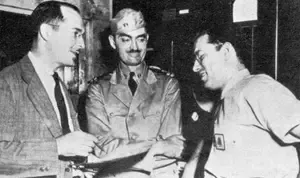 in addition to expanding our consciousness
 -
Fictional Dates of the Old Solar System
Oct 07, 26 12:33 PM
 our timeline extended into imagined pasts and futures
 -
Uranian Throne episode 24 Underway
Oct 07, 26 08:38 AM
 The skyfleet sails into Fyaym
 -
Guess The World - how many scenes on each world
Oct 05, 26 06:09 AM
 how each world is doing on the scenic front
 -
What to see on Jupiter
Oct 05, 26 05:58 AM
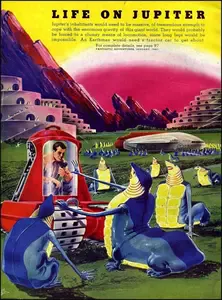 The Jovian scene
 -
History of Hopes
Oct 03, 26 10:46 AM
 Optimistic science and speculation
 -
the hits race
Oct 01, 26 10:37 AM
 the monthly popularity-contest for worlds
 -
Countries
Sep 30, 26 12:56 PM
 Supplementary Gazetteer for countries in sf scenes
 -
Zendexor's OSS Diary 2026
Sep 29, 26 03:19 PM
 reflections on life, the oss and everything
 -
Eras, Periods and Epochs
Sep 28, 26 02:01 PM
 The ages of deep time
 -
Uranian Throne - index of proper names
Sep 28, 26 12:43 PM
the people and places of Ooranye -
What to see on Titan
Sep 28, 26 05:16 AM
 The Titanic scene
 -
What to see on Callisto
Sep 26, 26 04:11 AM
 The Callistan scene
 -
Artists who have illustrated the Old Solar System
Sep 22, 26 12:53 PM
 visual depictions of the OSS
 -
What to see on Mars
Sep 21, 26 03:40 AM
 The Martian Scene
 -
Authors of the Old Solar System
Sep 18, 26 01:09 PM
authors who have contributed to the old solar system -
What to see on the Moon
Sep 18, 26 04:05 AM
 The lunar scene
 -
What to see on Venus
Sep 14, 26 02:01 AM
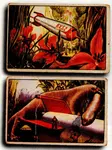 The Venusian scene
 -
What to see on Phobos
Sep 07, 26 05:36 AM
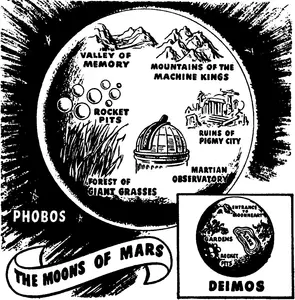 the scene on the inner moon of Mars
 -
CLUFFS
Sep 06, 26 11:33 AM
 CLUFFS - Cute Little Unfulfilled Fragments of Fascination
 -
Idea for another site - The Stellar Neighbourhood
Sep 06, 26 11:10 AM
 the named or designated stars that appear in literature
 -
What to see on the Asteroid Progenitor Planet
Sep 03, 26 09:18 AM
 The Lost Planet scene
 -
Jasoomian Gathol
Aug 22, 26 08:40 AM
 dreams and themes from an island
 -
What to see on Uranus
Aug 17, 26 03:12 AM
 The Uranian scene
 -
Future Dates for Real
Aug 12, 26 02:39 PM
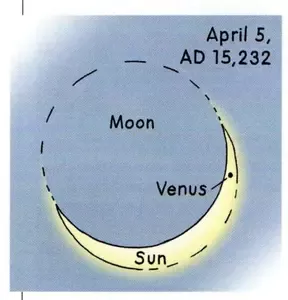 prophecies which are quite certain
 -
What to see on Mercury
Aug 11, 26 07:51 AM
 The Mercurian scene