the area gazetteer:
Countries
regions, states, provinces, shires...
...in sf scenes
[ + link to the main Gazetteer ]
The main Gazetteer page has become so enormous, that I welcome any
excuse to start another so as to accommodate some "overspill".
One such idea has led to this page. It occurred to me with regard to the brilliant start of Keith Laumer's A Plague of Demons - the opening scene in Tamboula, Algeria. I set about doing a Gazetteer entry for Tamboula, but I encountered a problem: the town doesn't exist. Laumer must have invented it.
Formerly, that would have stopped me from using Laumer's scene at
all, since my aim has been to reserve the Gazetteer for scenes with
fairly specific real locations: entries for particular
towns and cities, all of which actually exist.
Now, however,
while I shall continue with the main Gazetteer for locatable specifics, this new
page will be for scenes which refer to reality in a more general sense.
Here, then, you'll find imaginary towns, or just
unspecified states or provinces or countryside, that nevertheless definitely belong to the real countries which provide the headword entries to this supplementary Gazetteer.
 upper St.Regis Lake
the Adirondacks, New York State, USA:
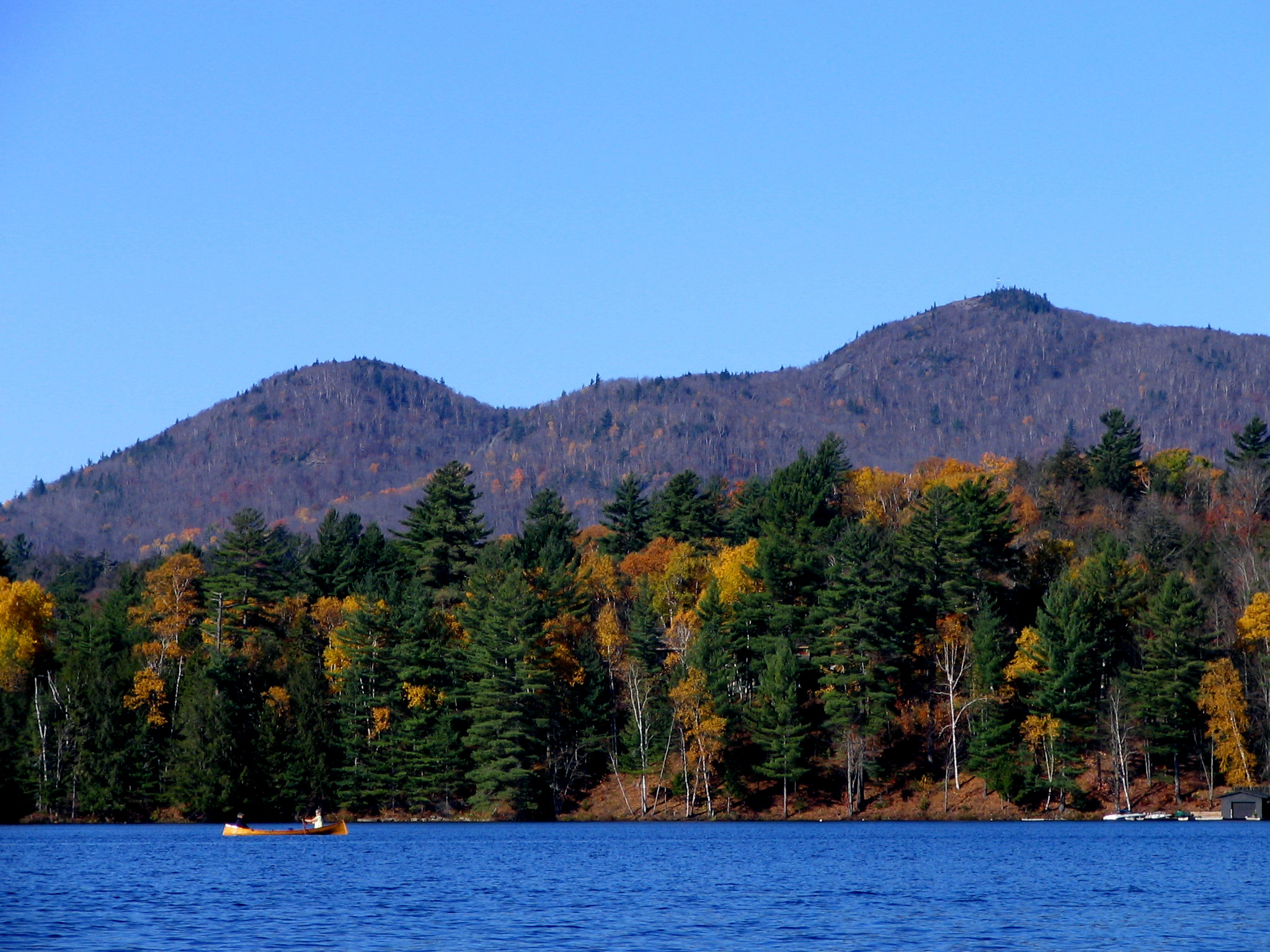
While on a fishing holiday in the St Regis range of lakes in this mountain range, the narrator of Howard Fast's The Large Ant (Fantastic Universe, February 1960) sees an alien and instantaneously kills it in a fear-response, to his later consternation and regret.
...I
keep trying to think back, to recreate the moment when I saw it
standing at the foot of my bed in the fishing shack. I keep trying to
dig out of my memory a clear picture of what it looked like...
The Adirondacks are the scene of a brief idyll snatched from the fight against the parasitic alien invaders from Titan in Heinlein's The Puppet Masters (1951). Agent "Sam" Nivens introduces his new bride to his mountain cabin:
...I found her staring at the shack. "Sweetheart, it's beautiful!"
"You can't beat the Adirondacks," I agreed. There was a slight haze
with the sun low in the west, giving that wonderful, depth upon depth,
stereo look.
She glanced at it and said, "Yes, yes - but I didn't mean that. I meant your - our cabin. Let's go inside, right now."
"Suits," I agreed, "but it's really just a simple shack." Which it was
- not even an indoor pool. I had kept it that way; when I came up here
I didn't want to feel that I had brought the city with me...
The fictional town of Stanhope, New York, home of Marvin Flynn, the discontented young protagonist of Robert Sheckley's Mindswap (1966),
...was a pleasing rural community situated in the foothills of the Adirondacks, garlanded with orchards and dotted with clusters of brown cows against rolling green pastureland. Invincibly bucolic, Stanhope clung to antique ways...
- while Marvin has such a yearning for travel that he eventually takes the risk of swapping bodies with a Martian, with consequences that take him far further into the galaxy.
The evil scientist in Edmond Hamilton's The Dogs of Dr Dwann (Weird Tales, October 1932) conducts his sinister transplants between men and dogs in his laboratory in the Adirondacks.
...They loomed before us, green range on range of forest-clad heights, each range out-topped by the one beyond. In the nearer hills we could see the compact white buildings of farms gleaming here and there in the morning sunshine, but farther westward only forest appeared to cover the slopes and crests.
Doctor Dwann gestured widely as he drove up the steep and narrow dirt roads. "A find region, Mr. Jameson. I hope Farliss hasn't spoiled your stay in it with his talk."
"No, he was just telling me of some queer barkings of dogs heard back in these hills..."
Afghanistan:
After the Patagonian disaster, the Second Dark Age, which lasts for most of the next ten million years as recounted by Olaf Stapledon in Last And First Men (1930), saw the topography of the wounded Earth undergo continuing long-drawn-out violence:
...The huge mass of Tibet sank deeply into the disturbed foundations, lunged West, and buckled Afghanistan into a range of peaks nearly forty thousand feet above the sea...
Alabama, USA:
Thomas Parker, folklorist, in Clifford Simak's The Whistling Well (1980), mentions the Devil to a former preacher, and gets an answer that suggests an evil existed on Earth before Man.
...Sitting there, he remembered the old black man he had talked with one afternoon, deep in Alabama, sitting on the ramshackle porch of the neat, ramshackle house, with the shade of a chinaberry tree shielding them from the heat of the late-afternoon sun. The old man sat easily in his chair, every now and then twirling the cane he held, its point against the porch floor, holding it easily by the shaft, twirling it every now and then, so that the crook of it went round and round.
"If you're going to write your book the way it should be written," the old black man had said, "you got to look deeper than the Devil..."

Algeria:
Secret agent John Bravais' arrival to investigate a missing-persons mystery opens the near-future narrative of Keith Laumer's A Plague of Demons (1965):
It was ten minutes past high noon when I paid off my helicab, ducked under the air blast from the caged high-speed rotors as they whined back to speed, and looked around at the sun-scalded, dust-white, mob-noisy bazaar of the trucial camp-city of Tamboula, Republic of Free Algeria. Merchants' stalls were a clash of garish fabrics, the pastels of heaped fruit, the glitter of oriental gold thread and beadwork, the glint of polished Japanese lenses and finely-machined Swedish chromalloy, the subtle gleam of hand-rubbed wood, the brittle complexity of Hong Kong plastic - islands in the tide of humanity that elbowed, sauntered, bargained with shrill voices and waving hands or stood idly in patches of black shadow under rigged awnings all across the wide square. I made my way through the press, shouted at by hucksters, solicited by whining beggars and tattooed drabs, jostled by UN Security Police escorting officials of a dozen nations...
the Arctic:
Olaf Stapledon in part VI of Last And First Men (1930) tells the tale of the sole survivors of the Patagonian disaster -
By one of those rare tricks of fortune, which are as often favourable as hostile to humanity, an Arctic exploration ship had recently been embedded in the pack-ice for a long drift across the Polar sea. She was provisioned for four years, and when the catastrophe occurred she had already been at sea for six months....
The crew's first intimation of the catastrophe was a furious hot wind that melted the surface of the ice. The sky turned black. The Arctic summer became a weird and sultry night, torn by fantastic thunderstorms...
Arizona, USA:
Piedmont, a name belonging in reality to a ghost town in Yavapai County, becomes in Michael Crichton's techno-thriller The Andromeda Strain (1969) a town in a remoter area of the state, disastrously contaminated by an alien micro-organism brought down by an artificial satellite's re-entry nearby.
...Crane tapped the map with a pencil in a nervous way, and announced the name of the town at the foot of the hill: Piedmont, Arizona. Population forty-eight; both men laughed over that, though they were both inwardly concerned...
...And then Shawn noticed the birds.
In the light of the full moon he could see them, big birds, gliding in slow circles over the buildings...
Britain: see Jasoomian Gathol.
 in the Chiltern Hills in Buckinghamshire
Buckinghamshire, England:
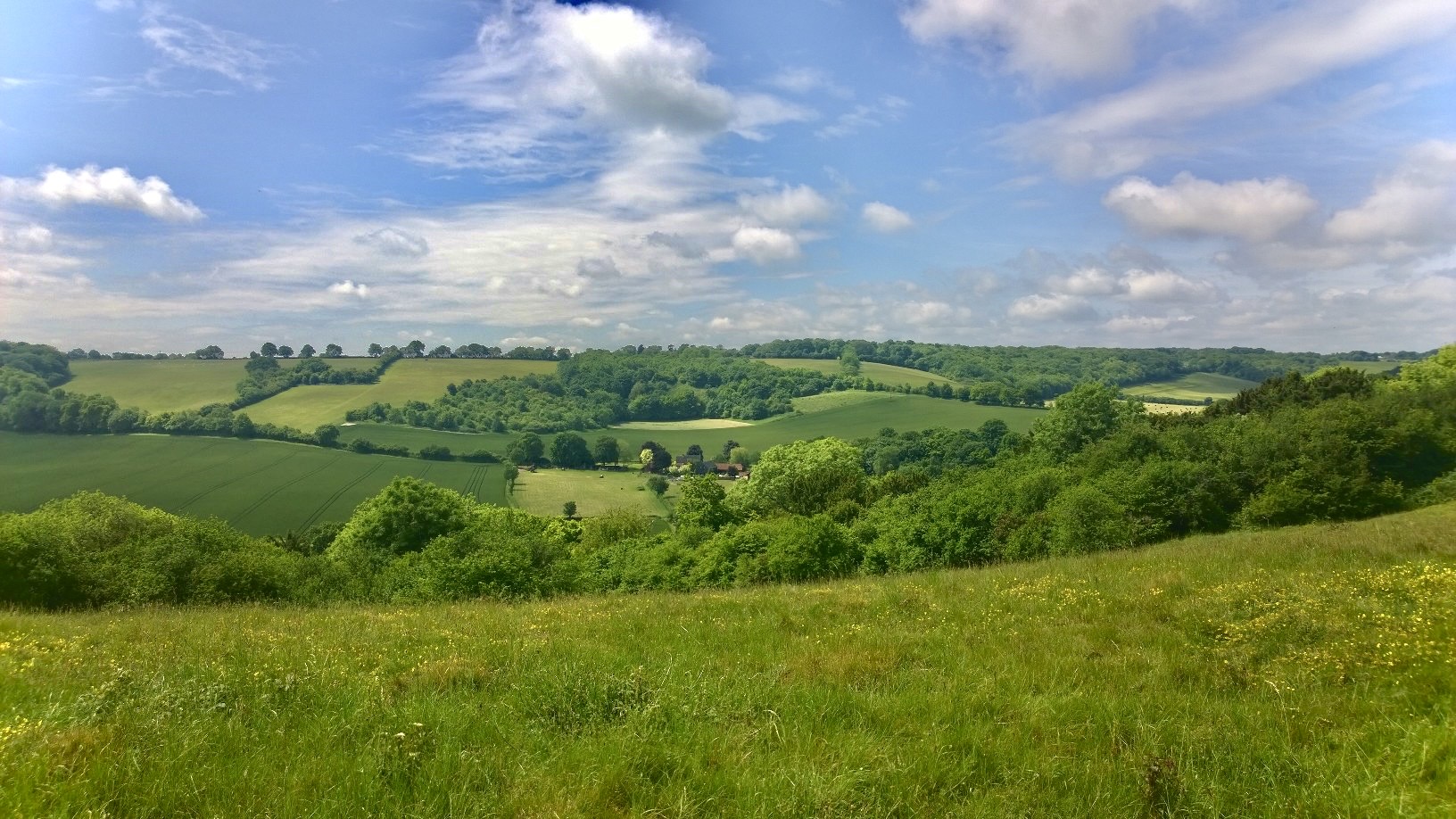
L P Davies' novel of the paranormal The Land of Leys (1979) is set in this county, which the novel depicts as rich in ley lines of psychic significance.
...Now it was possible to see the fronts of some of the older buildings with their carved stone facades, the carvings worn smooth with the passage of weather and time... "This has always been witch country; always will be. And that, of course, by virtue of the leys. Three intersect at the market square we just passed..."
the Congo:
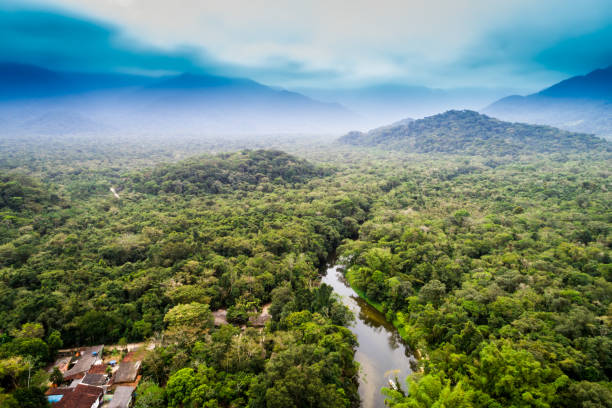
James Blish's extraordinary lost-world novel The Night Shapes (1962) recounts an expedition guided by American exile Kit Kennedy (alias "Ktendi" of the Wassabi tribe) which discovers the existence of two secret valleys inhabited by surviving dinosaurs. The action is set during the personal rule of the ruthless Belgian king Leopold II (see 1906). The novel begins:
The sun
It is impossible to complete the sentence. Even the centipedes are stunned. But everyone understands.
At Mushie, the Kwango and that branch of the Ikatta which drains Lake Leopold come together on their way to the Congo. It is not far to the equator, but it is impossible to imagine that the sun can become any worse.
It was here that Kit Kennedy came out of the jungle. He was not in a balaniere, which is the usual boat of white men on shallow waters in this country. He came out in a Bulu dugout, poled by four silent African warriors...

the Cotswolds, England:
In Fred Hoyle's The Black Cloud (1957) this is the location of the refuge and research centre where the scientists recruited by Professor Chris Kingsley learn to communicate with the gaseous intruder to the Solar System, and where they wait out the disasters caused by the Cloud's advent.
The manor house of Nortonstowe is set in open parkland, high in the Cotswolds not far from the steep western scarp. The land around is fertile. When it was first proposed to turn the manor into "one of those Government places" there was a considerable measure of opposition both locally and in newspapers throughout Gloucestershire. But the Government had its way, as it does in such matters. The "locals" were somewhat mollified when they heard that the new "place" was to be agricultural in orientation and that farmers could look to it for advice...
In Bob Shaw's The Peace Machine (1971, 1985) mathematician Lucas Hutchman is on the run after having invented a way to explode nuclear weapons remotely:
The whole broad back of the country lay before him, daunting in its size, complexity, and possibilities of danger. He had been accustomed to thinking of Britain as a cosy little island, a crowded patch of grass which scarcely afforded a jetliner space to trim for level flight before it was time for it to nestle down again. Now, suddenly, the land was huge and misty, crawling with menace, magnified in inverse proportion to the number of human beings to whom he could turn for help...
...By midday Hutchman was deep in the Tolkien-land of the Cotswolds, swishing through villages of honey-coloured stone which seemed to have grown by some natural process rather than artifice. Domesticated valleys shone in pale tints beneath veils of white mist. He surveyed the countryside in detached gloom, his brain seething with regrets and reconsiderations, until the mention of his name on a newscast brought him back to the minute-by-minute business of living...
John Lymington's novel of alien invasion, The Star Witches (1965), is set in an unnamed Cotswold village. Characters seem understandably keen to relate to certain disturbances to water-levels in the area:
..."It's that cold smell again." He became quite still and sniffed. "That reminds me. There's a spring under this house somewheres. The Cotswolds is full of springs. It's where the Thames comes from, them springs - I wonder." He looked at the polished oak floor.
"Yes," said John Gray awkwardly. "Yes, it could be that..." [p.40]
And a bit later:
"Do you know what I reckon?" said Jim Wagg, craneman at the gravel pits. "I reckon it's the water under here. Water level's high in the Cotswolds. Only a couple of feet down some places. S'pose it started shifting or something. You'd get a hell of a belly rumble then, wouldn't you?" [p.57]
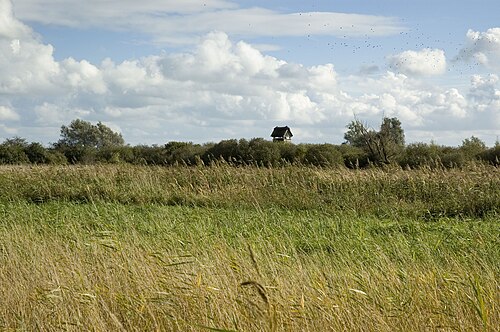 Wicken Fen
East Anglia, England:
Wanderers in the post-disaster world which has undergone the effects of the mental illness called the "Radiant Suicide", the protagonists of Edmund Cooper's All Fool's Day (1966) drive through a region re-awakenking to its old natural beauty.
It was another jewelled morning. The flat East Anglian landscape, unfettered now, free from the tidy patterns of agriculture, the greedy attentions of man, was reverting to its own primal mystery. Fen and woodland marched towards each other; and the rolling brown acres of ploughland were no more...
Epping Forest, Essex, England:
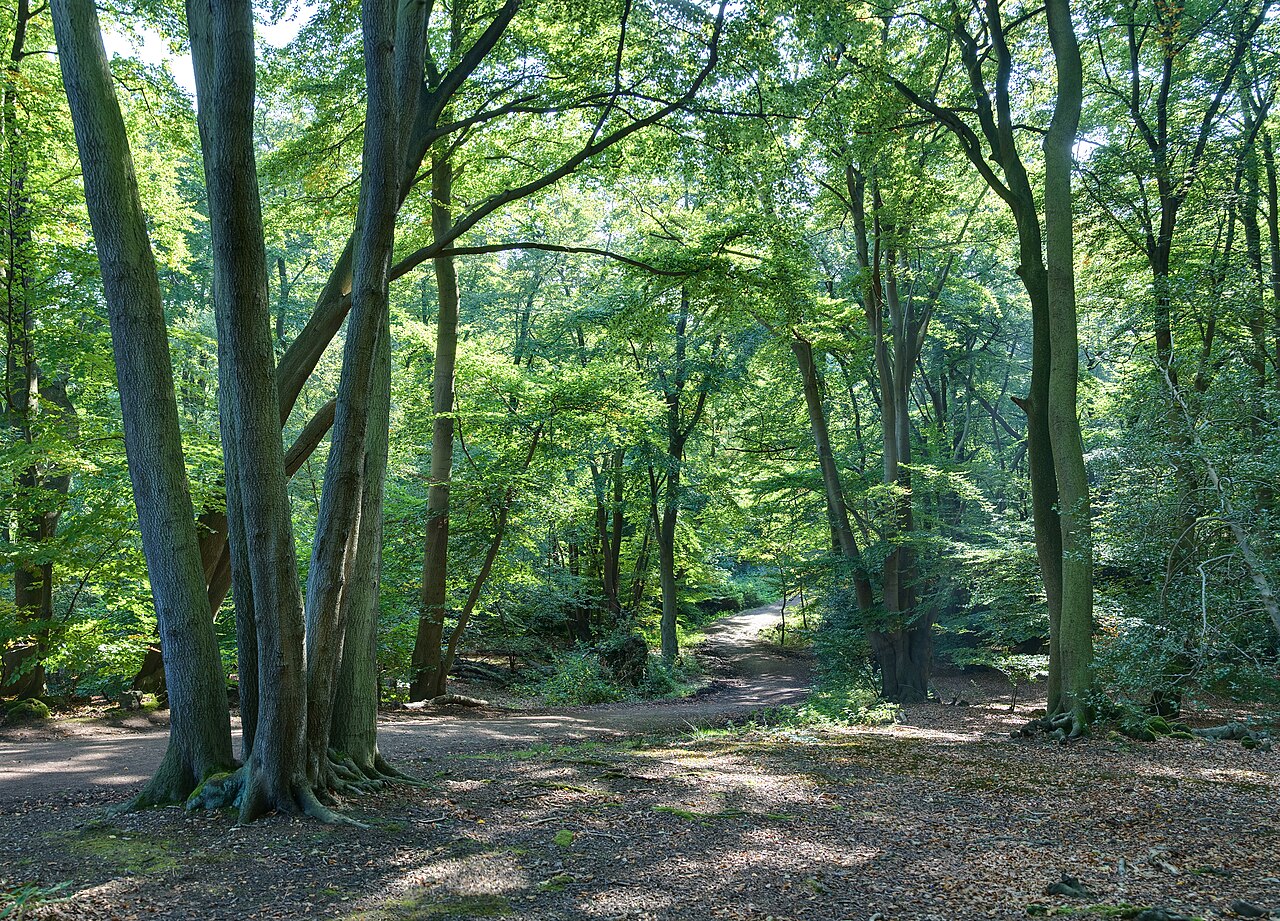
Site of the shelter in which John Markham survives the nuclear holocaust of 1967 that is the prologue to Edmund Cooper's The Uncertain Midnight (1958), the Forest largely survives and is revisited by Markham in 2113, after his 146 years of suspended animation, when the problem is not bombs but androids. But first, before the bomb:
Epping Forest. Fifteen miles north of the City. Epping in autumn, with the leaves red and gold; and the rustle of crisp, multi-coloured waves blown tumbling along the concrete highways. The sudden stillness of trees, and then a wind-whipped turbulence bringing them to life, scattering the leaves in a dance of death.
Autumn and falling leaves - and bulldozers, excavators, tractors, trucks. Men sweating in the late sunlight. Burrowing into the earth like moles; creating tunnels, chambers...
Florida, USA:
Keith Laumer, who lived in Florida from the late 1950s onwards, narrates the arrival of fugitive John Bravais on that state's east coast (somewhere near Jacksonville) on page 78 of A Plague of Demons (1965); the wounded Bravais has swum ashore from a submarine whose captain had arranged for him to be betrayed to the authorities and thus to the secret invaders of Earth:
...I came to shore in a tangle of water hyacinth rooted in the soft mud of a river's edge. For a long time I lay flat on my face, waiting for the sickness to drain away. There were far-off sounds of life: the rumble of a monorail, the hoot of a tug out in the harbor. Nearer, a dog barked. Mosquitos whined insistently.
I turned on my back. Giant stars blazed across a sky like charred velvet. The air was hot, heavy, oppressive. There was an odor of river muck and decayed vegetation. I got to my feet, staggering a little. I waded out, washed the mud off me...
...A sandy road cut across the edge of a planted field before me, a strip of lesser black against the darkness. I squinted, trying to bring my night-vision into play...
Leslie Charteris' one and only science-fictional "Saint" story, The Man Who Liked Ants, (Double Detective Magazine, December 1937, and collected in The Happy Highwayman, 1939) is set vaguely in the Sunshine State, the evidence for this being that Simon Templar's friend Ivar Nordsten confides in him in that mood of idle fantasy which may well come with the after-lunch contentment of a warm Florida afternoon.
Nordsten's remarks concern his acquaintance, the sinister Dr Sardon, who turns out to have bred a potentially world-dominating species of ant:
His voice sank almost to a whisper, and in the dim light of candles on the table the smouldering luminousness of his eyes seemed to leave the rest of his face in deep shadow.
"With the ant, Nature overreached herself. The ant was ready to take his place at the head of creation before creation was ready for him... Nevertheless, when the solar system is older, and the sun is red because the white heat of its fire is exhausted, and the red light which will accelerate the growth of all living cells is stronger, the ant will be waiting for his turn. Unless Nature finds a swifter instrument than Time to put right her miscalculation..."
(The story was memorably televised as part of the ITV series The Saint starring Roger Moore, as The House on Dragon's Rock, aired 24th November 1968, but this televised version is set in Wales - which to my mind is a better idea than setting it in Florida. Indeed in re-reading the tale recently I was disappointed at being reminded that Charteris hadn't placed his mad scientist to lurk in the atmospheric Welsh mountains.)
Anyhow, the Saint saves the world from Sardon's scheme, but the question of a far future ant-dominated Earth is, in Templar's words, left open. Having admitted that he is by and large nauseated by the human race, the Saint adds:
"...But it isn't my job to alter it. If Sardon was right, Nature will find her own remedy. But the world has millions of years left, and I think evolution can afford to wait."
Consequent upon the low-lying topography of Florida we get this brief, forceful description of the overwhelming floods caused by the intruding planet in Fritz Leiber's The Wanderer (1964):
Barbara Katz sat in the topmost spread of the big, pale rung-like, right-angling branches of a gigantic dead magnolia tree, the westering sun hot on her back, and watched east under the blue sky for the Atlantic to come mounding back from Daytona Beach and Lake George over the neck of Florida...
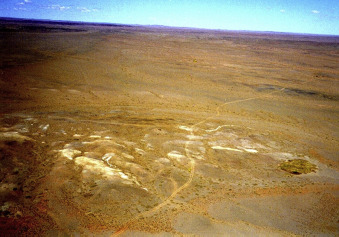
the Gobi desert:
From Paul Tabori's The Doomsday Brain (1967):
The
city which Bruno Gatterer alias Master Brug built under the rocks of
the Gobi Desert had a population of seven hundred. But its extent and
its production capacity were that of a large metropolis. The answer to
this seeming paradox was automation. The seven hundred did little but
tend the machines each of which did the work of a thousand or more...
And now he was ready. Ready to crown his life's work, to prove that he was
Master Brug, the man whom the machines had made into a god and whose
godhead was embodied in machines that were like men and men that had
become machines...
From Frederick Pohl's The Merchants' War
(1984) which is set in a "sales-fearing" commercial dystopia run by
advertising agencies, and in which the "hero", Tenn Tarb, is recruited
to extend their sway:
We wound up in the Gobi Desert...
The place is technically known as the Xinjiang Uygur Autonomous Region,
but everybody called it the Reservation. It was where one of the last
remaining batches of unconsolidated aboriginals lived, Uygurs and Hui
and Kazak, the ones that never made the transition to the market society
when the rest of China joined it. There's civilization all around
them. There's RussCorp to the North, Indiastries South and all the
China-Han complex at their gates. But the Eager Weegers just sit there
and do their own thing...
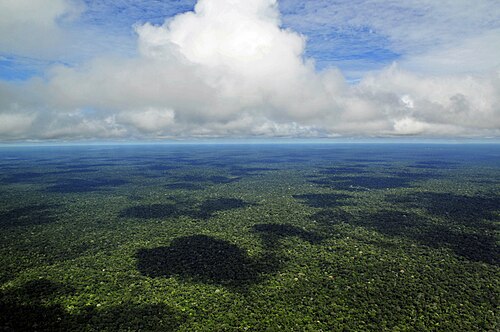
Guyana:
Donald A Wollheim's strange and memorable story The Rules of the Game (New Writings in SF-22,
ed. Kenneth Bulmer, 1973) is set in Guyana: at a launch site for a
mysterious craft which seems to lack an engine. The theme of the tale
is that the laws of Nature are not fixed but on the contrary have
changed in historical times and are about to change again - in
particular the law of gravity...
"This
is not a spaceship or maybe it is," Dr. Desai said now, leaning back.
"I regret that you must perforce remain with us, but the change is
coming now - suddenly and violently, and it is raining petroleum from
the skies, and the grounds are rising up now to take new conformations
to fit the new rules of science..."
...The great globe rocked from side to side and then the oil drops
slid away from the bull's eye windows and the globe rolled slightly over
and I saw the whole of Guyana below us, aboiling and aseething with
seas of gleaming sludge, and tossing with flotsam that were jungles...
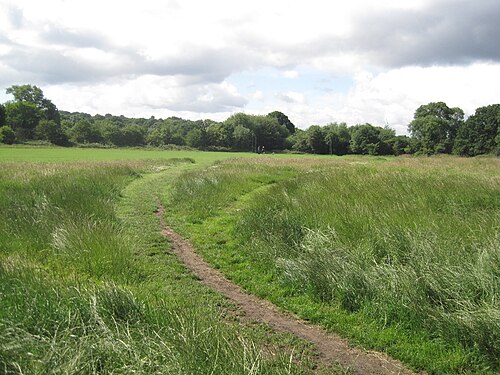
Hampstead Heath, Middlesex, England:
Bill Masen, in chapter 8 of John Wyndham's The Day of the Triffids
(1951), re-visits the area of the Heath in search of provisions, having
been placed in charge of a group of the Disaster's blinded victims, and
on the look out for the vegetable menace that has come into its own:
...I
recalled that in former days when I had come up to Hampstead Heath it
had often been by way of a bus terminus where a number of small shops
and stores clustered. With the aid of the street-plan I found the place
again easily enough - not only found it, but discovered it to be
marvellously intact. Save for three or four broken windows, the area
looked simply as if it had been closed up for a week-end.
But there were differences. For one thing, no such silence had ever
before hung over the locality, weekday or Sunday. And there were
several bodies lying in the street. By this time one was becoming
accustomed enough to that to pay them little attention. I had, in fact,
wondered that there were not more to be seen, and had come to the
conclusion that most people sought some kind of shelter either out of
fear, or later when they became weak. It was one of the reasons that
one felt a disinclination to enter any dwelling house.
I stopped the lorry in front of a provision store and listened for a
few seconds. The silence came down on us like a blanket. There was no
sound of tapping sticks, not a wanderer in sight. Nothing moved...
A different disaster - nuclear war in the year 1967 - has transformed the life of John Markham, who spends 146 years frozen in a bomb shelter in Edmund Cooper's The Uncertain Midnight (1958). Some time after being revived in 2113, into a Britain with a tiny fraction of the population of yore, he is flying over the countryside in a helicar with his personal android:
Down below was Hampstead Heath - incredibly unchanged.
"Circle," he said to Marion-A in a voice that was hoarse and indistinct. "Circle slowly, and take it low... Hampstead. I - I used to... I want to have a look."
"Yes, sir."
...The Heath was cleaner, fresher than it had ever been. Where were the lovers who had walked there arm in arm? Where were the children who had romped and flown kites and scattered the wrappings of innumerable sweets over the worn grass? Where were all the ghosts of a thousand yesterdays...?
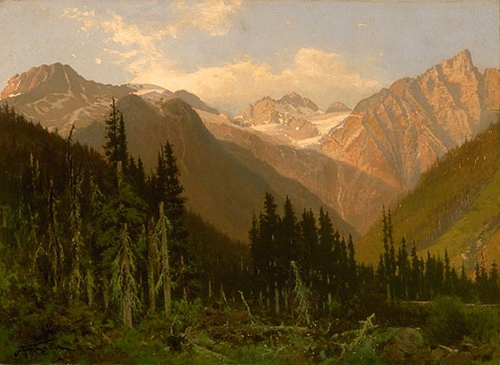 At the Rogers Pass by John A Fraser (1886)
Idaho, USA:
From E E "Doc" Smith's The Skylark of Space (1928, 1958), chapter three, which looks back to the origins of Richard Seaton, man of action, scientific genius and space-pioneer:
Seaton's childhood had been spent in the mountains of northern Idaho, a region not much out of the pioneer stage and offering few inducements to intellectual effort. ...his father, 'Big Fred' Seaton... owned a quarter-section of virgin white-pine timber, and in that splendid grove he established a home for himself and his motherless boy.
In front of the cabin lay a level strip of meadow, beyond which rose a magnificent, snow-crowned peak that caught the earliest rays of the sun.
This mountain, dominating the entire countryside, was to the boy a challenge, a question, and a secret...
Illinois, USA:
Adam Nova, an idiot-born superman with as yet a blank-slate infant mind in his adult body, borrowing personalities and knowledge telepathically from other minds, is driving south through Illinois in a stolen car with the fake medium "Sister Louella" on page 78 of Keith Laumer's The Infinite Cage (1972):
..."Got to get a map. Need money. Make it to Atlanta..."
"Right here, Adam, I got a map." Louella rummaged in the dusty glove compartment, spilling out a boken plastic windshield scraper, a beer-can opener, gnawed pencils, a tattered Shell Oil Company road map, folded out to show the northern section of the state.
"Where are we?" Adam snapped, glancing aside as she held it out.
"Right here, about twenty miles west of Springfield."
"What's the next main road we cross?"
"That's State 42; just past Oakdale."
"We'll head south there. About fifty miles to the line. You got money?"
"Money? No, Adam, just some silver, is all, I never had time - "
"Got have money." Adam stared fiercely out at dark weed-grown fields, scrub woods, billboards, power poles. Ahead, a shabby service station squatted by the road; faded pennants strung from the dim-lit pumps fluttered half-heartedly...
Iowa, USA:
...I stopped in a bar and looked at a newscast. There was no news from Iowa, but when is there any news from Iowa?
Robert A Heinlein, The Puppet Masters (1951)
Labrador, Canada:
[See 2675.]
This is the province inhabited by the post-apocalyptic population described in John Wyndham's 1955 novel The Chrysalids.
The
world... was generally thought to be a pretty big place, and probably
round. The civilized part of it - of which Waknuk was only a small
district - was called Labrador. This was thought to be the Old People's
name for it, though that was not very certain. Round most of Labrador
there was a great deal of water called the sea... if you were to go
three hundred miles or so east, north, or north-west you would come to
it sooner or later. But south-west or south, you wouldn't; you'd get to
the Fringes and then the Badlands, which would kill you...
The province also features in Isaac Asimov's tale of the rash over-use of probability worlds, Living Space (Science Fiction, May 1956), in which an accountant, Clarence Rimbro, sometime in the fifth millennium, finds (to his indignation) that his very own probability-Earth is shared by the inhabitants of another.
...The situation of the dwelling place was in that region which on Earth proper would be called Labrador. (It was Labrador here, too, really. It had been calculated that in not more than one out of a quadrillion or so Earths were there significant changes in the geological development. The continents were everywhere recognizable down to quite small details.)
The novelist Nevil Shute, who more than once ventures into what I consider borderline sf by way of the paranormal, sets some of No Highway (1948) in Labrador, where a search takes place for a vitally important part of an aircraft wreck, which is eventually discovered by psychic means.
...We searched that square mile of Labrador forest for three days, and it was a terrible job.
Before I went there I thought that Labrador was a country of rocks and sparse, scattered trees. I mentioned that to Russell once, who told me that it was, all except this particular bit. That bit was dense jungle - there is no better word...
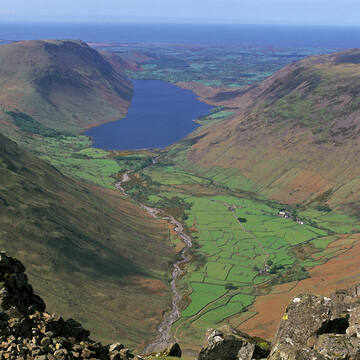
the Lake District, England:
Jerry Coleman, journalist, on his way to investigate a rumoured community of telepaths, has
...an
odd feeling that, although he had never been within a hundred miles of
the Lake District, the landscape was totally familiar.
Normally he might have put this impression down to the restimulation of
half-forgotten memories of photographs and films of the area that he
had seen in the past; but this was something more than a general
impression. After they had passed through Kendal it became so strong
that it could not be ignored. Time and again as he came to a corner, or
to the top of a hill, it was as if he knew with certainty what lay
beyond, down to the smallest detail. The view of a solitary farmhouse,
the pattern of stone walls in a valley, crossing and recrossing with the
jigsaw logic of some ancient rights of tenantry, a small church
nestling against a clump of trees in the morning sunlight...
It was just after eleven when they began to run down a hill into the
village of Alsdale. The feeling of familiarity was even stronger here;
it was almost like coming home... Jerry found himself recognising the
front of each stone cottage like the face of an old friend; knowing that
the board outside the village pub would bear a faded picture of
Nelson's flagship and the name VICTORY; that just beyond it would be the
village store and post office, its brown-painted facia bearing the name
GARFORTH in faded cream capitals...
- Dan Morgan, The Several Minds (1969)
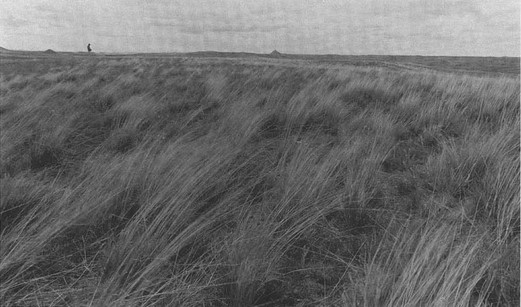
Montana, USA:
My impression of this state came originally from reading Patrick Tilley's Fade-Out
(1975), a novel of extraterrestrial visitation. I read it in the late
1970s and ever since then a mention of Montana has conjured in my mind
the image of an alien epiphany. Somehow the locale is so appropriate:
North
of Miles City, the land is known as 'The Big Open'. Bare, rolling,
high plains country with as few trees as there are people. For mile
after mile on either side of the two-lane hog-backed highway, there is
nothing but endless stretches of buffalo grass and sage. Cattle
country, scarred here and there by poisonous salt pans, and the
intertwined, weathered clusters of gumbo and sandstone buttes that make
up the eastern Montana badlands...
Montana is also the scene of Bob Shaw's The Two-Timers (1968), set in the year 1981 except for flashbacks. (The city in the text is not named.) Jack Breton has managed to go back nine years to save his wife from a killer, but in doing so has created a parallel time-track.
...As he reached the outskirts of the city Breton distracted himself by looking for visible differences between the Time B world and his memory of the same area in Time A. But things appeared no different - there was the same penumbra of lumber yards, used-car lots, lonely little banks stranded far away from their parent organizations, knots of bravely-lit stores, diners, and occasional incongruous groups of houses...
When the car had shaken off the city and was arrowing through the Montana prairie, Breton increased speed, and insects began to splatter the windshield. A coppery sun was setting to his left, withdrawing its light from a peacock-green sky. Far off to the east something flickered above the horizon...
Three chapters later the meteor showers (connected, though Breton does not know this yet, with changes in the gravitational constant due to his tampering with time) have increased to a disturbing extent.
...He reached the crest of the ridge and far away to his left saw topaz fragments of flame stirring on the sloping grasslands.
Within a matter of minutes the whole area would be overrun with curious sightseers. Breton knew the mentality of the average Montana city-dweller - even a simple brushfire was enough to bring them pouring out of their dessicated houses, ridiculously grateful at having somewhere to go in their brand-new cars, which - big and fast though they were - were unable to perform their function as magic carpets in the face of the prairie vastness...

Nevada, USA:
The rocket-research site in Charles Eric Maine's Spaceways (1953) was located -
...on the south-eastern edge of the desert, about twenty-five miles from Silver Falls - a hick village to which some long-dead humorist, in a fit of malicious irony, had given its attractive but fanciful name. There wasn't even the slightest suggestion of a stream within many miles of the place, let alone a waterfall. Some distance to the east was a vast low-lying area dotted with small deep lakes, and water from some of these was pumped through a narrow pipe-line to keep the hard-bitten citizens of Silver Falls alive... [Note: Silver Falls, Nevada, exists in fiction only.] Later on, the narrator remarks further on the scene, so apt for this story:
...The months slipped by smoothly, with little to indicate the passage of the seasons - except for the diminishing fire of the sun during the day, and the increasing fury of the autumn winds. In November the first rains of winter arrived - a steady torrential downpour from heavy swollen nimbus cloud that crawled sluggishly and blackly across the sky. I realised then where the many lakes and springs to the south-east gathered their water supply from. The rains soaked deeply into the loose dry ground, until, guided by the deep clay and rock strata, they merged and united into a vast underground lake that broke out on the surface, like a rash, in areas where the level of the terrain was below average. In spite of the heavy rainfall of the cold season, the land remained barren; there was no organic matter in the gritty top-soil to support any kind of vegetation more ambitious than cacti or thorn-laden shrubs of stunted twisted growth...
The fictional "Flatrock, Nevada" is where the US Government builds the underground facility for dealing with alien micro-organisms in Michael Crichton's The Andromeda Strain (1969).

the New Forest, Hampshire, England:
Matthew Cotter, a Guernsey grower, is searching on the mainland for his daughter amid a country devastated by earthquakes too severe for society to survive, as described in the 1965 disaster novel by John Christopher, A Wrinkle in the Skin. In chapter ten, Matthew and a child whom he has rescued on the way are cheered by a sight in the Forest:
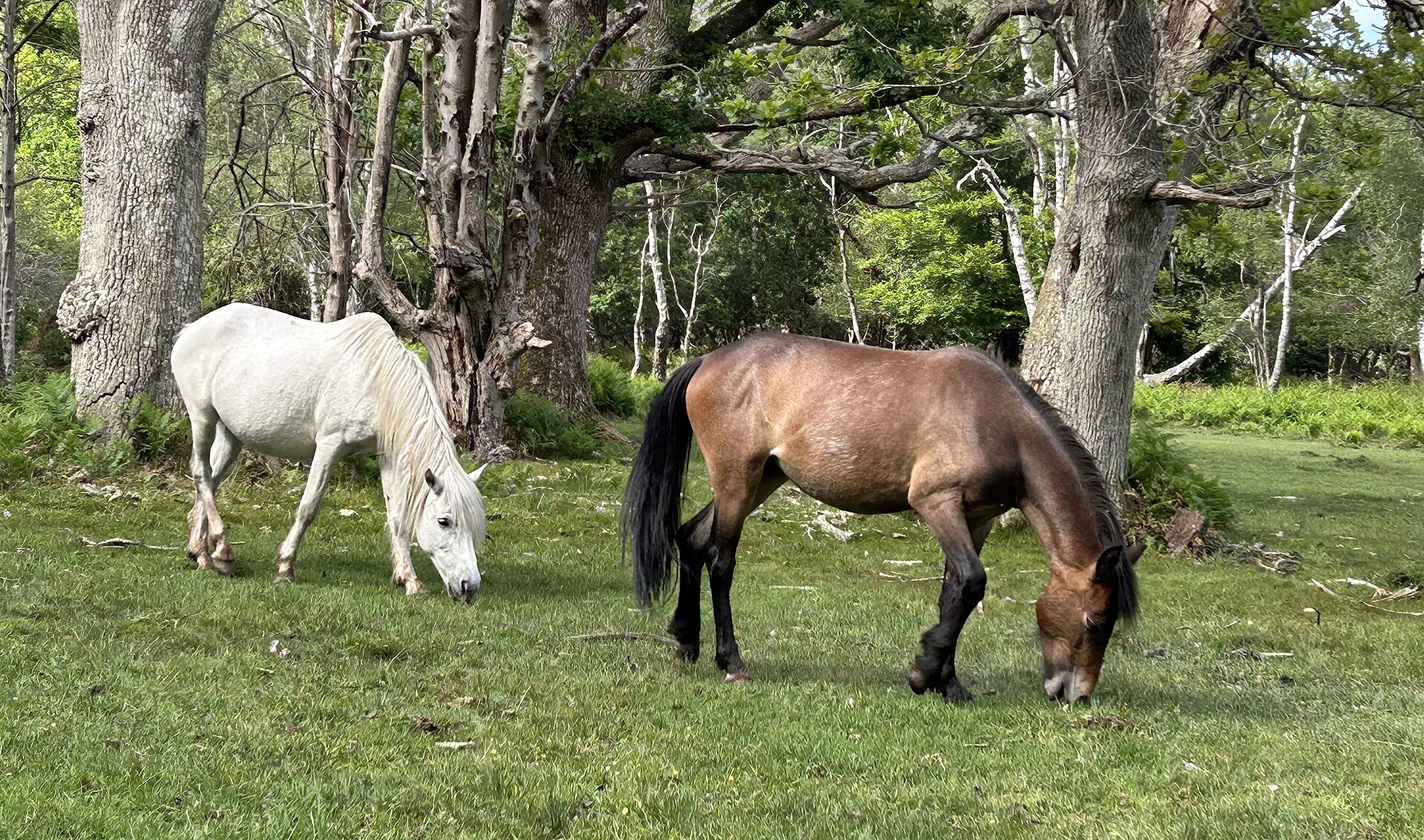
...It was early morning, light enough to see fifty yards or so. And they stood at the very edge of vision - wraith-like, almost melting into the shadows. But clear enough to see. Two at first and then, as one of them moved, he saw a third grazing behind it. New Forest ponies. A brown, a dun, and a smaller sorrel. Matthew thought, with delight: they survived the motorists who massacred them summer after summer on the unfenced roads of the Forest, and now the motor-cars are gone and they still crop the grass as they did in the days of William Rufus...
New Hampshire, USA:
Whiteford, N.H., in Bob Shaw's Fire Pattern (1984), appears to be non-existent, so this entry is for the State rather than the town. The novel's first four chapters are set in the State and give a generally pleasant impression of it, though it is the scene of stunning events for science-journalist Ray Jerome, who is researching cases of spontaneous human combustion. He seeks a Doctor Pitman in the Albany district of Whiteford:
...Albany was an exclusive enclave where, as a kind of reaction to the strict grid pattern of the rest of the town, the roads had been laid out in meandering curves and given English county names instead of numbers...
- and has no peace from then on.

Nicaragua:
One of the large cast of Fritz Leiber's multi-viewpoint novel The Wanderer (1964), about an intruding planet-sized starship that causes tidal devastation on Earth, is a would-be Central American revolutionary:
Don Guillermo Walker, straining to see, through the dull black Nicaraguan cloud-jungle, the inky gleam of Lake Managua, decided that bombing el presidente's stronghold in the dark of the eclipse had been a purely theatric idea, a third-act improvisation from desperation...
Eclipses weren't all that dark, it turned out, and el presidente's three jet fighters could chop up this ancient Seabee in seconds, ending the Revolution of the Best, or at least the contribution to it of the self-proclaimed lineal descendant of the original William Walker who had filibustered Nicaragua in the 1850s...
Later, after the celestial intruder has wrought its effects:
...The inference was incredible, yet inescapable. The Wanderer-multiplied tides were flowing over the isthmus, joining the Pacific to Lake Nicaragua... The Nicaraguan Canal, of which so many men had dreamed, had become a twice-daily reality.
A red glare appeared half-way up the thickly vegetated cone of Madera...
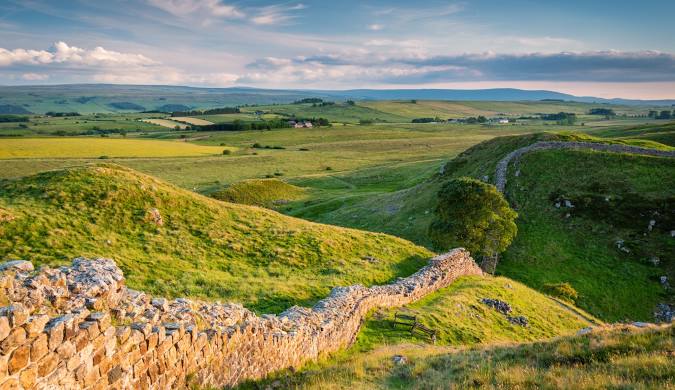
Northumberland, England:
This northern county is the site of the (fictional) village that becomes a focus for the pursuers and the pursued in L P Davies' novel The Alien (1968).
"These are the details of the sighting in question, sir. Date: December twentieth, 2014. Place: Monksmere. That is a small village in one of the Coastal Preserve areas in Northumberland. There are six eye-witness reports. Three come from people living in the village who all say that on the night in question, at about twenty-one hundred hours, they saw a circular blue-white light travel slowly across the sky. Our analysis of their - "
"Just the basic details, please," the Minister broke in quietly...
In another Davies novel, his first - The Paper Dolls (1964) - the fictional village of Kendly, Northumberland, is a base from which to mount a search for the mutated quadruplets who share a group mind whose psychokinetic powers threaten humanity.
...There was no mention of Kendly on any of the sign-posts we passed. I stopped to make enquiries at a cottage, and an old man with dangling braces told me that we were, in fact, already in Kendly, and the house we wanted was perhaps quarter of a mile ahead, off the main road... "Hid-like, so's you can't see it from the road..."
Oklahoma, USA:
Somewhere in this state, in the crisis of 2136, is the intended detention centre for the persecuted long-lifers in Robert Heinlein's Methuselah's Children (1958):
"...The prisoners are being shipped to a reservation in Oklahoma, near the ruins of the Okla-Orleans Road City about twenty-five miles east of Harriman Memorial Park. The Chief Provost describes it as a "Little Coventry", and has ordered all aircraft to avoid it by ten miles laterally. ...a usually reliable source inside the administration informs us that the mass arrest was accomplished in order to speed up the investigations whereby the administration expects to obtain the "Secret of the Howard Families" - their techniques for indefinitely prolonging life..."
Oregon, USA:
Ursula K Le Guin, who lived in Portland from 1958 to her death in 2018, remarks in her alternate-realities novel The Lathe of Heaven (1971):
In the Second World War the only part of the American mainland to suffer direct attack was the State of Oregon. Some Japanese fire balloons set a piece of forest burning on the coast. In the First Interstellar War the only part of the American mainland to be invaded was the State of Oregon. One might lay the blame on her politicians; the historic function of a Senator from Oregon is to drive all the other Senators mad, and no military butter is ever put upon the state bread. Oregon had no stockpiles of anything but hay, no missile launch pads, no NASA bases. She was obviously defenseless...
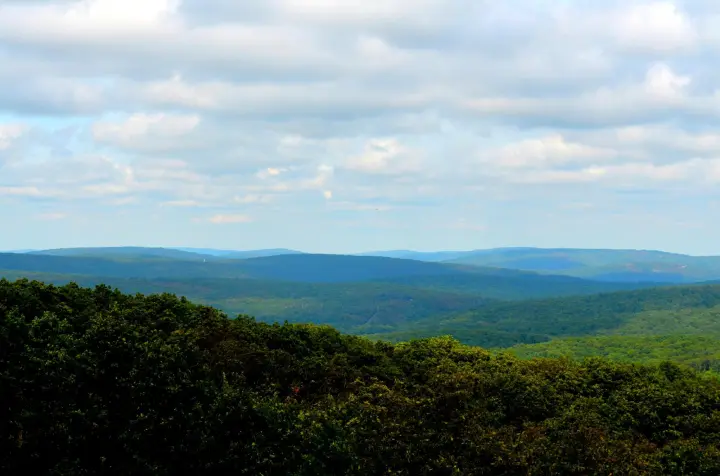
the Ozarks, mostly Missouri and Arkansas, USA:
In this rural setting a researcher encounters the telekinetic "witch"-girl Abbie, in the novella by James E Gunn, Wherever You May Be (Galaxy, May 1953).
A tinkling of little silver bells. Laughter? Matt looked up quickly, angrily. The woods were thin along the top of this Ozark ridge. Descending to the lake, sparkling cool and blue far below, they grew thicker, but the only one near was the young girl shuffling through the dust several hundred yards beyond the crippled car. And her head was bent down to watch her way.
Much further futureward is the scene depicted by Stanley G Weinbaum in his posthumously published Dawn of Flame (Thrilling Wonder Stories, June 1939):
He passed the place where the great steel road of the Ancients had been, now only two rusty streaks and a row of decayed logs. Beside it was the mossy heap of stones that had been an ancient structure in the days before the Dark Centuries, three hundred years ago, when Ozarky had been a part of the old state of M'souri.
They had been mighty sorcerers, those ancients; their steel roads went everywhere, and everywhere were the ruins of their towns, built it was said, by a magic that lifted weights...
A vital role in Robert Heinlein's Methuselah's Children (1958) is played by mathematical genius Andy Libby, who begins to suffer from nostalgia when far out in interstellar space:
...Libby found himself wondering if the hills of his native Ozarks were still green, if the smell of wood smoke still clung to the trees in the autumn...
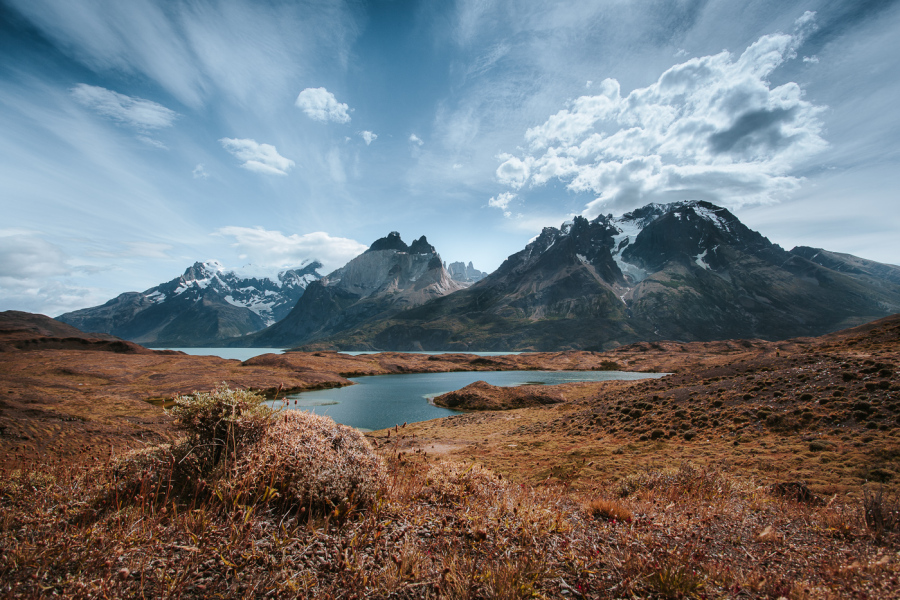
Patagonia:
Olaf Stapledon's Last And First Men (1930) describes - in the chapter "The Fall of the First Men" - how, early in the ten-million-year Dark Age that stretches between the First and Second Men, a brief rebirth of civilization occurs about a hundred thousand years after the disastrous demise of the first World State.
...Complex climatic changes had rendered the southern part of South America a fit nursery for civilization. Further, an immense warping off the earth's crust to the east and south of Patagonia had turned what was once a relatively shallow region of the ocean into a vast new land connecting America with Antarctica by way of the former Falkland Islands and South Georgia, and stretching thence east and north-east into the heart of the Atlantic.
It also happened that in South America the racial conditions were more favourable than elsewhere. After the fall of the First World State the European element in this region had dwindled, and the ancient "Indian" and Peruvian stock had come into dominance. Many thousands of years earlier, this race had achieved a primitive civilization of its own... Superficially Americanized, it remained fundamentally "Indian"... had lain dormant like a seed in winter... From the interaction of this ancient primitive culture and the many other racial elements left over in the continent from the old cosmopolitan civilization, civil life was to begin once more. Thus in a manner the Incas were at last to triumph over their conquerors.
Various causes, then, combined in South America, and especially in the new and virgin plains of Patagonia, to bring the First Dark Age to an end. The great theme of mind began to repeat itself...
(The civilization of Patagonia ends, however, with a disaster which almost wipes out all life on Earth.)
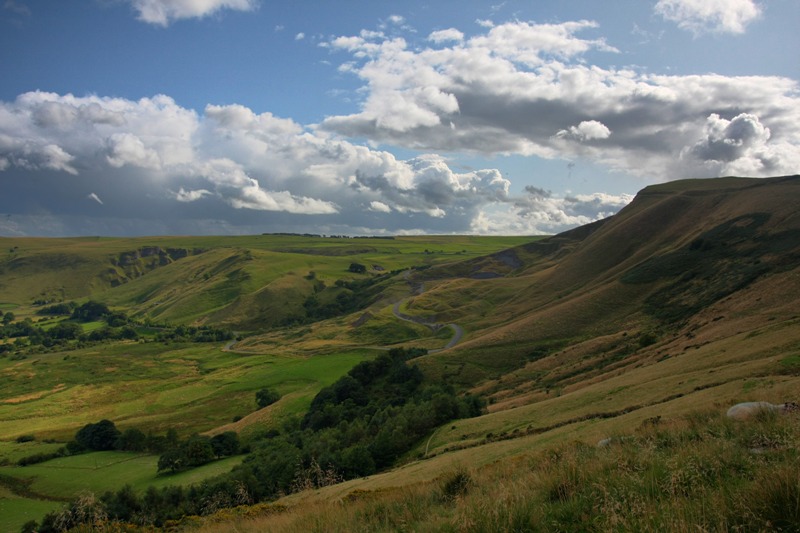
the Peak District, (mostly in) Derbyshire, England:
This area is the site of Glyn Weston's time-travel experiments, in Seeker of Tomorrow (Astounding Stories, July 1937) by Eric Frank Russell and Leslie J Johnson.
...I
had set up my laboratory in the wilds of the Peak District of
Derbyshire, in England, where work could be carried on with the minumum
of interference. From this laboratory I had dispatched into the
unknown, presumably the future, a multitude of objects... In no case
could I bring back anything I had made to vanish. Once gone, the
subject was gone forever. There was no way of discovering exactly where
it had gone. There was nothing but to take a risk and go myself...

Puerto Rico:
This is where Theodore Sturgeon learned to operate bulldozers, while working for
the US Army during 1940-41, clearing jungle to build airfields and dry
docks; a hands-on experience which heavily inspired one of his greatest
stories. To quote Sam Moskowitz in Seekers of Tomorrow (1967), p240-1:
...Sturgeon applied himself and wrote Killdozer,
a 37,000-word novelette, in just nine days. That story, about a
primeval electronic intelligence that takes over a bulldozer clearing an
airfield on a Pacific island, embodied the vivid impressions of a
sensitive artist of the power, sound, smell, and mortal danger of these
mechanical behemoths.
Campbell loved it and it became the cover story of the November,
1944, issue of Astounding... The check that Sturgeon received, $545,
was the largest single amount he had ever earned for his writing...

the Sahara:
This greatest of hot deserts is the scene of the first of the terrifying changes made by the invading Venusians in Clark Ashton Smith's The Metamorphosis of Earth (Weird Tales, September 1951):
In the year 2197, the first intimation of a strange peril of
world-wide scope and gravity came and passed unrecognized for what it
really was in the form of a newspaper dispatch from the Sahara,
reporting a sand-storm of unprecedented fury...
Toward the end of the same year, there came a fresh report from the
Sahara, this time of so strange and inexplicable a nature that it
immediately aroused the curiosity of many scientists, who forthwith
formed and expedition to investigate the conditions that had given rise
to the report. The members of a caravan from Timbuctoo, the first to
venture into the path of the great storm, had returned within a week,
half-mad with terror and telling incoherently of unaccountable changes
that had taken place all through the disturbed area. They said that the
long, rolling dunes of sand had all disappeared, to be replaced by solid
earth and mineral forms such as no one had ever seen before. The earth
consisted of great patches of a sort of violet-colored day, very moist,
and with a noxious odor that had almost overpowered those who ventured
to walk upon it.
Also, there were outcroppings, immense ledges, and even hills of
singular stone and metals. The stone was mainly crystallized, with red,
black, blue and dark-green colors, and the metals were white and
irridescent. The members of the caravan swore that they had seen huge
boulders heave visibly from the earth before their eyes, and had watched
the crystals swell on the sides of these boulders...
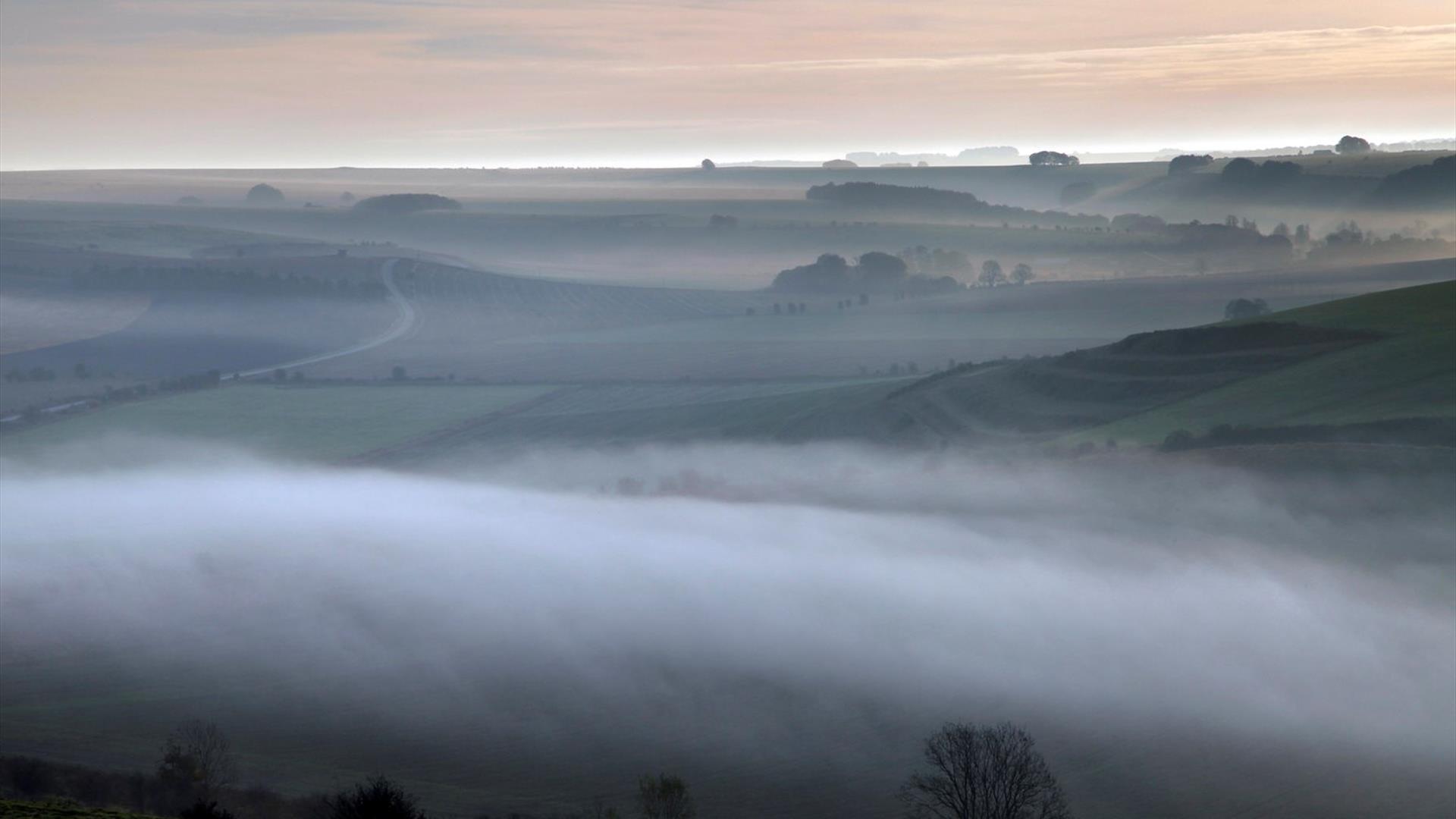
Salisbury Plain, (mostly in) Wiltshire, England:
The first Mars expedition - organized and led by a private
individual, millionaire adventurer Dale Curtance - takes off from this area, as narrated
in John Wyndham's Stowaway to Mars (1935). Chapter V, "Great Day", begins:
The
few hardy souls who had elected to spend the night upon the open
inhospitality of Salisbury Plain slept no later than dawn upon the
morning of the twelfth of October, 1981, for it was with the first rays
of sunlight that the influx which would last all day began.
The hysterical ballyhoo timed to reach its climax upon this day had
been sustained with an unsurpassed degree of journalistic art. The
birth of a son to Dale Curtance had given a fillip to interest at a
convenient moment, and every newspaper reader in the country had become
familiar with the, at present, somewhat dough-like features of Victor
Curtance. The announcement of the names of Dale's companions for the
flight had caught three unknown men and one rather more familiar figure
into an undying fulguration of publicity. Every person who could reach a
radio set had seen and heard a prince of the blood say: "I name this
ship the Gloria Mundi. May God guide her and bring safely back to us,"
and the film of the occasion had been shown at every cinema...
The Plain has a more sinister feel to it in Susan Cooper's Mandrake (1964), in which a Planetary Intelligence has reached out into the human mind to destroy civilization:
...He drove up the dark hill out of Amesbury, the Lagonda humming
deeply, and out on to Salisbury Plain. The road had been climbing genly
for a long time; now, suddenly, he was out on the roof of England. The
darkness all round, like a black fog in the air, was the darkness not
of enclosing hills or trees but of the open sky. There was no moon. He
could see, beyond the down-thrown white path of his headlights, the
faint bright points of stars in the night. He felt a sudden oppressive
loneliness, and accelerated again... [p.80-1]
Scotland:
In chapter 2 of David Lindsay's A Voyage to Arcturus (1920) we first hear mention of Starkness Observatory, the point of departure for the amazing adventure on Tormance, the Arcturian planet. The protagonist, Maskull, asks where Starkness is and is simply told, "On the northeast coast of Scotland. Curious discoveries are made there from time to time."
Chapter 3 begins,
A couple of days later, at two o'clock in the afternoon, Maskull and Nightspore arrived at Starkness Observatory, having covered the seven miles from Haillar Station on foot. The road, very wild and lonely, ran for the greater part of the way near the edge of rather lofty cliffs, within sight of the North Sea. The sun shone, but a brisk east wind was blowing and the air was salt and cold. The dark green waves were flecked with white. Throughout the walk, they were accompanied by the plaitive, beautiful crying of the gulls.
The observatory presented itself to their eyes as a self-contained little community, without neighbours, and perched on the extreme edge of the land...
The following fifteen pages of increasingly spine-tingling narrative are a fitting prelude to the hallucinatory wonder of Tormance itself.
Siberia:
This huge region figures strongly though indirectly (no scenes are actually set there) in the post-nuclear-holocaust novel Twilight World (1961) by Poul Anderson, in which the human race has been irrevocably contaminated by mutant genes. Siberia "...set
itself up as independent when the old Russian government vanished. Not
being too badly hurt, and having a certain amount of industry, an
energetic population, and plenty of natural resources, it came back fast
- as fast as we, if not more so. It's annexed Manchuria, you can see,
and Mongolia and Korea; Japan is its puppet, as are several of the North
Chinese states. We don't know a great deal about it, international
communication is still pretty slim, but it's a hardboiled outfit, and
its Khan - well, you can learn about that later on..."
In the novel's Martian climax Colonel Boris Byelinsky of the Khanate announced to some pioneering American astronauts who have reached the Red Planet:
"...The importance of Mars as a place for colonization and research is fully recognized by the Khan. Since we are convinced that your view of the problem is misguided and can only lead to disaster for the entire race, we do not intend that you shall have this planet..."

the Solomon Islands:
The action in Robert Sheckley's Meeting of the Minds (Galaxy, February 1960) takes place on the fictional volcanic island of Vuanu in the Solomons, scene of a life-or-death struggle with a mind-absorbing alien, the Quedak, who appears as a kind of bug.
...Vuanu was a worthless, humid, jungle-covered piece of land, free to anyone who wanted it.
William Sorensen, general manager of a chain of liquor stores in California, decided he wanted it.
Sorensen's hobby was treasure-hunting...
The first man in Sorensen's group to fall under the alien control begins by saying over the walkie-talkie:
"...It sure isn't like any bug I've ever seen. I'm going to swat hell out of - "
They heard him scream, more in surprise than pain...
...There was a long silence. Then Eakins' voice, low-pitched and calm, came over the walkie-talkie.
"We'll speak with you again later," Eakins said...
Tibet:
See Afghanistan.
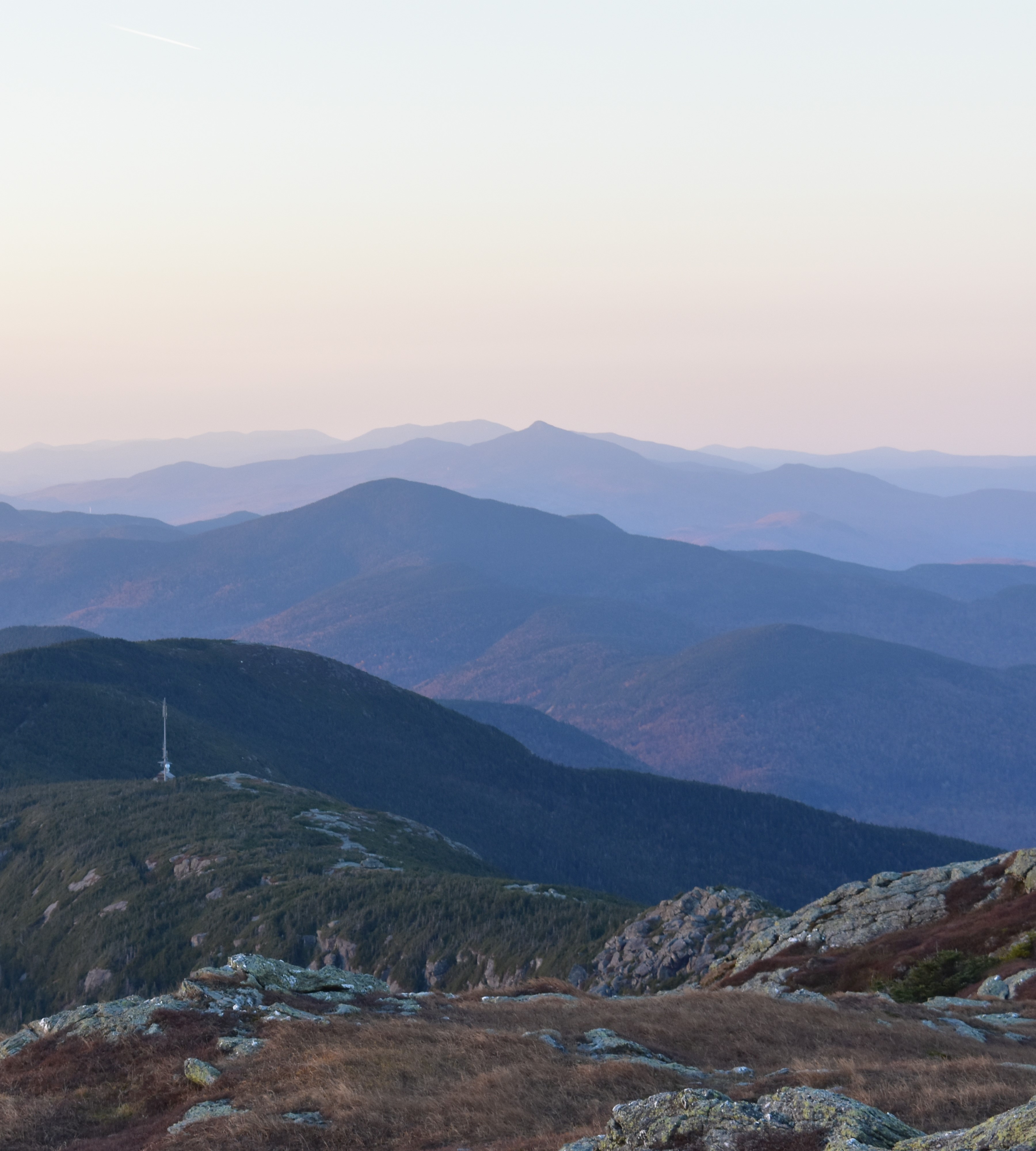
Vermont, USA:
The state is the setting for The Whisperer in Darkness (Weird Tales, August 1931), the fine science-fictional horror novella by H P Lovecraft.
The quaint, sightly village of Newfane, reached in less than an hour,
was our last link with that world which man can definitely call his own
by virtue of conquest and complete occupancy. After than we cast off
all allegiance to immediate, tangible, and time-touched things, and
entered a fantastic world of hushed unreality in which the narrow,
ribbon-like road rose and fell and curved with an almost sentient and
purposeful caprice amidst the tenantless green peaks and half-deserted
valleys. Except for the sound of the motor, and the faint stir of the
few lonely farms we passed at infrequent intervals, the only thing that
reached my ears was the gurgling, insidious trickle of strange waters
from numberless hidden fountains in the shadowy woods...
Whereas the Lovecraft tale involves physical brain-stealing and transplanting by aliens, the Green Mountain State hosts equally eerie mind-transferences with different physical effects in Henry Slesar's Legacy of Terror (Amazing Stories, November 1958), in which the heroine heads into the countryside to investigate the isolated retreat of her late father.
...The trees along the Vermont roadway had been baked brown in an August hotter and stickier than most. At the wheel of her car, Holly Kendall felt stifled by the oppressive weather, despite the abbreviated shorts and light cotton sweater she wore. Her father's house, tucked deep into a hillside eighteen miles off the main highway, was accessible only through tortuous side roads, and the wear and tear on the car and herself was considerable...
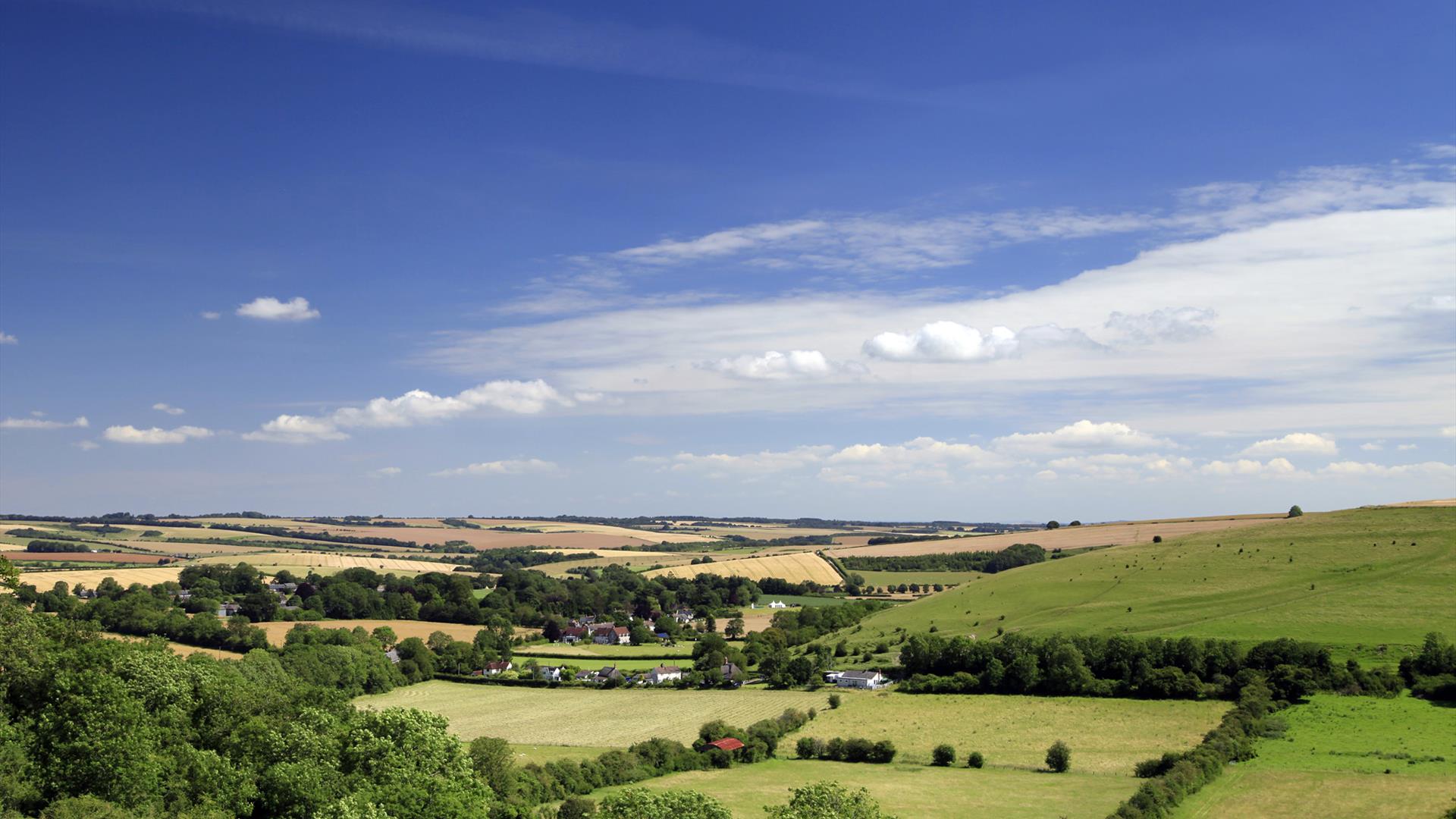
Wiltshire, England:
The action of L P Davies' Possession (1976) takes place in this county. The protagonist, investigating the suspicious death of his brother, stays in the small town of "St. Martin". Whether this is the same as the village of Barford St. Martin, which really exists, I'm not sure. Possession is a great mystery novel; as for whether it's even borderline sf, I find it hard to decide. There is a scientific breakthrough, to do with (somewhat dubious) immortality; it's partly fraudulent, but the reader is left uncertain how much there might really be in it. Meanwhile we're treated to an absorbing and exciting tale, grounded in the locality.
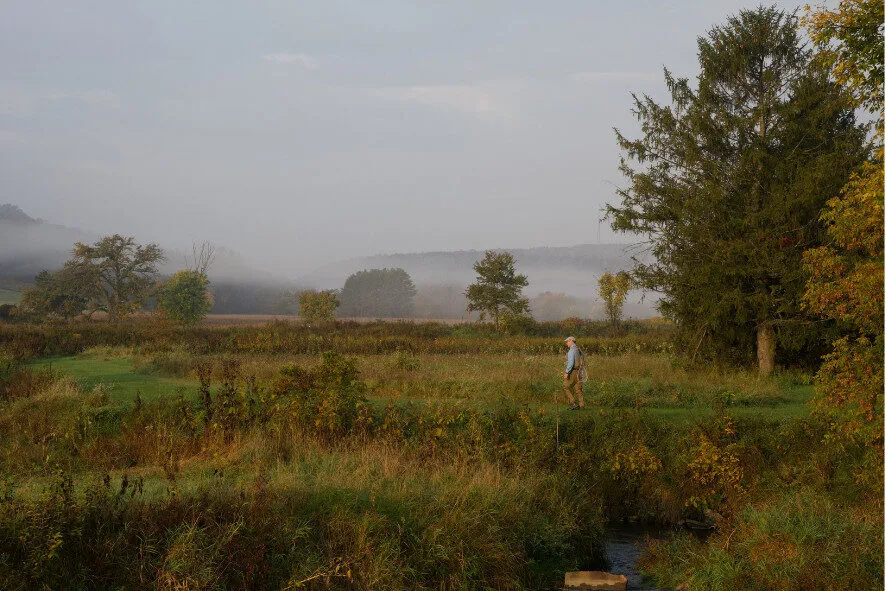
...The traffic lights changed and a tide of morning shoppers swept him across the road. Busy shops, even busier pavements. Red faces, brown faces, country tweeds and country burrs. Bags and baskets and plastic carriers and tartan-covered contraptions on wheels. Prams and dogs and nobbly, home-carved walking sticks. And on the next corner, with humanity piled waiting for the lights to change, another red face -
Wisconsin, USA:
The southwestern corner of the State is Simak country. In The Whistling Well (1980) we're introduced to the narrator's ancestral land before we meet the stunning mystery that has lain in wait since the pre-human past.
...The ridge itself was bare of trees, except for a few that still clustered around the sites of homesteads, the homesteads now gone, burned down or weathered away or fallen with the passage of the years. In time long past, there might have been trees, but more than a hundred years ago, if there had been any, they had fallen to the ax to clear the land for fields. The fields were still here, but no longer fields: they had known no plow for decades...
...Here his ancestors had walked the land, the last of many who had walked it. For millions of years unknown, perhaps unsuspected, creatures had walked along this ridge. The land was unchanging, geologically ancient, a sentinel of land standing as a milepost amidst other lands that had been forever changing. No great mountain-building surges had distorted it, no glacial action had ground it down, no intercontinental seas had crept over it. For hundreds of millions of years, it had been a freestanding land. It had stayed as it was through all that time, with only the slow and subtle changes brought by weathering...
For more on Simak country see America's own haunting.
The Badger State is also the setting for the framing-Prologue of Ray Bradbury's 1951 collection The Illustrated Man, which begins:
It was a warm afternoon in early September when I first met the Illustrated Man. Walking along an asphalt road, I was on the final leg of a two weeks' walking tour of Wisconsin. Late in the afternoon I stopped, ate some pork, beans, and a doughnut, and was preparing to stretch out and read when the Illustrated Man walked over the hill and stood for a moment against the sky...
the Yang-tze, China:
In roughly ten million years' time humanity will achieve a resurgence in the form of the cultures of the Second Men, in Olaf Stapledon's vast future history, Last And First Men (1930). On their way up, these improved humans suffered many twists of fortune.
...For some thousands of years the race remained in a most precarious condition, now almost dying out, now rapidly attaining an extravagant kind of culture in some region where physical nature happened to be peculiarly favourable. One of these precarious flashes of spirit occurred in the Yang-tze valley as a sudden and brief effulgence of city states peopled by neurotics, geniuses and imbeciles. The lasting upshot of this civilization was a brilliant literature of despair, dominated by a sense of the difference between the actual and the potential in man and the universe. Later, when the race had attained its noontide glory, it was wont to brood upon this tragic voice from the past in order to remind itself of the underlying horror of existence...
Zendexor greatly appreciates your donation of £2! Thank you.
Recent Articles and Updates


-
Guess The World - Seventh Series
Oct 08, 26 03:37 PM
 Yet more scenes from Solar System worlds
 -
Haunted Worlds - Fictional auras of places on Earth, the Moon and Mars
Oct 08, 26 03:15 PM
 The double life of our place-names
 -
Deeds of the Creators
Oct 08, 26 02:48 PM
 in addition to expanding our consciousness
 -
Fictional Dates of the Old Solar System
Oct 07, 26 12:33 PM
 our timeline extended into imagined pasts and futures
 -
Uranian Throne episode 24 Underway
Oct 07, 26 08:38 AM
 The skyfleet sails into Fyaym
 -
Guess The World - how many scenes on each world
Oct 05, 26 06:09 AM
 how each world is doing on the scenic front
 -
What to see on Jupiter
Oct 05, 26 05:58 AM
 The Jovian scene
 -
History of Hopes
Oct 03, 26 10:46 AM
 Optimistic science and speculation
 -
the hits race
Oct 01, 26 10:37 AM
 the monthly popularity-contest for worlds
 -
Countries
Sep 30, 26 12:56 PM
 Supplementary Gazetteer for countries in sf scenes
 -
Zendexor's OSS Diary 2026
Sep 29, 26 03:19 PM
 reflections on life, the oss and everything
 -
Eras, Periods and Epochs
Sep 28, 26 02:01 PM
 The ages of deep time
 -
Uranian Throne - index of proper names
Sep 28, 26 12:43 PM
the people and places of Ooranye -
What to see on Titan
Sep 28, 26 05:16 AM
 The Titanic scene
 -
What to see on Callisto
Sep 26, 26 04:11 AM
 The Callistan scene
 -
Artists who have illustrated the Old Solar System
Sep 22, 26 12:53 PM
 visual depictions of the OSS
 -
What to see on Mars
Sep 21, 26 03:40 AM
 The Martian Scene
 -
Authors of the Old Solar System
Sep 18, 26 01:09 PM
authors who have contributed to the old solar system -
What to see on the Moon
Sep 18, 26 04:05 AM
 The lunar scene
 -
What to see on Venus
Sep 14, 26 02:01 AM
 The Venusian scene
 -
What to see on Phobos
Sep 07, 26 05:36 AM
 the scene on the inner moon of Mars
 -
CLUFFS
Sep 06, 26 11:33 AM
 CLUFFS - Cute Little Unfulfilled Fragments of Fascination
 -
Idea for another site - The Stellar Neighbourhood
Sep 06, 26 11:10 AM
 the named or designated stars that appear in literature
 -
What to see on the Asteroid Progenitor Planet
Sep 03, 26 09:18 AM
 The Lost Planet scene
 -
Jasoomian Gathol
Aug 22, 26 08:40 AM
 dreams and themes from an island
 -
What to see on Uranus
Aug 17, 26 03:12 AM
 The Uranian scene
 -
Future Dates for Real
Aug 12, 26 02:39 PM
 prophecies which are quite certain
 -
What to see on Mercury
Aug 11, 26 07:51 AM
 The Mercurian scene